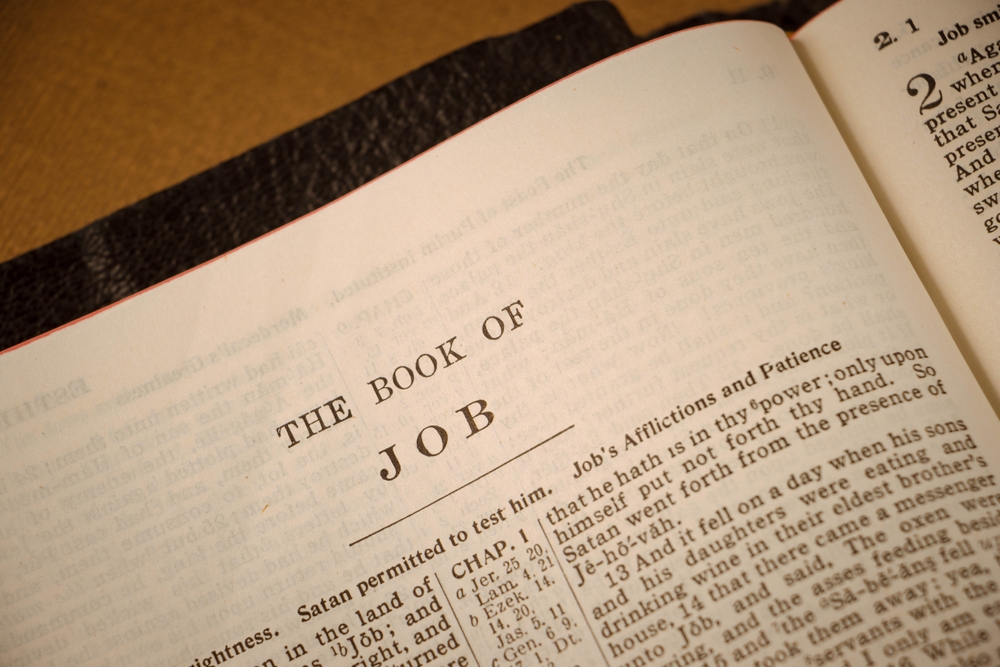
The biblical figure of Job—the righteous man who loses everything without apparent reason—has accompanied humanity’s most profound questions regarding suffering, justice, and the relationship between human beings and the divine for centuries.
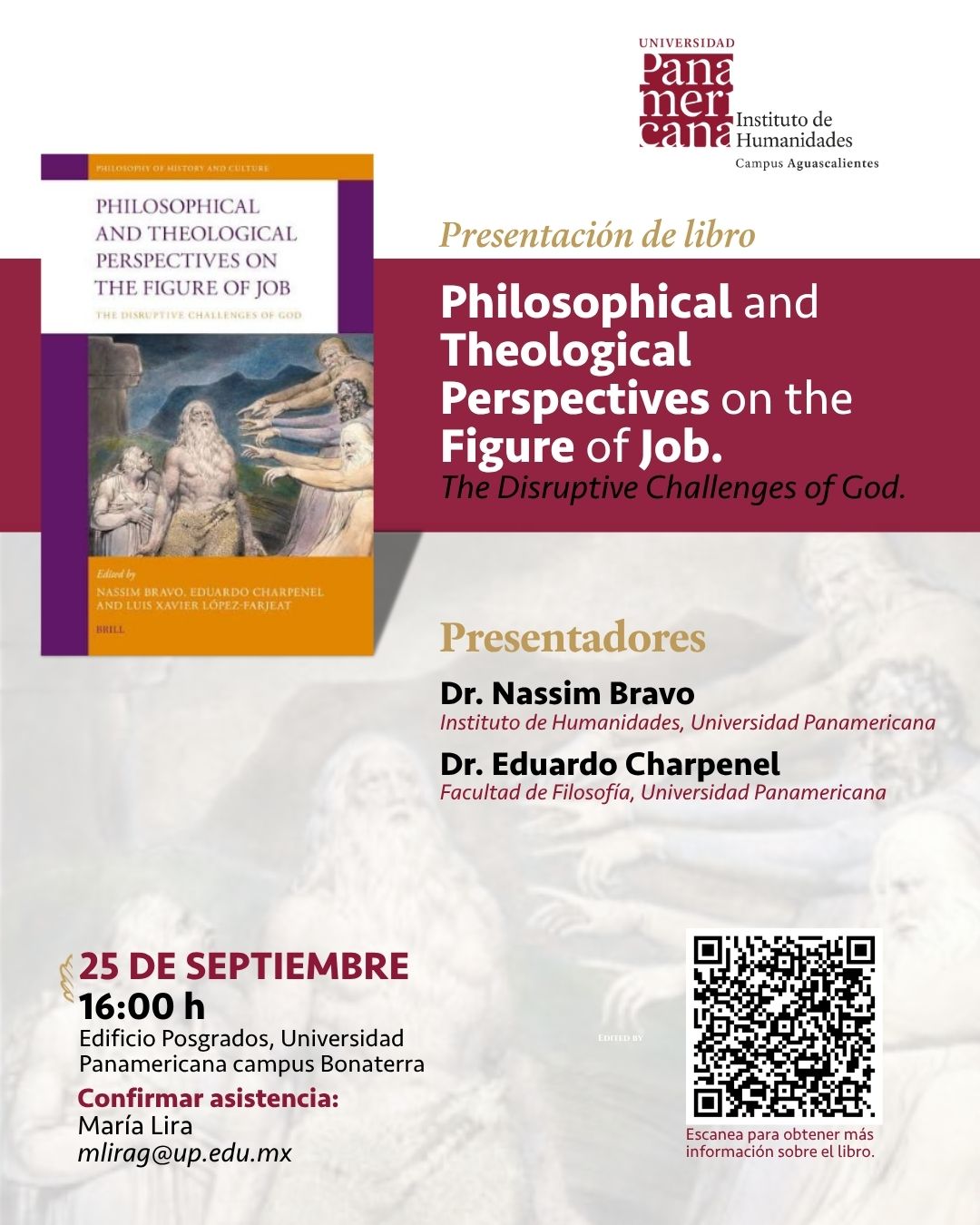
Now, a new scholarly volume published by Brill, Philosophical and Theological Perspectives on the Figure of Job: The Disruptive Challenges of God, brings together specialists from diverse philosophical and religious traditions to explore—without attempting to foreclose—the tensions that this narrative continues to pose today.
The book, Volume 41 in the series Philosophy of History and Culture, was co-edited by Dr. Nassim Bravo Jordán, Dr. Eduardo Charpenel Elorduy, and Dr. Luis Xavier López-Farjeat, scholars at Universidad Panamericana.
A Figure Transcending a Single Tradition
For Dr. Bravo Jordán, the point of departure was recognizing that Job does not belong exclusively to the Christian reading with which he is typically associated. “The story of Job is a classic narrative that has exerted an impact across multiple traditions throughout history”, he explains.
He further notes that because the themes it raises—the origin of suffering, justice, and the relationship with the divine—still challenge us today, the editorial team decided to approach it “from multiple vantage points that would enrich our understanding of these enduring questions”.
This commitment to plurality explains much of the volume’s structure, which places Job in dialogue with Kant, Kierkegaard, and René Girard’s mimetic theory, while also engaging María Zambrano’s poetic reason, Islamic theology (kalām), and artistic representations such as William Blake’s illustrations.
Why Job Remains Unsettling
One of the central axes of the volume is Job’s disruptive character in relation to conventional notions of justice. Dr. Bravo Jordán explains this through the lens of the original Hebrew worldview: a “simple and intuitive, yet problematic” theory according to which “good people are rewarded and enjoy life, whereas wicked people are punished and suffer”. The problem, he points out, is that lived experience constantly refutes that framework.
He adds that in a contemporary world “accustomed to obtaining answers expeditiously, the catastrophes endured by Job—who stands as the paradigm of the righteous man—remind us that the question of justice in the world is never easily answered” and compel us to coexist with uncertainty.
Philosophy, Mysticism, and Islam: Three Distinct Lenses
What does reading Job alongside modern philosophers contribute that a purely theological analysis would not? For Dr. Bravo Jordán, its value lies in demonstrating that the narrative’s message “cannot be reduced to a religious or confessional discourse […], but is rather universal.”
The inclusion of María Zambrano responds to a similar impulse, albeit from a different tradition. In contrast to the Western habit of resolving human questions through abstract concepts, Dr. Bravo explains that Zambrano’s Hispanic approach “suggests that there are dimensions of existence that cannot be reduced to concept or theory”, but must instead be grasped “from the innermost core (‘entraña’) […] and through poetic discourse”.
Incorporating the Islamic perspective, he states, answers a pressing need of our time: “in a context in which non-Western worldviews often appear foreign, incomprehensible, and even threatening, it is an indispensable task to examine how Muslim scholars have engaged” with questions akin to those posed by Job.
An Open-Ended Question Without Closure
The analysis of Job does not seek to offer a definitive answer to the problem of suffering. For Dr. Bravo Jordán, multiple answers may exist, and certain questions may rightly remain without a single resolution.
This openness constitutes one of the core pillars of the volume: in contrast to a contemporary mindset accustomed to seeking rapid answers, Job keeps open the inquiry into justice in the world and the meaning of suffering.
Similarly, he notes that bringing together specialists from such disparate traditions was not without its challenges. “The main challenge is offering them full support to express their ideas freely, while simultaneously convincing them that we are all contributing toward a shared objective”, he remarks.
Among the contributors, he acknowledges, there are views that “one might argue represent opposing positions; yet all form part of the same intellectual project”.
What He Hopes Readers Will Take Away
For non-specialist readers approaching the volume, Dr. Bravo Jordán hopes the book will spark an interest in reading the Book of Job firsthand and discovering the enduring relevance of the questions it raises.
Additionally, he hopes they will discover that questions formulated centuries ago “are not so far removed from what readers themselves experience in the modern world”.
Further details on the book Philosophical and Theological Perspectives on the Figure of Job: The Disruptive Challenges of God can be found here.
Learn more about research projects at Universidad Panamericana at: https://www.up.edu.mx/investigacion/noticias/