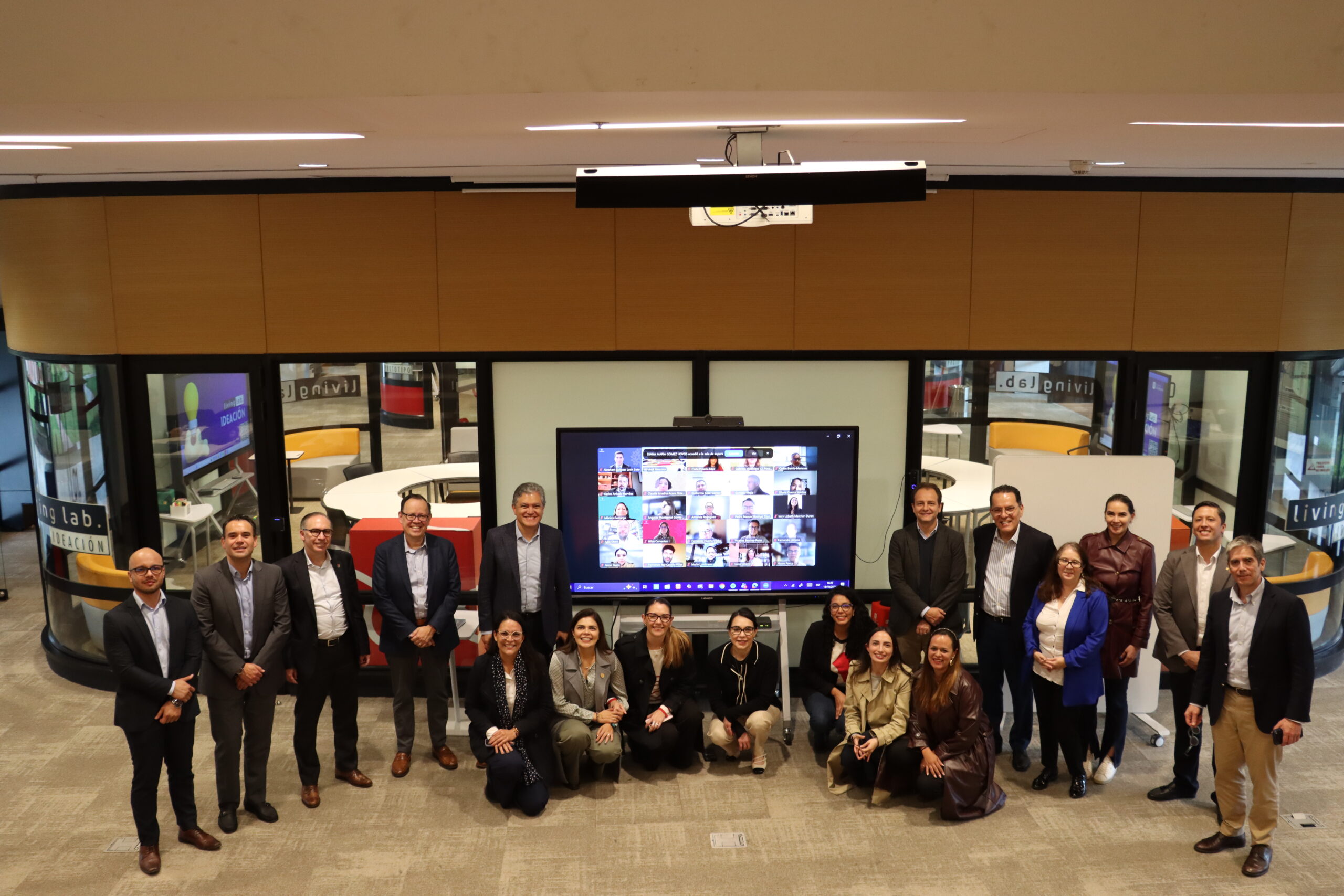

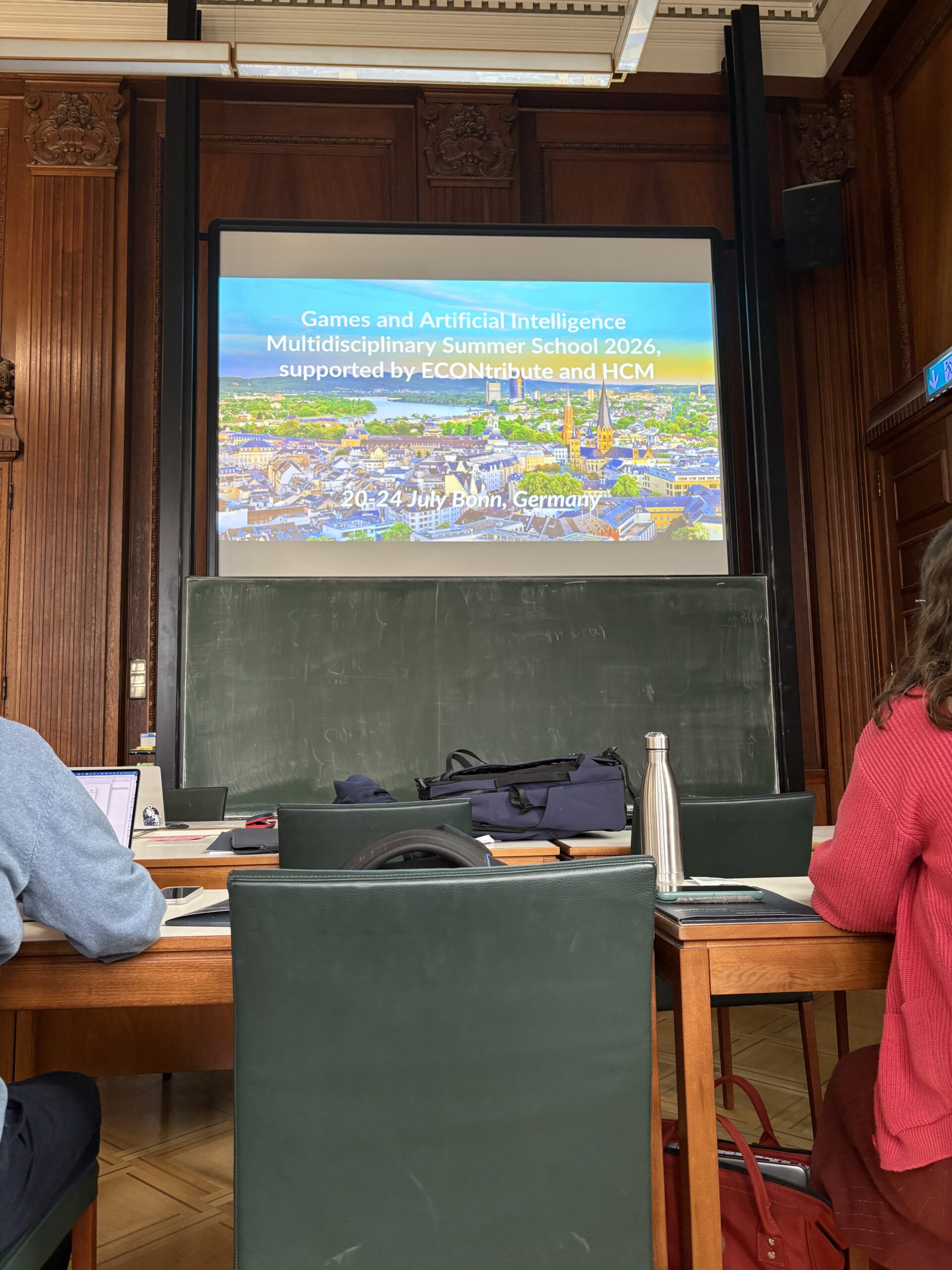
Game theory and artificial intelligence converge in one of the most dynamic research fields in the applied sciences. At this disciplinary crossroads, the University of Bonn hosted the Games and Artificial Intelligence Multidisciplinary Summer School 2026 (GAIMSS’26), a gathering that brought together specialists in mathematics, economics, computer science, and operations research.
Among the attendees was Daniela Medrano Gutiérrez, research professor at the School of Sciences of Universidad Panamericana and currently a doctoral candidate at Rice University, whose participation represented Mexico on a premier international academic stage.
About GAIMSS’26
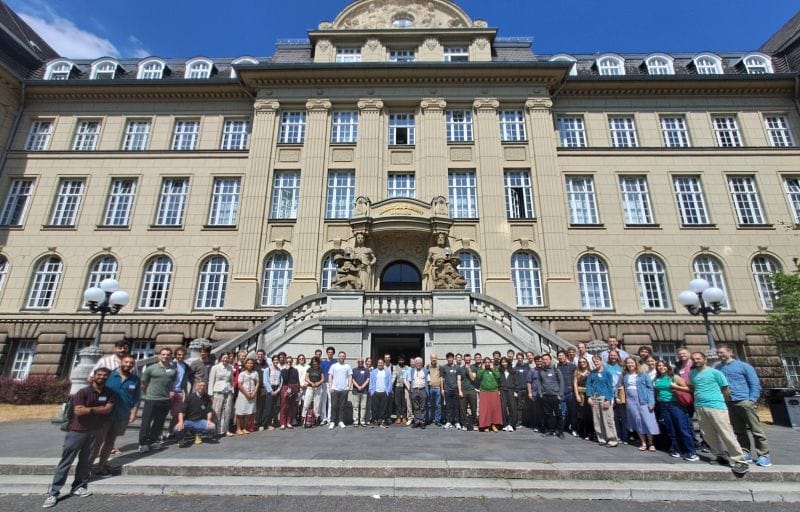
GAIMSS’26 brought together game theory researchers and students from disciplines including mathematics, computer science, operations research, and economics. Co-organized by ECONtribute, the event took place at the Hausdorff Center for Mathematics at the University of Bonn and comprised a three-day summer school followed by a two-day workshop.
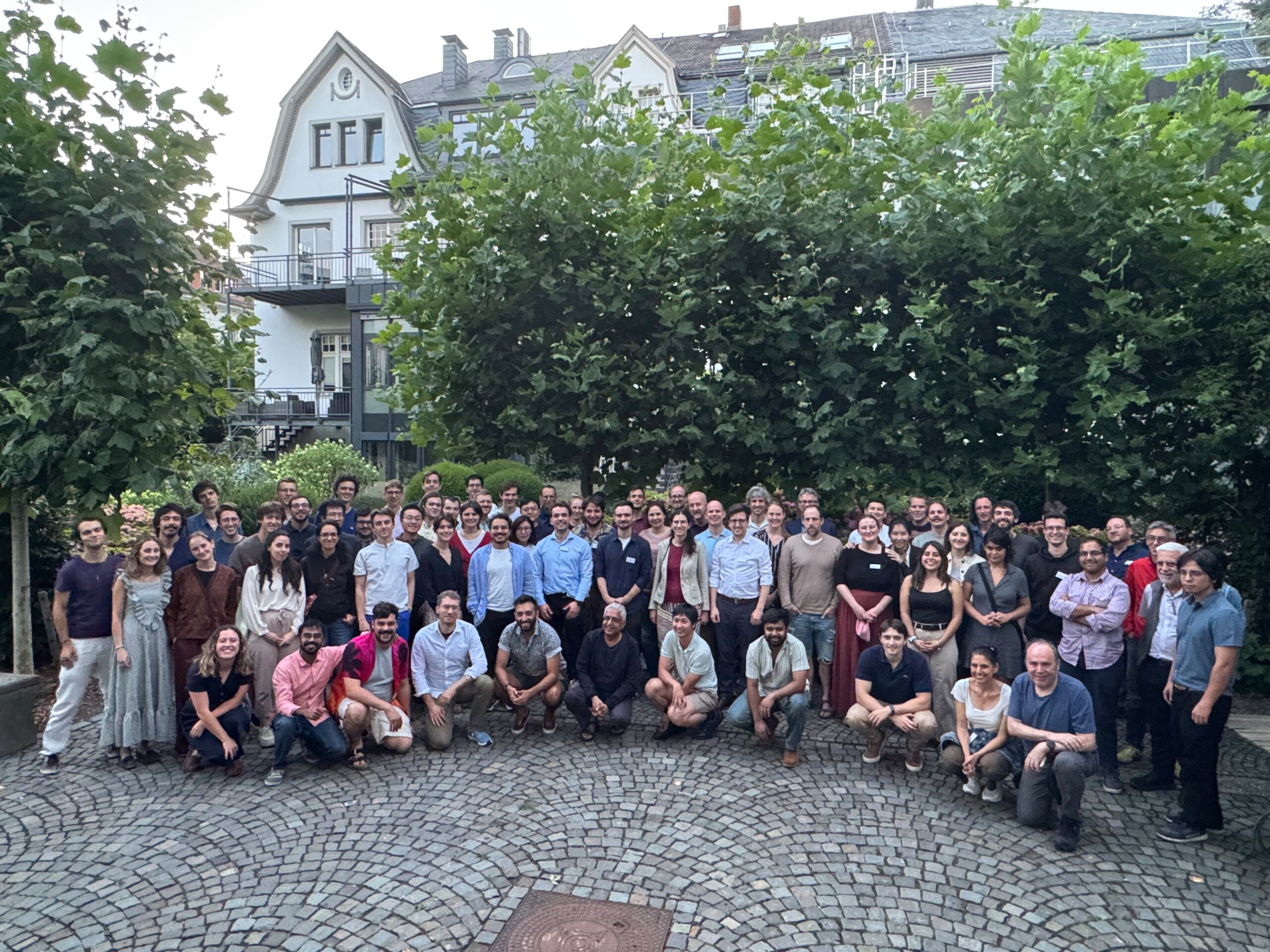
The summer school featured three specialized courses taught by distinguished scholars: Applications of Geometry to Economics in Auction Theory and Beyond, led by Professor Elizabeth Baldwin (University of Oxford); Strategic Queuing, by Professor Marco Scarsini (Luiss University); and Mechanism Design with Inspection, by Professor Rakesh V. Vohra (University of Pennsylvania).
During the workshop, recent research was presented on optimization, learning in games, market design, auctions, online algorithms, equilibrium, networks, and decision-making under uncertainty.
An Enriching Experience at GAIMSS’26
Medrano Gutiérrez is currently in the second year of her Ph.D. in Computational Applied Mathematics and Operations Research at Rice University, where she works with Dr. Sebastián Pérez-Salazar on problems of decision-making under uncertainty and online optimization. Her participation was encouraged by Dr. Felipe Garrido-Lucero, research professor at Université Toulouse Capitole and member of the GAIMSS’26 organizing committee.
“I was particularly motivated by the close alignment between the themes of GAIMSS’26 and my doctoral research”, notes the researcher. “The primary added value of my participation was broadening my perspective on game theory and mechanism design, becoming acquainted with current research tools and open questions, and exchanging ideas with leading specialists and early-career researchers across institutions and disciplines”, she adds.
Among the most memorable highlights was the lecture by Professor Roberto Cominetti, entitled Faster than Banach–Picard?: “I found his creative approach to communicating complex mathematical ideas especially memorable. One of the moments I enjoyed most was when he explained how a particular polynomial emerged from interpreting a pursuit game between the Road Runner and Wile E. Coyote. Examples like this show that mathematical rigor can also be conveyed in an intuitive and accessible manner.”
Sharing Knowledge at UP
This international experience also represents an opportunity for Daniela to strengthen her academic ties with Universidad Panamericana. “I would like to teach remote courses related to mathematical economics, linear and integer programming, sequential decision-making, and convex optimization”, she comments.
“Beyond imparting technical knowledge, I would like to introduce students to contemporary problems at the intersection of mathematics, economics, artificial intelligence, and operations research. I would be delighted to serve as a research mentor for students at Universidad Panamericana’s School of Sciences”, she states.
The Pivotal Role of the UP School of Sciences
Medrano notes that Mexico offers fertile ground for developing research at the intersection of game theory and artificial intelligence, with applications in resource allocation, market design, mobility, logistics, digital platforms, and decision-making. “Game theory provides tools to model strategic interactions, while artificial intelligence enables learning and decision-making in dynamic environments”, she says.
She also highlights the role of Universidad Panamericana as an academic environment of excellence: “In my experience, the School of Sciences at Universidad Panamericana is an outstanding place to train, as it combines rigorous academic standards with opportunities to build collaborative networks. During my time there, I took courses that are now foundational to my doctoral research and forged academic connections that have contributed to my professional growth.”
The Only Mexican Scholar at GAIMSS’26
One of the most eye-opening moments for the researcher occurred when she reflected on her presence at the international gathering: “At one point during GAIMSS’26, I realized I was the only Mexican in the room and also one of the youngest participants”.
“It was deeply meaningful to occupy that space, converse with scholars working on problems similar to mine, and see firsthand that my questions and ideas could also contribute to the discussion”, she adds.
She likewise notes that she is the only Mexican student in her doctoral program at Rice University—an opportunity for which she is profoundly grateful. In the same spirit, she encourages others to follow in her footsteps: “I want more Mexican students to recognize themselves as capable of reaching the spaces where new ideas are debated, research is conducted, and breakthroughs emerge that can transform the world.”
“I feel deeply proud to represent Mexico, Universidad Panamericana, and UP’s School of Sciences, yet I do not wish to remain the only one: I hope many more people discover that they also belong in these spaces and have a tremendous amount to contribute”, she concludes.
Daniela Medrano Gutiérrez’s participation in GAIMSS’26 reflects the reach of the scientific training and research fostered at Universidad Panamericana, as well as the importance of championing the involvement of young Mexican scholars in international academic forums where mathematics, artificial intelligence, and innovation converge.
Learn more about researchers at Universidad Panamericana at: https://www.up.edu.mx/investigacion/