In an environment where artificial intelligence is increasingly transforming various sectors, adaptive learning is establishing itself as one of the leading innovations in education.
This methodology uses data and digital tools to tailor the teaching process to each student's pace, skills, and needs, enhancing their learning experience without replacing the role of the teacher.
Zyanya Paola Díaz García, M.A., coordinator of Educational Innovation and the TALENT Faculty Center at the Universidad Panamericana, explains how adaptive learning works, what its benefits are, and where this trend—which is redefining higher education—is headed.

What is adaptive learning?
For decades, educational models operated under a “one-size-fits-all” approach, in which the same content was delivered in the same way to all students. Adaptive learning is an educational model that uses artificial intelligence, data analytics, and digital platforms to tailor content, activities, and assessments to each student’s performance and learning style.
Unlike traditional models, where everyone receives the same materials and progresses at the same pace, this methodology designs personalized learning paths that evolve as students interact with the platform.
“What adaptive learning does is create a tailor-made solution. It transforms the content so that it adapts to the needs, pace, and learning style of each student—all in real time,” said Ms. Díaz García.
One of the major advantages of these technological environments is immediate feedback, a crucial element that is often difficult for a single teacher to manage in classrooms with large groups. In addition, the variety of formats (such as podcasts, videos, and infographics) strengthens the process, ensuring that each student reinforces their knowledge through their own preferred learning style.
Redefining the Role of the Teacher: Inspiration on Knowledge Transfer
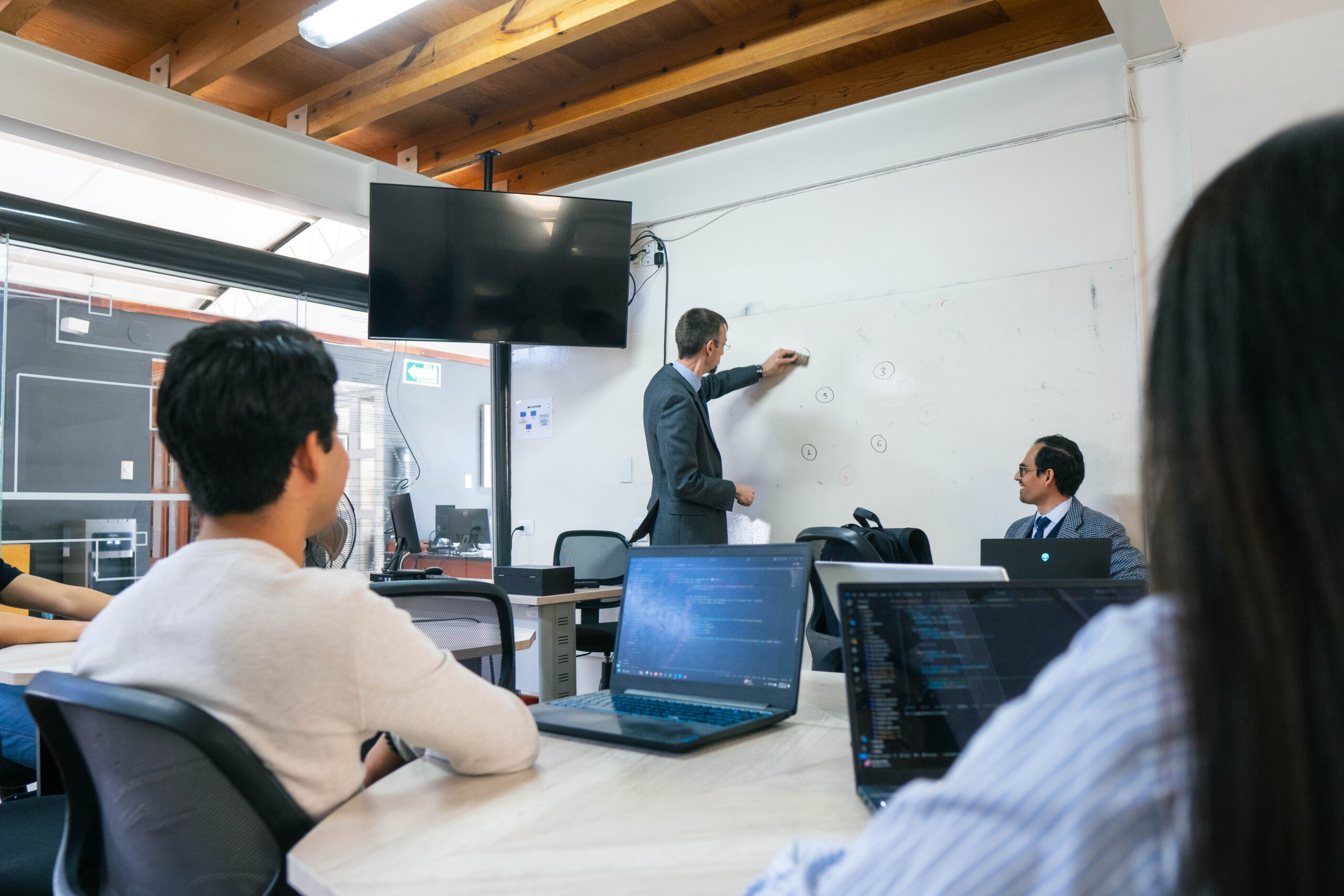
In response to widespread fears that technology will replace teachers, the specialist from the National Institute for Educational Research and Innovation ( Universidad Panamericana ) clarified that the role of the teacher is not disappearing, but rather evolving.
By drawing on Bloom’s taxonomy, adaptive tools take on the initial stages of learning—such as memorization, comprehension, and basic analysis—freeing up valuable time in the classroom. “The machine won’t be able to teach the more complex stages of learning, which already involve critical thinking, evaluation, creation, and problem-solving. That is the human element involved in this entire process, and it is something teachers must embrace, ” he noted.
Zyanya Díaz, M.A., emphasized that emotional connection and the ability to inspire are uniquely human traits. No algorithm will ever replace the experience of a teacher who motivates a student to choose a career path. In this new landscape, teachers are no longer merely transmitters of information; instead, they become facilitators of learning, mentors, and sources of inspiration who guide students in developing personal and professional skills.
The Shift from the Cognitive to the Emotional
Looking to the near future, adaptive learning is shifting from a purely cognitive approach toward an emotional dimension. Current developments make it possible to detect signs associated with frustration, fatigue, or demotivation in order to adapt the educational experience in real time.
However, the coordinator cautioned about the importance of managing this transition. “I’m a little concerned about this aspect—that we shouldn’t let students experience frustration, which is also part of the learning process. If everything is given to you exactly the way you want it, when someone doesn’t give it to you that way, it’s going to cause you conflict.”
For this reason, he believes that teachers will continue to play an essential role in developing skills such as resilience, adapting to change, conflict resolution, and emotional intelligence—skills that are increasingly in demand in the professional world.
How does adaptive learning help democratize education?
In the social sphere, access to mobile technology—where a large majority of the population owns a device with internet access—opens the door to bridging educational gaps. Ms. Díaz suggested that the democratization of learning also lies in teaching people how to use strategic prompts in generative AI tools to simulate personalized guidance forlifelong learning.
There are well-established examples of these advances in practice, ranging from global pioneers such as Khan Academy—which tailors math challenges to a user’s progress—to local innovations developed by the institution itself.
How does the " Universidad Panamericana " promote adaptive learning?
Universidad Panamericana is constantly developing educational innovation initiatives that incorporate artificial intelligence to enhance the learning experience for students and teachers.
One of these projects is Conectia, a suite of GPTs developed by the TALENT Teacher Center, designed to help teachers create personalized learning experiences, activities, and assessments tailored to the characteristics of each group.

In addition, the University of the Pacific ( Universidad Panamericana ) promotes research, teacher training, and the development of innovative methodologies that integrate technology, a humanistic education, and academic excellence to address the challenges of 21st-century education.
The future of education will be technological, but deeply human
According to Zyanya Díaz, M.A., the future of education will be shaped by greater integration between artificial intelligence and personalized learning. However, she cautions that the true value will continue to lie in the relationship between teachers and students.
The educational landscape of tomorrow is clear to the Panamericana specialist. “The future of education will inevitably be hyperconnected and technology-driven, but it will only have—or maintain—this sense of significance if it remains deeply human. Its value will rest entirely on the connection that can exist between a student and a teacher.”