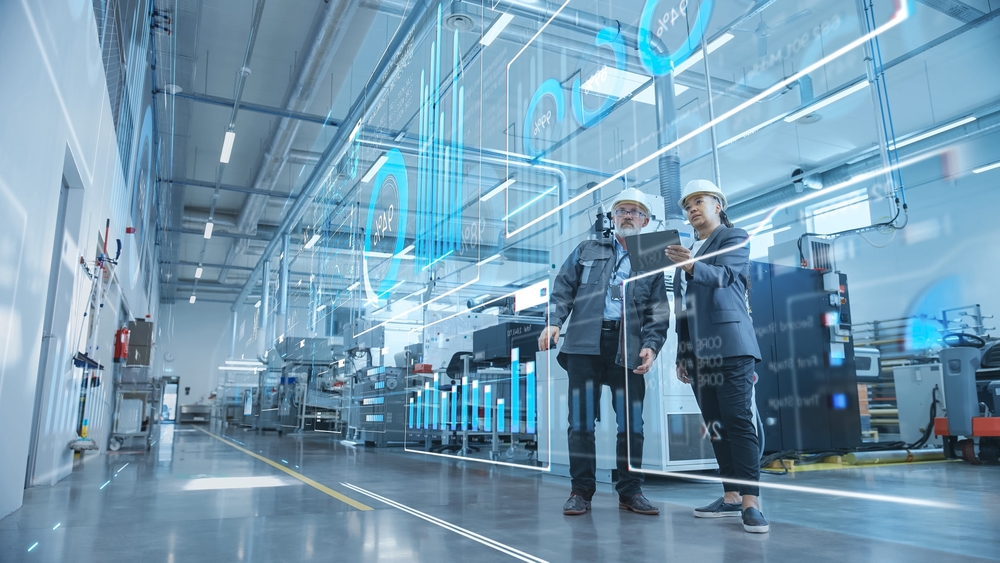
It often happens that companies adopt a new technological trend simply because it’s trendy or because it has worked for others—without really stopping to consider whether it’s a corporate necessity or just a spur-of-the-moment experiment in modernity. With the arrival of Industry 4.0 several years ago, the digitization of processes, automation, and the use of emerging technologies such as artificial intelligence or the Internet of Things have become industrial practices that raise the same question: trend or necessity?
In today’s manufacturing landscape, digitalization without a strategic direction is just noise. True digital transformation in our country should not be measured by the flashiness of its tools, but rather by its tangible ability to solve specific production problems, optimize supply chains, and generate real value for both institutions and society. In this context, advanced automation ceases to be a cosmetic option and emerges as an imperative necessity for the nation’s survival and economic competitiveness.

In today’s information age, the value of data has surpassed that of raw materials and physical labor, redefining global rules through artificial intelligence and the Internet of Things. As such, the transition to Industry 4.0 goes beyond the mere adoption of technology as a trend to become a driver of genuine value that boosts productivity, optimizes resources, and improves quality of life, unlocking fundamental competitive advantages such as operational flexibility, mass customization, and strong global integration.
When we examine this paradigm in Mexico’s industrial landscape, it becomes clear that organizations that transform their processes do so by pursuing clear goals and resolving day-to-day challenges on their production lines. A prime example can be found in the food sector with Grupo Bimbo, the Mexican bakery with the largest global presence, which perfectly illustrates the transition from theory to operational profitability through disruptive technologies. To mitigate the critical impact of unplanned downtime on its baking and packaging lines, the company adopted additive manufacturing by 3D-printing high-precision mechanical parts directly at its plants. This innovation enables the technical support team to resolve critical failures in a matter of hours rather than days, optimizing overall performance and ensuring the continuity of its value chain.

To remain at the forefront of global innovation, we must definitively move beyond the superficial view that reduces the Fourth Industrial Revolution to a mere fad or marketing trend. Technological tools and accumulated data are abundant, but what is truly valuable is the institutional discipline to listen to the environment, gather high-quality information, analyze it with methodological rigor, and implement solutions that address real-world problems. Industry 4.0 in Mexico is not a flash of originality; it is the science of transforming data into well-being, resource efficiency, and tangible economic progress for our community. Anyone who aspires to innovate and keep the national industry afloat must go beyond abstract ideas and have the insight and boldness to translate them into real solutions.

Dr. Hiram Eredín Ponce Espinosa
Director of the Center for Innovation and Technological Development at the Universidad Panamericana
President of the Mexican Society of Artificial Intelligence
Taken from:https://www.eluniversal.com.mx/opinion/hiram-ponce/industria-40-en-mexico-moda-o-necesidad/