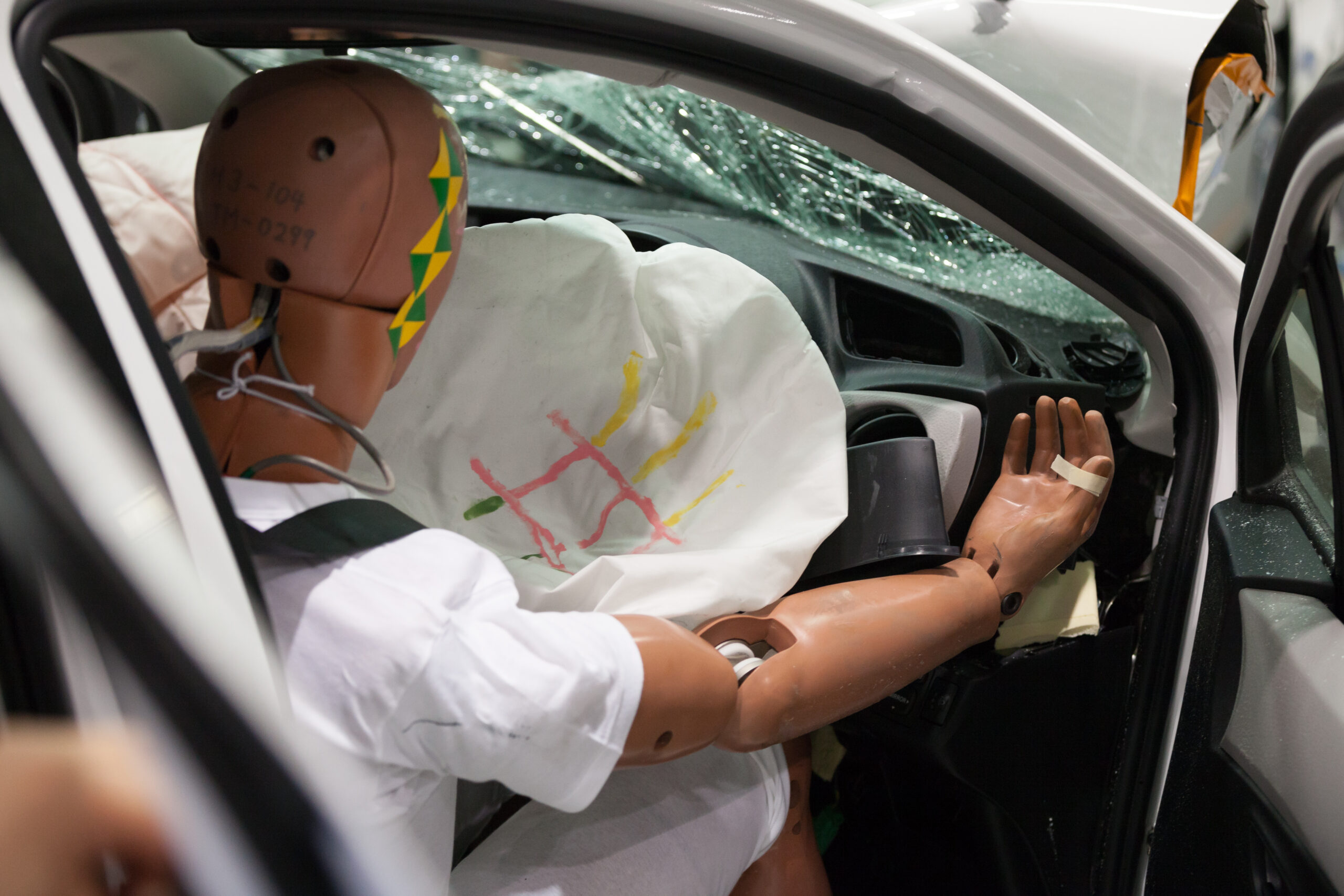
Mexico City, July 6, 2026.— The National Institute of Technology and Sciences ( Universidad Panamericana ) has been granted a new patent that could transform the way the automotive industry conducts vehicle safety tests. It is an atmospheric simulator capable of recreating various conditions of pressure, temperature, and humidity to evaluate the performance of systems such asairbags and other safety devices.
That was precisely the need identified by a team of researchers from the Universidad Panamericana, led by Dr. Eduardo De la Vega Segura, Dean of the School of Engineering, and which has now resulted in a patent granted by the Mexican Institute of Industrial Property (IMPI) under numberMX/a/2025/007941: the Atmospheric Simulator for Testing the Performance of Automotive Sensors, Such as Airbags and Other Devices.

The development of this technology is the work of the research team at the National Institute of Technology ( Universidad Panamericana), which also includes David Escobar Castillejos, Rodolfo Raúl Cobos Téllez, Octavio Lozada Flores, Alfredo Pedroza Díaz, Briseño, Erwin Alberto López Hurtado, Sara Daniela Ramírez Álvarez, and Ricardo Barba Chanes, as well as external researchers Valentín Cobarrubias and Jesús Peña Piña.
A Problem of Tons and Vibrations
Traditional crash-test structures are concrete chambers approximately40 meters long, six meters high, and weighing close to 2,600 metric tons.
Building them takes months, and replacing them is even more complicated and costly. But the real operational challenge arises during testing: the vibrations caused by impacts cause cracks in the concrete, leading to air leaks that make it impossible to maintain the stable pressure, temperature, and humidity conditions necessary for reliable validation.

The Panamericana team determined that the industry needed a solution capable of withstanding repeated and continuous vibrations without sustaining damage. “The invention arose from the industry’s need to test crash safety system components under specific conditions of atmospheric pressure, temperature, and humidity,”, explains Dr. Eduardo De la Vega.
He adds: “The hypothesis behind the development is that there are components, such as airbags, that behave differently depending on the atmospheric pressure they are under at the moment of impact”.
How does the atmospheric simulator developed by UP work?
The solution proposed by researchers at the Panamericana replaces concrete with a modularSA285C steel structure, a material selected for its special properties suited to high-pressure applications. But the innovation doesn’t end there. The simulator incorporates amobile cabin with canvas coversthat solves one of the most common operational problems: limited access for loading and unloading test vehicles.
“The concrete test chambers have limited access points for bringing vehicles in and taking them out for testing. To address this, we designed canvas covers that provide greater convenience and easier access for preparing the tests inside the chamber,”, explains the professor.
The tarps are designed to be easily removed and replaced in a short amount of time using a coupling system attached to the metal cab, which also facilitates maintenance of the hoist, rail, and shock piston that are in operation during testing.
Precision Environmental Control
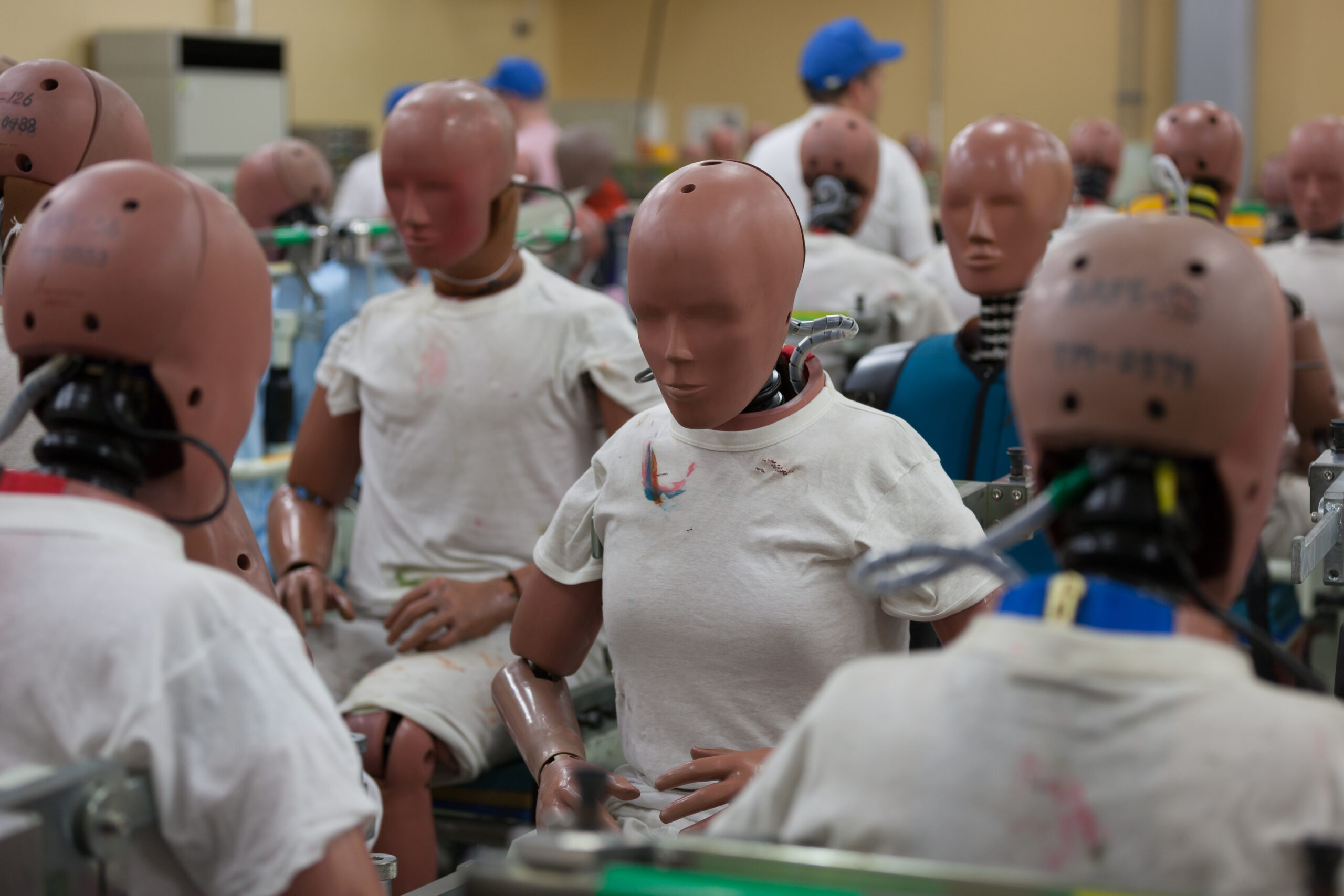
The system not only withstands vibrations; it also ensures stable and precise environmental control. During crash tests, sensor-equipped dummies—known as anthropometric test devices (ATDs) or crash test dummies—are used, and their proper functioning depends on specific temperature and humidity ranges.
“The control system allows us to simulate different geographic scenarios,”, says Dr. De la Vega, which is essential for ensuring that test results are reliable under any weather conditions around the world.
From Theory to Industrial Validation
Development has successfully progressed from a theoretical concept to an engineering design that has been validated in the laboratory and through simulations. Currently, the technology has reachedTRL Level 4, which means it has demonstrated its functionality in a relevant industrial environment and is ready to move on to more rigorous validation.
“At the laboratory scale and in simulations, the technology has proven its effectiveness, indicating that it is ready to move on to more rigorous industrial validation and establish itself as a mature solution with high commercial potential,”, the researcher notes.
The biggest technical challenge during development, he explains, “was to design a modular structure capable of withstanding the repeated vibrations of a car crash, surpassing current alternatives in durability, and ensuring stable and precise environmental control of pressure, temperature, and humidity without the system suffering leaks, depressurization, or structural damage”.
Beyond the Automotive Industry
Although the simulator was originally designed for automotive safety testing, researchers envision a wide range of future applications.
“In addition to establishing itself as a standard in the global automotive industry, the simulator offers great potential for expansion or diversification into other industries that require complex environmental testing, such as the aerospace sector, the marine sector, and HVAC (heating, ventilation, and air conditioning) systems, with specific adaptations for each application,”, he explains.
International Protection and Commercial Future
With the national patent already secured, the National Institute of Technology and Innovation ( Universidad Panamericana ) has filed an international PCT application to protect the invention in more than 150 countries, laying the legal groundwork for its future licensing. This protection strategy reflects the high commercial potential of a technology that aims to establish itself in a global market projected to exceed $2,200 million by 2030.
The simulator is a scalable solution for automakers (OEMs) and Tier-1 suppliers, who can use it to validate their safety systems under controlled environmental conditions without the costs and limitations of traditional infrastructure.
UP Innovation Ecosystem
Universidad Panamericana has established an ecosystem that transforms scientific knowledge into high-impact solutions for society, directly linking research results to the needs of industry.
To ensure that these developments move beyond the laboratory and are successfully integrated into the market, we operate under a coordinated model involving the Corporate Directorate of Innovation and Technology Transfer, the Pan-American Entrepreneurship Hubs, the Intellectual Property Management Centers, the Center for Technology Foresight, and the Center for Innovation and Technological Development (CINOV).
Currently, the university's portfolio of intangible intellectual property assets consists of:
- 23 patents granted.
- 24 software licenses.
Of these, the Atmospheric Simulator provides the ideal platform for evolving from a protected invention into a licensed technology with a direct impact on the industry.