Mexico City, June 12, 2026.— The Universidad Panamericana has established an institutional ecosystem aimed at transforming scientific and technological knowledge into solutions with economic and social impact.
This effort is driven in a coordinated manner by the Corporate Directorate of Innovation and Technology Transfer, the Pan-American Entrepreneurship Hubs, the Intellectual Property Management Center, and the Center for Technology Foresight and Competitive Intelligence, integrating capabilities in research, protection of intangible assets, entrepreneurship, and industry engagement; and, more recently, the Center for Innovation and Technological Development (CINOV) , as the entity tasked with bridging the gap between applied research capabilities and industry needs.
Thanks to this coordinated effort, the University currently has a technology portfolio of 50 intellectual property assets, consisting of 23 granted patents and 24 registrations of software registrations, reflecting a growing capacity to generate knowledge with the potential for technology transfer and commercialization.
Rodolfo Martínez Jiménez, M.A., corporate coordinator of Intellectual Property and Technology Transfer and representative for innovation and technology transfer at CINOV, describes how these areas work together to ensure that research conducted by Panamericana University faculty members truly makes an impact on society.
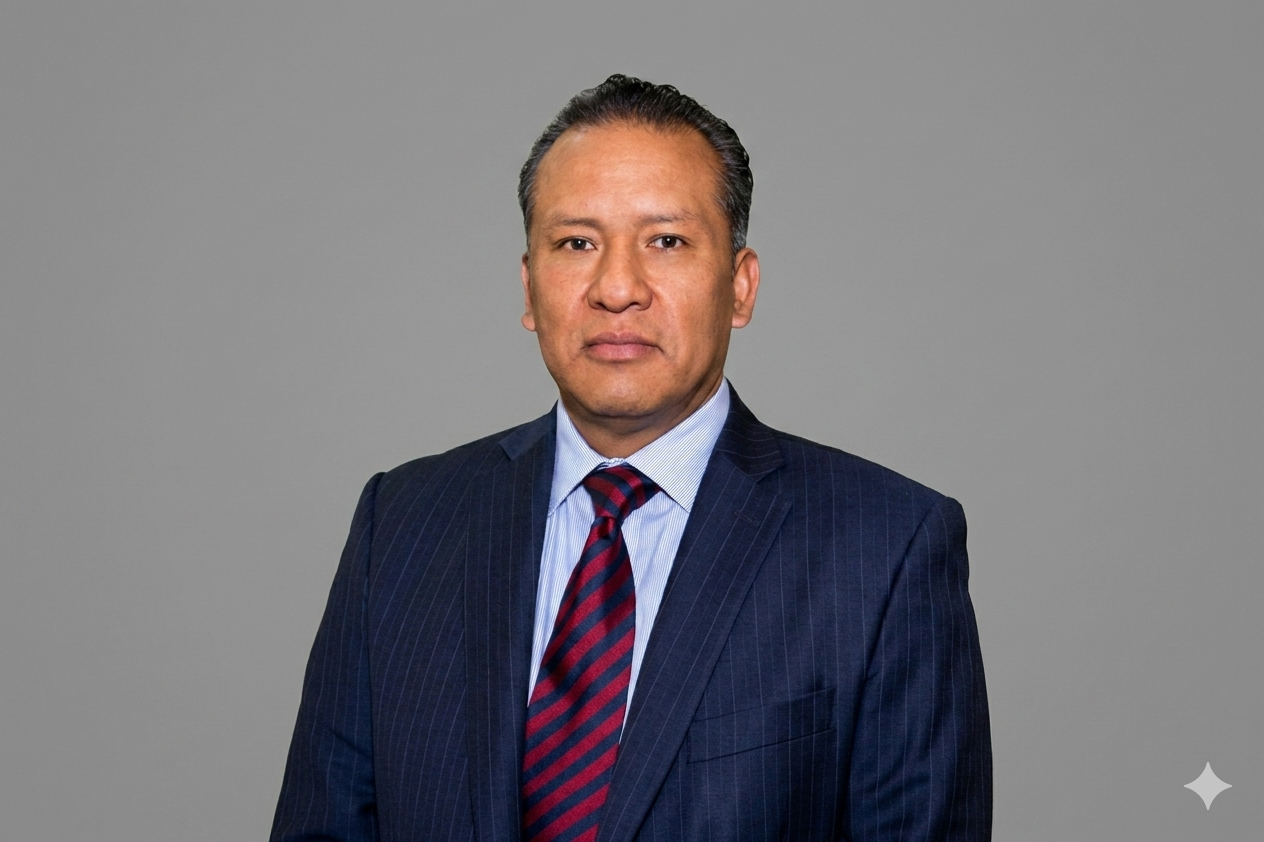
A culture built over six years
When Mr. Martínez Jiménez began working on intellectual property protection at Panamericana, the path forward wasn’t entirely clear. Today, six years later, the landscape has changed. “Researchers are very aware of the issue and place a high value on protecting their work,”, he says.
That shift in mindset did not happen on its own. The university implemented specific measures to foster it, including the so-called Intellectual Property Protection Workshops, which are held every year during the second semester, as well as courses and workshops throughout the academic year.
The result is an academic community that increasingly understands that protecting an invention is not a bureaucratic formality, but rather the first step toward ensuring that their work has an impact beyond the classroom or the laboratory.
Mistakes That Cost a Lot
Although the culture of intellectual property protection has matured, there are still risks that can undermine the potential of an innovation. Rodolfo identifies two mistakes that still occur and that can have irreversible consequences: publishing before filing a patent, and beginning research and development work without a confidentiality or collaboration agreement.

Both can leave an invention without legal protection, depriving the researcher and the institution of rights that, had they acted in a timely manner, could have been preserved.
The good news, he says, is that the Intellectual Property Management Center and a Technology Transfer Office at the University of the West of Spain ( Universidad Panamericana ) offer “ongoing support for researchers”, reducing the margin for error from the very start of each project.
What kinds of innovations can be protected?
Protection for an invention is not reserved for major discoveries. Any result of applied research and technological development is eligible for protection if it meets three basic requirements:
- Novelty: something different from what is already known in the world.
- Inventive step: it must be the result of the author's technical and creative ability.
- Commercial application: one that is designed to address a problem or need in industry or society.
With regard to ownership, the distribution is as follows: when the researcher is a full-time professor, he or she is entitled to the rights to the invention (in the case of patents, utility models, and industrial designs) or moral rights in the case of software.
The university, on the other hand, holds the industrial exploitation rights for patents, utility models, and industrial designs, or the economic rights in the case of software.

From the Lab to the Market: A Process with Defined Steps
For those who believe that protecting an invention involves navigating a legal maze without a map, Rodolfo offers clarity. La Panamericana has “a fully documented and established institutional process based on intellectual property policy and technology transfer policy”.
This process consists of six stages:
- Invention Report.
- Technology Background Search.
- Patentability Assessment.
- Drafting the application.
- Submission to the appropriate authority.
- Follow-up until the concession is granted.
Nor is it a coincidence that a technology makes its way into the productive sector. According to Mr. Martínez, this means that the technology “has undergone a systematic process of knowledge management and/or intellectual property protection, as well as an appropriate negotiation process for its licensing or transfer”, with the aim of securing for the university and its inventors “an economic, social, or environmental benefit, among others.”
CINOV: Where Research Becomes a Solution
CINOV was established with three research units focused on the agri-food industry, flexible manufacturing, and health technologies—areas that, according to Martínez Jiménez, were not chosen at random.
“These areas align with the strategic research priorities of the National Institute of Technology and Innovation ( Universidad Panamericana ), and that will allow for common ground in applied science and technological development,”, he explains.
The direct consequence is that the projects, publications, and inventions generated within the center will have “a high potential to influence work that is likely to be transferred for the benefit of industry and society as a whole.”
For researchers with an idea or a prototype who aren’t sure what to do with it, CINOV offers a concrete starting point. The center can provide guidance to ensure that the work aligns with established strategic areas and facilitates collaboration with the Intellectual Property Management Center and the Technology Foresight Center, “so that they can advise and complement your work.”
A cycle, not a straight line
For the Universidad Panamericana, research, intellectual property, and technology transfer are all part of the same value-creation cycle.
The vision that unites both the Intellectual Property Center and CINOV can be summed up in one idea: “Researching, protecting, and making an impact on industry or society as a whole are not isolated stages, but rather a continuous cycle of value creation,”, says Rodolfo.
He adds: “For the research conducted at UP—especially that managed by CINOV—to be considered complete, it must be protected and transformed into a real solution for society.” It’s not enough to simply generate knowledge. We have to see it through to the end.