
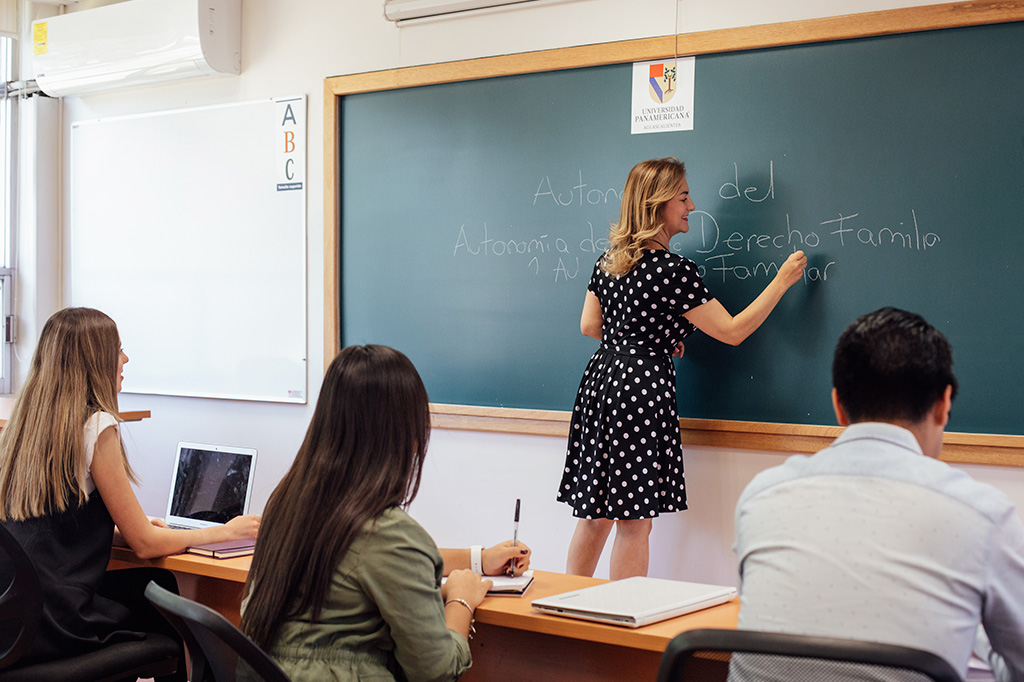
Artificial intelligence is transforming the role of teachers toward functions focused on critical thinking, ethical guidance, and the design of more human-centered learning experiences. In higher education, generative AI tools and digital learning are redefining how knowledge is taught, assessed, and developed.
Dr. Teresa Nicolás, director of the Institutional Center for Educational Innovation (CIIE) at the Universidad Panamericana, explains how artificial intelligence is changing education, what the main risks of its use are, and what skills teachers will need to develop by 2026.

One of the main distinguishing features of the Universidad Panamericana is the development of a Framework for the Ethical Use of Artificial Intelligence, focused on promoting principles such as justice, transparency, data protection, non-discrimination, human oversight, and accountability within educational settings. These are principles for developing judgment, not necessarily set-in-stone rules.
How has the role of teachers changed with the advent of artificial intelligence?
Today, teachers are no longer merely repositories of knowledge, but rather guides in more complex cognitive processes that require analysis, judgment, and, above all, reflection. Therefore, they must design learning experiences that incorporate the human element.
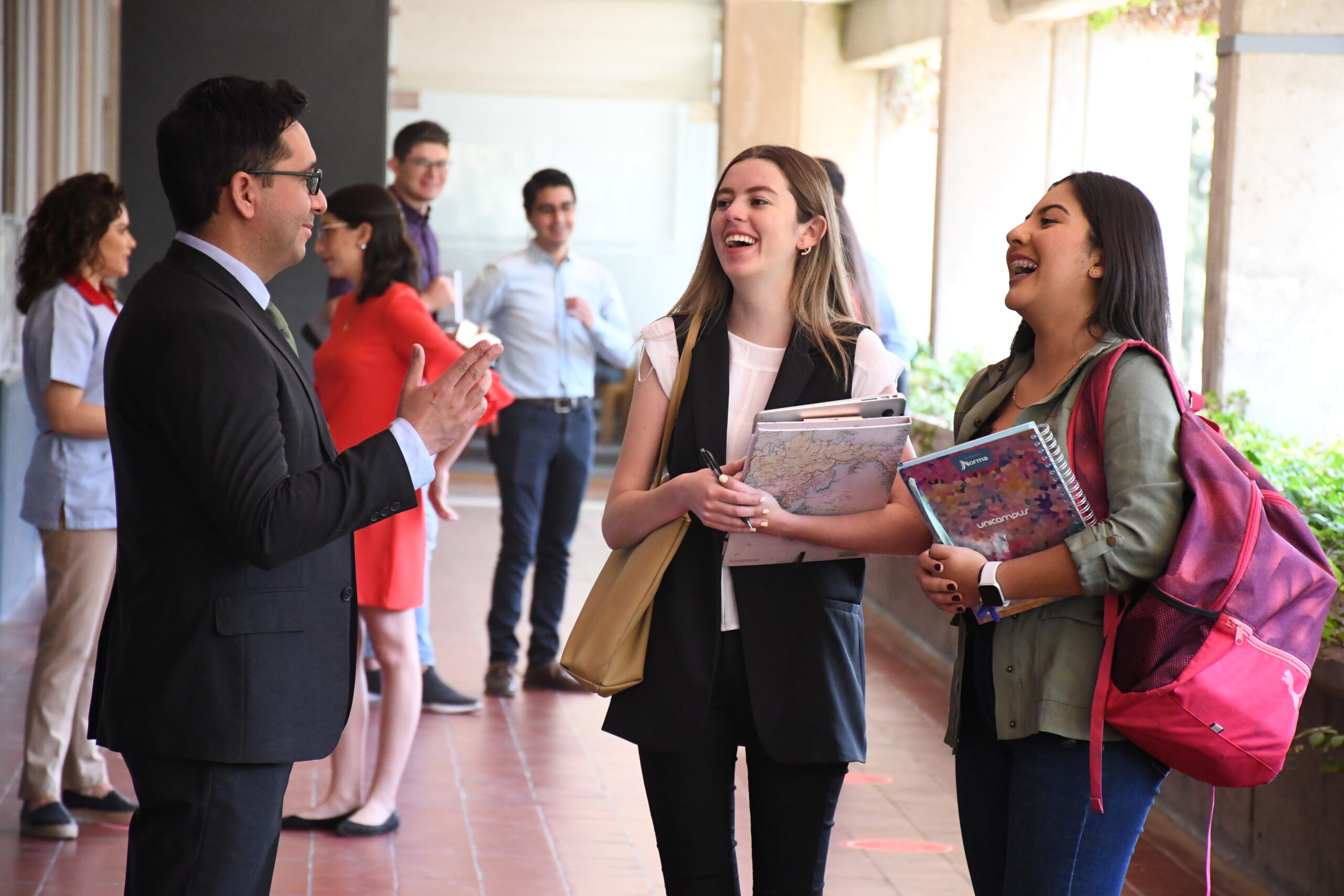
In an environment where generative AI can automatically produce content, teachers should help students:
- Develop critical thinking skills
- Verify information
- Put answers into context
- Using technology responsibly and ethically
In addition, designing learning experiences that take a holistic view of the student has become a priority in digital education and hybrid teaching models.
What challenges are teachers currently facing?
The use of artificial intelligence presents challenges at three distinct stages of the educational process: during lesson planning, when delivering content, and when assessing learning.
One of the main challenges is distinguishing which activities can be enhanced by AI tools and which require entirely human processes. In addition, teachers must identify which skills students need to develop and how AI, as a tool, can assist or contribute to that development.

With regard to assessment, the instructor must establish learning outcomes that are achieved by the student—with or without the support of Gen AI—while establishing key criteria regarding the student’s ultimate authorship of the work. In this regard, it is important to recognize that Gen AI is a tool available to the student.
To support this process of content development, instruction, and assessment, the Universidad Panamericana has developed artificial intelligence agents focused on:
- Instructional design
- Instructional Planning
- Authentic assessments
- Enhancing meaningful learning.
These tools aim to integrate technology without compromising educational quality or ethical standards.
How should we understand ethics in the use of artificial intelligence?
Ethics in artificial intelligence is not limited to identifying risks or imposing bans. It involves understanding that technology is a tool created by human intelligence and that it must remain at the service of people and society for the greater good.
The goal is not to create users who are dependent on artificial intelligence, but rather people who are capable of using it judiciously, responsibly, and for good purposes.
What are the main risks of the indiscriminate use of AI?
Dr. Teresa Nicolás warns that one of the greatest risks is assuming that all information generated by artificial intelligence is accurate or reliable.
In this regard, it identifies three key risks:
· The empathy trap: People are replacing human connection with interactions with artificial intelligence.
· The crisis of truth: Related to hallucinations, misinformation, and digitally generated false content.
· Surveillance and monitoring: Resulting from the large-scale processing of personal data.
In this context, human judgment remains essential for interpreting, validating, and contextualizing information.
How can teachers approach artificial intelligence?
We recommend looking into training programs offered by universities, academic institutions, and organizations specializing in artificial intelligence.
Currently, many universities are already developing internal AI training programs to strengthen digital skills and help faculty and staff incorporate these tools strategically and responsibly into their professional activities.
It is also recommended to exercise caution regarding courses or training programs without academic backing that are circulating on digital platforms and social media.
What does the future hold for teachers in a hybrid human-AI environment?
In a context where artificial intelligence will continue to expand within education, the role of teachers becomes even more important. Technology can streamline tasks and simplify processes, but its implementation requires a clear purpose, well-defined boundaries, and an awareness of its academic, social, human, and environmental impacts.
The Universidad Panamericana that the future of education does not depend solely on incorporating more technology, but on training teachers and students to use artificial intelligence ethically, with critical thinking, and with a sense of humanity.
Learn more about the ethical framework for AI at the Universidad Panamericana: https://ciie.up.edu.mx/ai4ed


