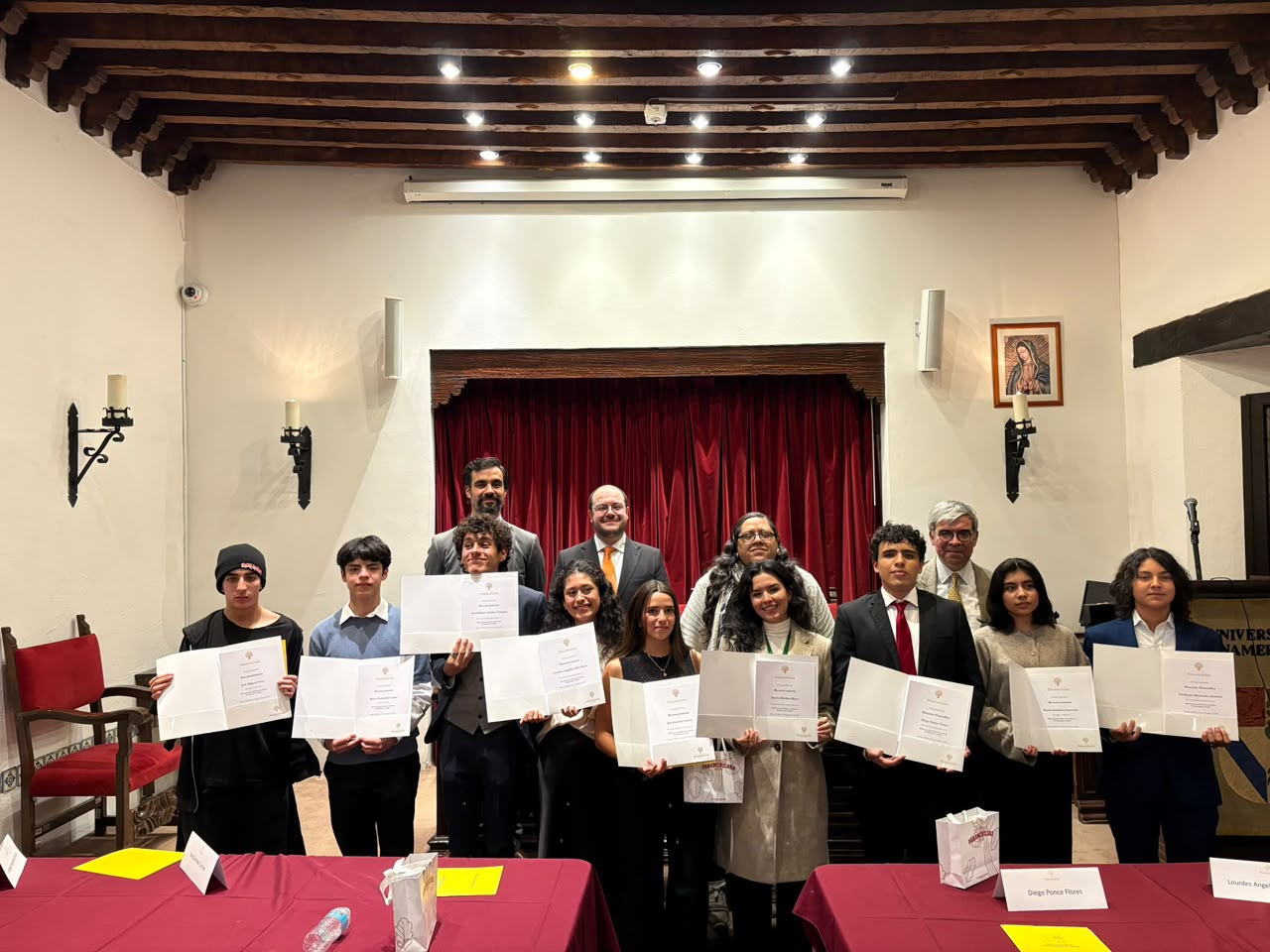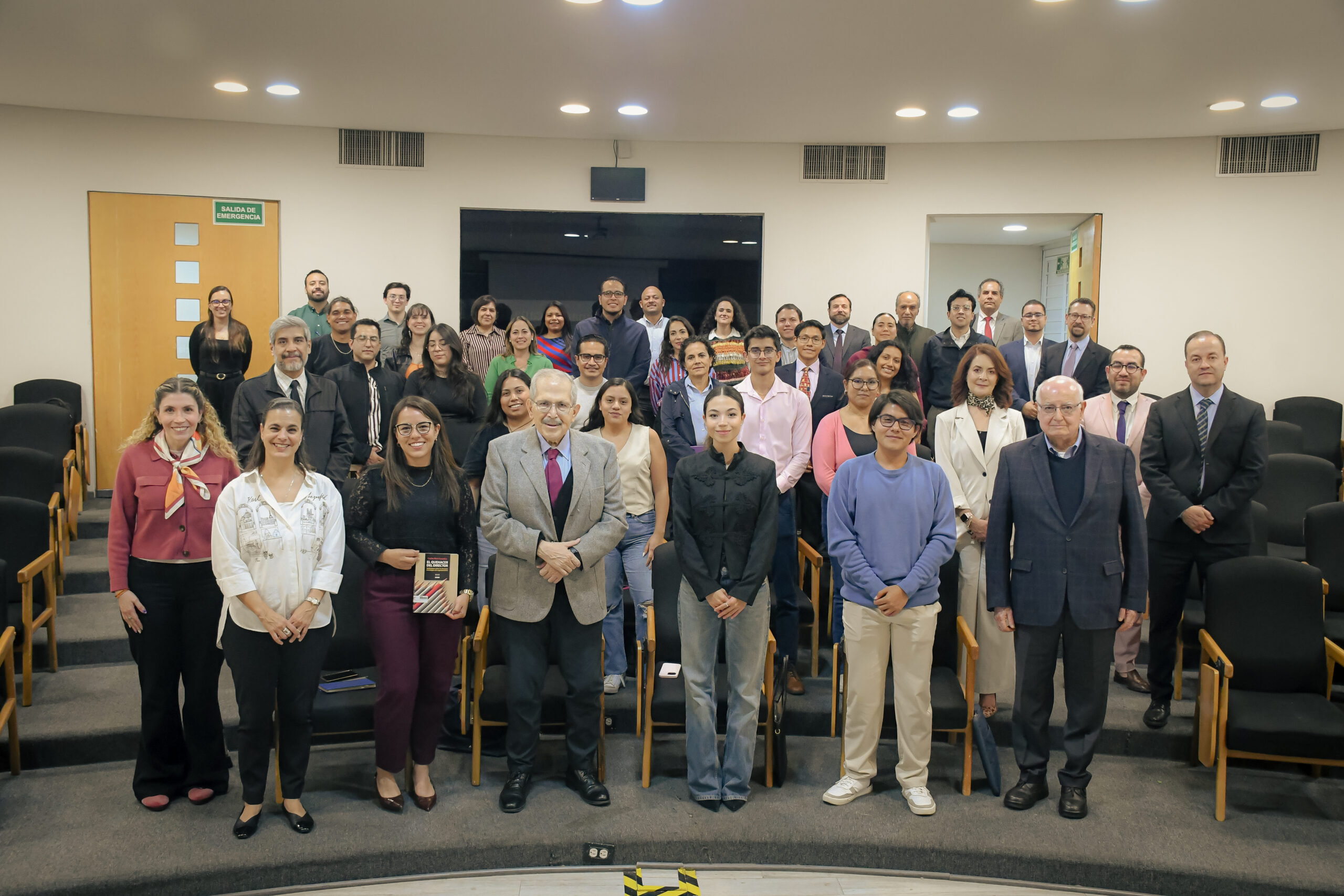
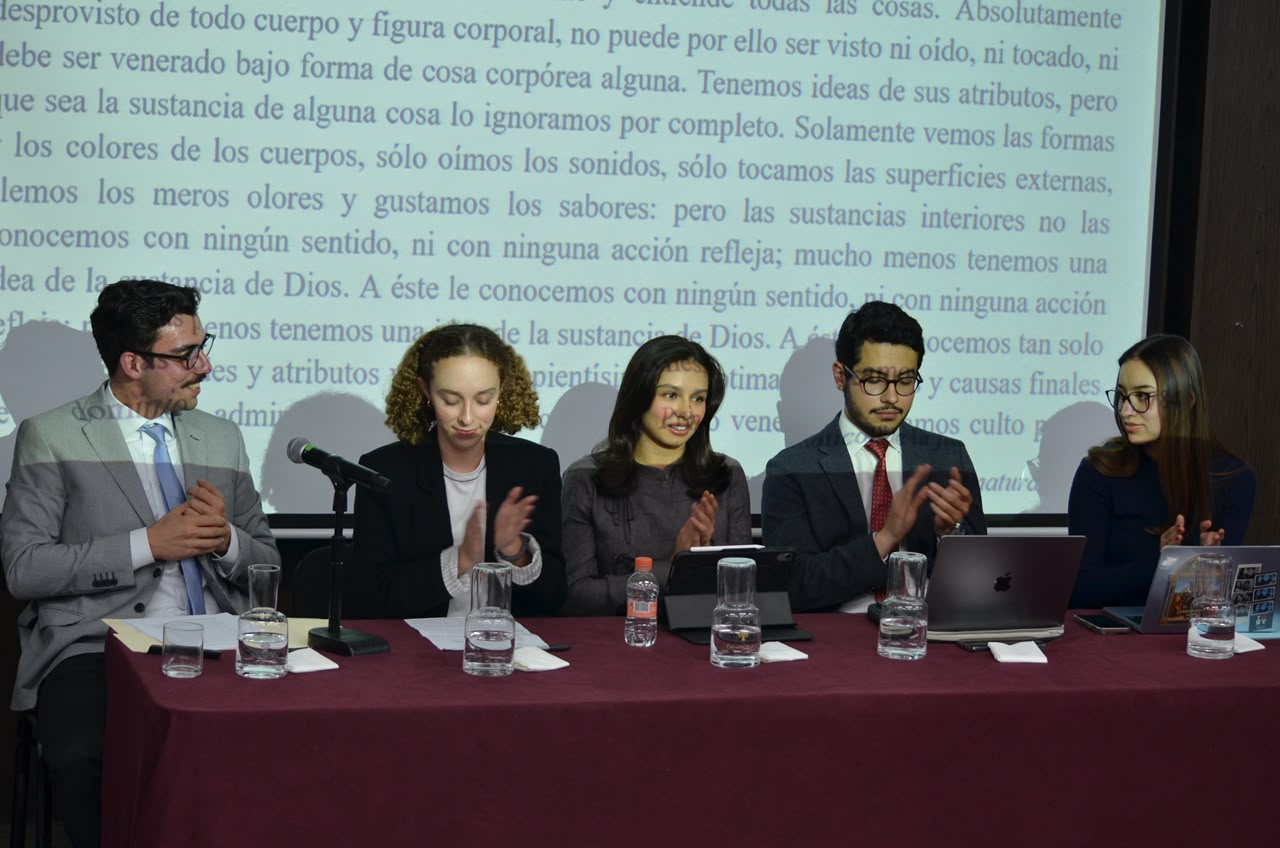
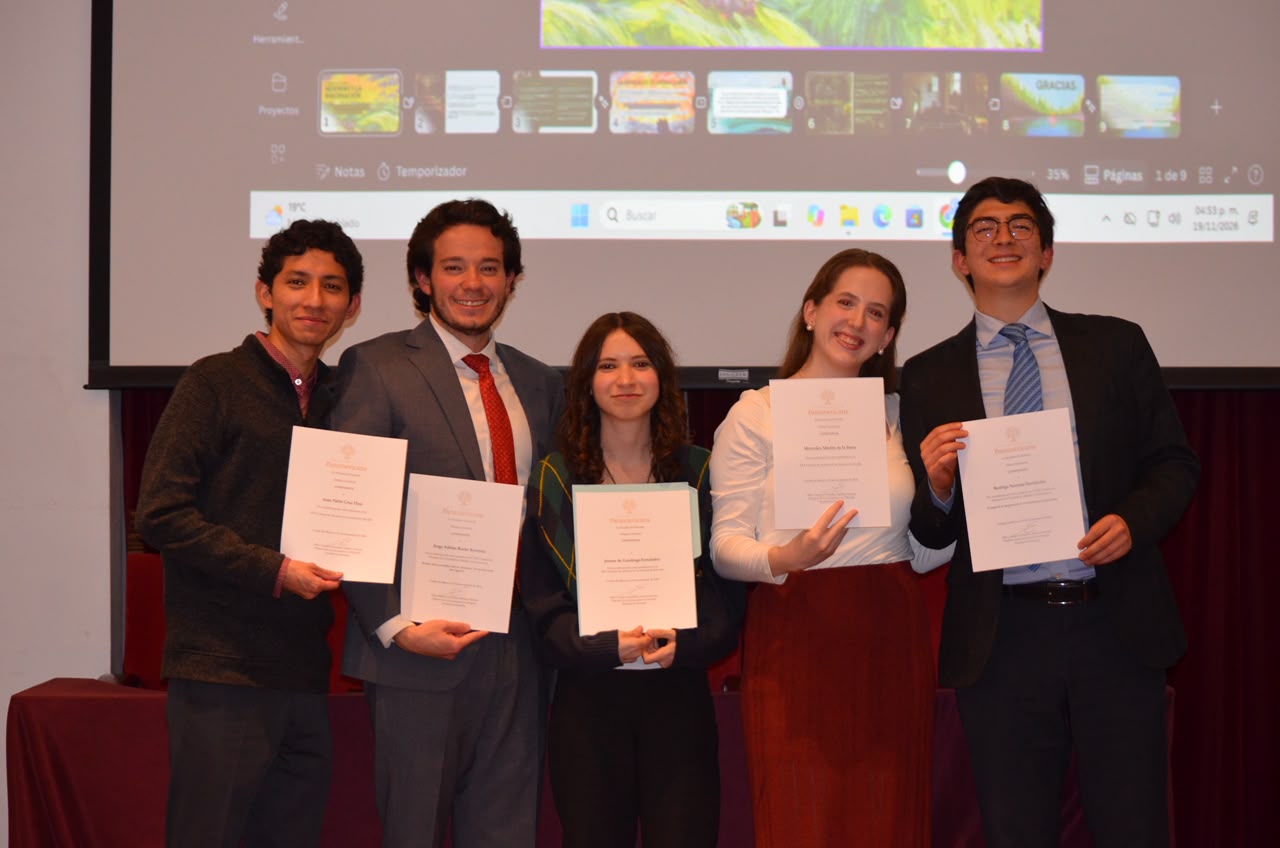
Mexico City, November 19, 2026.— As part of International Philosophy Day, the School of Philosophy at the Universidad Panamericana held the 30th Student Colloquium, an academic forum for listening and dialogue in which students from different semesters shared research and reflections on various branches of philosophical thought.
In this edition, students from different stages of their degree programs participated: those in their first semesters moderated the panel discussions, while other students served as discussants. The presentations were given primarily by students in their final year, who shared research on various topics of interest to them.
A Variety of Topics at the Philosophy Students' Colloquium
The wide range of student interests was reflected in the diversity of topics and authors addressed in each presentation.
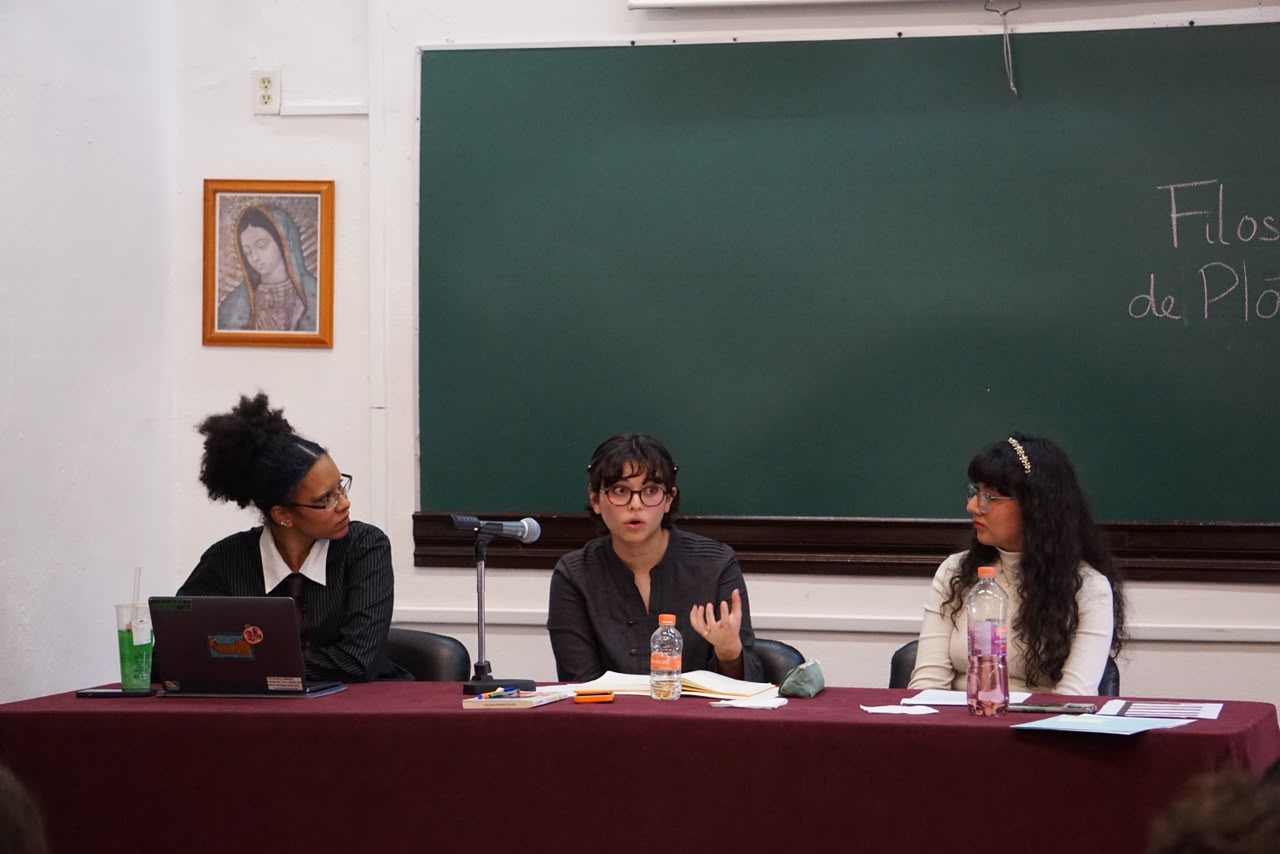
In the field of metaphysics and medieval philosophy, José Pablo Iglesias and Sofía Lazo explored various problems within this tradition. For his part, Juan Cristóbal Pineda proposed Ravaisson’s notion of habit as a response to the problem of defining personal identity in Aristotelian philosophy.
Jorge Barrio and Rodrigo Naranjo presented philosophical problems related to Christian salvation, particularly from epistemological, ethical, and anthropological perspectives. In this last area, Santiago Rangel examined the character of Penelope’s fidelity as a form of rebellion against the Greek system.
Philosophy of Art, Aesthetics, and Contemporary Culture
Reflections on culture and art also played a significant role in the symposium. Ana Sofía Marín presented a paper on Baroque gastronomy and its relationship to cultural capital and identity, drawing on Pierre Bourdieu’s sociological framework.
From a hermeneutic perspective, Lucía Macedo argued that the text transcends its audience, since cultural dynamics and historical memory also play a role in its interpretation.
Meanwhile, Rogelio Quintela and Fátima Zepeda analyzed elements of contemporary culture, such as vampires and Star Wars, from the perspective of the philosophy of art and aesthetics. Ana Paula Garrido examined the possibility of art as a metaphysical activity based on the thought of the young Nietzsche, while María José Chávez explored the relevance of Aristotelian mimesis in contemporary art.
Ethics, Political Philosophy, and Economic Thought
In the fields of ethics, political philosophy, and practical philosophy, Josefina Olvera examined the philosophical principles underlying Leibniz's legal codification.
Esteban Mateo and Guillermo Ruiz addressed political issues related to freedom, ontological determinism, and the fate of humanity. Regarding economic theories, Eulalio Reséndiz reexamined the Mandeville paradox from a deontic-logical framework, while Carlos Ramírez questioned the definition of aporophobia based on the thought of Adela Cortina.
Philosophy of Science, Mind, and Language
The presentations on the philosophy of science and its connections to other disciplines included a paper by Gabriela Zamora, who highlighted the importance of the humors in pangenesis and human generation.
Pablo Ricardo Rivera and Regna Ochoa examined problems in contemporary theories of the philosophy of mind, with a special focus on the role of the soul and self-awareness in today's scientific and philosophical landscape.
From an epistemological perspective, Antonio D’Amico traced the epistemic positioning of the critical-genealogical method based on Foucault’s poststructuralism. For his part, Carlos Ruiz analyzed, from the perspective of the philosophy of nature, the anti-ontological interpretations of Newtonian absolute space.
Reflections on logic and the philosophy of language were also presented. Binnui Navarro examined Aristotelian logic through the lens of Hintikka-Lambert’s free logic, while Fernanda Solís and Emilio Hernández delved into issues specific to the philosophy of language in Plato’s thought.
Philosophy as a Shared Vocation
The event concluded with a reflection and a message of thanks from Dr. Leonardo Ruiz, dean of the School of Philosophy.
The 30th Student Colloquium served as a reminder that, despite the diverse backgrounds and interests within the Faculty, its students share a love of learning. Drawing from different fields and schools of thought, each participant found in this forum an opportunity to share their work and celebrate the philosophical calling they nurture every day.
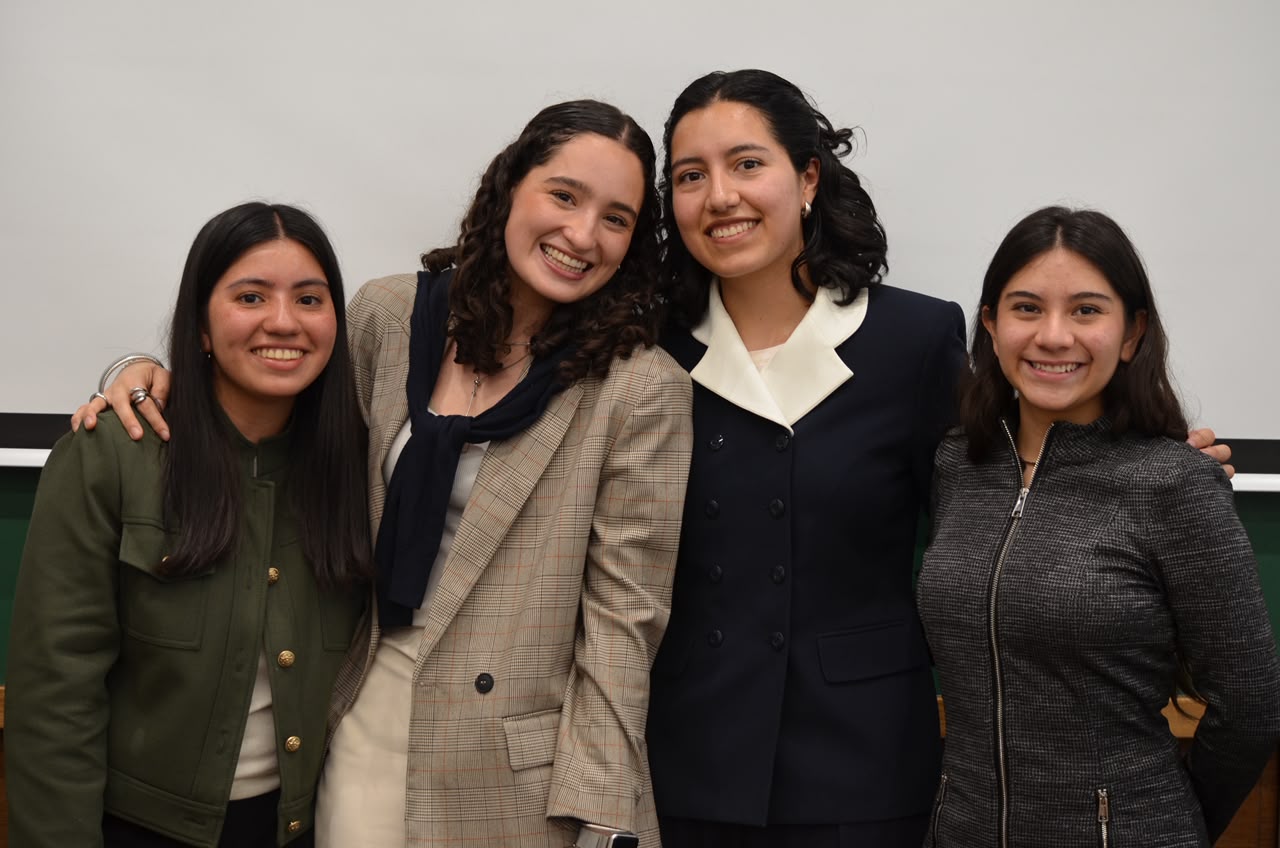
As part of International Philosophy Day, this event reaffirms the importance of dialogue, research, and the exchange of ideas in the education of students at the Universidad Panamericana.