Currently, artificial intelligence (AI) has become a powerful tool in many areas of society. However, its rapid growth raises questions about its responsible and ethical use. As AI becomes more integrated into our lives, challenges arise regarding the creation of reliable and fair systems.
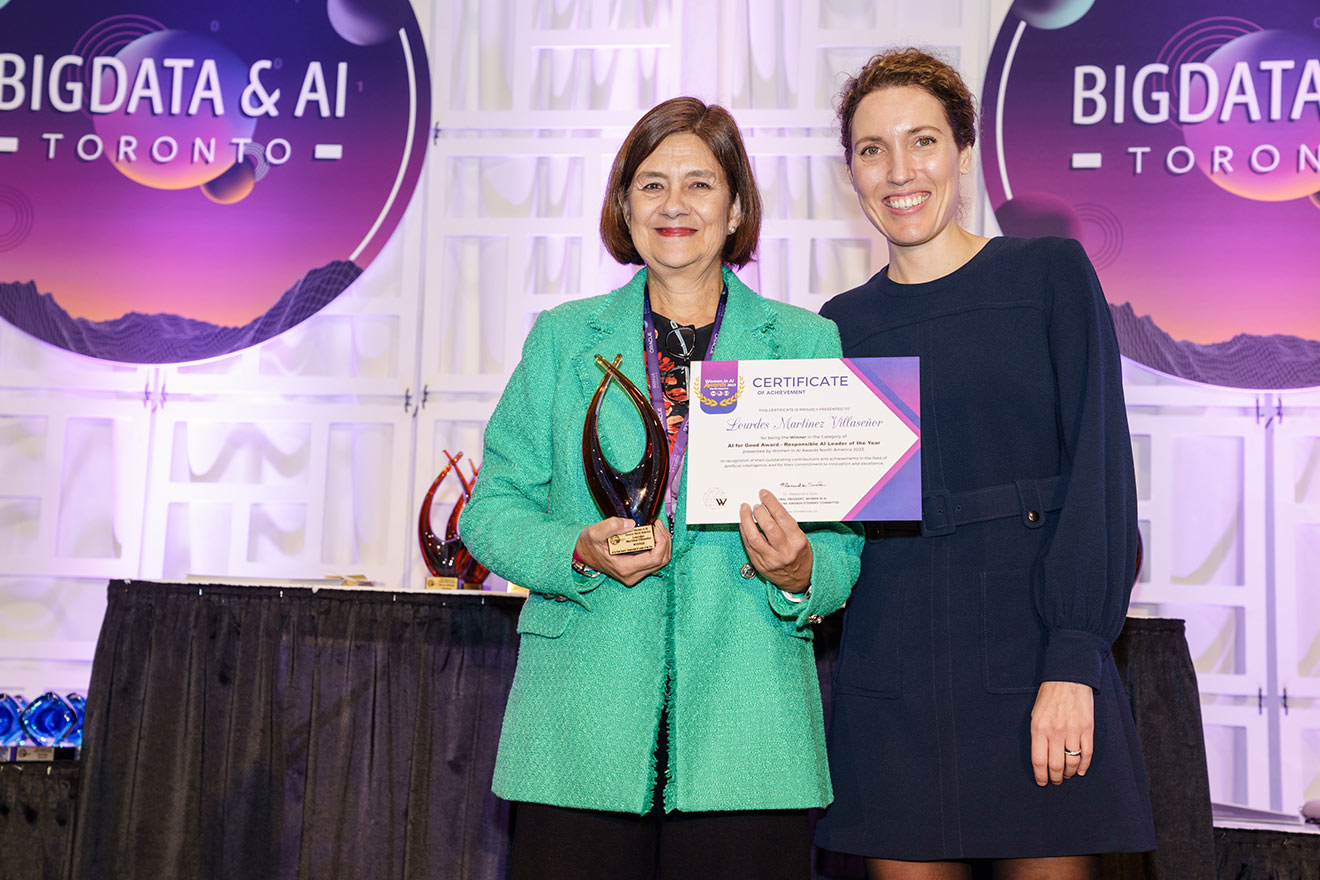
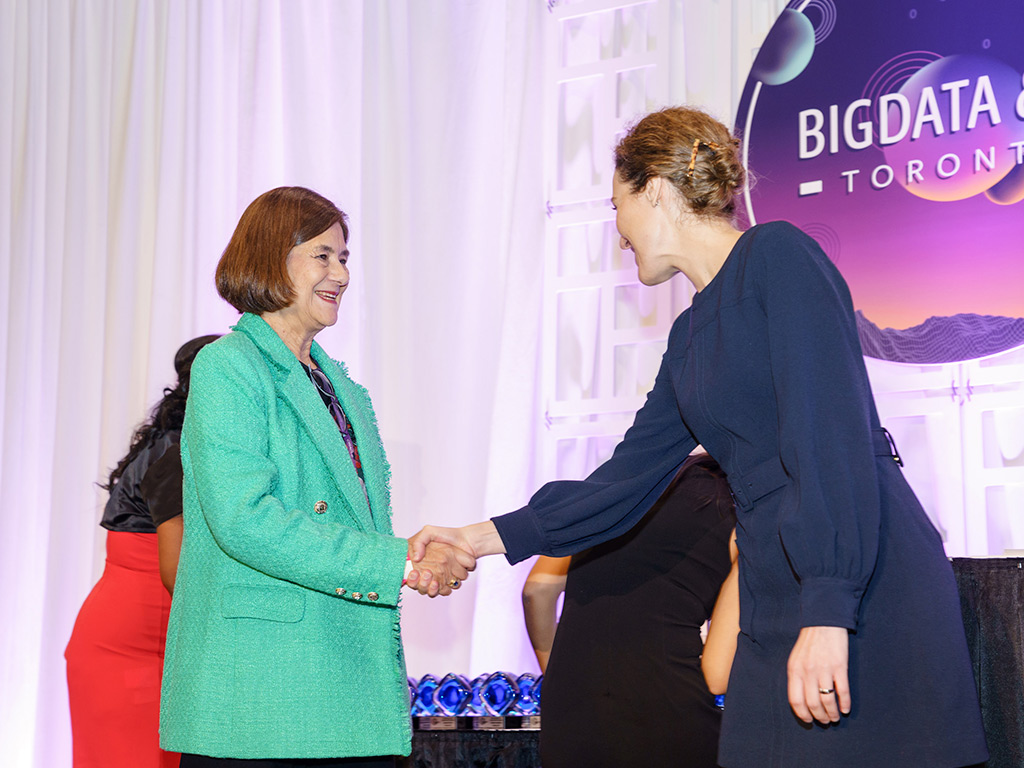
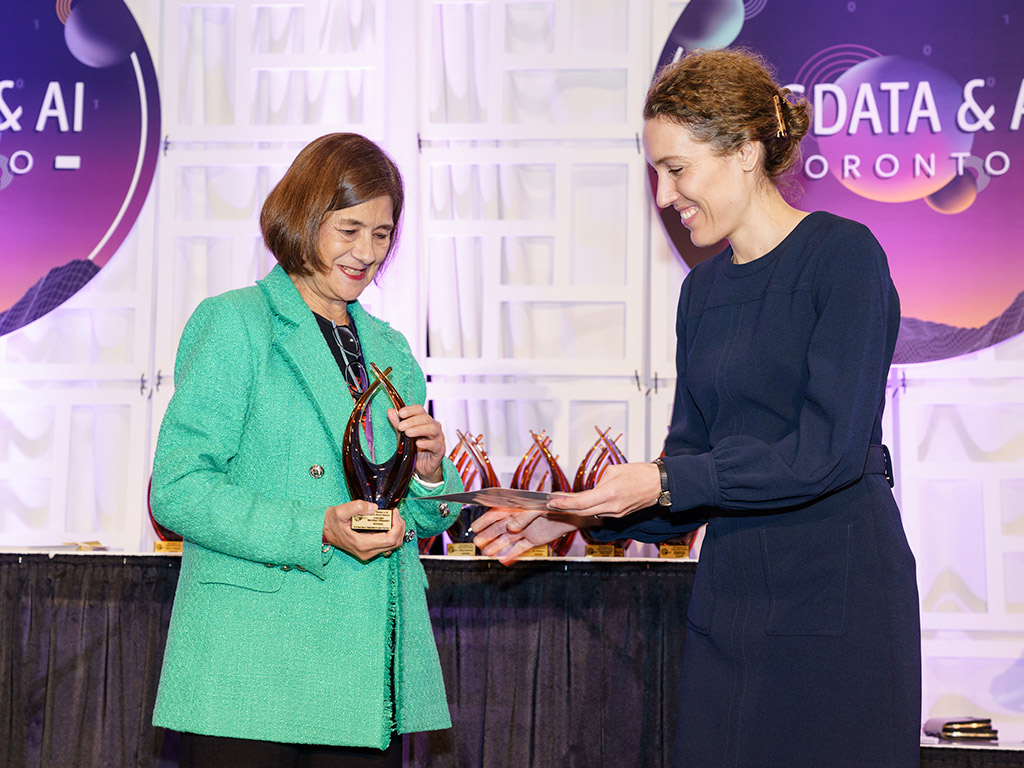
Dr. Lourdes Martínez Villaseñor, director of the Master’s in Data Science program at Universidad Panamericana, is aware of this and therefore advocates for the responsible and ethical use of artificial intelligence. It is precisely because of the steps she has taken toward this goal that she has been named Responsible AI Leader of the Year in North America.
Service to the scientific and academic community
Dr. Martínez explains that this recognition was awarded in recognition of her work since 2014 to promote AI ethics through various activities, including publications, organizing and participating in national and international forums, and teaching.
For the past two years, she has led special sessions at the International Joint Conference on Neural Networks (IJCNN) on the ethical challenges of AI systems in healthcare and medicine. Furthermore, in 2023 she served on the editorial board for an issue of the scientific journal of the Mexican Society on Artificial Intelligence, *Komputer Sapiens*, dedicated to ethics in AI.
In addition to her service activities for the scientific community, she has also advocated for the inclusion of three panels on ethics in artificial intelligence in the programs of national and international conferences (COMIA and MICAI) and has regularly participated as an expert on these topics.
Similarly, she is responsible for and teaches courses on AI Ethics and Ethics for Data Science at the undergraduate, master’s, and doctoral levels at the Universidad Panamericana.

Reliable AI systems in healthcare
Currently, there is a great deal of enthusiasm and high expectations surrounding artificial intelligence technologies. However, there are significant negative consequences.
When discussing the challenges she has faced in her professional career regarding the development of reliable, accessible, inclusive, and impartial AI systems, she notes that the main challenges relate to privacy, security, fairness, transparency and explainability, accountability, human oversight, and the promotion of human values.
“Applications in healthcare are extremely critical, as people’s lives are at stake. In this field, the ethical design of intelligent systems is, of course, essential and particularly relevant. To this end, it is vital to ensure that ethical principles are upheld in the application of intelligent systems,” she says.

She also adds, “The medical community is very cautious—and rightly so—about the benefits of AI in medicine, so it has taken seven years to build bridges and engage them in the development of systems that will earn their trust and lead to their adoption.”
She also points out that a major challenge is putting the principles, best-practice guidelines, and international regulations and laws into practice.“This is still an unresolved issue that is difficult to address on a case-by-case basis, and it becomes even more complicated given the emergence of generative AI technologies such as ChatGPT, which have extremely complex models.”
Working together
She says AI is transforming every sector of society. In fact, it boosts operational efficiency by automating repetitive tasks and enabling advanced data analysis.
However, she says,“the problem is that there is no way to ensure that the benefits of AI are distributed equitably and fairly around the world, as it is a multifaceted issue that affects the entire ecosystem.”
In this regard, she notes:“We must work across all sectors—academia, government, and business—to raise awareness of the need to consider the ethical dimension, enact laws, and make commitments to self-governance and inclusion. For every smart system, the impacts on human rights and human dignity must be assessed in collaboration with all stakeholders and through an interdisciplinary approach.”
Work in other fields
Another important role of the academy is to serve on the Technical Advisory Committee of the Preliminary Electoral Results Program (COTAPREP). This committee is responsible for advising on and monitoring the implementation and operational activities of the PREP, a system that provides preliminary election results by capturing and publishing the data collected by polling place officials.
“My role will be to participate in these activities and make recommendations to improve the preparation of systems and processes for the implementation and operation of the PREP,” she explains.
Similarly, the General Assembly convened to elect the Board of Directors of the Mexican Society on Artificial Intelligence (SMIA) for the 2024–2025 term confirmed that Dr. Ponce will serve as president; Dr. Hiram Ponce, who is also a research professor at the Panamericana School of Engineering, will serve as vice president, with both appointments effective January 1, 2024.
In this role, the researcher will be responsible for managing the SMIA Board of Directors, as well as developing and implementing the strategic plan and serving as the liaison between the society and its academic, business, and government stakeholders.
Contribute to the development of AI
“Being among the experts who can directly contribute to the development of these technologies—and thus to the development of our country—is a great privilege and a great responsibility,” says Dr. Lourdes.
Similarly, she tells her female students, “As women, we have unique perspectives, and our creativity is needed to find solutions to complex problems.”
“Today more than ever, there is a need for greater representation of women—both in the development of intelligent systems, where they can influence decisions throughout their life cycle, and at all levels of government and business—to leverage AI and address the challenges and difficulties posed by these technologies,” she concludes.
Researcher's data
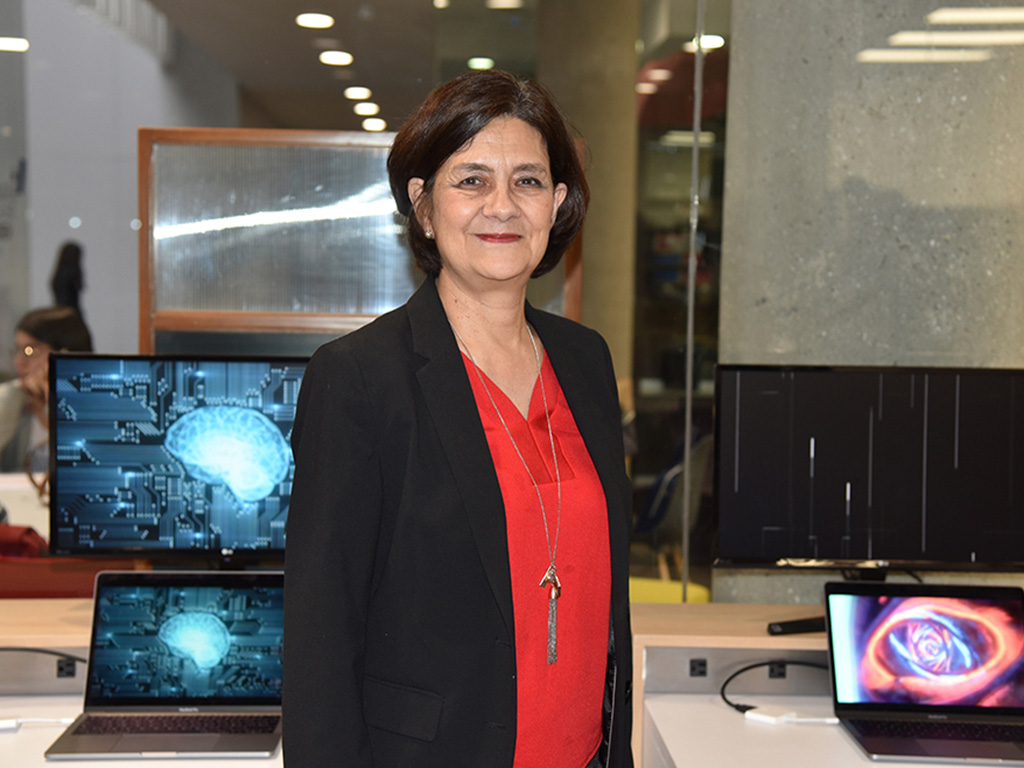
Dr. Lourdes Martínez Villaseñor, head of the Master’s in Data Science program at Universidad Panamericana.
SNI Level I
Learn more about Universidad Panamericanaresearchers and their areas of research at: https://www.up.edu.mx/investigadores-panamericana/