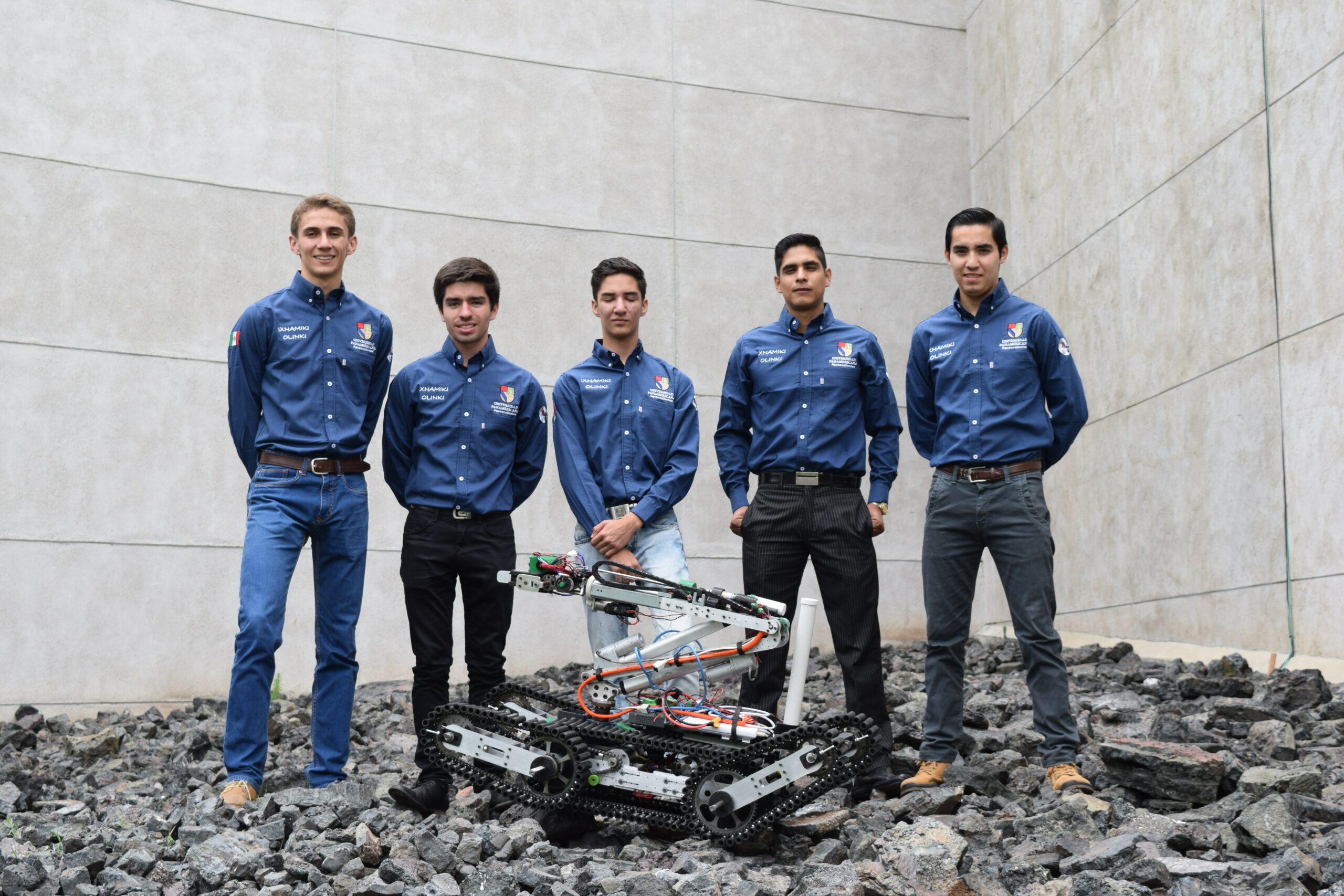
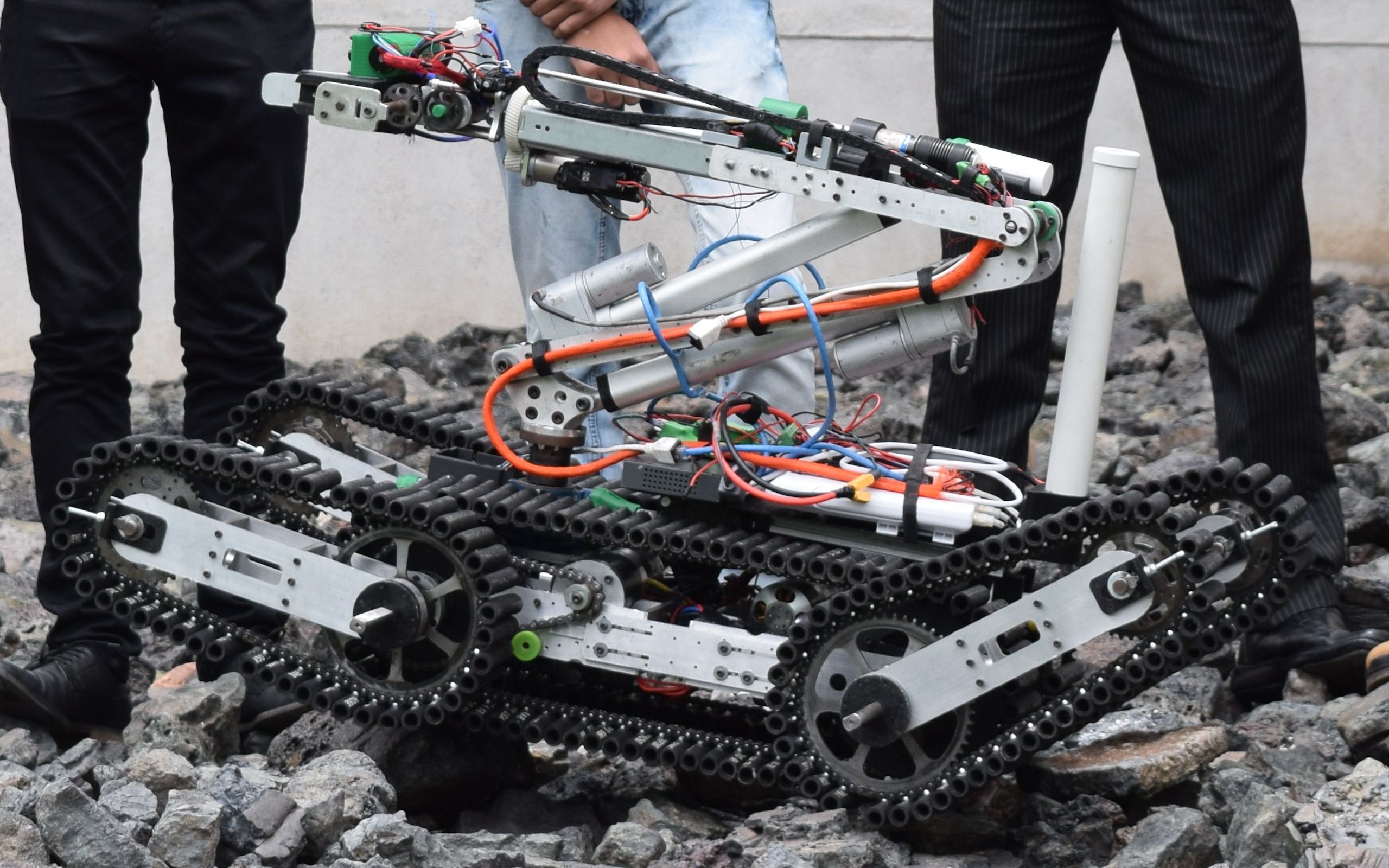
Aguascalientes, Aguascalientes.— As part of the commemoration of the September 19 earthquakes, the Aguascalientes campus of the National Autonomous University of Aguascalientes ( Universidad Panamericana ), through its School of Engineering, proudly recalls the participation of its rescue robot Ixnamiki Olinki in the search and rescue efforts following the 2017 earthquake in Mexico City.
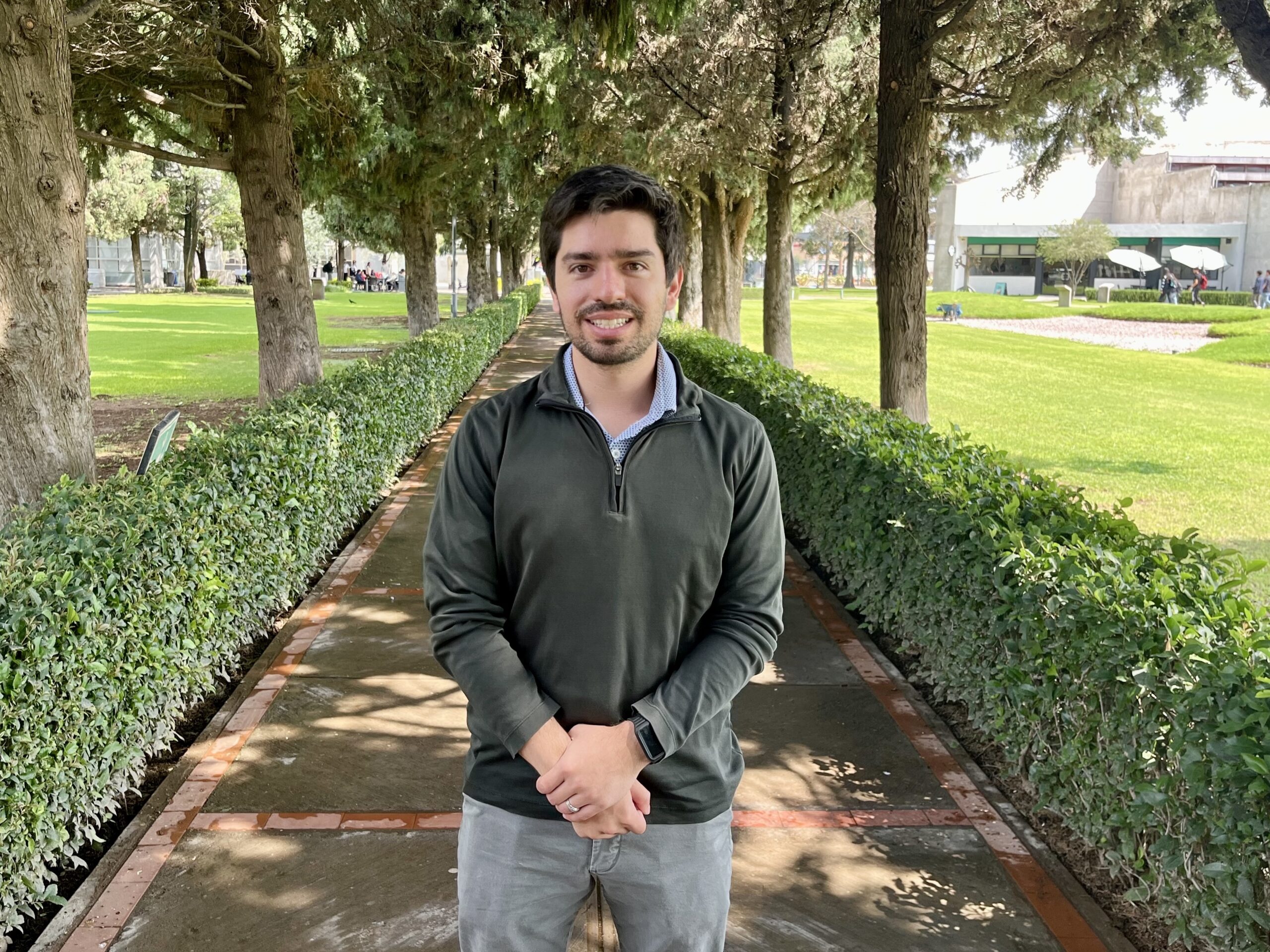
The project, developed by students under the guidance of faculty members such as Dr. Fernando Dávalos Hernández, a research professor in the School of Engineering, emerged within the framework of the international RoboCup competition, in the Rescue Robot category. This line of work was adopted in 2012 with the conviction that it would have a real social impact by designing tools capable of assisting in disaster situations and saving lives.
““The goal was always to develop a platform that would complement the work of rescue workers without putting human lives at risk,” explained Dr. Dávalos.
Equipped with cameras, carbon dioxide sensors to detect human breath, high-sensitivity microphones, and a rugged frame designed for rough terrain, the robot was designed to serve as an ally in search missions.
From International Competition to a Real-Life Emergency Situation
Ixnamiki Olinki gained recognition at international competitions, achieving success in countries such as Germany and Japan. However, its greatest challenge came in September 2017, when the robotics team from the Universidad Panamericana joined the rescue brigades in Mexico City.
Thanks to coordinated efforts with Aguascalientes Civil Protection, firefighters, and a canine rescue team, the robot was able to enter restricted areas where access was initially prohibited. “The robot’s true value was in clearing a path,” recalled Dr. Dávalos.
Although the primary task of locating people fell to the search dogs, Ixnamiki Olinki served as a technological support system that demonstrated the potential of Mexican engineering in critical situations. “The important thing was to understand how our technology could adapt and provide support in real-life disaster scenarios. It was an experience that set the course for the project,” he added.
Lessons Learned and Progress
The experience provided valuable lessons for the School of Engineering. Among them was the need for rescue robots to be lighter, more compact, and quieter—features that have been incorporated into newer generations of the platform, such as Ixnamiki Ek’Balam.
Currently, students continue to develop prototypes in the field of rescue robots, while exploring new areas of expertise, such as the creation of lunar rovers for extreme terrain. “We want our students to tackle high-level technical challenges, but always with the understanding that engineering must serve a social purpose,”, Dávalos emphasized.
A Vision for the Future
With more than 30 years of experience in robotics, the Aguascalientes campus of the National Institute of Technology ( Universidad Panamericana ) has built a team that is constantly renewed by the talent of its students.
Participating in international competitions and social impact projects allows students to experience how engineering can address real-world challenges and provide innovative solutions for society.
“We want young people not only to learn how to build robots, but also to understand that technology only makes sense when it is put to work for people,”, concluded Dr. Fernando Dávalos.
Learn more about the School of Engineering at the University of the Andes ( Universidad Panamericana ) at: https://www.up.edu.mx/educacion-universidad-facultad-de-ingenieria/