
Media Lab
The Impact Club
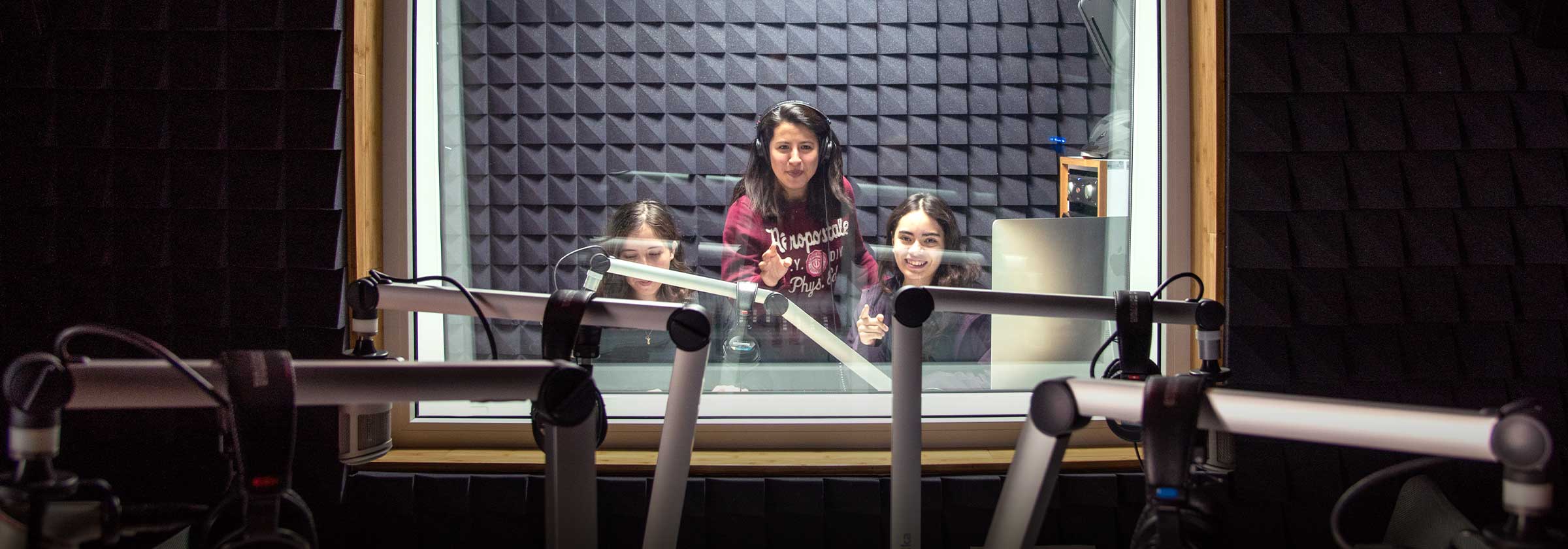
"El Club de Impacto" was the first video-format audiovisual program created by MediaLab for Capital21 to be broadcast on free-to-air television.
The goal of this program was to bring young people into contact with individuals who had distinguished themselves and made a positive impact on society. Among the guests were Danielle Feinberg, lighting director at Pixar; Diego Stommel, drummer for Allison and director of Zoé Water; Álvaro Gordoa, image consultant; and TV host Lety Sahagún, among many others.
The recording, production, and post-production of the show were handled entirely by students in our Communication degree program at the MediaLab facilities over the course of a 24-episode season. The second season is currently in pre-production.
Book Center
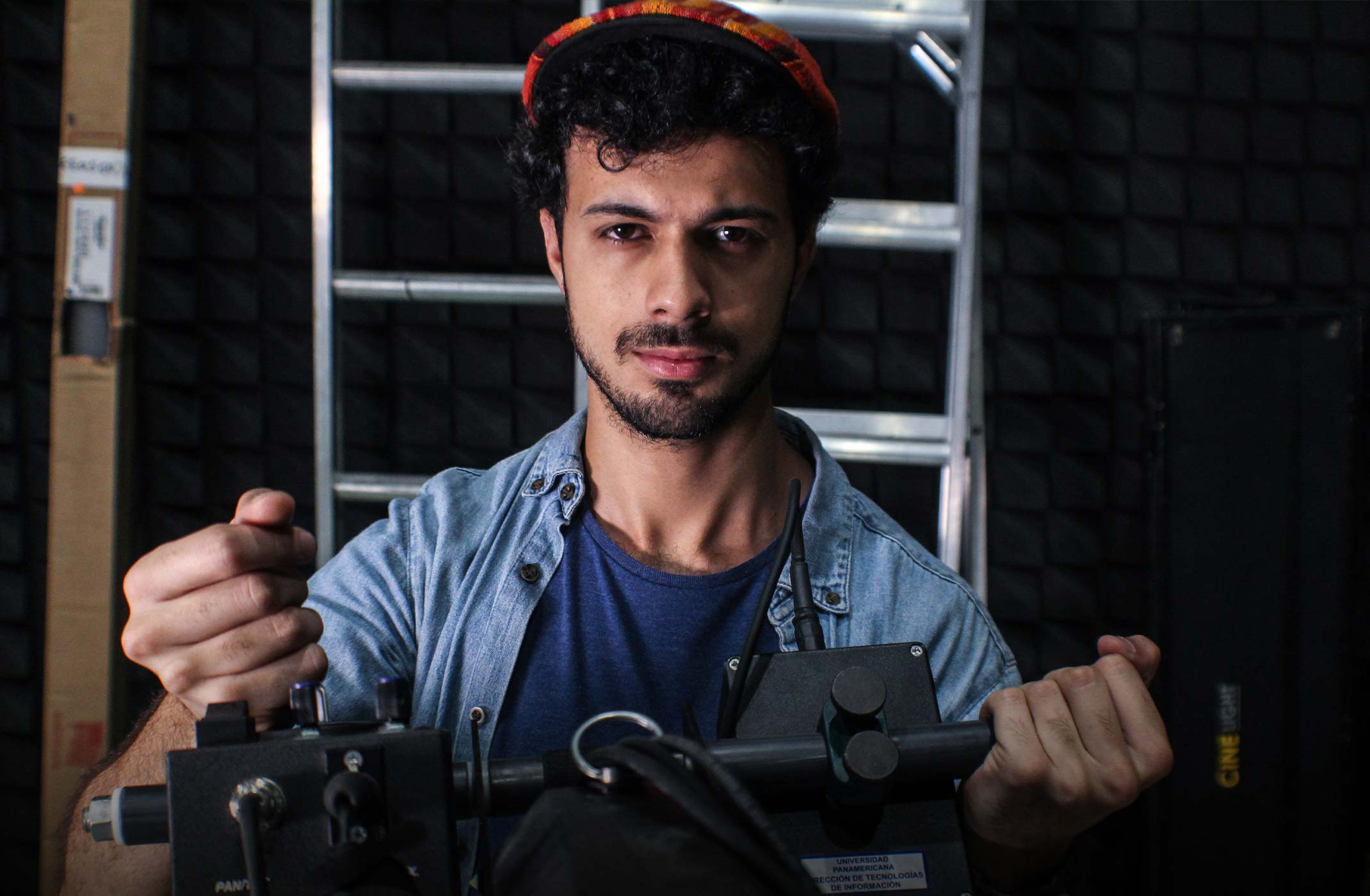
Through Central de Libros, Communication students and MediaLab participants helped create the YouTube channel for one of the world’s largest publishing houses, offering bite-sized content about the publishing group’s books, editions, and new releases.
From interviewing authors such as Luisito Comunica and Joel Dicker to serving as correspondents at the Guadalajara International Book Fair, this project gave students the opportunity to gain experience in production, hosting, editing, and post-production. In addition, participants were given creative freedom to develop their own projects.
Podcasts and Radio
At MediaLab Radio & Podcast, we turn ideas into sound and sound into stories.
We produce more than 10 original podcasts, as well as projects for media outlets outside the university.
Our music show “Shuffle” offers students the opportunity to produce their first entirely live program—a unique experience that has already garnered more than 75,000 plays on Apple Podcasts.
Don't miss our content—follow us on Spotify and Apple Podcasts as MediaLab.
Audiovisual Production
At MediaLab’s Audiovisual Production department, we transform ideas into high-impact content, ranging from corporate videos, short clips, and feature stories to video podcasts, live streams, and special reports.
Our work combines creativity, technical excellence, and a strategic vision to communicate authentically. Each year, we produce an average of 80 video recordings in various formats in collaboration with strategic stakeholders, 41 photo shoots, and 4 live broadcasts, and we participate in more than 10 key events within the university community, in addition to fostering a sense of community through two annual social gatherings.
All of this positions us as a place where innovation and professionalism come together to bring meaningful projects to life.
Journalism and Entertainment
The content our students write is available at medialab.up.edu.mx and is open for the world to read. MediaLab averages 60,000 unique users per month from Mexico, and 20% of these page views are from international visitors, primarily from the United States, Argentina, Colombia, and Spain.
All members of our lab must complete at least one semester in the fieldwork program in order to improve their research skills, interview techniques, and analytical and interpretive abilities.
Post-production
At MediaLab, post-production is a key phase where technical expertise and creative vision come together to shape the final result of an audio or audiovisual project. It is the moment when the narrative takes shape, the aesthetic is defined, and every detail falls into place.
Through processes such as video and audio editing, color correction, sound design, and visual effects, Communication students at the Universidad Panamericana learn to make decisions that enhance the technical and artistic quality of their productions. Post-production allows them to polish imperfections, strengthen the narrative, and add depth to the story.
MediaLab trains post-production professionals with sound judgment, aesthetic sensibility, and attention to detail—professionals capable of transforming a well-executed idea into a solid, coherent audiovisual piece with its own distinct identity.
Research
As journalists and communication professionals, we have an obligation to society: to report accurately and objectively on what is happening in the world. That is why, in addition to training our students in best journalistic practices, we have also developed a research program that focuses its efforts on two specific areas: thematic research and in-depth analysis of specific topics for public dissemination.
Thus, MediaLab investigates the impact of digital phenomena such as hyperconnectivity, the formats most commonly used by Generation Z to stay informed, and the relationships between digital culture and the tangible world.
Social Media
With the digitization and democratization of the internet came new platforms for self-expression: social media. While most of our students are skilled at using social media for personal purposes, our goal is to equip them with sufficient knowledge and experience to use it professionally.
From Facebook as a traffic generator to experimentation on TikTok and its anti-marketing model, students manage the eight social media platforms that MediaLab maintains under the guidance of their coordinators.