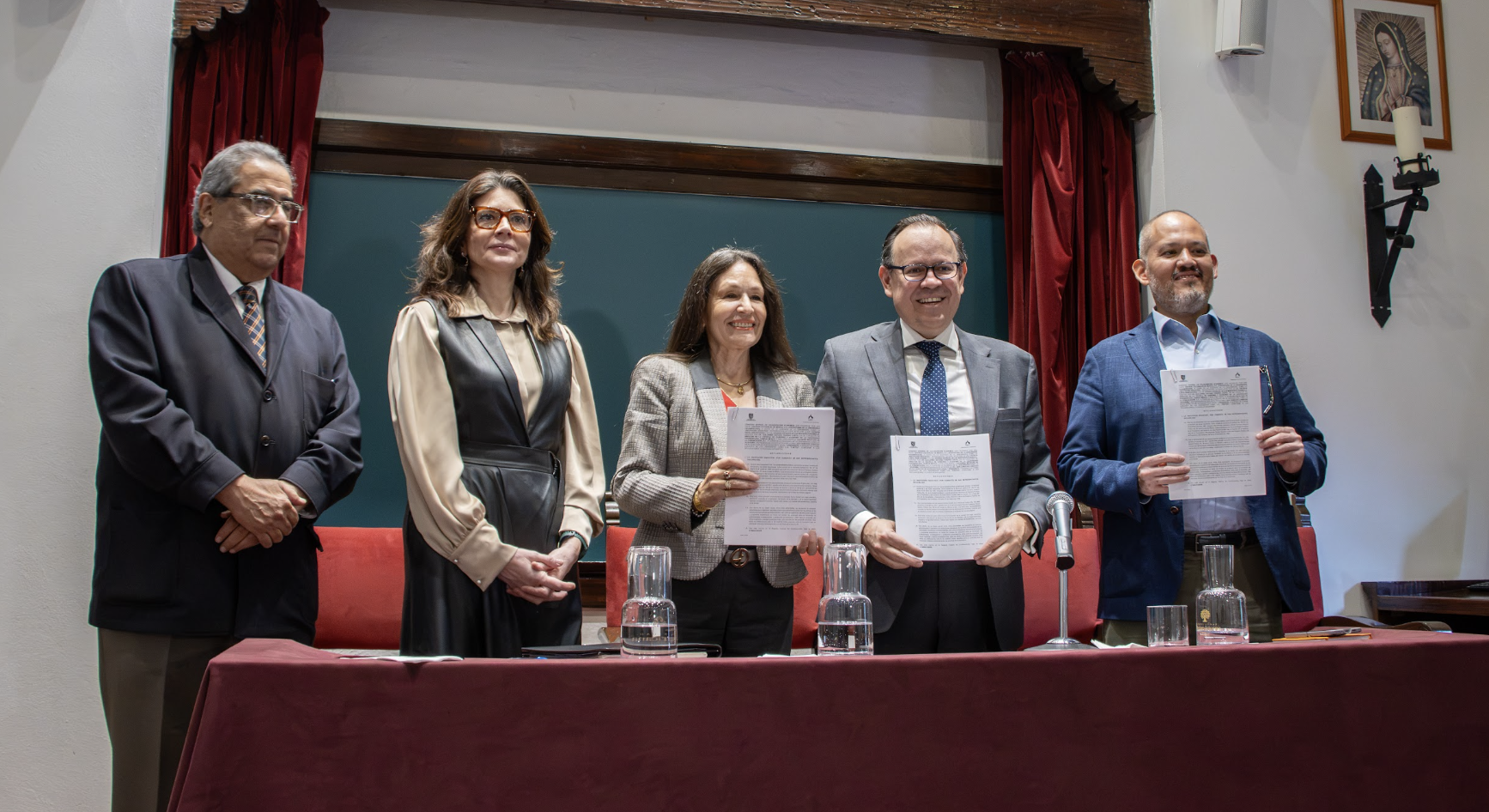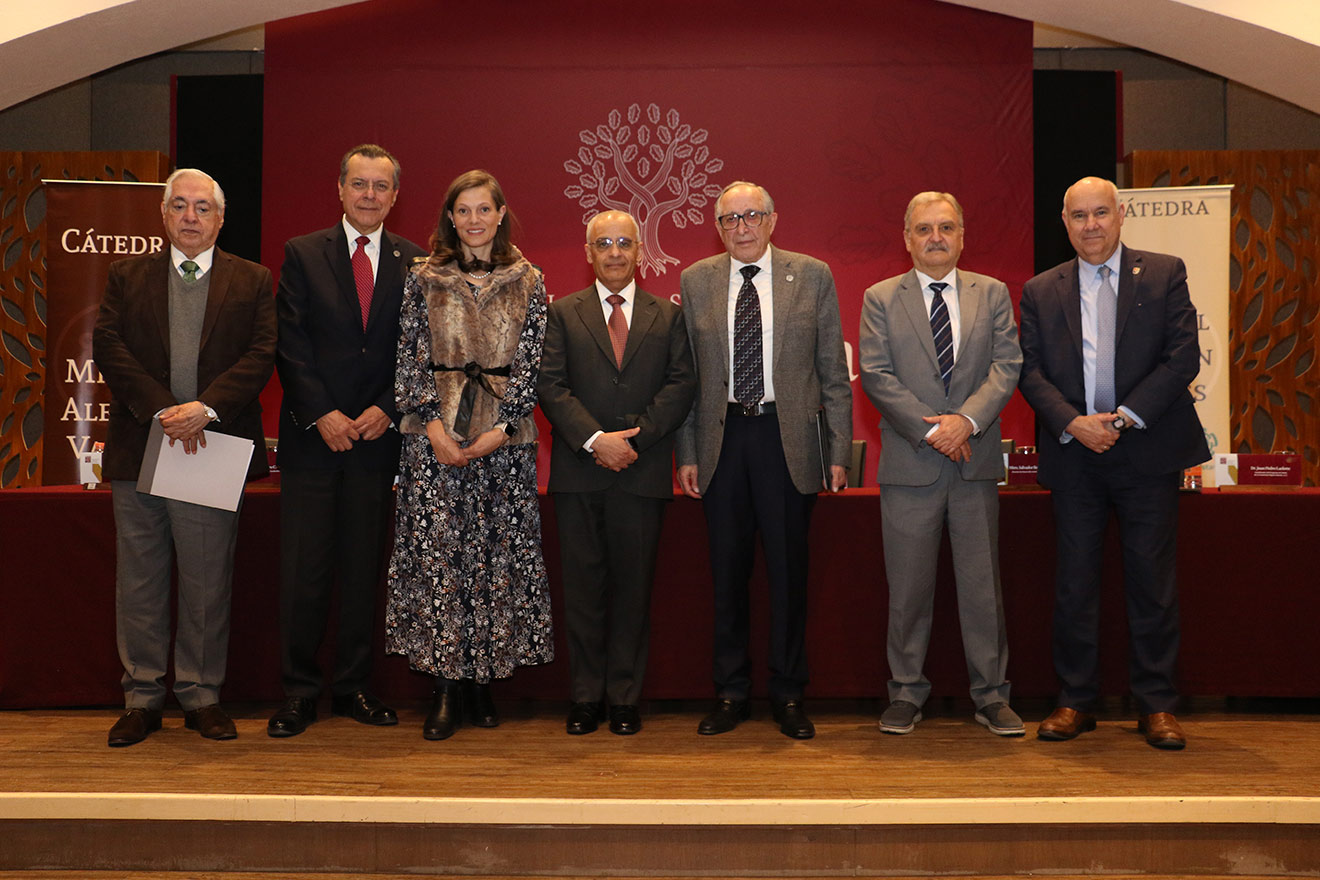
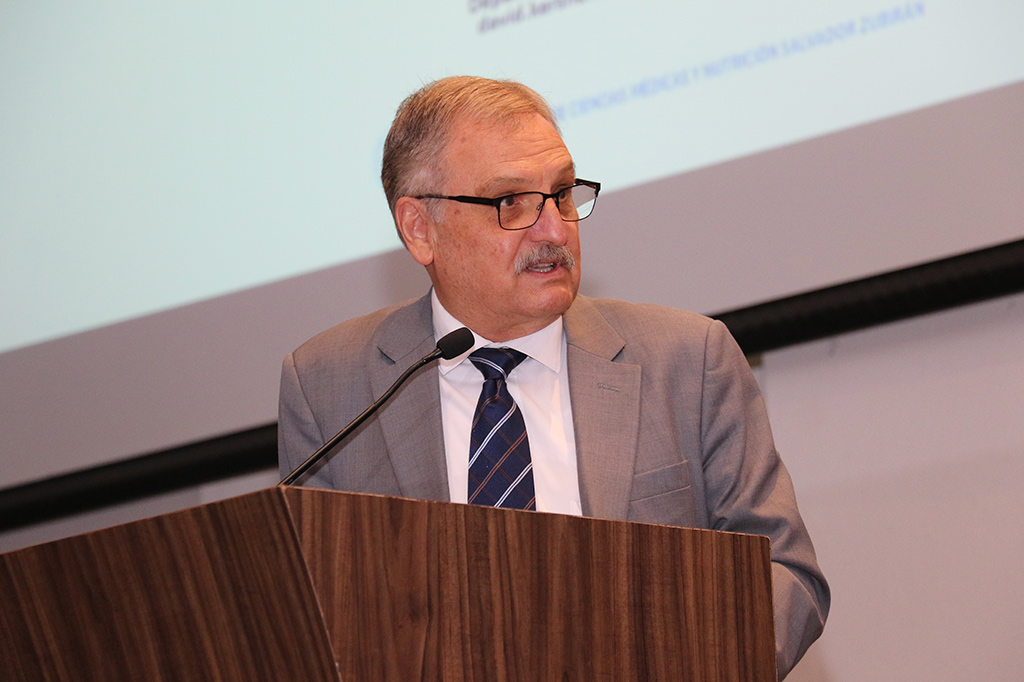
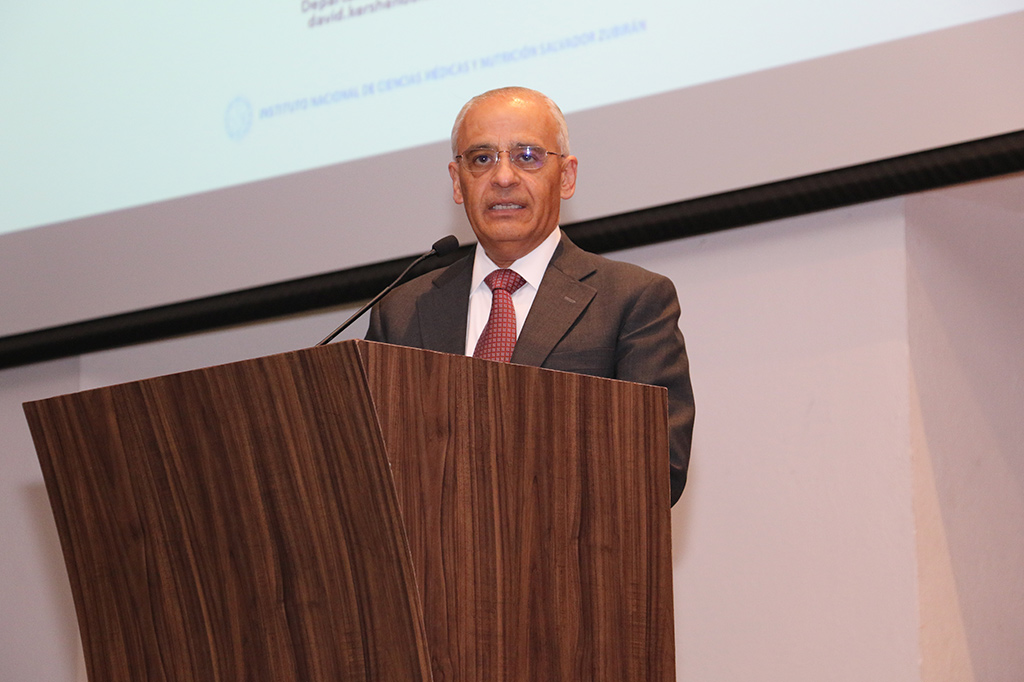
Mexico City, December 14, 2023.— The Universidad Panamericana together with the Miguel Alemán Institute and the Miguel Alemán Foundation held the 35th Health Lecture, delivered by Dr. David Kershenobich Stalnikowitz, a Mexican physician with extensive clinical experience, which focused on improving health in Mexico.
During the event, Kershenobich spoke about the challenges facing education in Mexico in the area of health, following the pandemic and, currently, technological advancements such as artificial intelligence (AI).
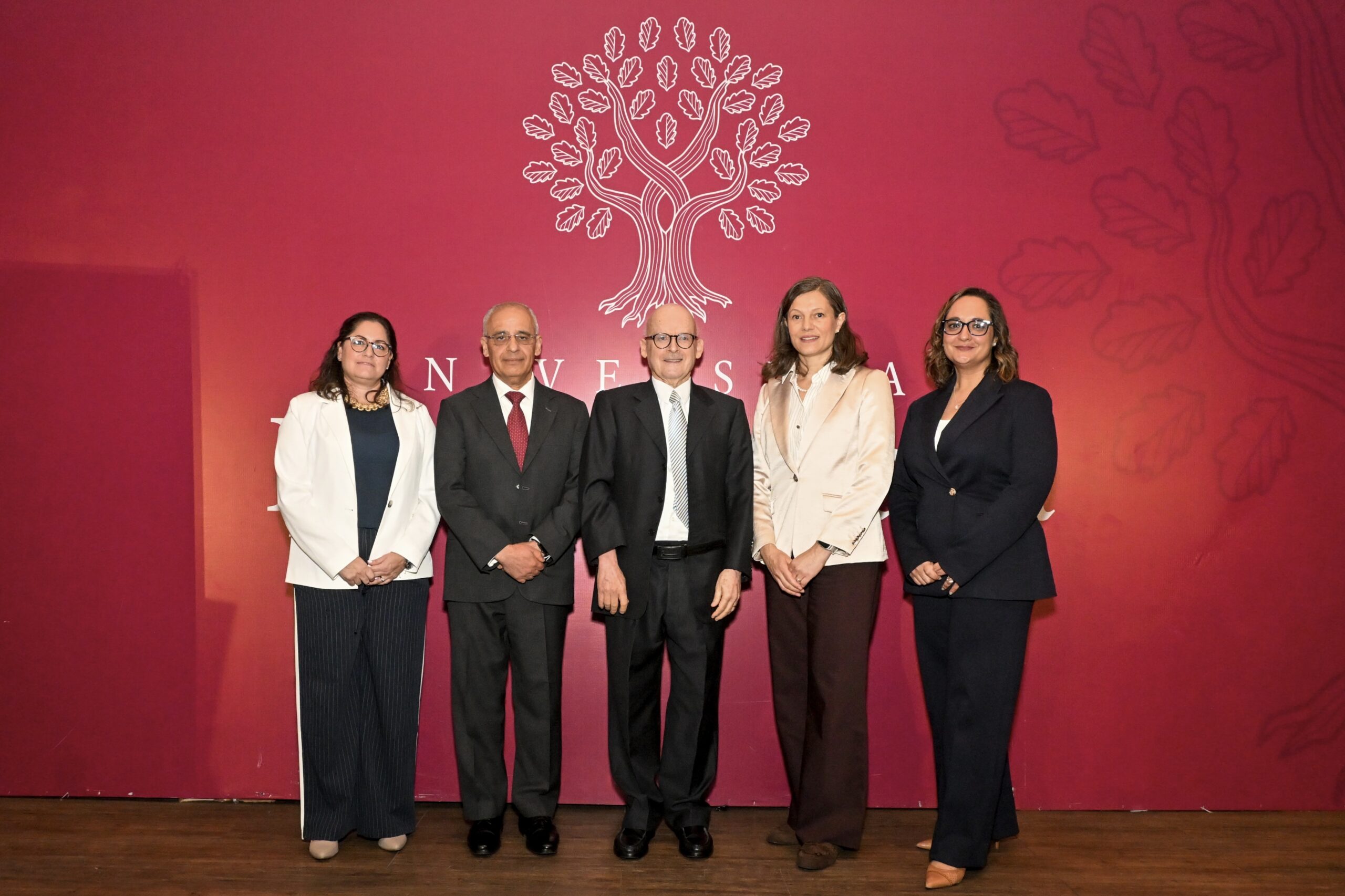
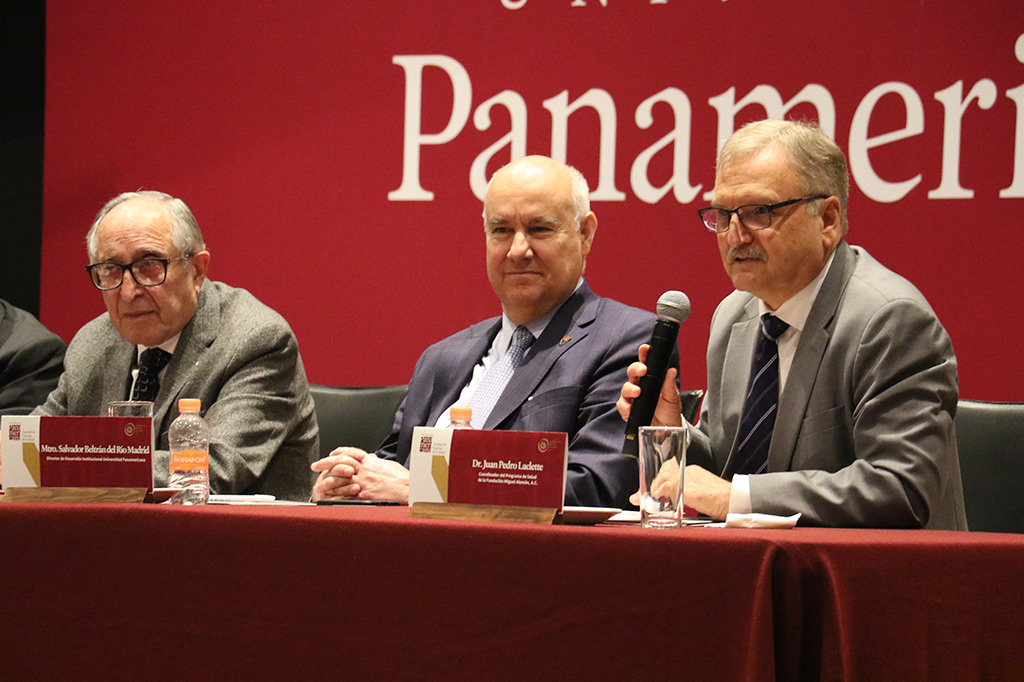
The event was attended by Salvador Beltrán del Río, Director of Institutional Development at the Panamericana University’s Mexico City campus; Dr. José Fuentes Osornio, Director General of the Salvador Zubirán National Institute of Medical Sciences and Nutrition; and Alejandro Carrillo Castro, Executive Director of the Miguel Alemán Foundation.
Also in attendance were Dr. Gregorio Tomás Obrador Vera, Director General of Health at Panamericana University; Dr. Stephanie Derive, Dean of the School of Health Sciences at Panamericana University; and Dr. Juan Pedro Laclette, Coordinator of the Health Program at the Miguel Alemán Foundation.
Improving Healthcare in Mexico
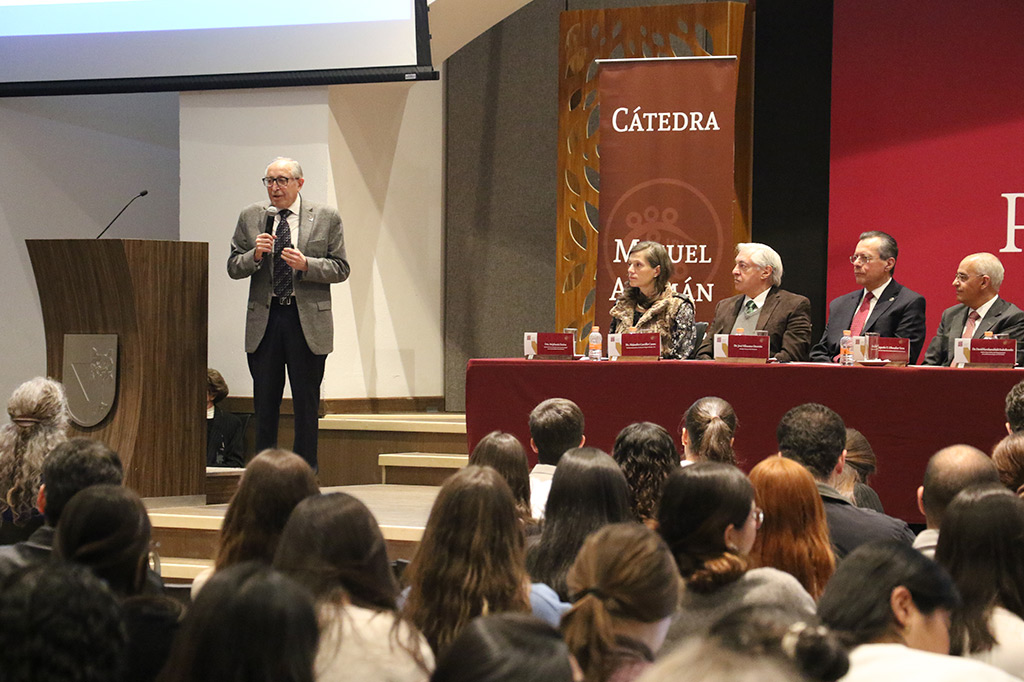
To kick off the event, Dr. Obrador reflected on how important these types of events are for the university and its mission:“The organization’s goal is to improve medicine in Mexico primarily by supporting research and development ( …). The purpose of the chair is to foster ties in the development of institutions in Mexico.”
The foundation then gave the floor to Dr. Laclette, who presented the institution’s health program and the initiatives that comprise it. He explained to the audience how, since its creation in 1984, the health program has aimed to contribute to the development of better healthcare in Mexico.
This is achieved through three initiatives: providing financial incentives to researchers; the Miguel Alemán Award, which recognizes scientific and technological achievements in the field of health; and the Miguel Alemán Chair, awarded to distinguished academics.
Medical education in our country
At the start of the lecture, Dr. Kershenobich thanked the Panamericana for supporting the lecture series. He also emphasized the importance of the topic: “Everything that happens beyond a doctor’s training is very important, but if we don’t have the raw material—that is, a well-trained doctor—it becomes very difficult.”
During his presentation, Kershenobich focused on medical education in our country, which he described as diverse: “The most important aspect has to do with education, which is the foundation of any other change.” He also discussed the fast pace of life today and what the future holds for medical education in the face of these changes.
Artificial intelligence in medicine
Among these changes, the doctor noted that one of the most significant was artificial intelligence, a tool that has become increasingly prevalent in recent years:“This represents a paradigm shift in the educational process (…), and the curriculum taught in medical schools must be highly flexible and must teach students how to adapt in order to learn.”
Given the power of AI, Kershenobich emphasized that it is of the utmost importance to bridge the significant digital divide in our country—a goal on which the Miguel Alemán Foundation has focused its efforts. He also noted that it was thanks to the COVID-19 pandemic that digital tools began to be integrated into medical education.
Adapting to change
It is important to be able to adapt to change, which is why Kershenobich remarked: “University teaching and learning are part of a historical process that has been shaped by various factors at different times, and we have gradually adapted multiple systems for teaching and transmitting knowledge to students.”
In conclusion, he highlighted some of the most important areas that need to be addressed in the classroom so that we can keep pace with these changes: “We live in an era of uncertainty, where things change rapidly, so we need to focus on fostering inspiration, the ability to create solutions, empathy, experimentation, and implementation.”
Learn more about the academic programs offered by the School of Health Sciences at: https://www.up.edu.mx/educacion-facultad-de-ciencias-de-la-salud-oferta-academica/