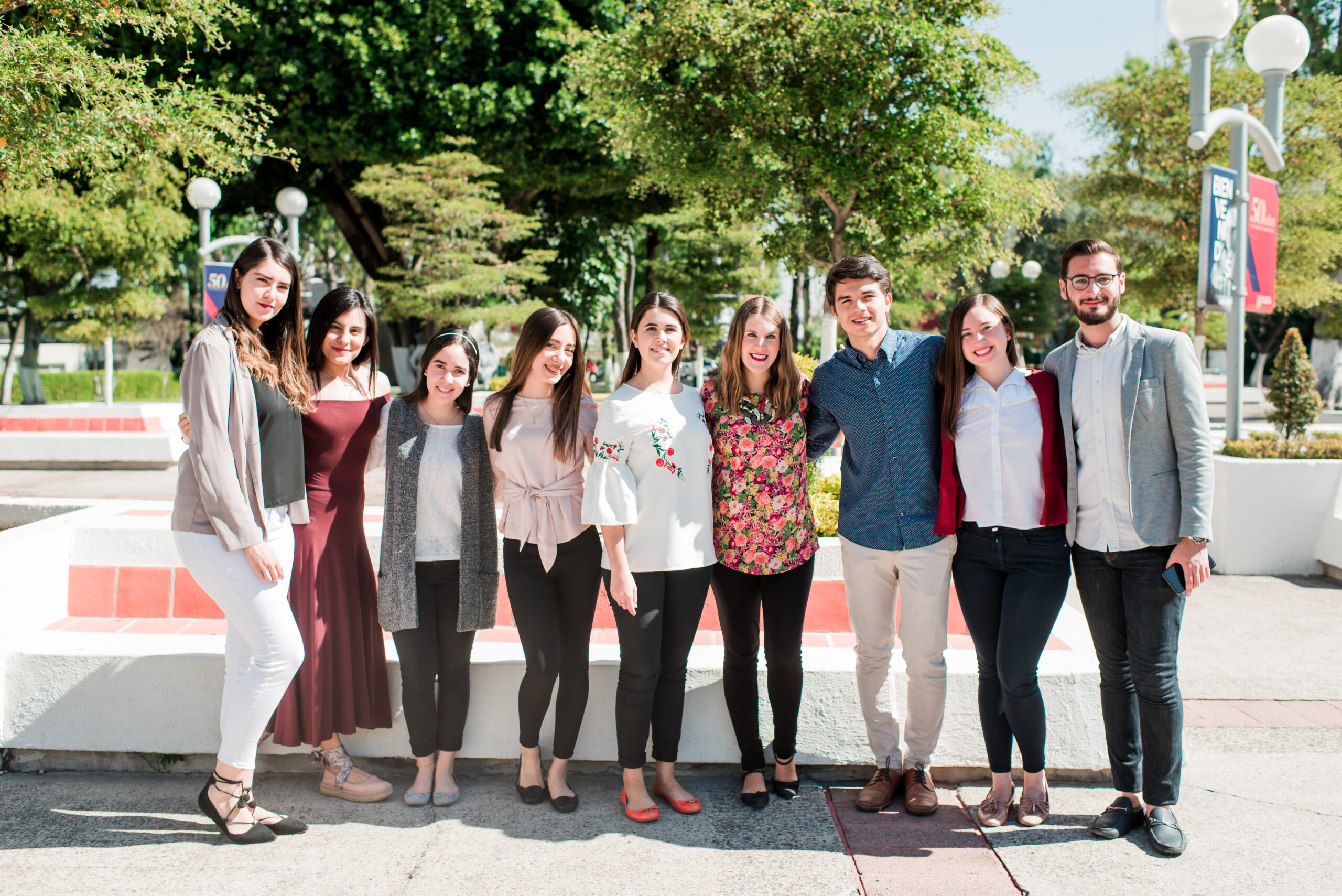
Zapopan, Jalisco; January 20, 2025.—Third-semester students in the Innovation and Design Engineeringprogram at the Universidad Panamericana ’s Guadalajara campus developed low-cost wooden delivery beds as part of the Camilla Julieta project, a social design initiative focused on improving childbirth care in rural and indigenous communities.
The project, conceived as a tool to support the childbirth process, reached its third phase of development, which focused on the design and manufacture of seven wooden birthing beds for Tzeltal communities in the Lacandon Jungle in Chiapas, with the goal of promoting social entrepreneurship and self-sustainability among indigenous women.
A project with social impact and a community-based approach
The Julieta Stretcher has evolved through three stages. The first involved the design of a portable delivery stretcher; the second, a stretcher for emergency areas in rural clinics; and this third phase focused on a frugal, accessible solution that could be adapted to the actual conditions in the communities.
The stretchers were developed in partnership with the organization IXIM, which provided the materials for their construction and assisted in the evaluation and selection of the final design. Manufacturing took place at the facilities of the Universidad Panamericana, under the leadership of Dr. Fabiola Cortés Chávez, a research professor in the School of Engineering.

The winning design: functionality, ergonomics, and portability
As part of the project, an internal contest was organized to select the best design. The evaluation was conducted with the assistance of Dr. Luisa Chávez Alcántar, a family physician at IMSS, as well as the IXIM team.
The designs submitted were characterized by their multifunctionality, capable of transforming into a bed, sofa, or desk when not being used as stretchers. The winning design stood out for meeting key criteria such as safety, portability, ergonomics, and ease of manufacture—elements essential for its replication in rural settings.
The seven stretchers that were produced were donated to the IXIM organization for distribution and use in indigenous communities in Chiapas.
Social Entrepreneurship and Empowering Tzeltal Women
The main objective of the project is to support a community-based co-design process that enables Indigenous women to replicate, adapt, and manufacture the stretchers in their own communities, promoting a model of social entrepreneurship that strengthens both the work of midwives and the local economy.
“The ultimate goal is for Tzeltal women to take ownership of the design and be able to manage and adapt it to their needs,” explained Dr. Fabiola Cortés Chávez.
Frugal design adapted to rural contexts
The treatment tables are made primarily of pine plywood, coated with natural wax, and feature foam mattresses and waterproof fabric. Their design allows them to blend in as household furniture, making them more readily accepted and suitable for everyday use.
One of its key features is its adaptability to transport while in motion, a critical factor in communities where an emergency may require several hours of travel. The stretcher allows the mother to maintain a proper position during childbirth even while en route, prioritizing the safety and comfort of both the mother and the baby.
Learning with a Real Impact
The winning team was awarded an all-expenses-paid trip to Ocosingo, Chiapas, to personally deliver the stretchers to IXIM’s headquarters. In addition, all participating students were considered winners, as all of the designs will be used to benefit the communities.
The design registration process is currently underway. Some students chose to release their proposals under an open-source model, allowing them to be freely reproduced to maximize their social impact.
This project exemplifies the university’s commitment Universidad Panamericana to the well-rounded education of its students, by promoting applied learning experiences that extend beyond the classroom and generate tangible social impact, bringing design and innovation to contexts where they are most needed.