In the laboratories of the Universidad PanamericanaFaculty of Engineering, cutting-edge research is laying the groundwork for a new generation of treatments against melanoma and skin hyperpigmentation.
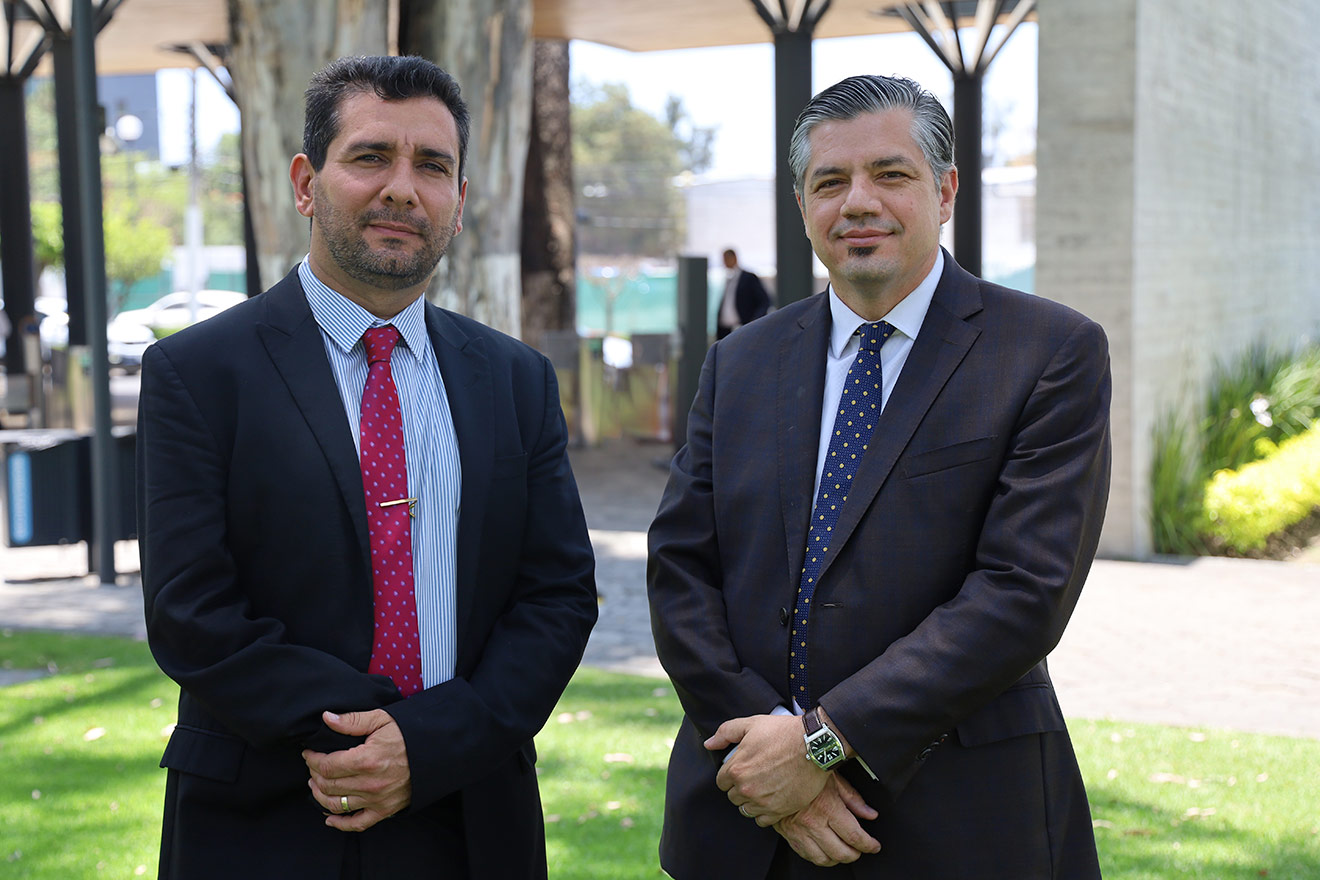
The project, led by Dr. Yovani Marrero-Ponce, a research professor at Panamericana and a Level III member of the National System of Researchers (SNII), has received funding from SECIHTI’s Science of the Frontier program.
Dr. Felix Orlando Martínez Ríos, a research professor at the Universidad PanamericanaSchool of Engineering, and Dr. Luis Antonio Garcia González, from the UNAM’s Center for Nanoscience and Nanotechnology, are also collaborating.

Biomedical innovation for the treatment of melanoma
The project, titled "Discovery of Multitarget Inhibitors of Melanogenesis," aims primarily to identify compounds—both natural and synthetic— capable of simultaneously inhibiting four key proteins involved in melanin production: the enzymes TYR, TRP-1, and TRP-2, and the transcription factor MITF, the latter of which is considered a key regulator in melanoma progression.
Beyond current treatments
Most currently available inhibitors target only the tyrosinase enzyme (TYR), which limits their long-term effectiveness. Dr. Marrero-Ponce explains the need for a multifaceted approach: “Melanogenesis is a complex biological process. Targeting a single pathway allows other pathways to compensate for the inhibition.”
He also adds: “Our multi-target strategy aims to comprehensively block the process, which results in greater efficacy and reduces the risk of resistance developing, both in cancer treatments and in depigmentation therapies.”

A hybrid strategy: from the digital world to the laboratory
The project’s methodological innovation lies in the integration of computational methods (known as the DRY approach) with experimental validation (WET approach).
On the one hand, the team uses artificial intelligence algorithms, molecular modeling, and virtual screening to analyze millions of compounds and predict how they interact with the target proteins. On the other hand, the compounds with the best results are synthesized and evaluated in the laboratory through enzymatic and cellular assays to verify their actual effectiveness.
“This integration allows us to work faster and with greater precision. We drastically reduce the time and costs associated with traditional drug discovery,” the researcher notes.

Products with scientific and social impact
In addition to the candidate molecules, the project will generate valuable resources for the scientific community:
- A specialized database containing structural information and biological activity data on the compounds, which will be made available to other researchers.
- Open-access software for virtual screening and molecule design, which can be downloaded from the platform http://mobiosd-hub.com/.
The most promising molecules will be protected by patents, with the aim of developing prototypes of anticancer drugs or depigmenting agents for the pharmaceutical and cosmetic industries.

Training the next generation of scientists
The project also serves as a training platform for young researchers who are still students, such as Ricardo H. Guerrero Lara, from the Doctoral Program in Artificial Intelligence at the Universidad Panamericana, and Greneter Cordoves Delgado, a doctoral student in the Department of Computer Science at the Center for Scientific Research and Higher Education of Ensenada (CICESE). Both actively participate in the project, acquiring skills in bioinformatics, medicinal chemistry, and molecular biology.
“For our students, this is an opportunity to get involved in a comprehensive project that bridges the gap between theory and practice, promoting a translational approach to science,” says Dr. Marrero-Ponce.
Through this research, the Universidad Panamericana its commitment to cutting-edge science and the pursuit of innovative solutions that have a positive impact on health and society.
Learn more about the Universidad Panamericana researchers at the Universidad Panamericana at:https://www.up.edu.mx/tema/noticias/investigacion/
Researcher Data:
- Dr. Yovani Marrero-Ponce, Research Professor, Faculty of Engineering, Universidad Panamericana. SNII Level III. ymarrero@up.edu.mx
- Dr. Félix Orlando Martínez Ríos, Research Professor, Faculty of Engineering, Universidad Panamericana, SNII Level I. fmartin@up.edu.mx
- Dr. Luis Antonio Garcia González, Center for Nanoscience and Nanotechnology, UNAM. lgarciaag89@gmail.com
Students:
- Greneter Cordoves Delgado, Doctoral Student, Department of Computer Science, Center for Scientific Research and Higher Education of Ensenada (CICESE).
- Ricardo H. Guerrero Lara, Ph.D. candidate in Artificial Intelligence, Academy of Information Technology and Analysis, Universidad Panamericana.