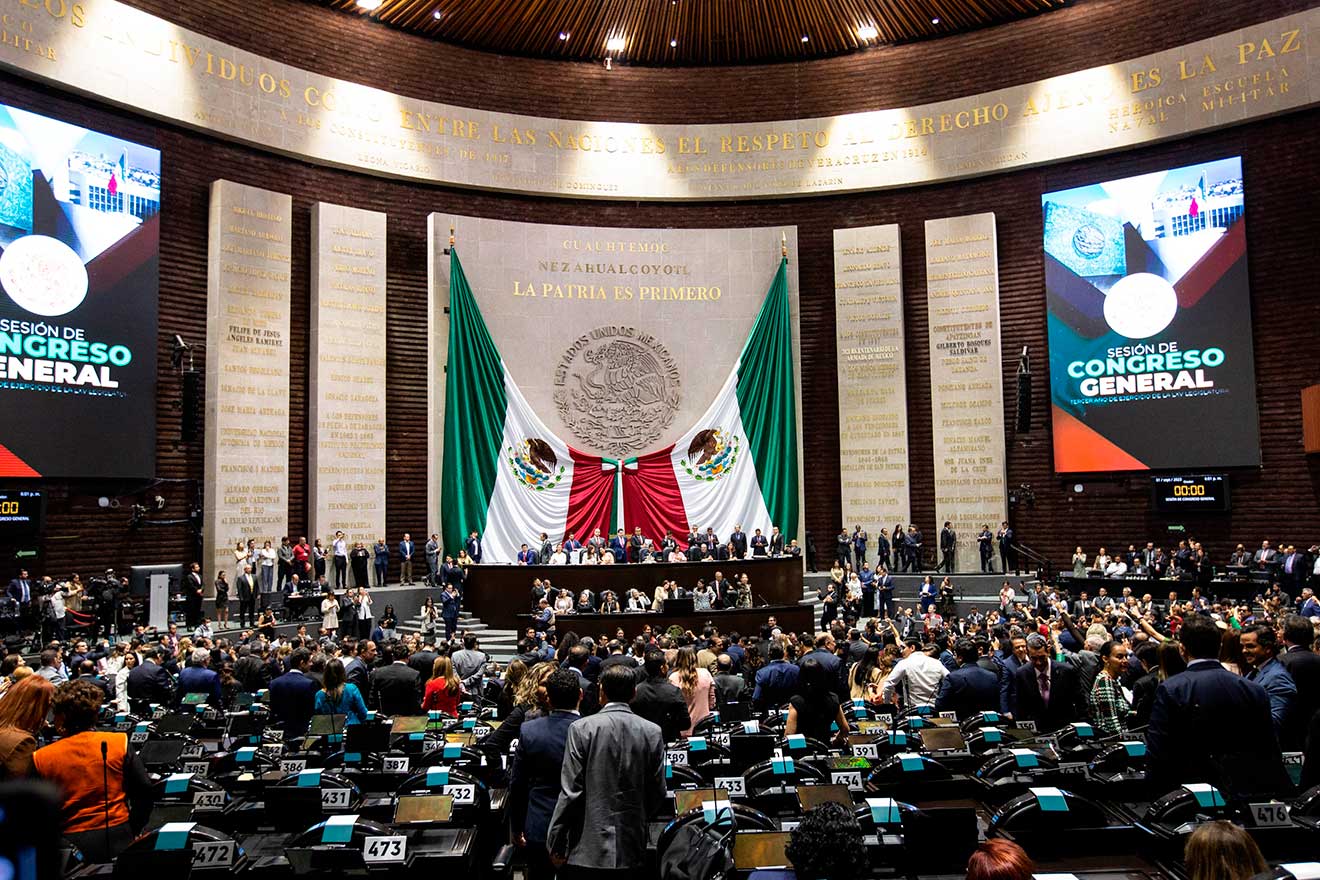
The Budget Committee of the Chamber of Deputies approved an amendment to the Organic Law of the Federal Judicial Branch, which would eliminate 13 of the 14 trusts available to the Federal Judicial Branch. The Federal Executive stated that this reform is intended solely to cut privileges “for those at the top,” while the Judicial Branch has indicated that it would affect its operations and the acquired labor rights of its employees, among other obligations.
In any case, implementing this reform and transferring this resource—which would then fall under the control of the Treasury—constitutes a direct attack on the independence of the judiciary.
The powers
In any constitutional and democratic state governed by the rule of law, the functions of government are divided into the executive, legislative, and judicial branches. These branches are on an equal constitutional footing; none is hierarchically subordinate to the others, and none interferes with the actions and decisions of the others. This principle was articulated by Montesquieu in the 18th century and has been adopted in democracies around the world.
The Judicial Branch plays a crucial role because it is the branch responsible for resolving disputes between individuals, and between individuals and the State, but it also serves as a guarantor of the human rights enshrined in the Constitution and international conventions.
Ultimately, it is the judiciary that safeguards the constitutional principles enshrined in our legal system. According to Montesquieu’s conception, the resolution of disputes should be carried out by judicial mechanisms through a non-political branch of government. In fact, unlike the other two branches, the nature and functions of the judiciary are not political but purely and strictly legal.
In order to ensure the proper functioning and operation of the judicial branch, its constitutional and legal framework must provide for this, and to that end, it must enjoy complete independence.
Judicial independence means that the judicial branch and judges have complete freedom to perform their duties without any interference or pressure, whether political, economic, administrative, or bureaucratic. Independence is the judge’s impartiality, which means that the judge must act free from any bias or personal preference, and to this end must rely solely on the law as the sole standard. In Bobbio’s terms, it is about the “value-neutrality of the scientist.”

Judicial independence
Judicial independence typically takes the form of what are known as jurisdictional guarantees. The first, and perhaps the most important, is financial autonomy. The efficiency and proper functioning of the judicial branch are closely linked to its economic and budgetary autonomy.
The Judicial Branch must have sufficient resources to carry out its functions; this includes, among other things, the payment of salaries, the construction and maintenance of buildings and infrastructure, and the purchase of equipment, office supplies, and other materials.
The second refers to fair and well-paid salaries. The competitive salaries of judges and judicial officers are not a matter of generosity, but rather the result of the importance of their duties and their technical expertise.
Judges and magistrates hear extremely important cases in which their physical safety or even their lives may be at risk. A fair salary and employment benefits that are above reproach are intended to ensure that judges remain independent from any form of pressure or attempt at bribery. It is not that such cases do not exist, but it is up to the judicial branch itself to discipline and sanction its members.

The third guarantee
The third guarantee pertains to access to and tenure in judicial office. Members of the Judiciary are appointed to their positions based on objective criteria, such as the successful completion of competitive examinations, and acquire the right to remain in their positions for a fixed or indefinite period of time, unless they engage in conduct that warrants their removal from office. This judicial stability ensures job security and peace of mind.
Furthermore, it should be noted that the above guarantees do not imply immunity from liability, as any government official or judge may be subject to civil, criminal, administrative, and even procedural liability.
In conclusion, undermining the trust in the judicial branch constitutes an affront to the independence of the judicial branch and its members. It is false to claim that cutting funding affects only a privileged group within the judicial branch; the damage will extend to all members of the branch at every level and, ultimately, to the users of judicial services—that is, ordinary citizens. In the words of Perfecto Andrés Ibañez, “undermining judicial independence directly harms the quality of civil life.”
Research data

José Juan Anzures Gurría, Research Professor Universidad Panamericana.
Ph.D. in Law from the University of Navarra, Member of the National Research System