Mexico City, January 29, 2025.—The education sector is undergoing rapid change, driven by edtech, artificial intelligence in learning , and pedagogical innovation. By 2025, these trends will redefine the way students, teachers, and institutions access knowledge, promoting educational skills and fostering a well-rounded education through new teaching methodologies.
In light of these changes, the Dr. Teresa Nicolás, Institutional Director of Educational Innovation at the Universidad Panamericana, emphasizes that this scenario requires preparing educational stakeholders to address ethical challenges and take advantage of the opportunities presented by a constantly evolving environment.

Key Trends in Educational Technology for 2025
-
Virtual and Augmented Reality: Immersive Experiences
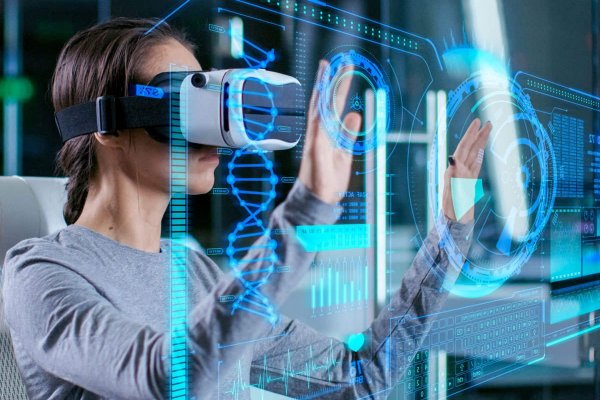
The use of virtual reality (VR) and augmented reality (AR) in education will enable interactive and dynamic experiences that improve knowledge retention and foster critical thinking. Platforms such as Labster, Google Expeditions, ClassVR, and zSpace are already being used in virtual labs and immersive tours, revolutionizing learning in disciplines such as medicine, engineering, and the experimental sciences.
These tools not only help improve learning retention but also foster creativity and critical thinking by engaging with real-world problems in virtual environments.
-
Educational Accessibility and Multilingual Education
Remote remote education and multilingual instruction will continue to break down geographical and physical barriers in 2025. Thanks to models such as COIL, students and teachers from different parts of the world can collaborate on academic projects, strengthening intercultural and digital skills.
In addition, translation and accessibility tools will make education more accessible to people with disabilities, promoting a more inclusive learning environment.

-
Artificial Intelligence: Personalized Learning
Artificial artificial intelligence in education is redefining teaching by enabling education tailored to the individual needs of each student. Learning Analytics (LA) will help teachers analyze learning patterns and adjust their teaching strategies in real time.
In addition, the AI-powered simulators will offer hands-on experiences in controlled environments, enhancing the development of technical and cognitive skills.
According to Dr. Nicolás, AI will enable students to develop not only technical knowledge, but also soft skills such as problem-solving and adaptability, which are essential in an ever-changing job market.
Challenges and Ethical Considerations in Technology Adoption
While technology has the potential to transform education, its implementation poses challenges such as ensuring equitable access to advanced tools and protecting personal data. Institutions with fewer resources may face difficulties in integrating virtual reality into education or artificial intelligence into learning, while data privacy and security must be a priority on AI-powered platforms.
To address these challenges, the expert proposes strategies such as regulating the use of personal data through transparent security measures, providing technology training for teachers and students, and seeking public and private funding to ensure the adoption of these technologies in institutions with fewer resources.
“Ethics must be at the heart of any educational transformation. Technological tools should be a means to well-being and human development”, notes Dr. Nicolás.
Educational Transformation at the Universidad Panamericana
In light of the challenges of 2025, the Universidad Panamericana positions itself as a leader in the integration of educational technology, promoting innovative projects and methodologies that prepare students for a dynamic environment.
Notable examples include the creation of interdisciplinary virtual labs and mentoring programs supported by artificial intelligence, and virtual reality in education and international partnerships to strengthen digital learning.
With this approach, the institution reaffirms its commitment to a well-rounded education, combining academic excellence, innovation, and ethical values to prepare leaders with a global perspective.
Learn more about Universidad Panamericana 's educational model at: https://www.up.edu.mx/sobre-la-universidad-modelo-educativo/