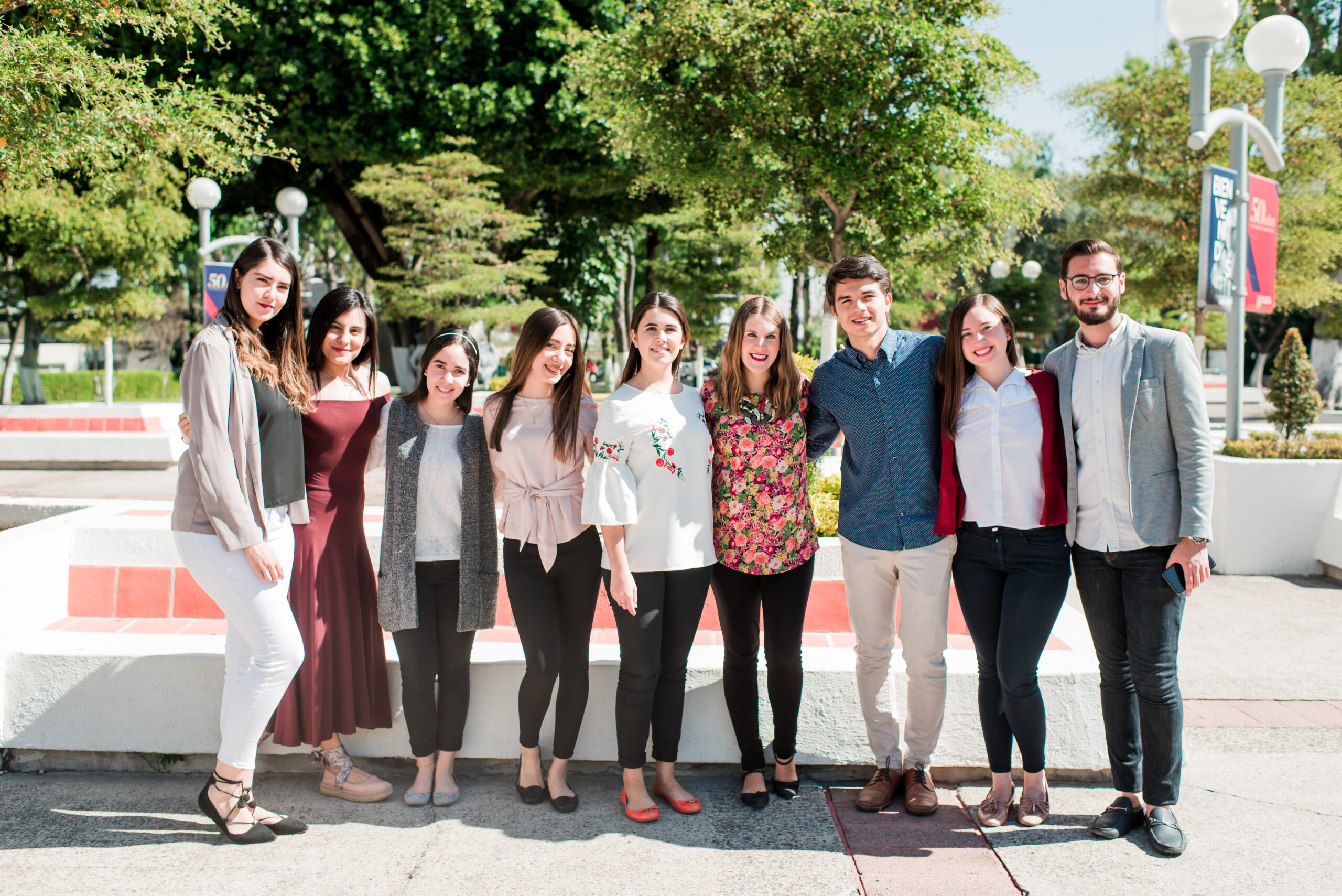
Mexico City, October 15, 2026.— A mathematical formula for soft materials, an algorithm that measures blood pressure without touching the patient, and a methodology to reduce the environmental impact of the dairy industry. Three very different projects, but they share a common origin: the CINOV (Center for Innovation and Technological Development) at the Universidad Panamericana, where three doctoral students are conducting applied research with an eye toward industry.
Their experiences offer a glimpse of what lies ahead for those who apply for the 2027 CINOV Doctoral Scholarship program, which will begin on October 15.
From industry and academia, toward a common goal
After earning a master’s degree in Robotics and Artificial Intelligence from the University of Guadalajara and completing a research fellowship in Canada, María Dariana Gómez Álvarez, from Guadalajara, joined CINOV to become part of the Flexible Manufacturing team.
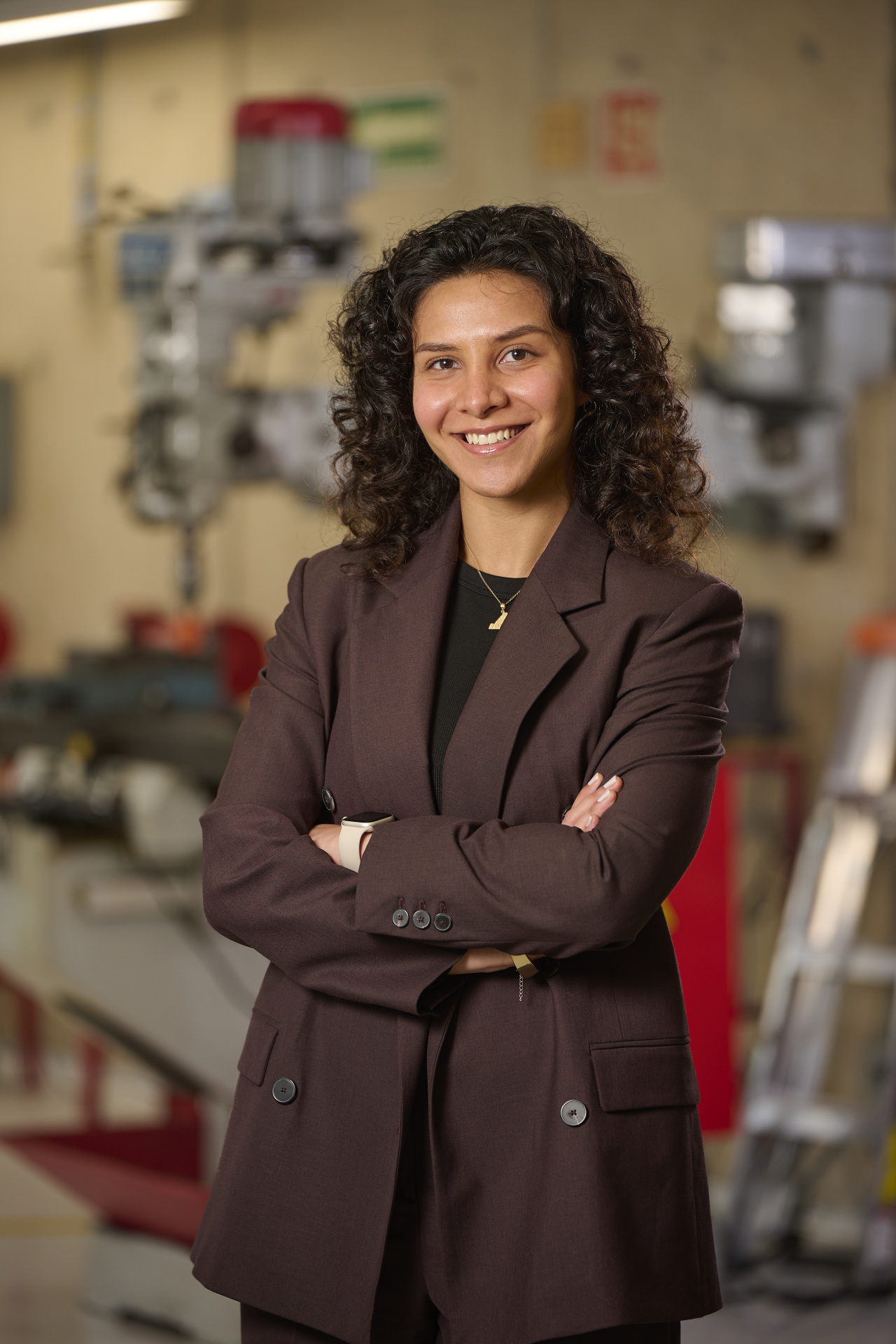
His work aims to automate the collection of precise data on soft materials—whose behavior is more complex than that of rigid materials—with applications ranging from soft robotics to medical prosthetics.
“Obtaining accurate, high-fidelity data for these types of materials opens the door to many applications, from soft robotics to prosthetics and medical devices,”, he explains.
To date, he has published an article on the behavioral evolution of expanded polystyrene and is collaborating with an external researcher on the development of an eco-friendly biopolymer.
Irvine Jordan Monroy Rueda de León came to CINOV by a different path: after five years at Ford Motor Company and two master’s degrees, he decided to pursue academic research.
He is currently in his first semester of the Ph.D. program in Artificial Intelligence at the Universidad Panamericana, where he is developing algorithms capable of estimating blood pressure in real time using cameras, without physical contact with the patient.

“My proposal is to develop advanced artificial intelligence algorithms that allow for the accurate, real-time estimation of blood pressure using cameras, without touching the patient,”, he says.
This project is being carried out in partnership with the School of Medicine at the Universidad Panamericana, to validate the system in real clinical settings, with the goal of transforming preventive medical monitoring.
For his part, Víctor Iván Morales Cortés has nine years of experience in the food industry. As part of his Ph.D. in Engineering, he is developing a methodology to assess the environmental impacts of the dairy industry and propose strategies to reduce them.
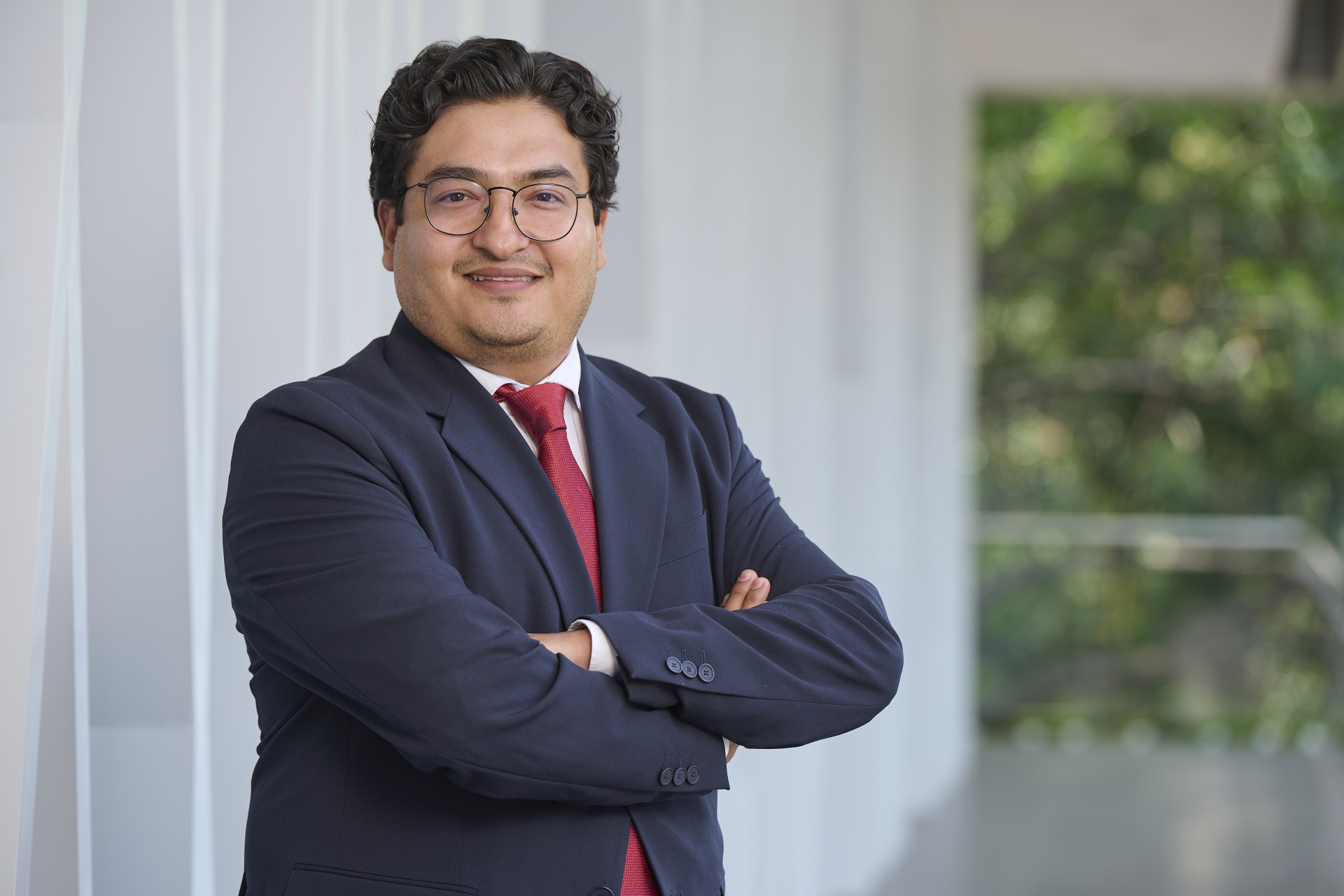
“My research aims to identify the negative environmental impacts caused by the dairy industry and, in doing so, propose strategies for improvement that will help reduce these impacts,”, he says.
Research That Goes Beyond the Lab
The three doctoral students agree that CINOV’s hallmark is the direct connection between academia and industry. “It dispels the misconception that research cannot be applied,”, explains Dariana.
Irvine, meanwhile, describes it as research “where projects are not intended to remain in the lab, but rather seek to become solutions with a real and tangible impact”. For Iván, CINOV is simply “the best way to conduct applied research that can truly transform the industry”.
That practical focus also defines what the center has provided them. Monroy Rueda de León highlights the opportunity to combine their doctoral studies with professional practice within the same center, without losing touch with the pace of work.

Morales Cortés values the resources and support available for conducting applied research, while Gómez Álvarez emphasizes “the opportunity to study at a prestigious university, surrounded by people from whom she can constantly learn”.
The challenges have been different for each of them: adapting to a dynamic institutional environment; transitioning from an industrial pace to an academic one and learning the patience that science requires; and finding sufficient scientific evidence to support their research.
However, the three of them have a unanimous message for those considering applying: don’t let this opportunity pass you by. “The experience is extraordinary, and you’ll be able to grow in the field of applied research,”, says Iván. To which Dariana adds: “It has made me immensely happy to return to the National Institute of Technology ( Universidad Panamericana ) to continue my professional training.”
CINOV Doctoral Scholarships 2027
CINOV will offer three doctoral scholarships—one for each of its campuses: Mexico City, Guadalajara, and Aguascalientes—to pursue a Ph.D. in Engineering or a Ph.D. in Artificial Intelligence at the School of Engineering of the Universidad Panamericana.
The priority areas are the agri-food industry , flexible manufacturing, and health technologies, with a particular focus on candidates with expertise in advanced manufacturing and robotics, artificial intelligence and data analytics, process optimization, the Internet of Things (IoT) and cybersecurity, and new materials.
Each scholarship offers the following benefits:
- Monthly child support of 25,000 Mexican pesos.
- Full coverage of registration and tuition fees.
- Support for up to 48 months, subject to annual review.
Scholarship recipients must be fully committed to the doctoral program on a full-time, on-campus basis; conduct research with industrial applications approved by the CINOV Committee; participate in the center’s projects; and complete their dissertation.
Mexican or foreign professionals with a master's degree, a minimum GPA of 8.5, and acceptance or conditional acceptance into one of the two doctoral programs are eligible to apply.
The application period opens on October 15, 2026, and the deadline for submitting documents is January 15, 2027; results will be announced between March 29 and April 2, 2027, and scholarship recipients will begin their programs in August of that year.
For more details about this call for applications, visit: https://www.up.edu.mx/wp-content/uploads/2026/10/Convocatoria.pdf
To learn more about CINOV, visit: https://www.up.edu.mx/cinov/