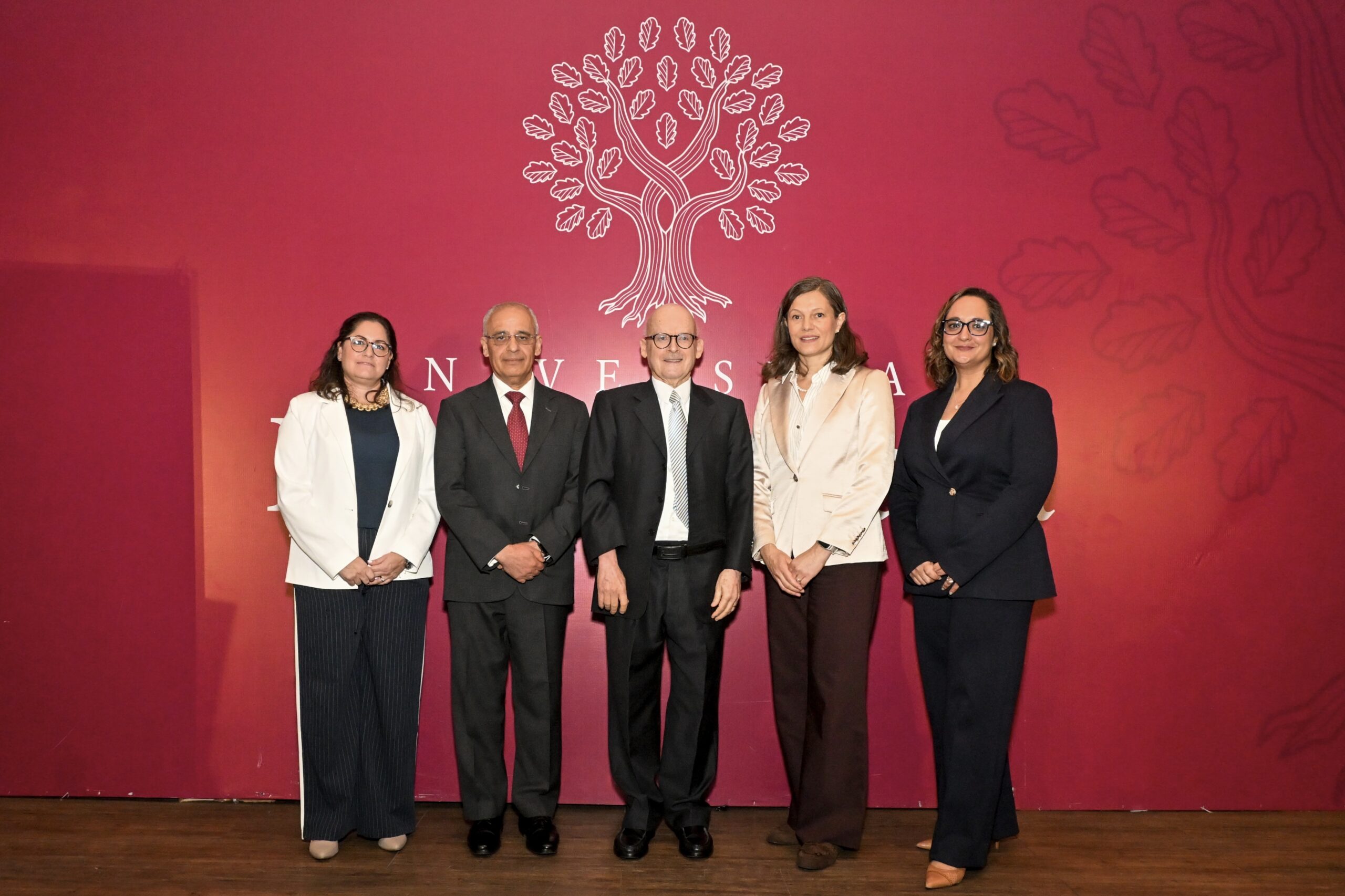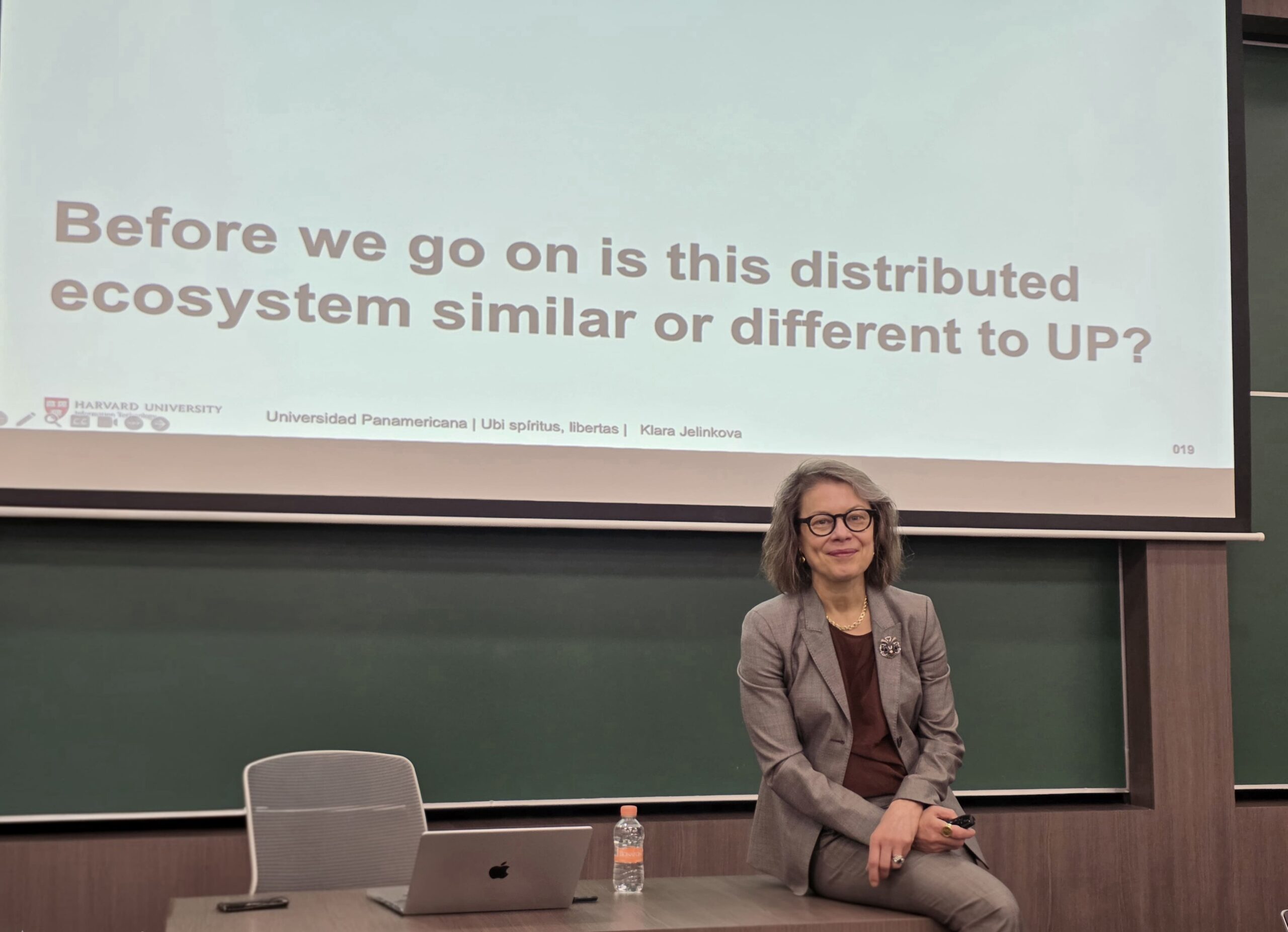
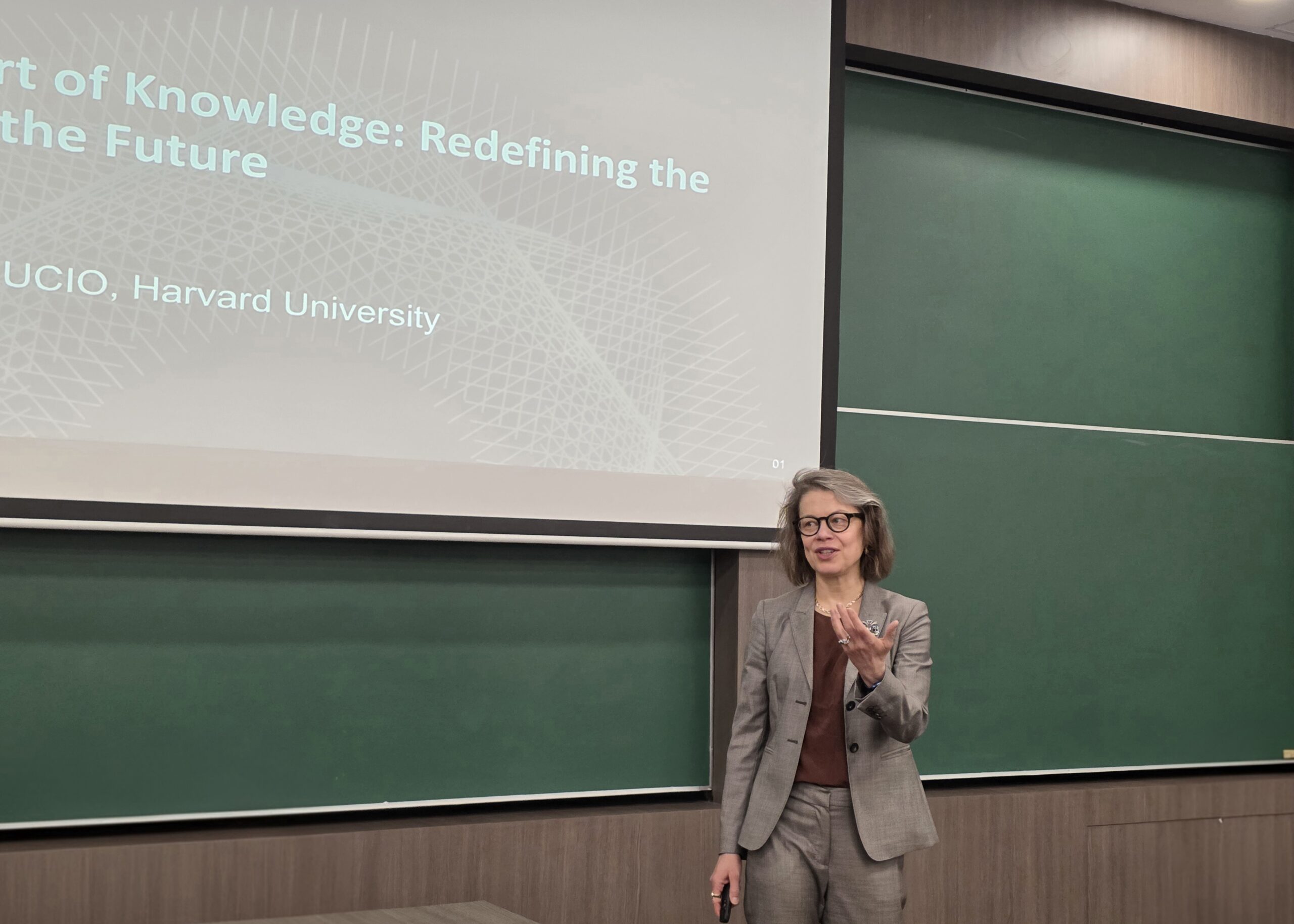
Mexico City, November 7, 2025.—Under the title AI at the Heart of Knowledge: Redefining the University of the Future, the Universidad Panamericana a keynote lecture by Dr. Klara Jelinkova, Vice President and Chief Information Officer (UCIO) at Harvard University, who shared with the university community her vision on the role of Artificial Intelligence (AI) in the transformation of higher education.
Dr. Jelinkova began her remarks by acknowledging that, although Harvard and the Panamericana operate in different contexts, both face the same fundamental challenge: integrating technology that is advancing at an exponential pace into institutions with a long academic tradition, where innovation must proceed with balance, ethics, and a forward-looking vision.
Co-thinking, not just automation
One of the central themes of the presentation was the concept of “co-thinking.” Dr. Jelinkova emphasized that AI is not a deterministic tool like a search engine, but rather an agent with which one must interact, challenge, and refine ideas.
“To get a good result, you have to talk to it and correct it. It’s a collaborative process,”, he noted, comparing this moment to historical milestones such as the printing press or the introduction of calculators in classrooms.
The Harvard Approach: Agility and Controlled Experimentation
In response to the disruption caused by AI, Harvard has adopted a strategy of agility and experimentation. Jelinkova described how, instead of large, monolithic projects, the university has launched small, targeted pilot initiatives that can be scaled up if successful or quickly discontinued if they don’t work.
“One of the most important things for us has been to start with small pilot projects and then, if they aren’t working, have the ability to shut them down. This is very countercultural in an institution like ours,” he admitted.
Among the specific initiatives, he highlighted the imminent availability of tools such as ChatGPT and Copilot to the entire Harvard community, the creation of customized “TutorBots” for massive open online courses, and the implementation of a program for “citizen developers” that trains administrative staff to create their own AI solutions, empowering them and overcoming the fear of job obsolescence.
Three areas of focus: teaching, research, and university administration
The conference was organized around three key areas:
- Teaching and learning:Jelinkova presented success stories such as the CS50 Duck, an AI tutor that has been shown to improve student engagement and outcomes, especially in online settings and for students who might feel less comfortable participating in class. She acknowledged, however, the challenge of using AI for essay writing and the importance of each teacher defining their own policy for its use in the classroom.
- Research:AI is revolutionizing research, from generating synthetic data for the diagnosis of rare diseases to analyzing civic disagreements. Jelinkova highlighted the major dilemma: the probabilistic and non-deterministic nature of AI clashes with the principle of reproducibility in science, an epistemological challenge that universities must address.
- Administration and operations:The goal is to use AI to make the university more efficient by freeing staff from repetitive tasks. The “citizen developer” program has been key, as it allows staff to identify processes that can be optimized and, with technical support, create their own solutions, fostering a sense of ownership and innovation.
Values, dialogue, and ethics: the key to innovation
The vice president of Harvard emphasized that, rather than rigid policies, what matters most is defining and upholding institutional values. At Harvard, principles such as human oversight, risk mitigation, and privacy protection have served as a guide.

Encouraging small, frequent conversations among faculty members, rather than large-scale assemblies, has been vital to understanding their concerns and building consensus.
A final thought for the Universidad Panamericana
In closing, Klara Jelinkova posed a crucial question: “What are the things you feel are at the core of the university, that you must protect?”She emphasized that defining essential values allows for the freedom to innovate, thereby fostering authentic and sustainable learning.
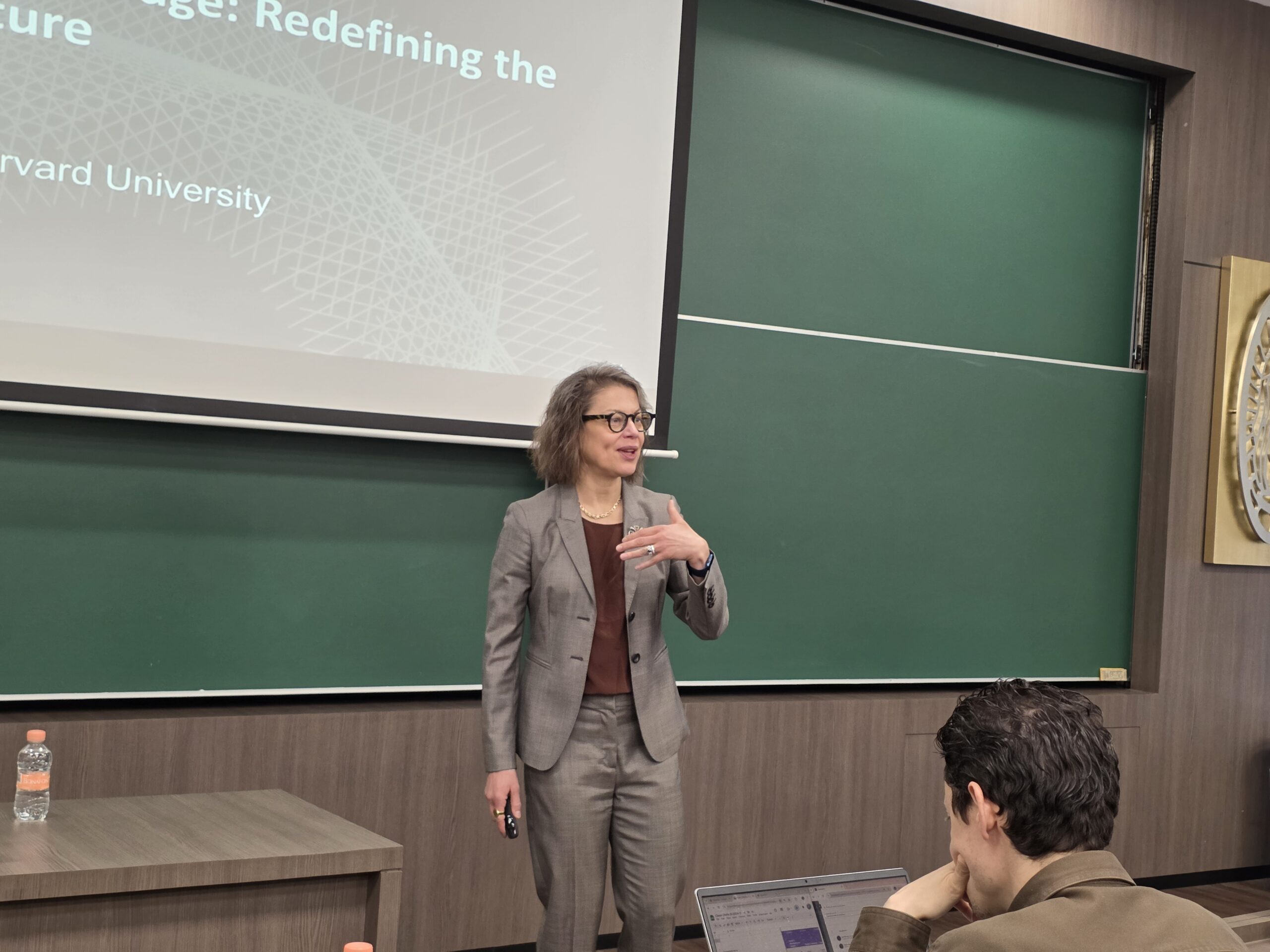
The conference strengthened the global dialogue on the future of education and positioned the Universidad Panamericana an active player in shaping its own future, with artificial intelligence serving as a strategic ally at the heart of its mission to advance knowledge.