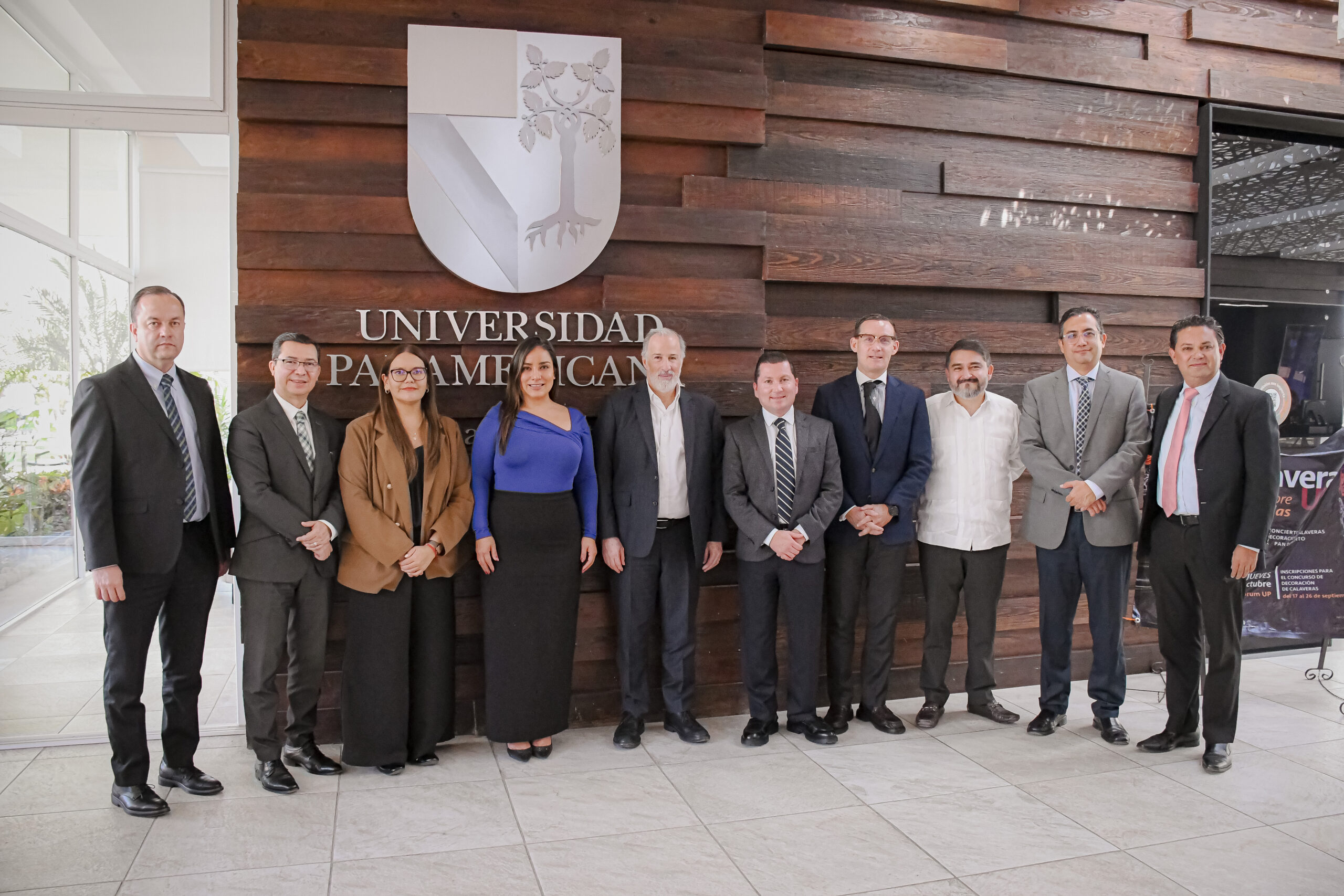
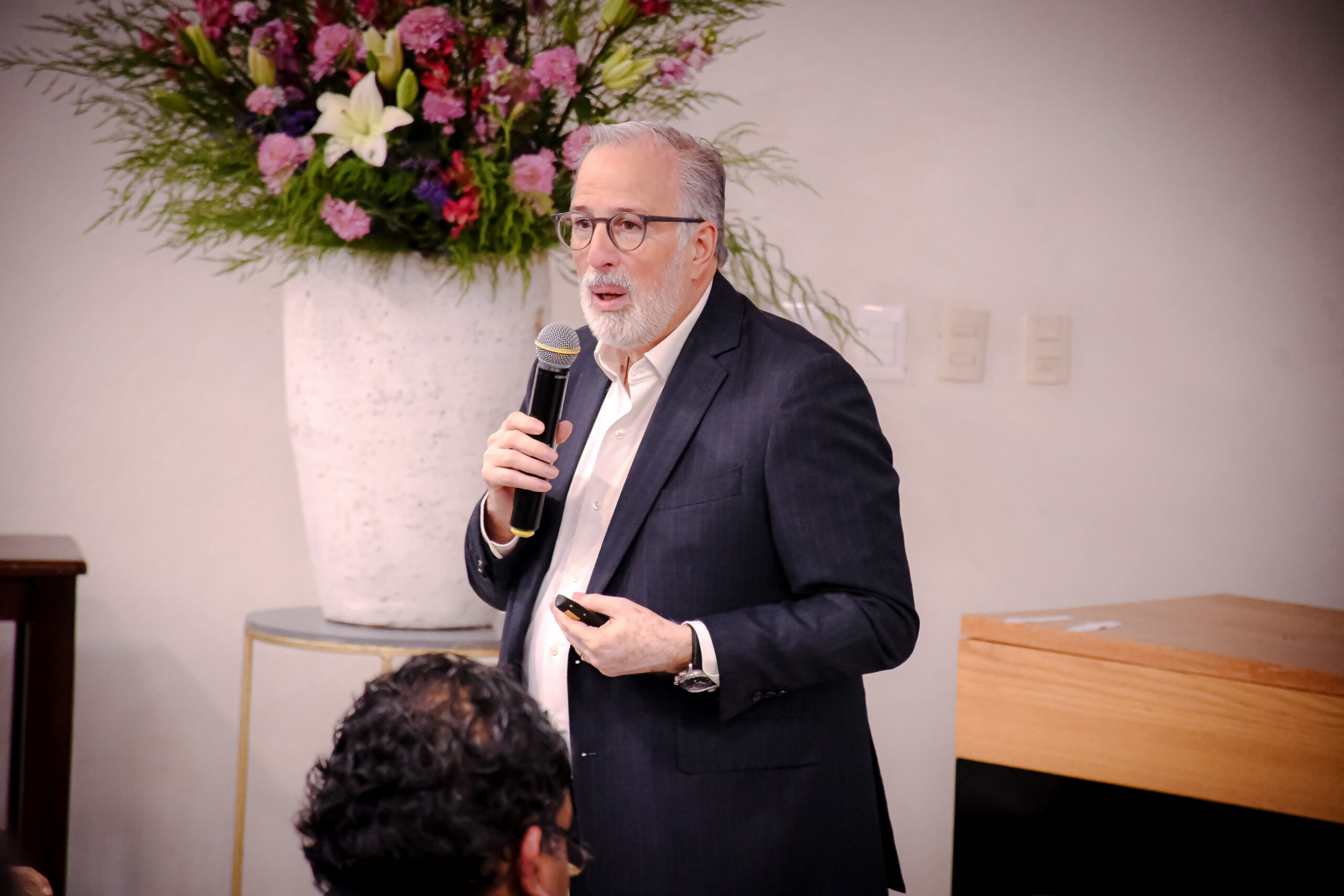
Aguascalientes, Aguascalientes, November 5, 2025.— Focusing on the national economic and political landscape, Dr. José Antonio Meade Kuribreña, former Secretary of Finance and Public Credit, delivered a lecture Mexico and the New International Economic Order: Perspectives and Challengesas part of Business Week 2025, organized by the School of Business at the Universidad Panamericana Aguascalientes Universidad Panamericana .
Speaking before an auditorium filled with students, academics, and business leaders, Meade discussed the main challenges facing Mexico in an uncertain international context, emphasizing the importance of combining economic prudence, institutional certainty, and a long-term vision to consolidate growth and capitalize on global opportunities.

“Mexico isn’t in crisis, but it does need to make changes. If we don’t make adjustments, we’re taking risks; if we do them right, we have enormous strengths,”, he said.
An economy with potential, but one that is growing below its capacity
The economist explained that, while the global economy is growing at an average rate of 3.2%, Mexico’s growth is barely between 0.5% and 1%, placing it among the least dynamic countries within the G20.
“Today, we are growing more slowly than the rest of the world, than our own past, and than neighboring countries like Guatemala. The problem isn’t one of potential, but of policies and direction,” he warned.
The former secretary noted that one of the country's major challenges is that public debt is growing faster than the economy, which could put pressure on public finances in the coming years if corrective measures are not taken.
Even so, he insisted that Mexico still has room to maneuver: “We have time to make corrections, but not much. We need to decide whether to cut spending, increase revenue, attract more investment, or reform the way our public companies operate, especially Pemex.”
Pemex, Energy, and the Challenge of Competitiveness
One of the central themes of the conference was the role of the energy sector as a driver of development. Meade argued that the shortfall in electricity capacity and Pemex’s inefficient management limit the country’s competitiveness and its ability to fully participate in the global technological revolution.

“The energy component of our exports is greater than the labor component. If our exports grow by 9% annually but our electricity capacity does not, we have a problem. The country needs an energy mix that keeps pace with its growth and allows it to participate in the artificial intelligence revolution,” he noted.
He added that improving Pemex's management would amount to a tax reform in itself, since its contribution to the treasury has fallen sharply in recent years:
“If Pemex were to return to the level of contribution it had a decade ago, we would inject between 300 and 350 billion pesos into the economy each year. That presents both a challenge and an opportunity.”
Investment, infrastructure, and the role of the private sector
When discussing public and private investment, Meade noted that the lack of long-term infrastructure projects and institutional uncertainty have hindered national development.
“In Mexico, we plan infrastructure every six years, depending on the whims of the government in power. We need to think in terms of a 40-year horizon, depoliticize decision-making, and define where we want to go as a country,” he said.
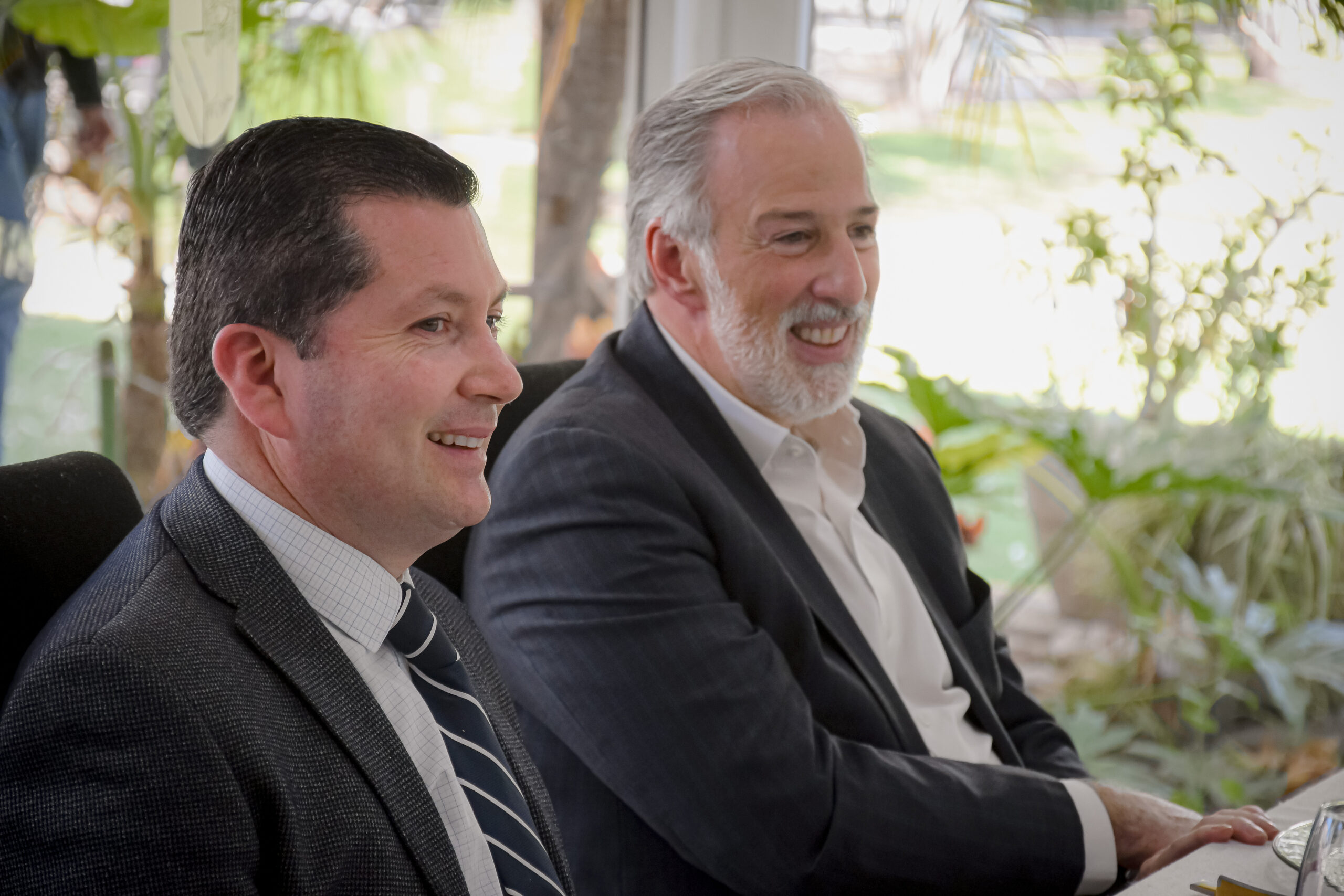
He also recognized Aguascalientes as a model of planning and public-private collaboration, noting its efforts to foster opportunities for reflection on the state’s future and its role in the country’s industrial and energy development.
He also noted that the limitations of the public sector create opportunities for entrepreneurs, especially in health and education, where the demand for quality services exceeds the government’s supply: “The decline in public spending on health and education is generating enormous demand that can be met through innovation, technology, and efficient private models”.
Economic policy, inflation, and institutional coordination
Meade called for better coordination between fiscal and monetary policy to boost growth without undermining stability. While he acknowledged the progress made in wages, he noted that this has not been accompanied by a proportional increase in formal employment.
He also emphasized the importance of maintaining a dialogue between the government and the Bank of Mexico to balance inflationary pressures without sacrificing growth: “We have the highest real interest rate on the continent, even though we are not growing. That suggests that certain policies are conflicting with one another. We need to reorder our priorities.”
Rule of law and institutional certainty
One of the most well-received parts of the conference was his analysis of judicial reform and the balance between technical and political considerations.
“This debate isn’t just a Mexican issue—it’s a global one. We have to decide which decisions should be technical and which should be political. If everything is political, we lose our way; if everything is technical, we lose our democratic legitimacy. Mexico needs to rediscover that balance,” he said.
The former secretary expressed confidence that the country will once again strengthen judicial independence, which is essential for attracting investment and ensuring the rule of law.
Mexico in the International Context
Meade also addressed the relationship with the United States and the reshaping of the global order driven by phenomena such as artificial intelligence, automation, and the resurgence of protectionism.
“The balance between Mexico and the United States is going to shift, but that’s not necessarily a bad thing. Both countries need to find new ways to cooperate on migration, security, and trade,” he explained. He reiterated that, in the face of external uncertainty and internal adjustments, Mexico must focus on strengthening its institutions, education, energy sector, and technological innovation.
Message to College Students
At the conclusion of the event, Meade addressed the students of the Universidad Panamericana, urging them to actively participate in building a new model for the country.
“You have a great opportunity to rethink Mexico. We already know what we don’t want politically and what we can’t do economically. Between those two constraints, there is enormous room to innovate, take initiative, and do things differently, ” he said.
“Mexico has solid foundations: a strategic geographic location, a young population, competitive human capital, and an enormous capacity to adapt. It is up to us to turn those strengths into growth and a better future,” he concluded.
Finally, Antonio de los Reyes Moreno, Ph.D., president of the Universidad Panamericana Aguascalientes Universidad Panamericana , thanked him for his participation and noted that his analysis reflects the university’s institutional mission: to educate leaders with an ethical vision, a commitment to social responsibility, and the ability to transform their communities.
Learn more about the educational model at Universidad Panamericana : https://www.up.edu.mx/sobre-la-universidad-modelo-educativo/