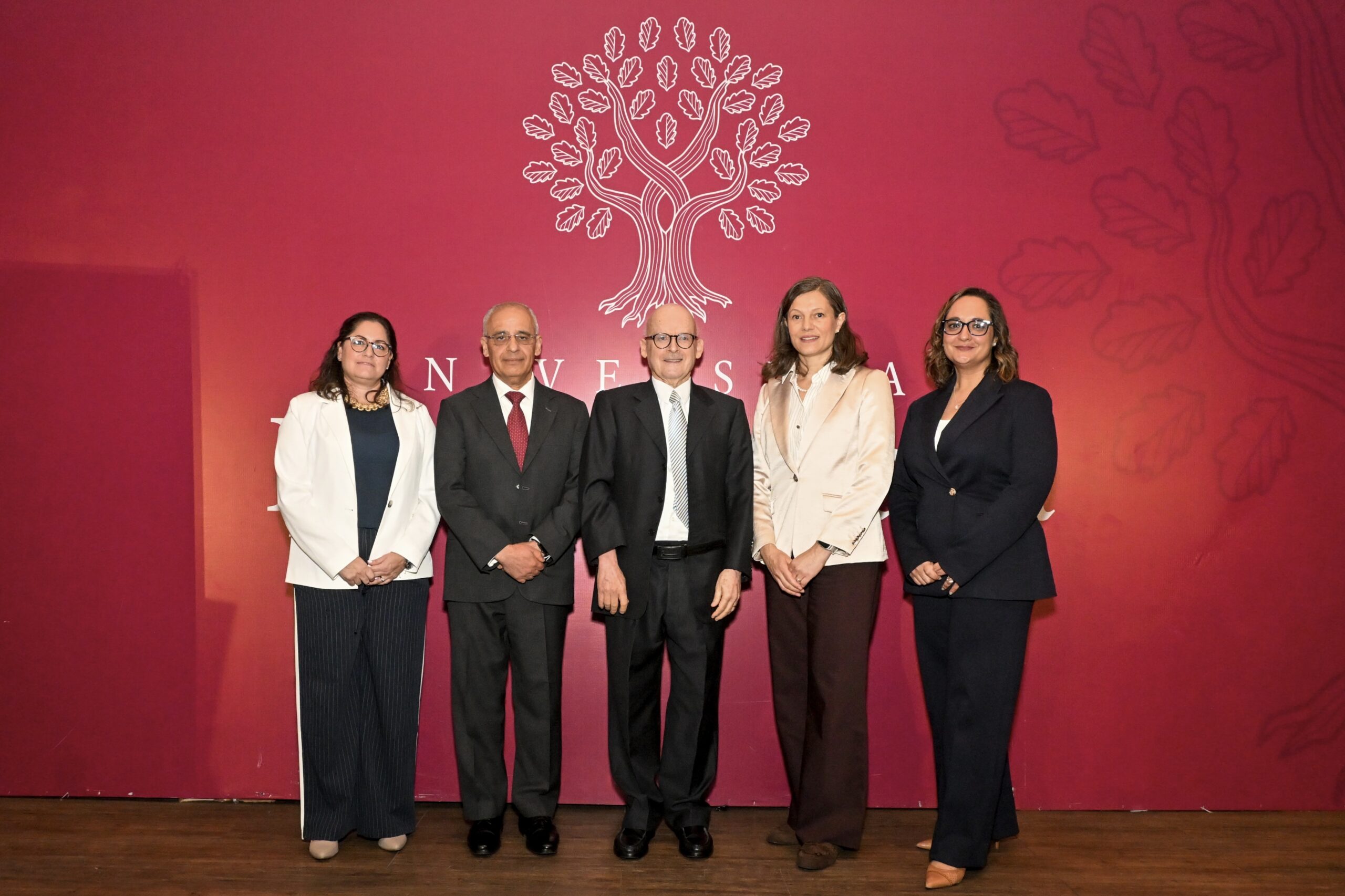
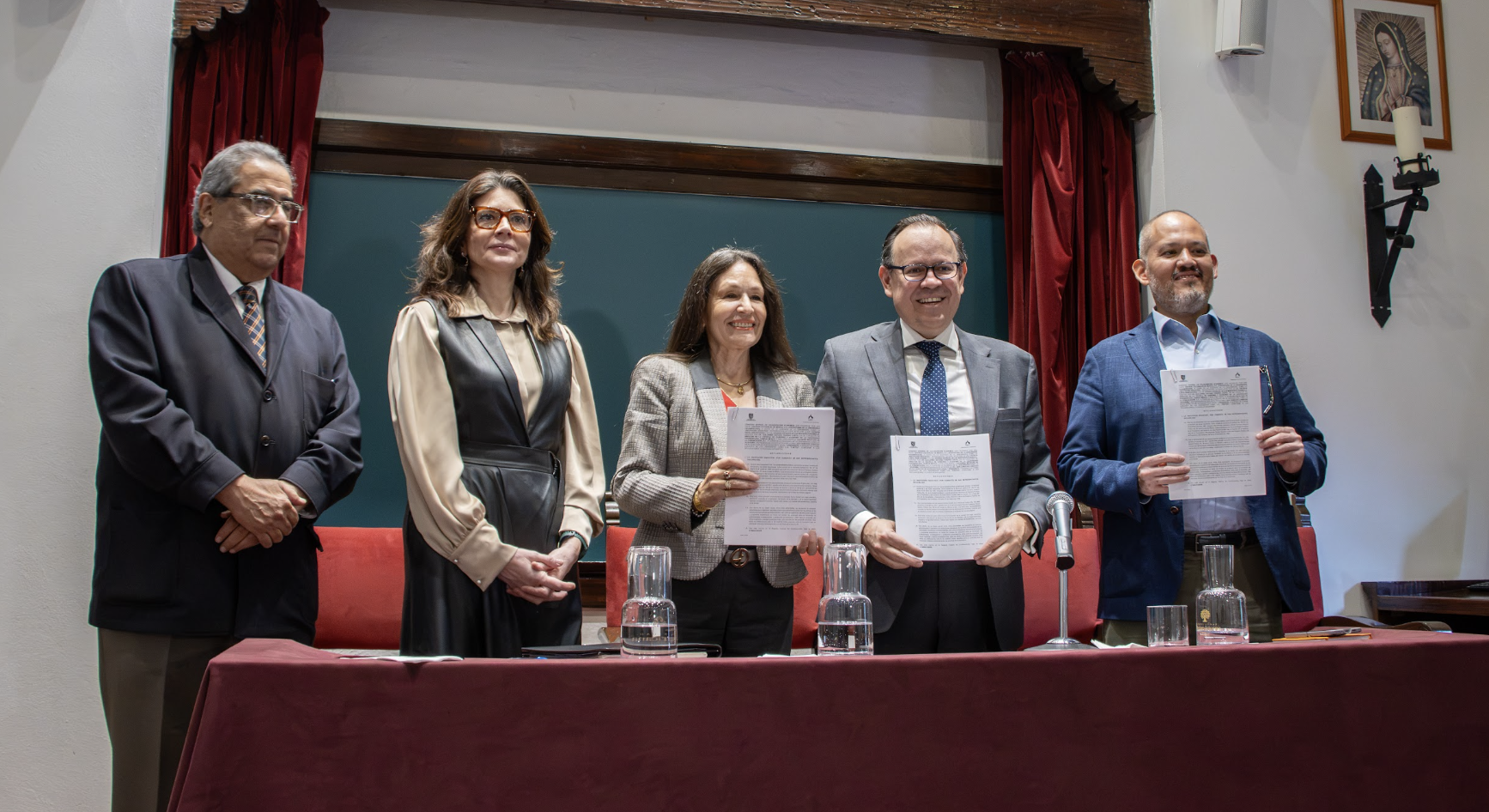
Aguascalientes, Aguascalientes; March 10, 2026.— As part of Women’s History Month, the School of Food Business Management and the Graduate Studies Department at the Universidad Panamericana AguascalientesUniversidad Panamericana held the 2026 edition of the conference “The Other Side of Agriculture: Women Who Turn Challenges into Opportunities.”
This forum for analysis, the exchange of ideas, and knowledge brought together businesswomen, industry leaders, and members of the academic community to highlight the strategic role of women in the agri-food industry.
The Strategic Role of Women in Food Innovation
In his opening remarks, Antonio de los Reyes Moreno, president of the Universidad Panamericana Aguascalientes Universidad Panamericana , emphasized that the purpose of the event was to recognize the transformative role of women within an industry that is vital to Mexico.
“When we talk about agriculture, we tend to think of production, markets, exports, and technology. But today we want to look at the other side—the faces, the intelligence, the determination, and the resilience of the women who are transforming this strategic sector for our country,” she said.

Following that, María de la Paz Reyes, president of the Guanajuato State Agri-Food Council (CEAG), delivered a lecture From Production to Strategy: The Role of Women in Agri-Food Innovation and Competitiveness.

During her remarks, the expert explained that, although women have historically played a vital role in the development of agriculture, their presence in leadership and decision-making positions still faces significant challenges.
Given this situation, María de la Paz emphasized the importance of fostering the development of female talent through education and vocational training. “If we want to develop and retain female talent in the field, we have to start in childhood, inspiring girls and women to pursue careers in science, technology, engineering, and mathematics, ” she said.
Women's Resilience in the Face of Industry Challenges
The day continued with the panel "Women’s Resilience in the Agri-Food Transformation,", moderated by Alejandra Arreola, M.A., dean of the School of Food Business Management.
The discussion included Gabriela Galicia, administrative director of Agroestimulantes Mexicanos; Ana Cristina Leyva, national manager of investment and social management at Red BAMX; Gabriela Lucas, executive director of the Center for Innovation in Small-Scale Sustainable Agriculture; and María de la Paz Reyes.

The participants shared their experiences across various sectors of the industry, and the discussion addressed the challenges faced by companies in the sector due to factors such as market volatility, the effects of climate change, and social conditions in rural communities.
To open the panel discussion, Alejandra Arreola emphasized that women’s participation in the business world represents not only progress in terms of equality but also a competitive advantage for organizations.

“The figures from McKinsey and the Peterson Institute are compelling: companies led by women report up to 44% higher returns on equity and 47% higher operating margins,” he said.
Drawing on her experience working with small-scale producers, Gabriela Lucas emphasized the importance of reconnecting with people and nature to build sustainable solutions.
“We must be very clear that we are dealing with nature. Technology often disconnects us from one another, which is why we need to return to the practice of listening to farmers—both men and women—and also to the young people who are turning away from the countryside today,” he emphasized.

For her part, Ana Cristina emphasized that leadership in uncertain times requires adaptability and a systemic perspective: “The idea is to reorganize ourselves, take the time to think things through, and have the flexibility to find new solutions.”
“Today we face a major paradox: while millions of tons of food are wasted every year, there are also millions of people living with food insecurity. In light of this, our job is to seek solutions through collaboration and systems thinking,” he added.

Regarding innovation within companies in the sector, Gabriela Galicia emphasized that growth requires perseverance, a long-term vision, and a commitment to agri-food development.
“Agriculture isn’t going to die out. We have to keep innovating with resilience and working very hard, because what people in rural areas and communities experience is very different from what we see from the outside,” he said.
Finally, the panelists agreed that collaboration and the building of support networks among women in the sector represent a key opportunity to strengthen the development of the agri-food industry.
Academic engagement and dialogue with students
The conference concluded with a networking session and a presentation of student projects, during which students from the Universidad Panamericana speak directly with the guest speakers and gain firsthand insight into current trends in the agri-food sector.

This event helped strengthen the ties between academia and industry, fostering the exchange of ideas and experiences that contribute to the development of future leaders in a field critical to food security and economic development.
Commitment to Women's Leadership
Through initiatives such as this conference, the Universidad Panamericana its commitment to the well-rounded education of leaders capable of making a positive impact on their communities, while fostering dialogue between academia and the business sector.
In this regard, highlighting women’s leadership in the agri-food industry not only promotes equity but also serves as a strategic factor for innovation, sustainability, and the development of Mexico’s food system.