Aguascalientes, Aguascalientes; July 24, 2026.— Artificial intelligence is transforming sectors such as healthcare, education, and industry, but can it replace judges and lawyers in the administration of justice?
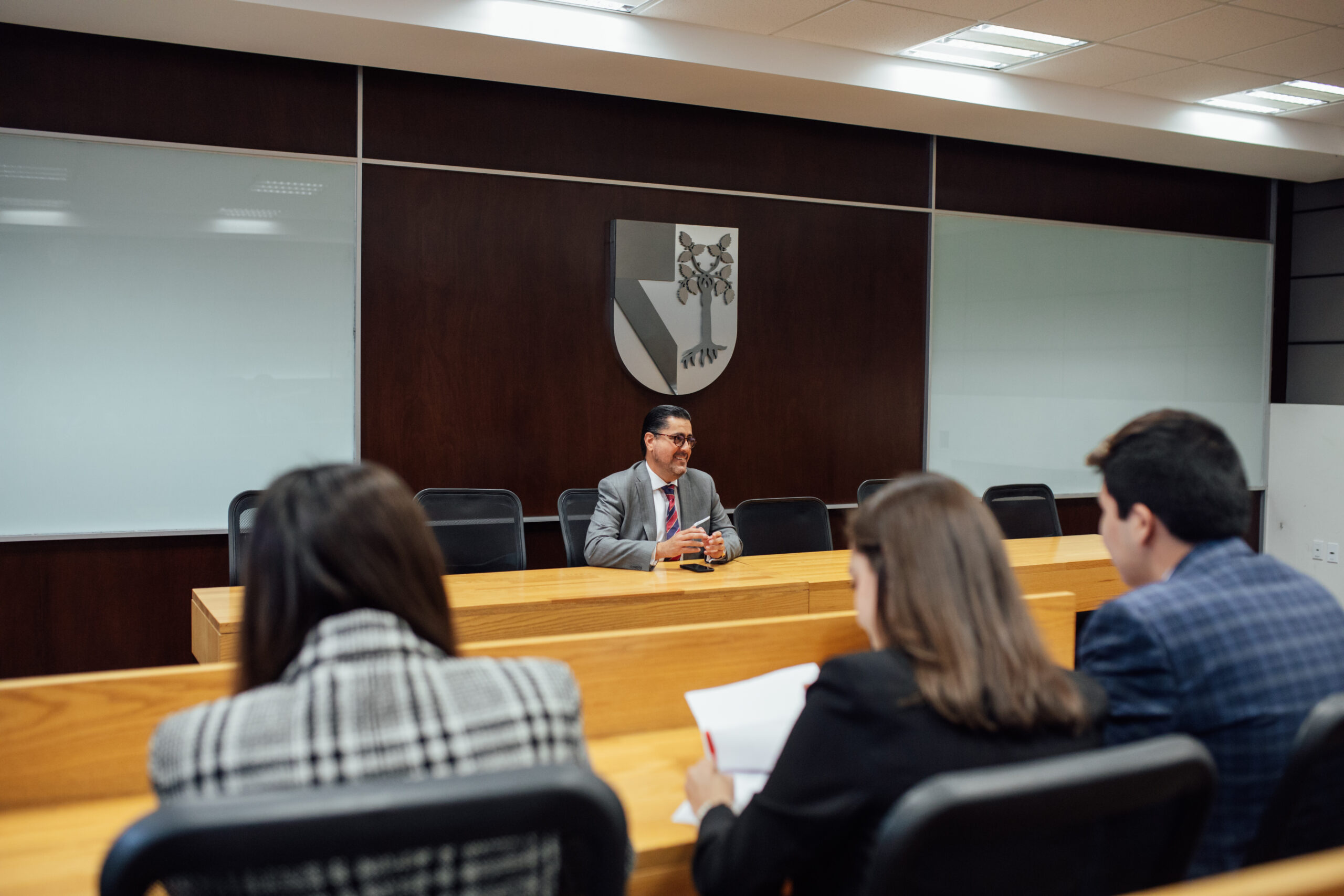
For Pedro Esteban Armendáriz Valenzuela, director of the Bachelor of Laws program at the Aguascalientes campus of the Universidad Panamericana , the answer is clear: AI can streamline legal processes, but it will never replace the judgment, ethics, and human conscience that justice demands.
The Myth of Substitution and Legal Logic
Although it is currently possible to develop algorithms capable of processing laws, analyzing facts, and constructing legal reasoning, it is a misconception to think that artificial intelligence can completely replace the work of judges and lawyers.
The specialist explains that these systems operate using binary code through artificial neurons that are trained to recognize reality, but that they are limited when it comes to the analytical complexity of human beings.
“It’s not true consciousness; it’s not as if we’re interacting with an entity that possesses intelligence equal to our own, with the ability to think outside the box,” points out Mr. Armendáriz. “Artificial intelligence can present arguments and offer reasons that sound very solid, but that doesn’t represent the whole reality.”

This difference is particularly significant in areas such as criminal law, where determining whether conduct was intentional or negligent requires interpreting intentions, circumstances, and factors that go beyond any algorithmic model.
How is AI currently used in the justice system?
Artificial intelligence is already part of the day-to-day work of law firms and courts. It is currently used for:
- Analyze case law and legislation.
- Organize court files.
- Automate document search.
- Process large volumes of information.
- Simulate legal scenarios to strengthen litigation strategies.
These tools help optimize time and improve decision-making, but legal responsibility still rests with individuals.

The Real Challenge: Legal Liability in the Age of AI
Beyond its application in legal proceedings, the main legal challenge lies in determining who is liable when artificial intelligence causes harm or infringes on rights.
“The most significant underlying issue is not so much the administration of justice—I’m referring to the intersection of AI and the law—but rather the question of liability in the age of AI,” the scholar explains.
Among the main challenges are:
- Accidents caused by vehicles equipped with driver-assistance systems.
- Use of copyrighted works to train AI models.
- Industrial property disputes arising from content or products generated by artificial intelligence.
- Limited access to algorithms protected by trade secrets.
Given these scenarios, the specialist emphasizes an essential principle:
“Artificial intelligence is not subject to rights or obligations; it is a tool, and that is how we must understand it.”

The Risk of the Technological Oracle and the Role of Universities
Another risk identified by the expert is treating AI as an absolute source of truth without verifying the information it provides.
Artificial intelligence models can reproduce errors, biases, or incomplete information depending on the data used to train them. For this reason, he believes that universities are playing an increasingly important role as spaces for critical thinking and the validation of knowledge.
“The legal field, but certainly universities, the education sector, and the academic sector, are becoming increasingly important as a filter for verifying information. If we rely solely on what AI gives us, we’ll take it as fact. However, we need to turn to books; we need to turn to universities, because they will be the only counterbalance.”
The Human Factor: The Profile of the Lawyer of the Future
In light of the advancements in artificial intelligence, the National Association of Law Schools ( Universidad Panamericana ) is committed to training lawyers who can use technology as an ally, without losing sight of critical thinking, professional ethics, and service to others.
Rather than simply memorizing rules, the educational model seeks to develop students’ ability to interpret the law, construct sound arguments, and solve complex problems with a sense of social responsibility.
According to Pedro Esteban Armendáriz, the future of the legal profession will depend on professionals who know how to combine the potential of artificial intelligence with what no technology can replace: human judgment.
“First, we must never forget that our purpose, our social function, is people, and we should never prioritize any technology or concept over human dignity and the provision of professional service,” he concluded.