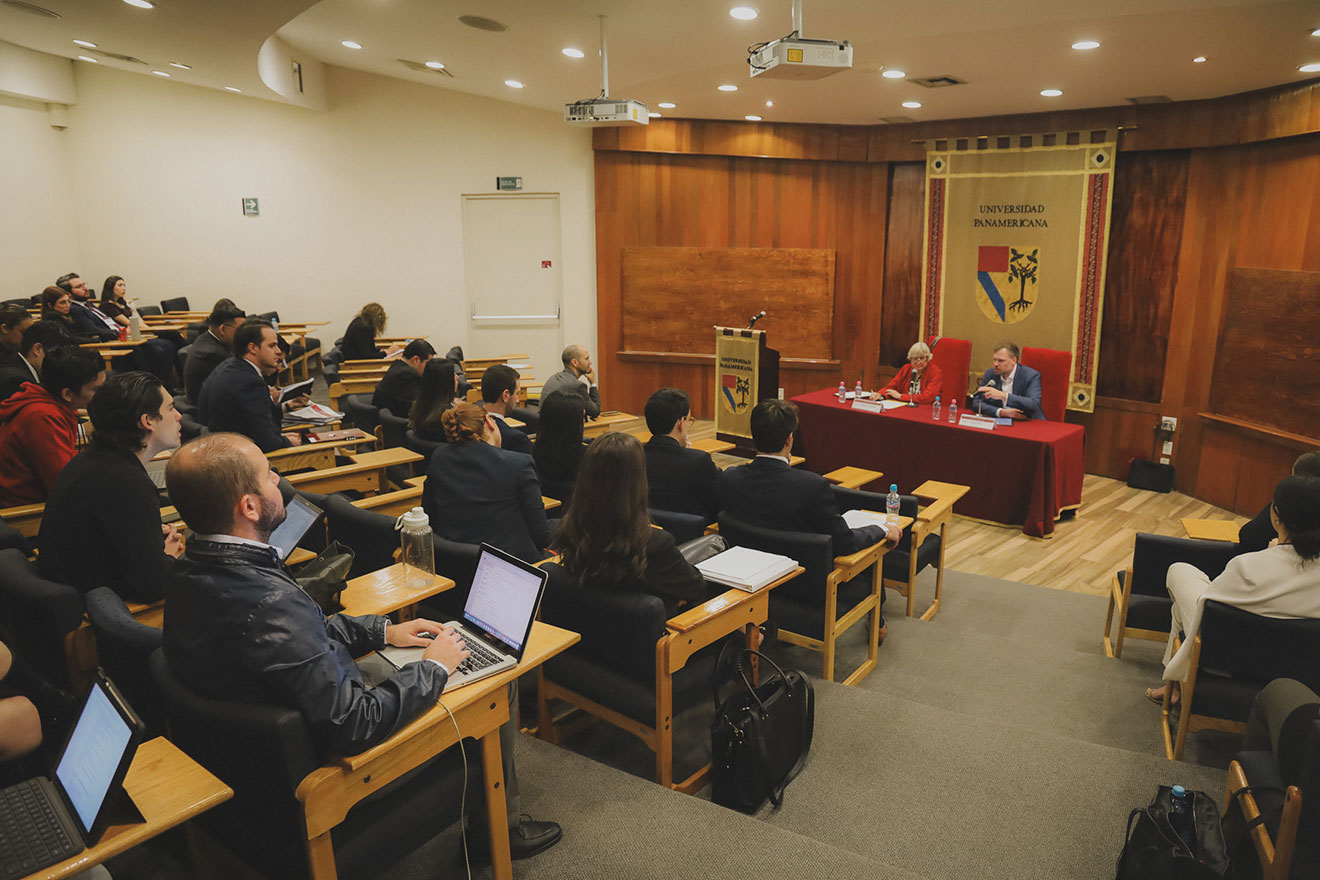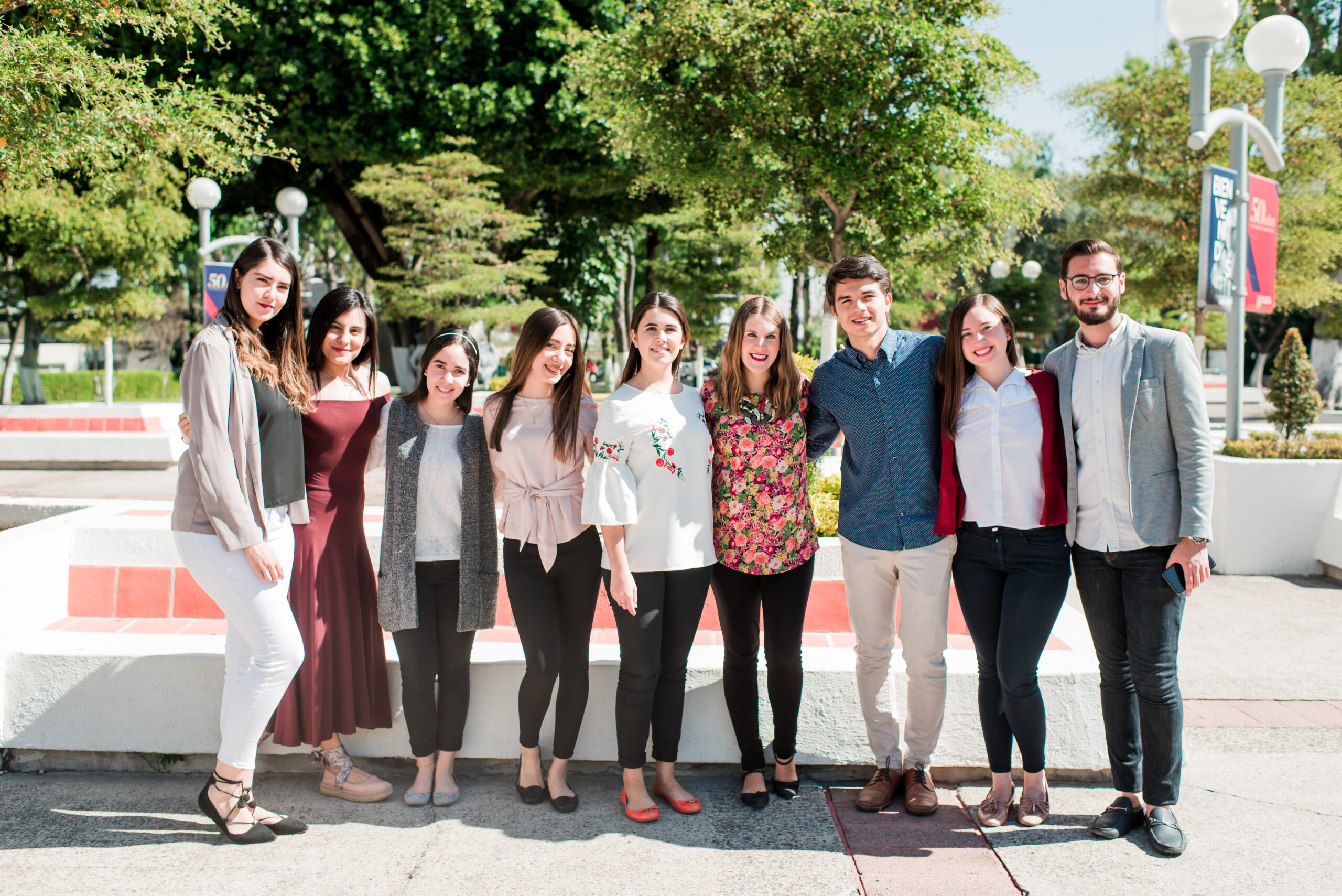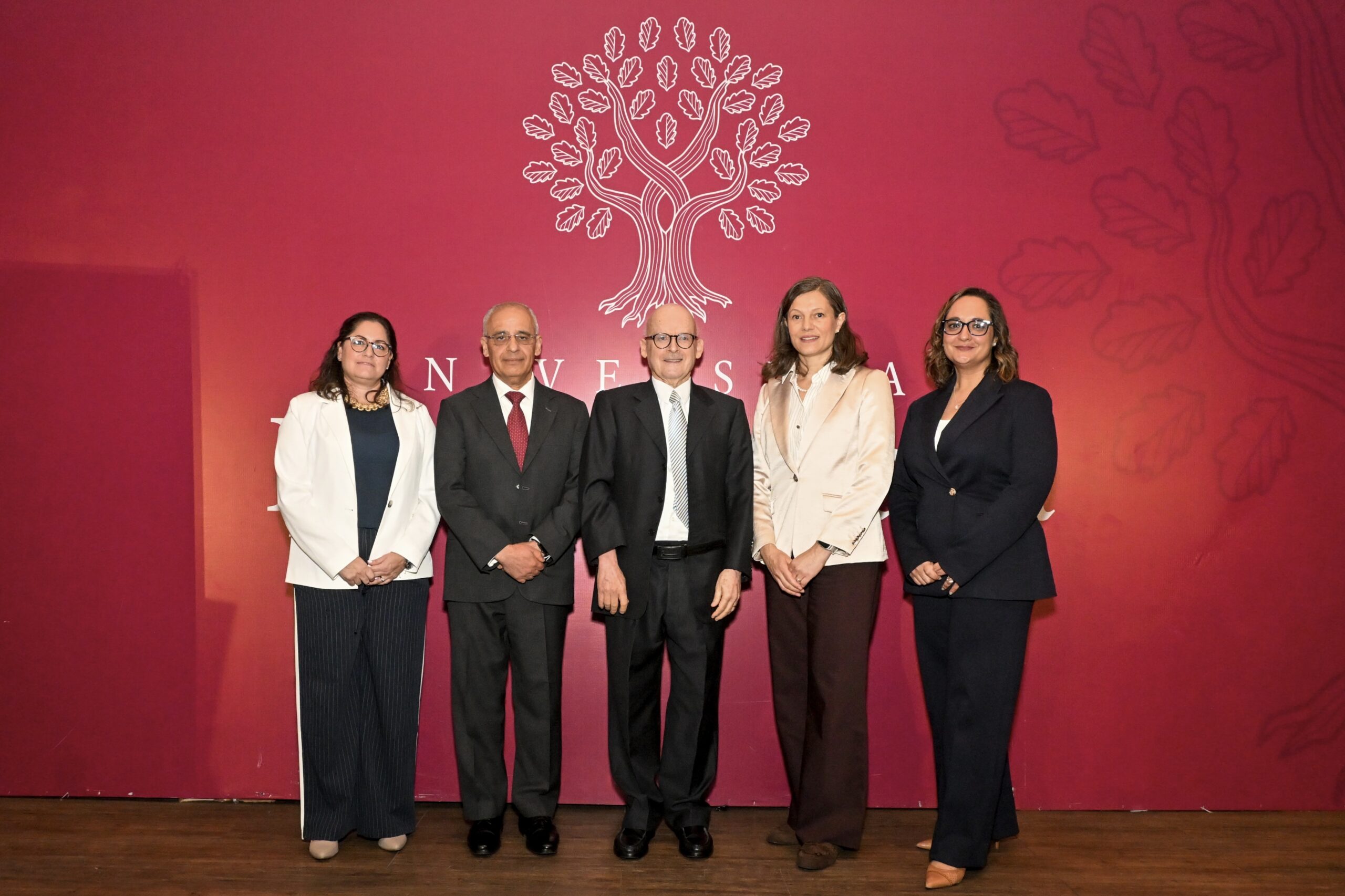
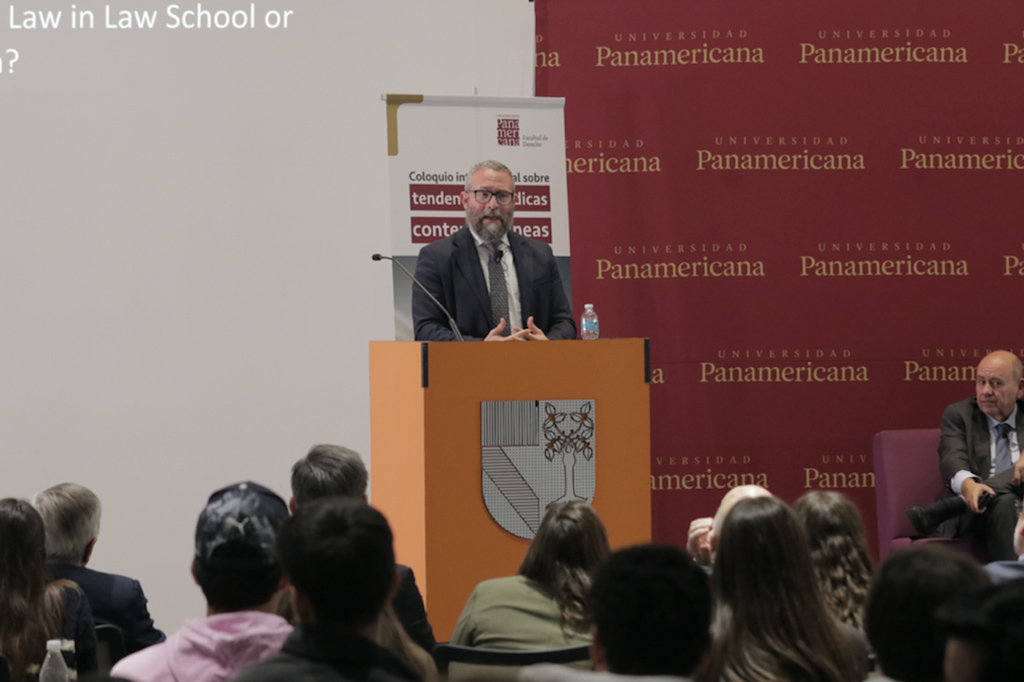
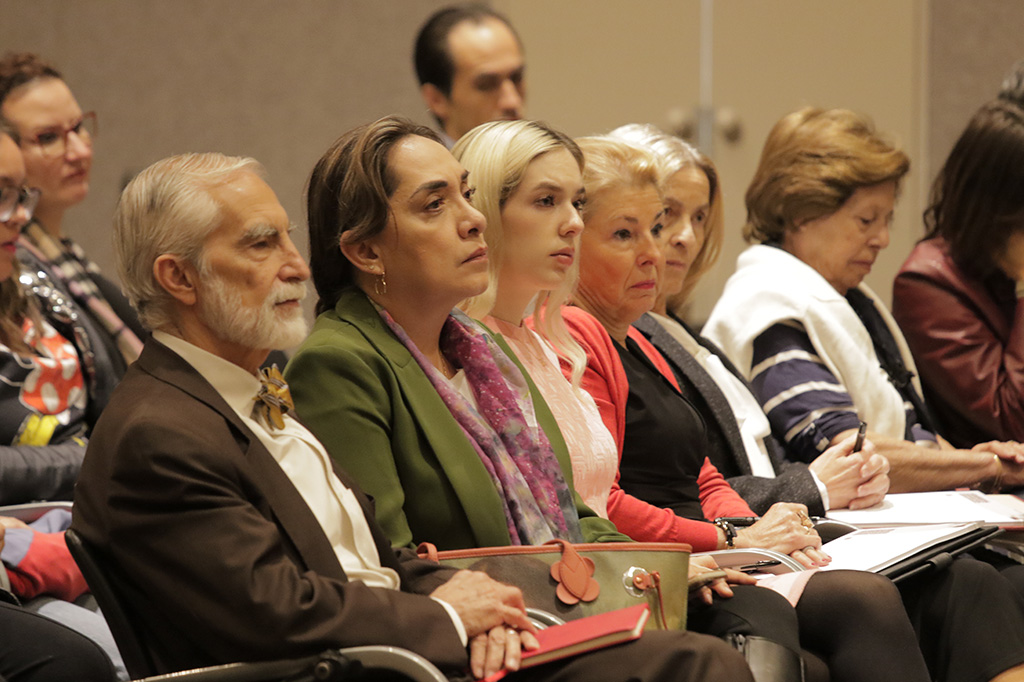
Mexico City, December 5, 2023.- The School of Law of the University of Mexico held a Universidad Panamericana held the International Colloquium on Contemporary Legal Trends, a space in which experts discussed topics such as legal education, megatrends, philosophy of law and constitutional law.This was a space in which experts discussed topics such as legal education, megatrends, philosophy of law and constitutional law, in order to understand how these decisions can impact our country.
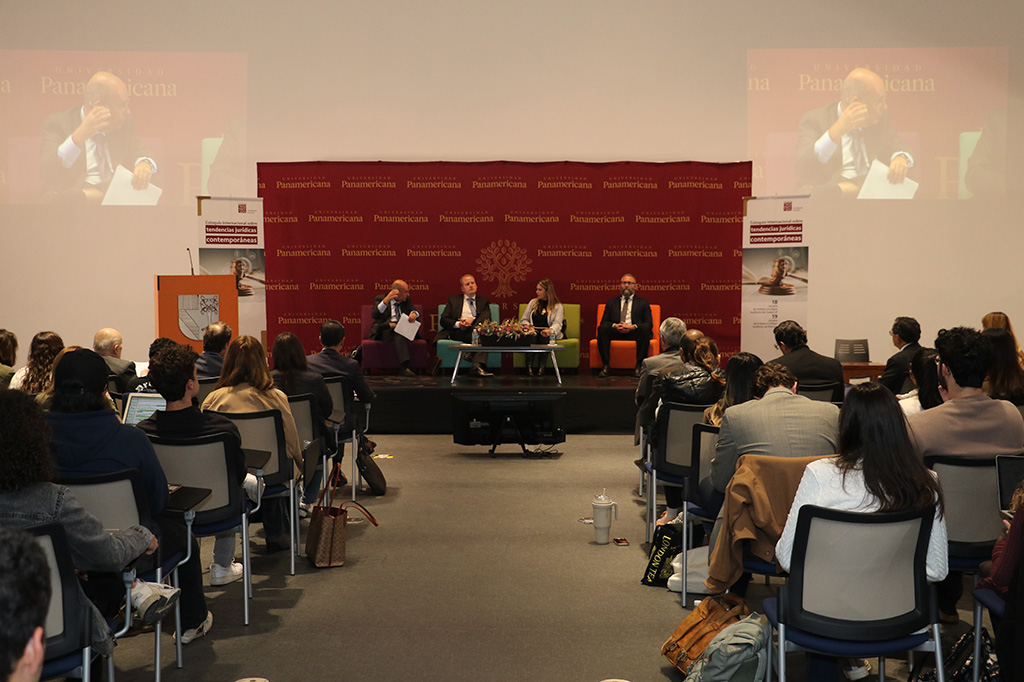
Legal trends
During the first panel, Salvador Vives, from Tirant lo Blanch, responded to the question "How will Artificial Intelligence affect the training of lawyers?" by saying: "I expect the impact to be small, because it does not offer a useful reasoning model, it offers another tool".
"In legal education, it seems to me that it is essential for students to understand the universe of technologies, but in the end a student will have to know issues such as property, which no one is going to teach them (...) I believe that the educational models that opt for a radical change will end up losing," he said.

Next, Mercedes Galán, from the University of Navarra, responded to the question of whether it will be possible to maintain legal education as an independent autonomous knowledge, expressing that "it should be possible and we should maintain our efforts to make it so, because it has its own language that must be serenely transmitted to students, and ensure that they acquire and learn it as part of their training".
"That is to say, it would be necessary to transfer to the students a series of concepts that make up the legal language (...). Legal education, like all legal education, requires basic knowledge embodied in day-to-day practical life," he said.
While talking about how to reconcile the formalist and autonomous tradition of legal education with the new megatrends of university education, such as interdisciplinarity, the irruption of the digital world and globalization, he revealed: "I think we should continue to educate students in formalism and in depth, with knowledge acquired in a reflective and calm manner".

The value of interaction
Afterwards, Christoph Bezemek, Dean of Law at the University of Graz Austria, spoke about the international perspective on legal education, about which he said: "Law as an academic discipline should not be left to randomness". He added: "(...) we acquire knowledge of the structures of the subject matter, simplified to the point of banality, by the plethora of textbooks, textbooks and other resources".
"This raises a difficult question for us: if the knowledge necessary for legal education can be easily obtained by anyone who is able to buy and read a book, what is the purpose of legal education? What is the added value offered to the people who pay for this education?" he questioned those present.

Thus, he stated that it can hardly be asserted that the objective is the transfer of knowledge. "Academic teaching in law can only play a value beyond the reproduction of what can be easily obtained elsewhere, if it seeks interaction with students and if it seeks their intellectual growth through the example of their professors," he stressed.
Then, Jorge Cerdio, from the Instituto Tecnológico Autónomo de México, expressed: "Law is not autonomous as knowledge, but rather it is quite useless without a perspective (...). So I would say that, in a university that ascribes certain human values and Christian perspectives, the idea of autonomy should be qualified if not adjectivized and say, in this sense, that one teaches law because one wants to form people who act law in a human and Christian sense".
Philosophy of Law II
During the second day, Dr. Juan Cianciardo Rocca, director of the Master in Human Rights at the University of Navarra, advocated for a profound revision of how the philosophy of law is taught, seeking a closer connection with the reality of legal practice and addressing fundamental questions about the concept and meaning of law.
He spoke about the subject from three perspectives: legal education, philosophy of law and constitutional law, and mentioned the discrediting of law and the bad reputation of legal positions, holding the Office of the Attorney General of Law partly responsible.
He said that there are good reasons for not maintaining the philosophy of law in the curricula, arguing that it has become an intellectual exercise detached from the life and interests of the jurist, "which negatively affects the teaching and practice of law".
He identified two fundamental questions: the description of the legal phenomenon and the explanation of the concept and purpose of law as a cultural product. He argued that "the current philosophy of law does not adequately answer these questions, which leads to problems in the training of lawyers and in professional practice".
He also proposed "adapting the teaching of the philosophy of law to contemporary perspectives, focusing on the correct object, the training of professionals and a pluralistic methodological approach".
Critically educating students
Dr. Rodolfo Luis Vigo, from the Universidad Austral of Argentina, stressed the importance of pointing out errors without affecting dignity and respect for those who think differently. He also underscored the importance of educating students critically and fostering the ability to think .

He also spoke of the reasons for maintaining the Philosophy of Law and classified them into permanent and contingent reasons. He described the paradigm shift from the Legal Rule of Law to the Constitutional Rule of Law. He also emphasized the influence of the Constitution in the configuration of the new paradigm and the philosophical problems in the teaching of law.
Likewise, he advocated acquiring a tradition and building an identity in the teaching of law and stressed the importance of rational and respectful dialogue, recognizing the strengths and weaknesses of each position.
Dr. Carlos Ignacio Massini Correas, from the University of Mendoza, Argentina, highlighted the importance of teaching philosophy of law in universities from a practical-realist perspective for three reasons:
- General intellectual benefits: suggested that the philosophy of law can contribute significantly to the intellectual development of law students and professionals.
- Areas of legal knowledge not covered by other subjects: The inclusion of the philosophy of law would make it possible to cover these important aspects and enrich the legal training of students.
- Understanding the ultimate meaning of law: he denoted the importance of knowing the sensitivity of the virtues of practical reason required in the exercise of law, and the rational foundations that justify the multiplicity of elements that make up public reality.
Find out more about the law program at Panamericana here: https://www.up.edu.mx/educacion-universidad-facultad-de-derecho/