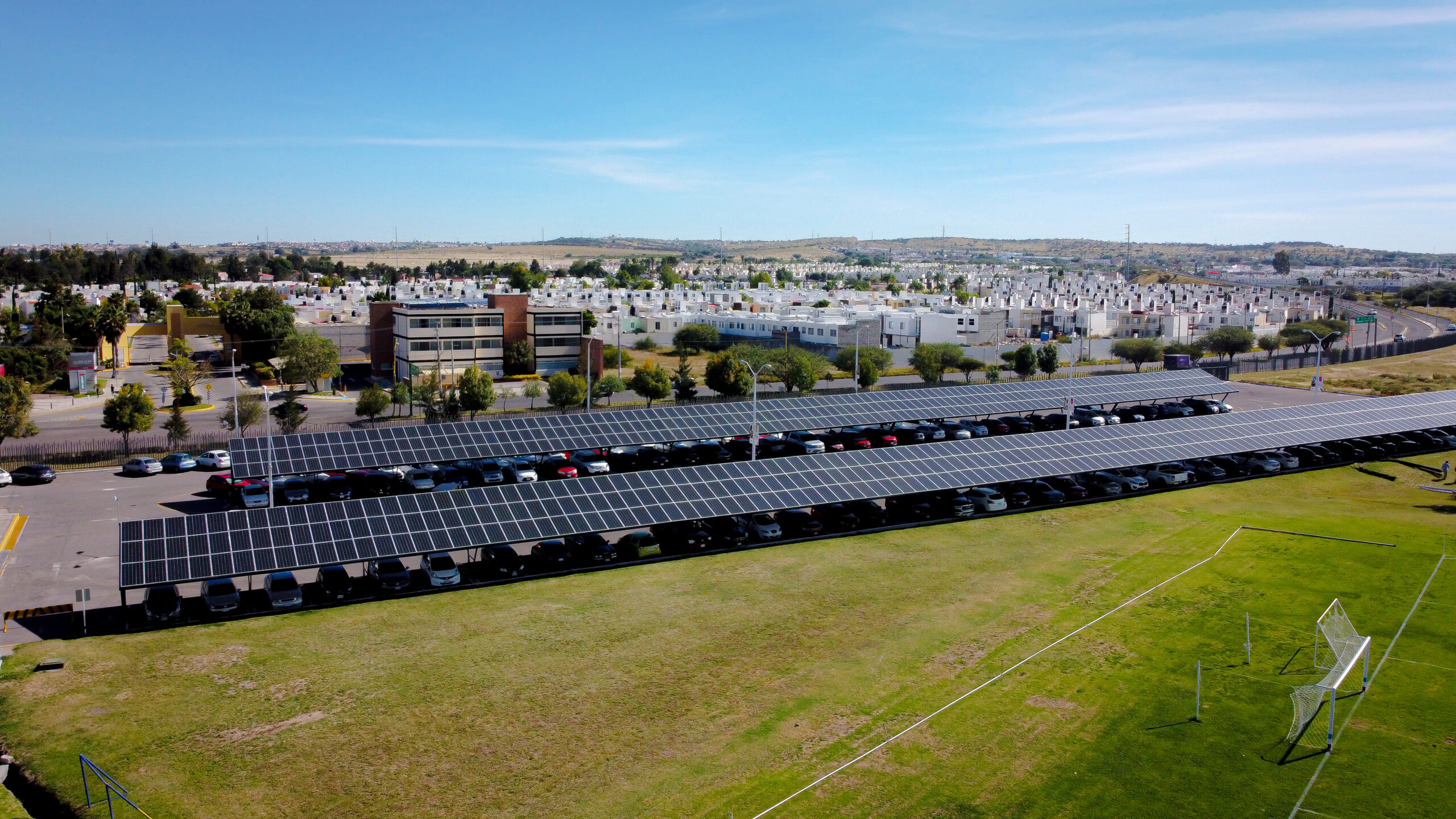
Aguascalientes, Aguascalientes, July 21, 2025. In a global environment marked by geopolitical uncertainty and climate change, Mexico faces the urgent challenge of transforming its energy model, reducing its dependence on fossil fuels, and moving toward sustainable energy independence.
Diego Larrondo Montalvo, director of the bachelor's degree program in Energy Technology Engineering at the Universidad Panamericana in Aguascalientes, highlighted in an interview the challenges and opportunities that the country faces in terms of renewable energy and energy technologies.

Mexico faces its dependence on fossil fuels
Mexico continues to rely heavily on fossil fuels, making it vulnerable to the energy policies of other countries, such as the United States.
Today, a large percentage of Mexico's energy generation still comes from gas, coal, and other fossil fuels. This causes us to react late to changes in international legislation, such as tariffs imposed on key products in energy production, which impacts our energy sovereignty,"explained Mr. Larrondo.
Diversification and new technologies: the path to energy independence
To counteract these challenges, Mexico must move toward a diversified energy model that includes renewable sources such as solar, wind, and geothermal energy. Recent public investment in geothermal projects is a positive step, but it is insufficient if not accompanied by comprehensive policies to reduce dependence on gas and coal.
Another key aspect is the development of infrastructure for electromobility. "Mexico has not yet invested enough in electric mobility, unlike countries such as the United States and China. Greater investment is needed in charging stations and incentives for the adoption of electric vehicles,"added Mr. Larrondo.
Furthermore, private investment plays a key role in this transformation. Nearshoring has opened up new opportunities to attract foreign investment, especially in manufacturing and energy technology. European and Asian companies are looking to establish themselves in Mexico to be closer to the US market. However, the regulatory framework and lack of transparency in the country are significant barriers.
The role of education in the energy transition
Higher education institutions, such as the Universidad Panamericana, play a fundamental role in training professionals who are prepared to face these challenges.
Through multidisciplinary projects, the institution promotes the active participation of its students in initiatives related to energy efficiency, public policy analysis, and the development of clean technologies, thus contributing to a culture of innovation with social and environmental impact.
At the Aguascalientes campus, the bachelor's degree in Energy Technology Engineering seeks to train future engineers to develop more efficient and sustainable energy systems, with a practical and strategic focus on creating sustainable, high-performance systems.
"It's not just about teaching about renewable energy, but also about improving efficiency in the use of current energy resources and encouraging innovation in energy storage,"he emphasized.

Energy storage and lithium: sectors with high potential
Energy storage is one of the areas with the greatest potential for growth, as it would enable a more stable and efficient electricity grid. "New-generation batteries can make renewable energies more reliable by reducing their intermittency, which would help to ensure a constant supply of clean energy,", added the expert.
The academic also highlighted the importance of optimizing current fossil fuel-based systems during the transition. "We cannot simply eliminate the use of coal and gas overnight.
"A comprehensive plan is needed that includes improvements in energy efficiency, infrastructure modernization, and a gradual transition strategy that guarantees energy supply without affecting the national economy," he said.
On the other hand, the development of lithium in Mexico, particularly in Sonora, represents a competitive advantage. "The proper exploitation and use of this resource will be key to the growth of energy storage and electromobility in the country,"he said.
The future of renewable energy in Mexico
The energy transition is not only an environmental imperative, but also an economic and geostrategic opportunity for Mexico. With appropriate public policies, technological investment, and an education system aligned with the sector's needs, the country can lead the way toward a sustainable and competitive energy model.
"In the next five to 10 years, Mexico has the potential to become a leader in renewable energy generation, as long as it manages to accelerate the adoption of new technologies and improve existing energy infrastructure,"concluded Mr. Larrondo.
Learn more about the Bachelor's Degree in Energy Technology Engineering at the Universidad Panamericana discover how to prepare yourself to lead the transformation of the sector at: https://www.up.edu.mx/educacion-facultad-de-ingenieria-oferta-academica-licenciatura-ingenieria-en-tecnologias-energeticas/