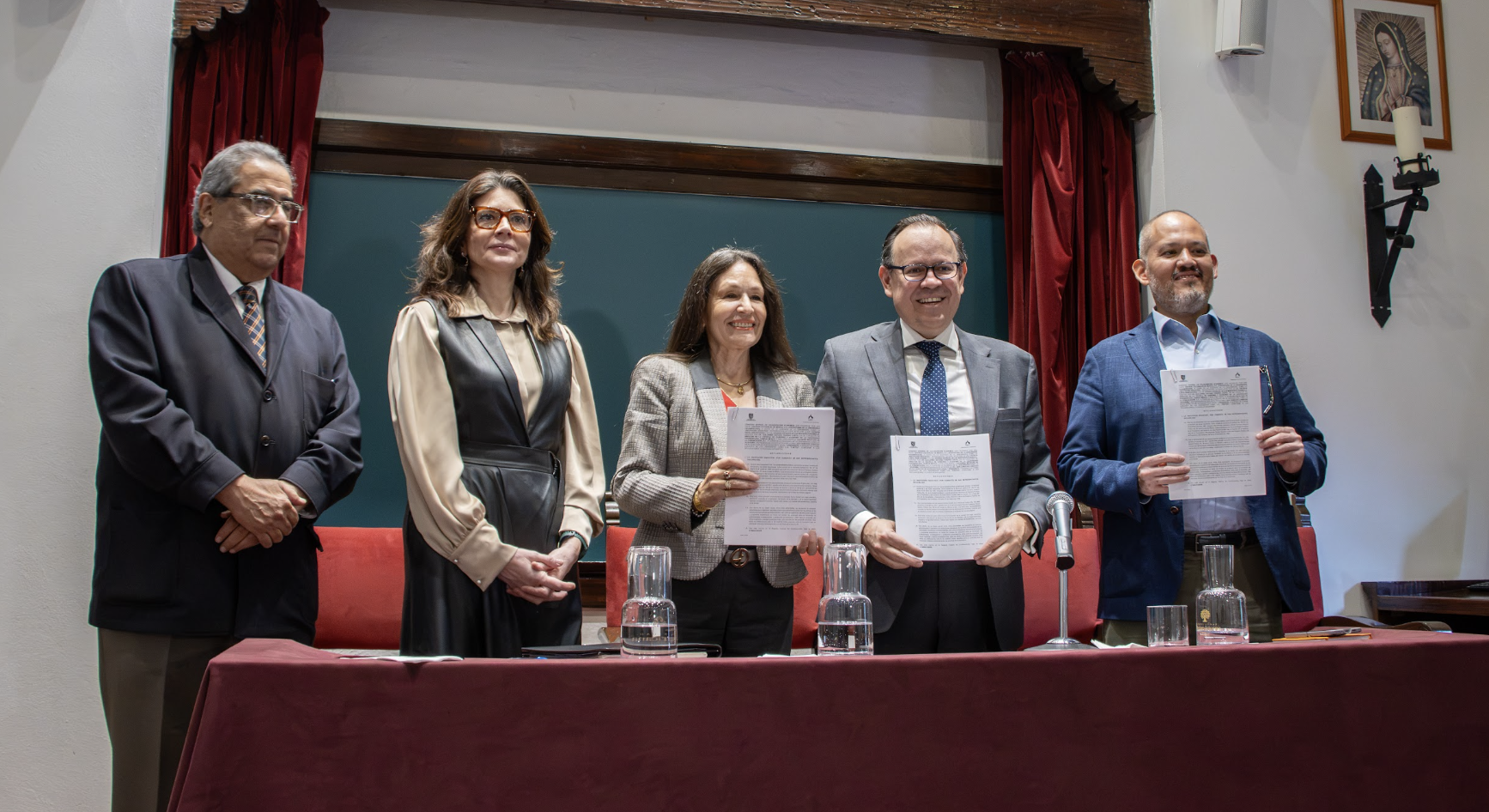
Mexico City, December 18, 2025.— The Universidad Panamericana the granting by the Mexican Institute of Industrial Property (IMPI) of patent MX/a/2021/013383 for the Compact Release Mechanism for Nanosatellites.
This technology, developed entirely at our university, addresses a critical challenge for scientific research in space: supporting, protecting, and releasing test masses with extreme precision within the tiny confines of CubeSats.
Manuel Alejandro González Mendoza, who coordinated the registry review process and was a member of the development team, explains that the project’s goal was to ensure the highest level of accuracy in scientific experiments conducted in microgravity.

“The design ensures that the test sphere is positioned exactly in the center of the chamber, allowing for accurate and repeatable measurements from a standardized starting point,”, he noted.
Innovation with the UP Seal: simplicity, efficiency, and reusability
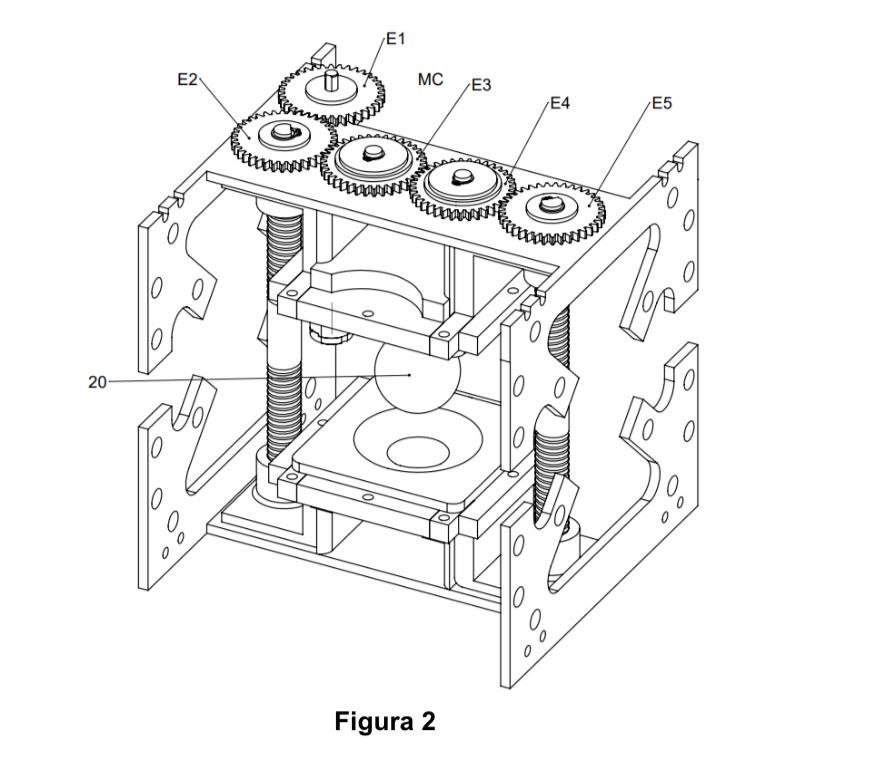
The patented mechanism is distinguished by its ingenious system of two movable walls that move in sync and in opposite directions, driven by a single motor and a gear train.
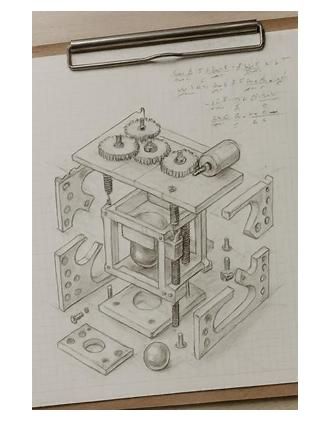
“Using a single motor reduces synchronization complexity compared to two-motor designs, and lowers energy consumption, mass, and volume—all of which are critical factors in a nanosatellite,”, explains Mr. González Mendoza.
Compared to pyrotechnic or thermal alternatives, which are typically single-use, the solution developed at the Universidad Panamericana a decisive advantage: reusability.
“This mechanism must operate repeatedly over the course of a three-year mission. The ability to open and close the system as many times as necessary increases the safety and reliability of the experiment,” says the coordinator.
A collective achievement and an institutional milestone
The path to obtaining the patent was not without its challenges. Mr. González reveals that the IMPI pointed out ambiguities in the nomenclature of the components within the documentation.
“We had to revise that documentation to ensure that each component was clearly identified in the description and illustrations,” he says, a meticulous process that resulted in a solid technical dossier and the final contract award.
This achievement is the result of a multidisciplinary effort. The inventors—students at the Panamericana University who worked on the nanosatellite’s mechanical design and payload—worked under the guidance of Professor Carlos Daniel Laguna Juárez and in collaboration with specialists from institutions such as NASA and MIT.
“This collaboration allowed us to refine the design, validate scientific requirements, and ensure that the mechanism met the demands of a real space environment,” he said.
The patent marks a milestone for science and applied research at the Universidad Panamericana, which is committed to training Mexican talent capable of competing in high-tech sectors.
“This is the first patent resulting from a nanosatellite design project, cementing the university’s position as an official and active participant in aerospace education and development in Mexico, and supporting its growth as an institution that drives technological innovation in this sector,” Mr. González proudly states.
UP Innovation in Space
With this breakthrough, the Universidad Panamericana is Universidad Panamericana only helping to strengthen national technological capabilities in a high-impact field, but is also inspiring future generations.
Mr. González Mendoza’s advice for those embarking on this path is clear: “Start the application process as soon as possible and contact your institution’s intellectual property office for advice and guidance”.
The Compact Nanosatellite Release Mechanism not only represents a technological breakthrough but also symbolizes the Pan-American Space Agency’s commitment to innovation, scientific research, and space exploration.
Learn more about our university's research projects at: https://www.up.edu.mx/investigacion-noticias/