Zapopan, Jalisco; September 2. – The National Institute of Technology and Higher Education ( Universidad Panamericana ) is promoting the integration of Artificial Intelligence (AI) into higher education based on a central principle: technology should expand human capabilities, not replace people’s judgment, creativity, or responsibility.
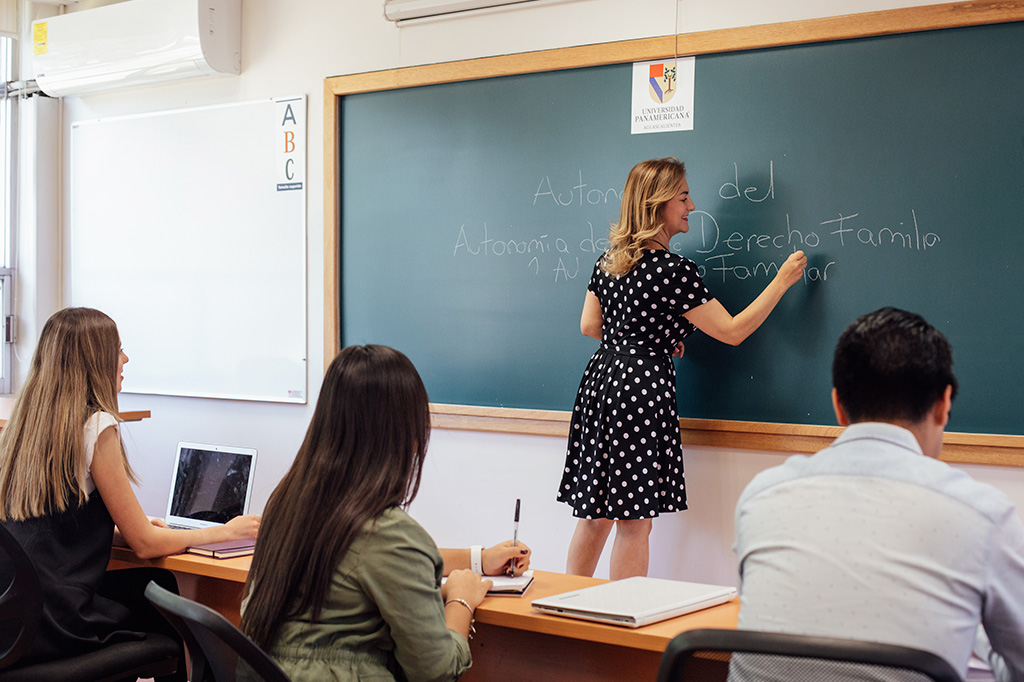
At the School of Engineering and Architecture at the Guadalajara campus of the Universidad Panamericana , under the direction of Dr. Jafet Rodríguez, the integration of AI tools is based on one premise: to train professionals capable of using this technology to solve complex problems, while also equipping them with the knowledge necessary to question, verify, and take responsibility for the decisions they make.

Human judgment over the algorithm
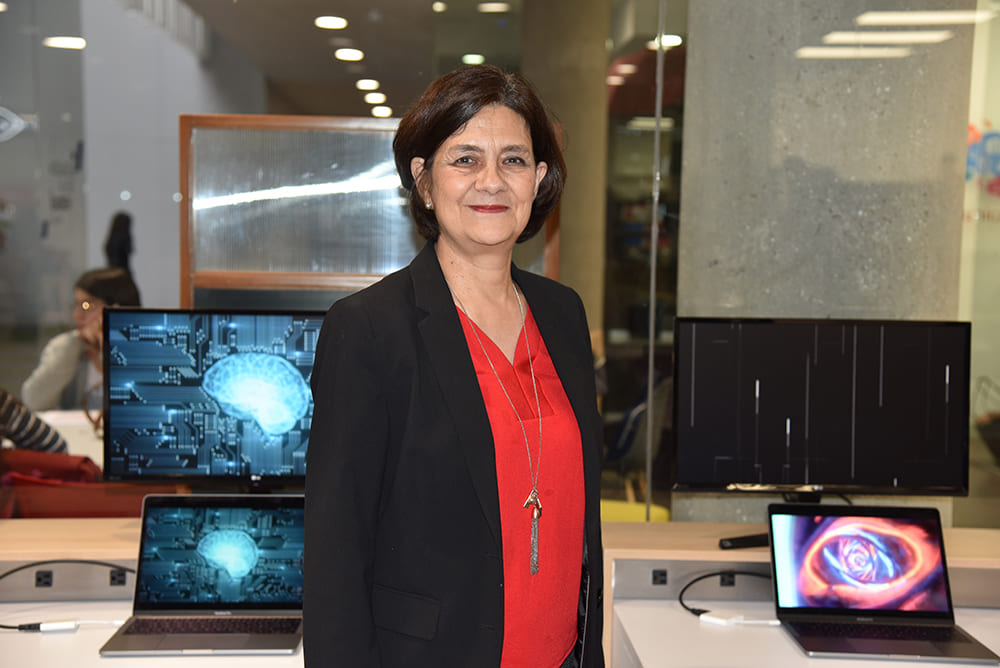
Dr. Jafet Rodríguez, dean of the School of Engineering and Architecture, notes that one of the main educational challenges is teaching students which decisions should not be delegated to an algorithm.
Historically, engineering has relied on advanced tools such as calculators and simulation software. However, risk arises “when we no longer have the knowledge and judgment necessary to determine whether the results provided by the tool make sense” and “when we stop applying our curiosity and creativity.”

For this reason, the school’s vision is not to train professionals who compete against AI, but rather “engineers augmented by it.” The goal is for students to leverage technology to explore more alternatives and solve complex problems, while retaining the ability to question, verify, and take responsibility for the final decision.
What role does human judgment play in relation to artificial intelligence?
Human judgment is essential because it allows us to interpret the results generated by an AI tool, identify errors or biases, and determine whether a solution truly addresses the problem at hand.
From this perspective, the School of Engineering and Technology ( Universidad Panamericana ) aims to help its students develop three fundamental skills related to AI:
- To question the results generated by a tool.
- Verify the information using reliable, primary sources.
- Take responsibility for the decisions made based on that information.
As Dr. Jafet Rodríguez explains: “AI can make suggestions. The engineer must understand, evaluate, and take responsibility for the decisions they make.”.
The goal, therefore, is not to use more AI simply because it is available, but to learn how to use it when it truly adds value to the learning process or to problem-solving.
How does the Universidad Panamericana verify AI-generated results?
One of the principles of the School of Engineering and Architecture's AI adoption framework states that no data, reference, calculation, or specification generated by artificial intelligence should be accepted without verifying it against primary sources.

This practice aims to prevent errors, fabricated information, or biases in AI systems from being directly incorporated into academic work or professional decisions.
Assessment also helps keep learning as the central focus. Technology can facilitate certain tasks, but it should not replace the skills that students need to develop during their professional training. In this way, the use of AI is directly linked to knowledge acquisition, critical thinking, and problem-solving skills.
How does the " Universidad Panamericana " promote student authorship when students use AI?
The " Universidad Panamericana " encourages students to maintain authorship and responsibility for their work, even when they use artificial intelligence tools.
The School of Engineering and Architecture aims to ensure that every assignment—from programming code to architectural projects—reflects the student’s creativity, judgment, and personal contribution.
One of the practices implemented involves having students give an oral presentation along with certain assignments, which allows professors to understand the reasoning behind the decisions made and assess the students' mastery of the work.
In addition, the institutional framework encourages the documentation of AI use through brief methodological notes. The purpose is not to conceal the use of these tools, but to make it transparent.
The student should be able to explain:
- What the person did.
- What the artificial intelligence tool did.
- How the result was verified.
- Why the final decision rests with the student.
This traceability fosters intellectual honesty and helps train professionals who are capable of using AI in an ethical and responsible manner.
What measures is the Spanish Data Protection Agency ( Universidad Panamericana ) considering to protect data when using AI?
Information security is another key component of the responsible adoption of artificial intelligence. It is recommended to use, whenever possible, tools that are covered by an institutional license and have adequate data protection measures in place, especially when working with academic, personal, or intellectual property information.
When handling sensitive information, the use of tools or agents capable of processing files locally on the computer is also encouraged, thereby avoiding the unnecessary uploading of information to external cloud services. These measures aim to reduce risks related to privacy, intellectual property, and the exposure of sensitive information.
Looking ahead to 2026, the School of Engineering and Architecture is incorporating consideration of the resource consumption associated with generative AI tools. This includes acknowledging the energy and water resources required to operate the technological infrastructure that enables these systems.
For this reason, the program aims to help future engineers and architects learn to formulate more precise and efficient queries and to avoid the unnecessary use of AI tools. This approach links technological innovation with sustainable engineering and architecture: using technology thoughtfully also means considering its environmental costs.
Ongoing training and the non-negotiable principle
Digital training and literacy are coordinated at the campus level by the AI Committee, with participation from representatives of each academic unit. Currently, efforts are focused on training for faculty, administrative staff, and students, notably the training offered by the Talent Faculty Center and the collaboration with Google partners to leverage tools such as Gemini.
Finally, the non-negotiable principle that will guide the institution as it strives to become a leader in AI with a human purpose is “a vision of technology centered on human dignity”. Drawing on Christian inspiration, it is understood that intelligence, freedom, judgment, and responsibility are dimensions that must be developed and not delegated.
The “ Universidad Panamericana ” (AI in the 21st Century) thus presents an approach to Artificial Intelligence that seeks to go beyond mere technological adoption. Its proposal is to train professionals capable of working with AI without sacrificing the skills that enable responsible decision-making: understanding, questioning, verifying, creating, and taking responsibility for their own decisions.