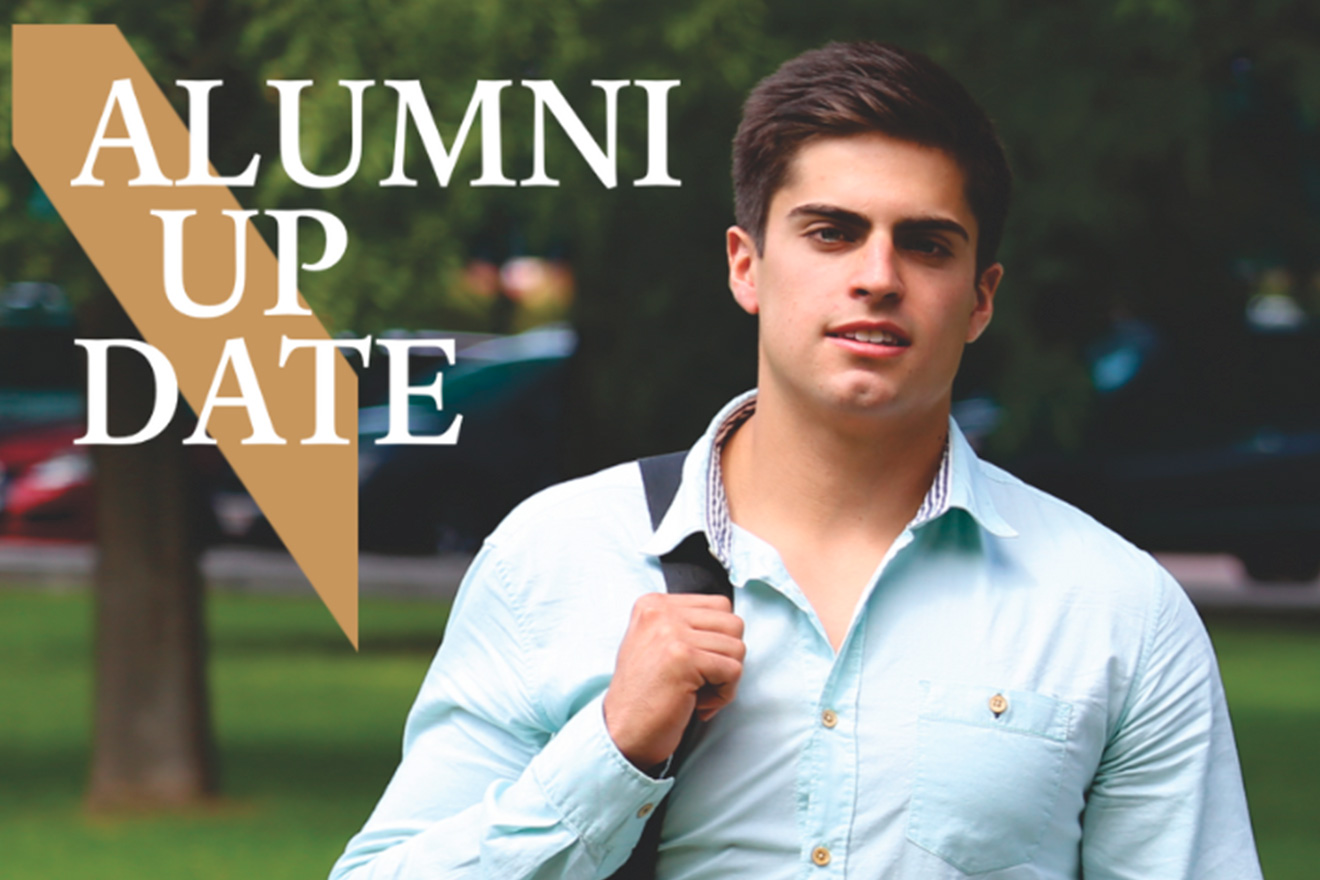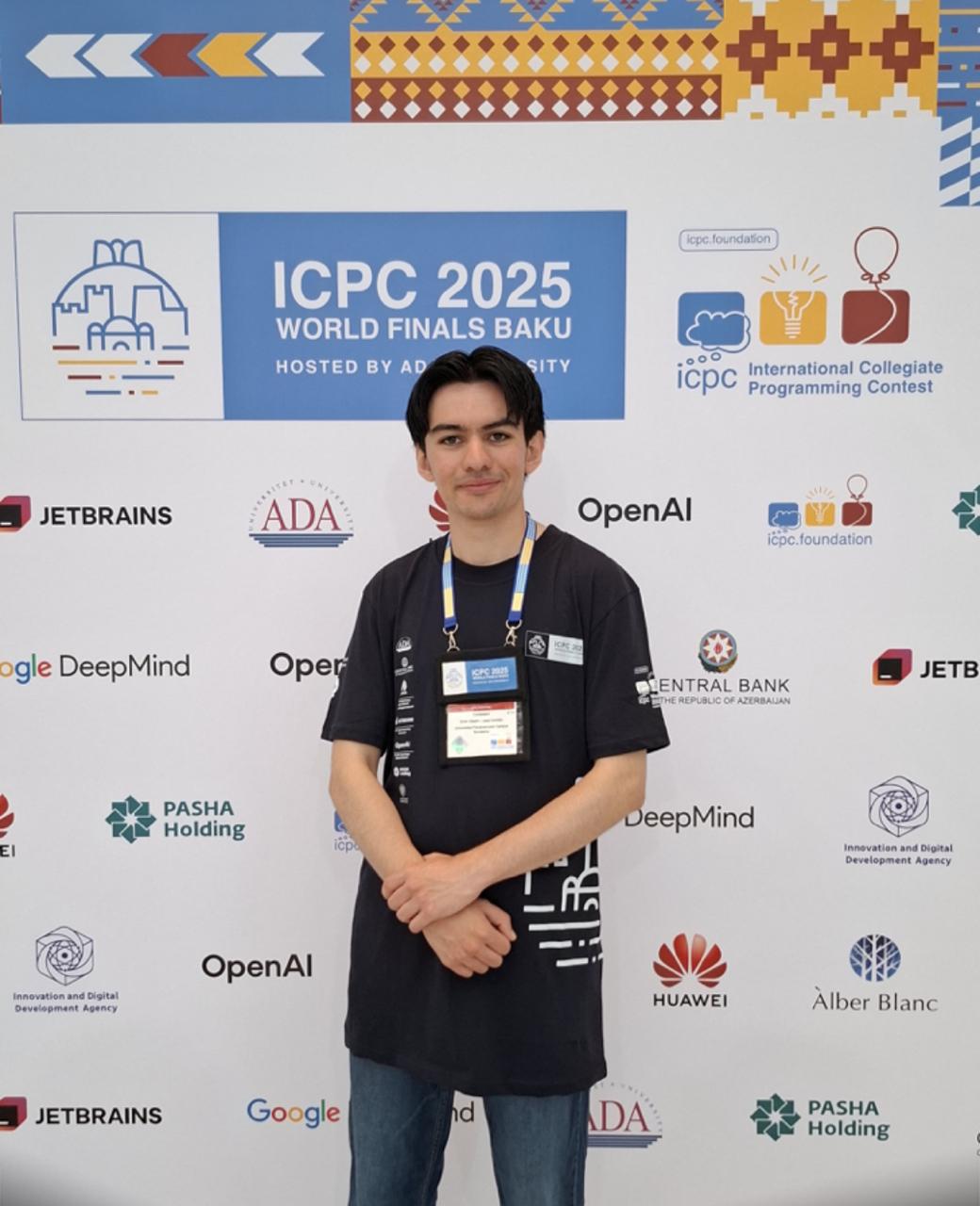
Aguascalientes, Aguascalientes, October 8, 2026.— Erwin Alberto López Hurtado, alumnus of the Artificial Intelligence Engineering program with a specialization in Software Quality at the Universidad Panamericana Aguascalientes campushas built his career on discipline, academic preparation, and the pursuit of new challenges.
His participation in international programming competitions opened the door to two professional opportunities: a stint at Meta in California, United States, and a research internship at the Huawei Research Center in Hong Kong.
A career built on perseverance
For Erwin, great opportunities don’t come overnight. His career path as a recent graduate is the result of years of preparation, perseverance, and a willingness to take on new challenges. During his college years, he participated in international programming competitions, and through these experiences, he had the opportunity to join professional projects at two of the world’s leading technology companies.
His story began to take an international turn after he participated in the International Collegiate Programming Contest (ICPC), one of the most prestigious competitive programming contests in the world. In 2025, he had the opportunity to represent Mexico and the Universidad Panamericana , alongside his team Upgraded.
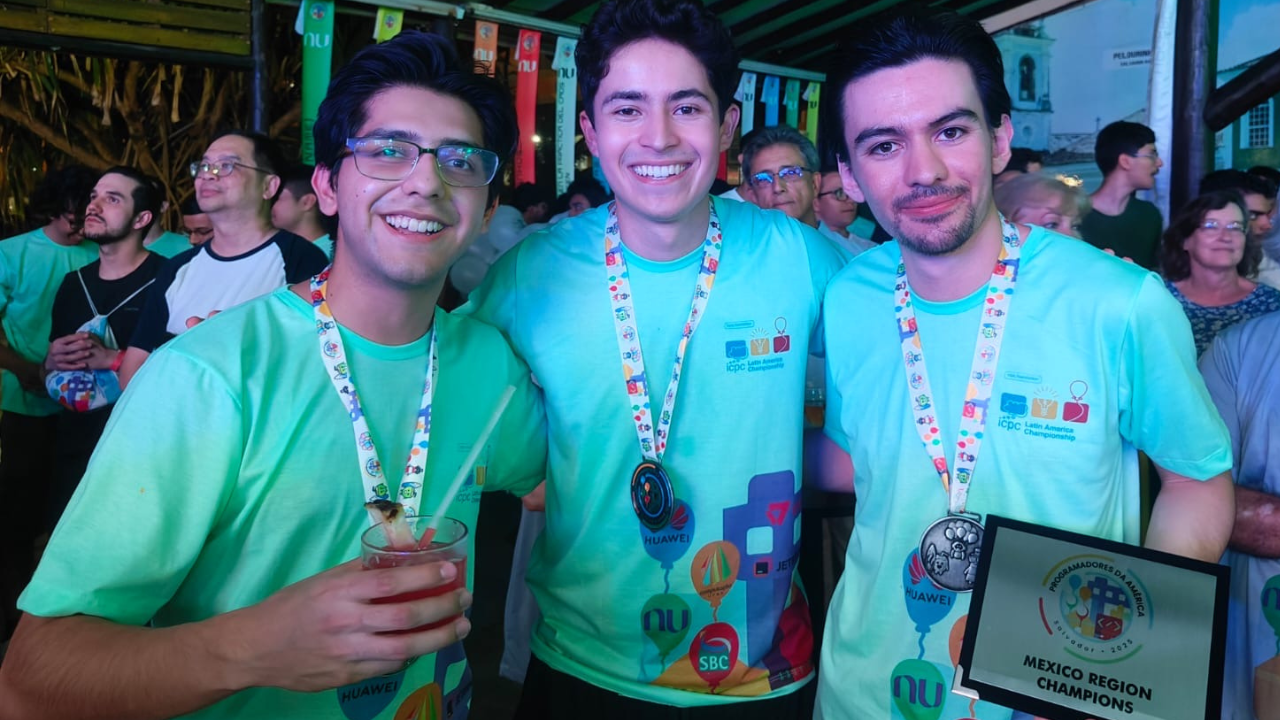
During this experience, he met with recruiters from Huawei, to whom he expressed his interest in doing an internship and submitted his resume. After participating in the regional competition—where he took first place in Mexico and advanced to the world finals held in Baku, Azerbaijan—Erwin continued his preparation, unaware that his conversation with Huawei would have consequences months later.
An opportunity that came from Hong Kong
While doing a summer internship at Meta in California, Erwin received word that Huawei was interested in offering him a six-month research internship in Hong Kong at the Huawei Research Center—a result of his perseverance and interest in working with the company.
“It had been a while since I’d submitted my resume to Huawei, without any expectations, so I was surprised by their response, but I was also very excited because, besides, it was in Hong Kong, and I’d always wanted to visit China,” she recalled.
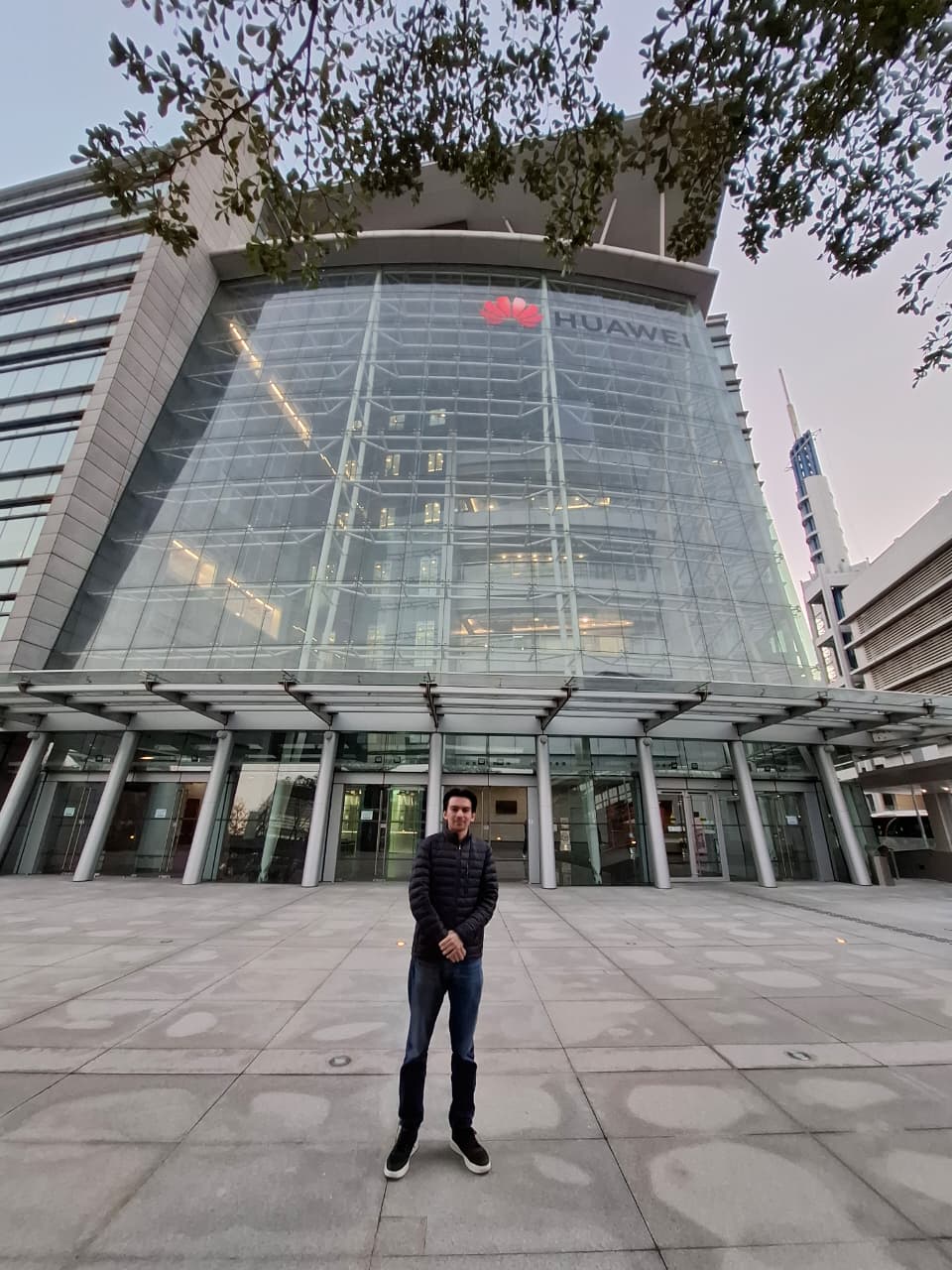
The proposal presented a significant academic challenge, as it required him to retake his final semester of his major. To that end, he presented to the relevant committee the nature of the internship, the project he would be working on, and the length of his stay in Hong Kong. Once he received authorization, he traveled there in late 2025 to begin an experience that would conclude in May 2026.
The experience also had a significant personal component. Erwin had wanted to visit China, and upon arriving in Hong Kong, he found a culture and daily life that were completely different from what he was used to. Although English allowed him to communicate with his team in the workplace, daily life presented an additional challenge.
“I really think I learned a lot—not just from the work but also from life there. I learned, more or less, how to make myself understood without the language. I really enjoyed my time there; I learned so much about their culture, and it really is very different from Mexico,” she shared.
From developing software to researching new solutions
Erwin's experiences at Meta and Huawei differed both in terms of their objectives and their work styles. At Meta, Erwin worked as a software engineer and participated in the development of projects related to WhatsApp. The work was based on pre-established objectives: he had to develop a solution, present it, and bring it to a functional and usable state.
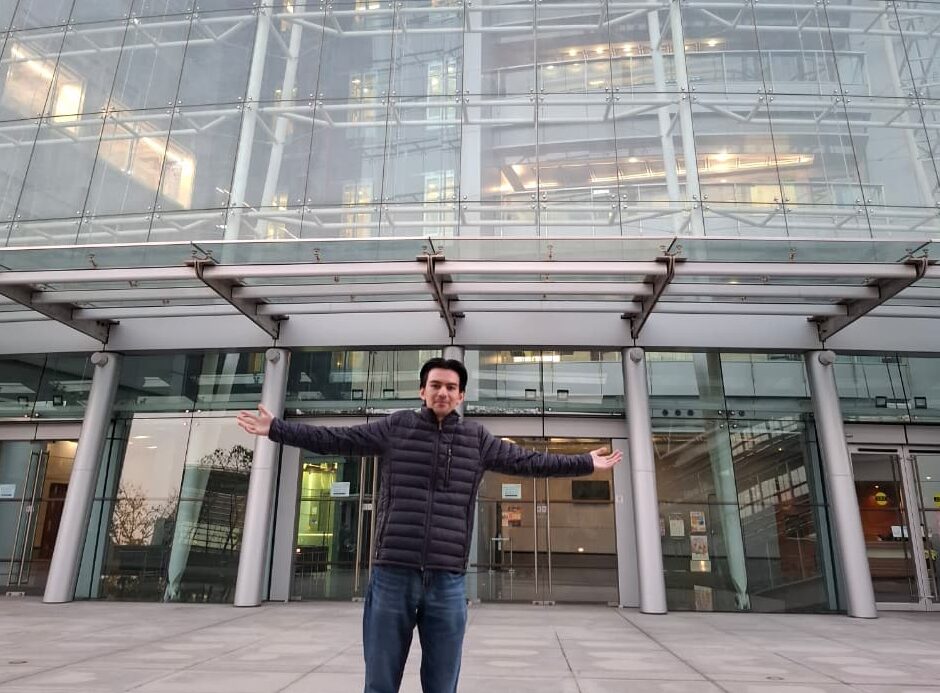
At the Huawei Research Center, however, he joined a research-focused environment. His project focused on natural language processing to convert text or speech into SQL commands, with the goal of facilitating interaction with databases using natural language.
When he arrived, there was no predetermined solution he had to develop; his responsibility was to investigate the current state of the issue, review recent scientific publications, identify opportunities, and propose new ideas.
“At Meta, you arrive with a clear plan and already know exactly what to do and what your ultimate goal is. But not here—here, it was: my ultimate goal is this specific topic. So, I have to research everything related to that topic, learn what’s new, and from there try to come up with something new,”he explained.
For Erwin, both experiences offered different lessons. While Meta allowed him to work in an environment with clearly defined goals, Huawei led him to take on a greater level of autonomy and responsibility. “I liked my time at Meta better because of the peace of mind it gave me at work, but I liked my time at Huawei because of the excitement of innovating and discovering, ” he said.
A college education as a starting point
The contrast between these two experiences also allowed him to identify how the knowledge he acquired during his college education can be applied to different professional contexts.
At Meta, Erwin found that working at a high technological level involved processes and dynamics that did not necessarily translate directly from what he had learned in the classroom. However, his experience at Huawei allowed him to recognize the value of the fundamentals he had acquired during his studies, particularly when tackling specialized research.
“So many of the things I learned in college were really valuable to me, because what I was taught in my college classes was the basic knowledge I needed to understand all those research papers,” she explained.
This academic foundation allowed him to delve deeper into specialized topics, learn new methodologies, and explore solutions in an international setting.
His experience demonstrates the importance of combining technical knowledge with the initiative to continue learning and applying that knowledge to new challenges.
Skills That Transcend Borders
Beyond technical knowledge, his international professional experiences also allowed him to develop skills that, from his perspective, can be applied to any work environment.
Teamwork, communication, organization, ethics, handling confidential information, and work-life balance were some of the lessons Erwin identified as particularly meaningful.
During his time at Huawei, he also had direct contact with clients and worked with information related to their databases, which allowed him to understand the importance of properly handling confidential information and respecting the copyrights of the research on which his work was based.
“Technical skills there aren’t the same as technical skills here, so technical skills obviously do help me […] but they aren’t conveyed as literally as soft skills,” he said.
For him, these skills represent one of the most valuable lessons he has learned throughout his career, precisely because they can serve him well regardless of the job, field, or company where he works. “I believe that this entire set of soft skills is the most valuable thing I’ve gained and that it helps me grow professionally, ” he noted.
An experience that opens up new possibilities
His international experiences have also begun to open up new possibilities for Erwin’s professional and academic future. He currently has an offer to return to Meta, where he plans to work for less than a year, and he is considering continuing his academic studies by pursuing a Ph.D. in Hong Kong.
This program illustrates how an experience can serve as a springboard for new professional and academic opportunities by allowing students to explore different work environments, expand their networks, and put their knowledge to the test in international settings.
“Be consistent in your work, be consistent in what you do, and give it your all—and dare to take risks. Dare to seize opportunities, even if they seem impossible,” he said.
His message stems from a conviction that has guided his own journey: where you start does not necessarily determine how far you can go. Constant preparation, hard work, and a willingness to try can open up paths that initially seemed out of reach.
Going Beyond What We've Learned
For Erwin, college provides a solid foundation, but learning doesn’t end in the classroom. “The best advice I could give to students and others is: don’t stop at what school teaches you—use it as a foundation to go further, ” he said.
From his perspective, academic training provides tools that must be complemented by personal initiative to explore, experiment, and discover how to apply them in new contexts.
Erwin López’s story shows how international academic and professional experiences can serve as a catalyst for students’ holistic development and as a bridge to new opportunities in employment, research, and specialized training.
Their experience and career path reflect the value of an education that extends beyond the classroom and offers opportunities on the global stage to put knowledge into practice, develop skills, and set new professional goals.
An education that opens new doors
For the Universidad Panamericana, supporting and highlighting the success stories of its students and alumni helps recognize the various paths that can emerge from a university education.
International experience, in addition to broadening personal and professional horizons, can strengthen skills, foster connections with organizations, and open doors to new career and academic opportunities—as was the case with Erwin, whose career path now continues with new challenges in both the technology industry and research.