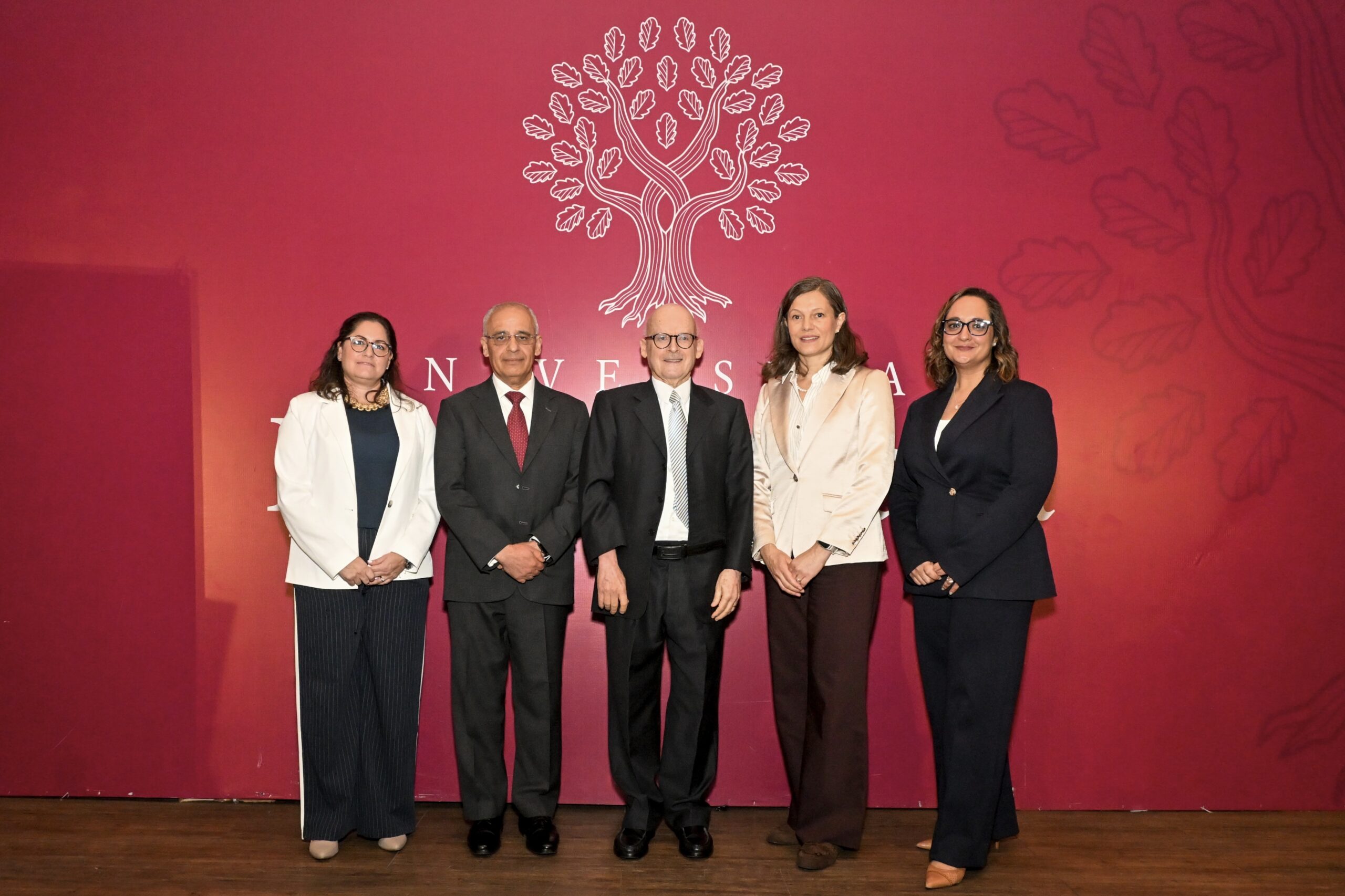
Aguascalientes, Aguascalientes, December 10, 2025.— The Universidad Panamericana recognizes that industrial engineering is a cornerstone for driving business innovation, thanks to its focus on process optimization, efficiency, and data-driven decision-making.
Based on this comprehensive vision that integrates analysis, management, and technology, Richard Farr, alumnus of Industrial Engineering at the Universidad Panamericana Aguascalientes campus and vice president of a business unit at Stori, shares his insights on the importance of innovation through engineering, as part of the launch of the new Industrial Engineering and Business Innovation degree program, designed to address the current challenges facing industry and entrepreneurship.

From Engineering to Global Leadership
Richard Farr graduated with a degree in industrial engineering and began his career as an intern at companies in Aguascalientes, where he specialized in quality, processes, and continuous improvement. He later earned an MBA from IPADE, which propelled his professional growth and led him to join McKinsey & Company as a consultant, working in more than ten countries.
Later, he led the launch of DiDi Mexico, first as head of the northern region and then as CEO, before joining Stori, a Mexican fintech company focused on financial inclusion.

Stori and its mission to promote financial inclusion
For Richard, one of the main reasons for joining Stori was the company’s clear mission: to bring financial services to millions of people in Latin America. “Mexico faces a significant gap in access to formal credit and financial inclusion, which is why Stori’s work aims to bridge social gaps and promote economic mobility, ” he says.

The organization is in a scale-up phase: rapid growth, constant innovation, and a significant impact on its users’ financial lives. According to the engineer, this phase combines the best of both worlds—that is, the agility of a startup and the stability of a growing company.
He also emphasized that the current challenge is to maintain agility without getting bogged down in bureaucracy, while preserving the direct impact on users.
“Innovation arises from both disruptions and processes of continuous improvement, always putting the user at the center. Understanding their needs, experimenting, testing, and improving quickly are key to designing financial products that truly transform people’s lives,” says the alumnus.
Professional Challenges: Solving Problems, Coordinating, and Exercising Influence
Throughout his professional career, Richard identifies three main types of challenges: intellectual and problem-solving challenges, which he links directly to his college education, as he views them as challenges that require comprehensive preparation, critical analysis, and a structured approach to developing strategic solutions.
On the other hand, there are the challenges of coordination and influence, drawn from his experience in consulting, which involve guiding teams and organizations toward a common goal, even in environments where decision-making requires clarity, discipline, and a systemic perspective.
“You’re an outsider… you frame the problem, figure out what needs to be done, and then you have to mobilize the company’s resources to solve it,” he adds.
Finally, some of the biggest challenges are those that focus on people—such as understanding cultural differences, communicating effectively, and building meaningful professional relationships—as these are essential components of day-to-day work.
UP Legacy: A Comprehensive Leadership Program
The engineer notes that at the Universidad Panamericana , he developed the ability to question realities—a skill he now considers indispensable.“Critical thinking means challenging yourself, others, the industry, your client, and your product,” he emphasizes.
In his view, this mindset made it possible to undertake initiatives such as challenging the assumption that “only 15% of Mexicans had access to credit.” According to the vice president of the business line, the company has expanded its user base thanks to this transformative vision.
Furthermore, with the acceleration of technology and the use of artificial intelligence, he asserts that iterating on solutions is faster than ever, so maintaining this mindset is essential to continuing to generate value.
“Innovation is very similar to continuous improvement… You always have to think about the user’s needs, test, experiment, and avoid settling for the status quo,” he says.
Finally, Richard believes that resilience is the most important trait a student can develop during their professional training.
“You can take the hardest elective, tackle the most complicated project, or participate in the most complex extracurricular activity… The more difficult situations you’ve faced, the more resilience you’ve had to develop,” he says.
Richard Farr’s testimony reaffirms the importance of continuing to promote, support, and highlight the talent alumni Universidad Panamericana. His achievements reflect how the holistic perspective, critical thinking, and spirit of continuous improvement fostered in the classroom can be transformed into global leadership with social impact.