Admission test

Bachelor's Degree in Economics
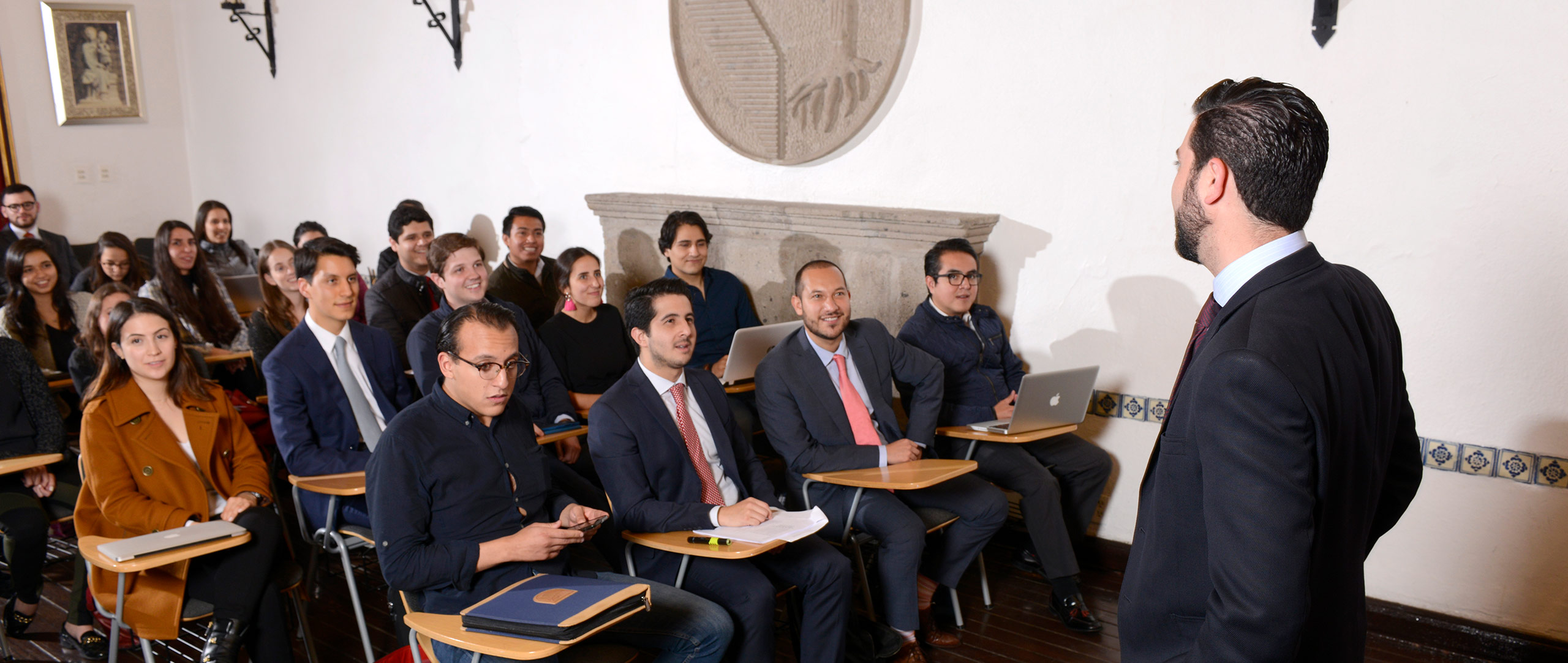
Our undergraduate degree in Economics seeks to train women and men with a pluralistic view of economic phenomena, from a complete perspective of society, understood as government, business, financial system and households.
That is why our teaching model combines a deep knowledge of human beings and their behavior, in addition to a solid technical-mathematical training and a genuine sense of social responsibility.
In addition, our curriculum is characterized by training professional experts in business economics thanks to subjects such as:
- Economy
- Mathematics
- Law
- Finance
- Philosophy
- Humanities
We have professors of international stature and high professional competence in economics, law, public administration, political theory, sociology, psychology, statistics, mathematics, philosophy, ethics, communication, among others.
The theoretical teaching is complemented by conferences with important public and private officials involved in socio-political and economic decision-making.
Economics degree program locations
- Panamericana City
RVOE
SEP 20210684, dated April 22, 2021, 2020 plan, in-person program, Ciudad UP campus.
Admission Profile
As an applicant to study for a degree in Economics you should have the following attributes:
- Passion for solving Mexico's major problems.
- Vocation of service.
- Interest in human behavior and economic development.
- Genuine commitment to the development and well-being of Mexico.
Graduate Profile
As a graduate of our bachelor's degree you will have a humanistic training and will be able to:
- Leading with an integral vision.
- Manage resources appropriately.
- Solve contemporary socio-economic, business and financial problems.
- Exercise your profession with ethical training and human sense.
- Generate a positive change in the world.
First Semester
- Architectural Composition I
- Fundamentals of Architecture and Urbanism
- Descriptive Geometry
- Topography
- Architectural Drawing I
- Applied Algebra
- History of Culture
First Semester
- Architectural Composition I
- Fundamentals of Architecture and Urbanism
- Descriptive Geometry
- Topography
- Architectural Drawing I
- Applied Algebra
- History of Culture
First Semester
- Architectural Composition I
- Fundamentals of Architecture and Urbanism
- Descriptive Geometry
- Topography
- Architectural Drawing I
- Applied Algebra
- History of Culture
First Semester
- Architectural Composition I
- Fundamentals of Architecture and Urbanism
- Descriptive Geometry
- Topography
- Architectural Drawing I
- Applied Algebra
- History of Culture
International Exchanges
Chiba University, Japan.
Shibaura Institute of Technology, Japan.
University of Nebrija, Spain.
Polytechnic University of Valencia, Spain.
International University of Catalonia, Spain.
University of Piura, Peru.
San Ignacio de Loyola University, Peru.
Forms of Qualification
- General Knowledge Examination for Bachelor's Degree Graduation (EGEL Plus ARQUI). The student must obtain the result of the Testimonial of Outstanding Performance (TDSS). To achieve this, the student must have, of the three areas that make up the exam, at least two with Outstanding Performance and the remaining one with at least Satisfactory Performance.
- Study of a case and proposal of a solution with the corresponding defense;
- Proposal and elaboration of a business project or its equivalent with the corresponding defense of the same;

"I loved how close the professors and directors are to us. I didn't imagine that it would be so personalized the university, let alone that we would have the best architects in the city as professors."
Natalie Peña Cárdenas (2nd semester)