
Talking about suicide can be frightening and uncomfortable, especially when you're worried about someone close to you. However, avoiding the topic doesn't make it go away. Talking about it directly, responsibly, and without judgment can make it easier for someone to express what they're going through and receive support.
Worldwide, more than 720,000 people die by suicide each year, and in 2021, it was the third leading cause of death among people aged 15 to 29 (World Health Organization [WHO], 2026). That is why recognizing warning signs, knowing how to ask the right questions, and knowing where to seek help are all part of prevention.
What causes suicidal thoughts?
Suicidal thoughts can arise when a person is experiencing intense emotional distress, loneliness, hopelessness, mental health issues, or situations they perceive as very difficult to cope with. There is generally not a single cause, but rather a combination of several factors.
One theory that helps explain some of these processes is the Interpersonal Theory of Suicide, developed by Thomas Joiner. The model suggests that risk may increase when a person feels like a burden, perceives themselves as disconnected from others, and has also developed a greater capacity to tolerate the pain or fear associated with self-harm (Joiner, 2005).
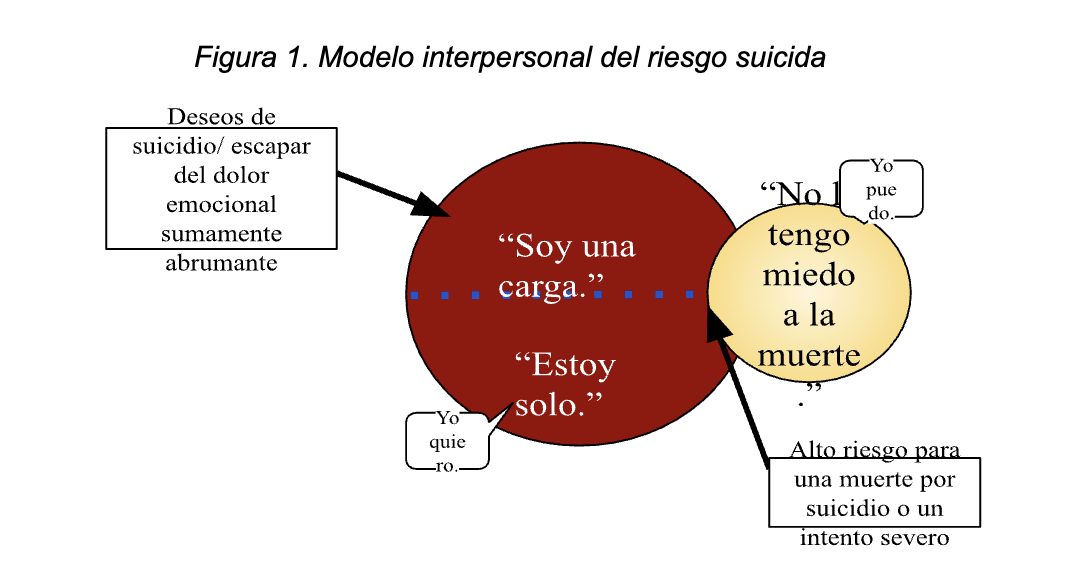
Do people with suicidal thoughts really want to die?
Not always. In some crises, a person may want to continue living and, at the same time, feel that they need to put an end to suffering that they perceive as unbearable.
In the documentary *9.8 m/s². The Speed of Suicide*, Dr. Marina Díaz Marsá explains that, in many suicidal crises, the person seeks to end a pain they perceive as unbearable and without a way out. This ambivalence helps us understand that the desire to die and the desire for the suffering to end are not always exactly the same (Spanish Society of Psychiatry and Mental Health & Questión de Imagen Producciones, 2026).
During a severe crisis, it can be difficult to imagine other possibilities. Psychological, psychiatric, family, or community support can help broaden those options once again.
How can you tell if someone is thinking about committing suicide?
It’s impossible to know for sure just by observing someone, but certain changes in what they say, do, or feel may indicate that they need support. Talking about death, withdrawing from others, showing despair, or making significant changes in their behavior are signs that should be taken seriously.
The presence of a single warning sign does not necessarily mean that a person will attempt suicide. However, when several warning signs appear at the same time or there is a clear change in their usual behavior, it is important to pay attention and consider seeking professional help.
What are the most important warning signs of suicide?
Warning signs may include talking about wanting to die, making plans, saying goodbye to loved ones, giving away personal belongings, withdrawing from others, increasing substance use, or exhibiting marked changes in mood and behavior.
Signs of emptiness, hopelessness, or a lack of purpose may also appear; comments about being a burden to others; giving up activities that were once enjoyed; significant changes in sleep, eating, or personal hygiene; or reckless behavior.
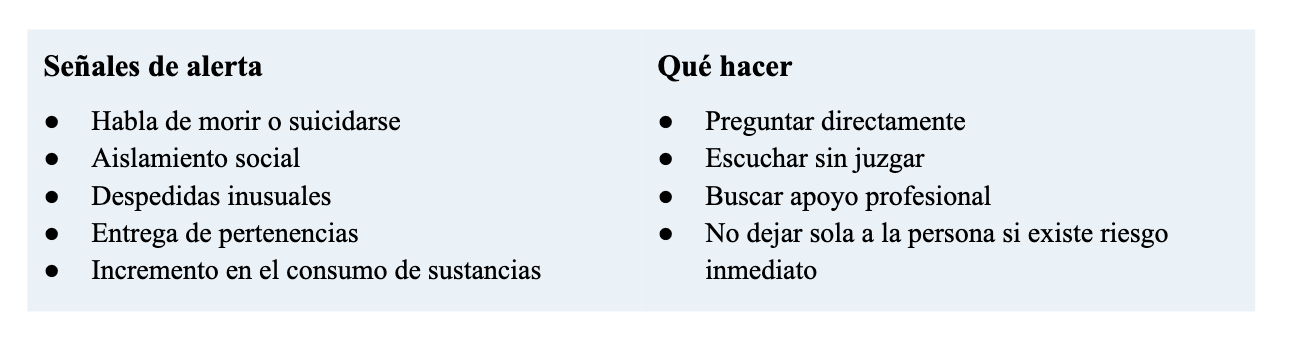
Shows like “Nobody Will Miss Us” can also help spark conversations about mental health, recognize warning signs, and think about how to support someone going through a difficult time.
Can talking about suicide increase the risk?
No. Asking directly about suicide does not mean provoking the behavior or “putting the idea” in someone’s head. When there is genuine concern, speaking clearly and without judgment can make it easier for the person to share what they are going through and get help.
One of the most common fears is avoiding the topic out of fear of making the situation worse. However, if there are already concerning signs, it’s better to ask simply, “Are you thinking about taking your own life?” Phrases like “You’re not thinking about doing something stupid, are you?” can convey disapproval and make it harder to get an honest answer.
How do you talk to someone who might be thinking about suicide?
The best approach is to address the issue with respect, calmness, and without judgment. Ask clear questions, listen carefully, and show that you're willing to be there for them. You don't need to have the perfect answer or solve everything right then and there.
You can start by pointing out what you've noticed and asking directly how they're feeling. If there are concerns about suicide, it's appropriate to ask explicitly if they are thinking about taking their own life.
What should I do if someone tells me they want to commit suicide?
Listen calmly, take what the person says seriously, and seek support. If there is an immediate risk, do not leave the person alone while you contact emergency services, a hospital, or a mental health professional.
Listening does not mean keeping the situation a secret. When there is a risk of suicide, the priority is to ensure the person’s safety and help them access support.
What should you say to someone who is having suicidal thoughts?
Phrases that convey support, a willingness to listen, and a readiness to be there for them can help keep the conversation open. Expressing gratitude for their trust and offering concrete help is usually more helpful than trying to convince the person that they “should feel better.”
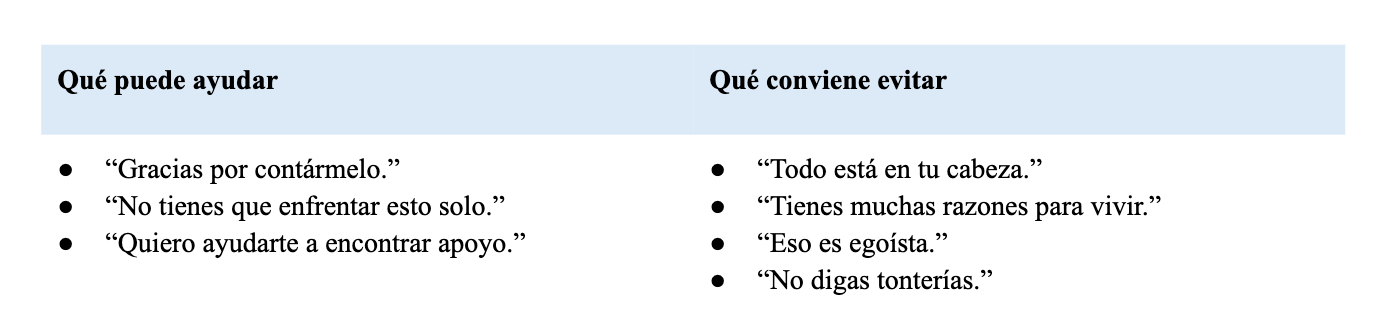
What shouldn't I say to someone who is thinking about committing suicide?
It’s best to avoid comments that downplay what’s happening, judge the person, or question their emotions. Phrases like “it’s all in your head,” “that’s selfish,” or “don’t be silly” can make it harder for the person to keep talking or seek help.
What should I do if I have suicidal thoughts?
Talking to someone you trust and seeking professional support are important steps. You don’t have to face the situation alone or find the “perfect” way to explain it. Sharing what’s happening can make it easier to access support and explore other options.
It could be a family member, a friend, a teacher, a coach, a therapist, a school counselor, or anyone you trust enough. You can even start with a simple message: “Something isn’t right, and I need help.”
When is it necessary to seek professional help?
When suicidal thoughts arise, it is important to seek professional help. If there is also a specific plan, an intention to harm oneself, or an immediate danger, urgent care is needed.
A professional can help assess the level of risk and determine what kind of support is needed. In an emergency, you can go to a hospital or contact emergency services.
Where can you get help during a suicidal crisis?
In the event of a suicide crisis, you can contact a mental health professional, go to an emergency room, or call a crisis hotline. If there is immediate danger, contact emergency services.
- Contact a psychologist or psychiatrist, or go to an emergency room.
- Call Línea de la Vida at 800 911 2000, a mental health counseling and support service available 24 hours a day, 365 days a year (CONASAMA, 2026).
- If there is an emergency or immediate danger, call 911 (CONASAMA, 2023).
- Talk to someone you trust and avoid dealing with the situation alone while you seek help.
How does a suicide affect the family and loved ones?
A death by suicide can have a profound emotional impact on family members, friends, colleagues, and communities. Companionship and supportive environments can be important for those affected.
Post-suicide support refers to the support measures taken after a death by suicide. It may include clear and responsible information, spaces for emotional support, identifying individuals who may need additional support, and access to mental health services.
Talking about what happened doesn't mean doing so in a sensationalistic way. Addressing it thoughtfully allows us to acknowledge the emotional impact, reduce stigma, and provide resources to those who may need them.
How can you prevent it?
Prevention does not depend on a single action. It involves strengthening support networks, facilitating access to professional care, recognizing warning signs, and helping people access resources to cope with difficult times.
Factors that can offer protection include having people you can trust, feeling part of a family, group, or community, having important goals or projects, engaging in activities that give meaning to life, knowing how to ask for help, expressing your feelings, and having access to psychological, psychiatric, or medical care when needed (Centers for Disease Control and Prevention [CDC], 2026).
These factors do not completely eliminate the risk, but they can provide support, connection, and additional resources to cope with situations of vulnerability.
Why does talking about suicide help prevent it?
Because talking about the issue responsibly can help break the silence surrounding it, make it easier for someone to ask for help, and enable those around them to recognize warning signs and take action when necessary.
Suicidal behavior cannot be reduced to a single explanation, diagnosis, or list of symptoms. Talking does not eliminate suffering, but it can open up an alternative when someone feels that all other options have been closed off.
Author
Alumna Regina Sardina Llaneza, M.A.
Bachelor's degree in Psychology with a specialization in Clinical and Health Psychology from the Universidad Panamericana.
Master's Degree in Personality Disorders from the Complutense University of Madrid.
References
- Amazon Studios. (2024). No One Will Miss Us [TV series]. Prime Video.
- Centers for Disease Control and Prevention. (May 26, 2026). Risk and protective factors for suicide. https://www.cdc.gov/suicide/risk-factors/
- National Commission on Mental Health and Addiction. (2023). Campaign: Let’s Stop Suicide. https://www.gob.mx/conasama/articulos/detengamos-el-suicidio?idiom=es
- National Commission on Mental Health and Addictions. (2026). La Línea de la Vida. https://www.gob.mx/lineadelavida
- Goldstein, A., & Gvion, Y. (2019). Socio-demographic and psychological risk factors for suicidal behavior among individuals with anorexia and bulimia nervosa: A systematic review. Journal of Affective Disorders, 245, 1149–1167. https://doi.org/10.1016/j.jad.2018.12.015
- Joiner, T. E. (2005). Why People Die by Suicide. Harvard University Press.
- Spanish Society of Psychiatry and Mental Health, & Questión de Imagen Producciones. (2026). 9.8 m/s². The Speed of Suicide [Documentary].
- World Health Organization. (2021). Live Life: An Implementation Guide for Suicide Prevention in Countries. World Health Organization.
- World Health Organization. (August 28, 2026). Suicide. https://www.who.int/news-room/fact-sheets/detail/suicide
- Xu, Y. E., Barron, D. S., Sudol, K., Zisook, S., & Oquendo, M. A. (2023). Suicidal behavior across a broad range of psychiatric disorders. Molecular Psychiatry, 28(7), 2764–2810. https://doi.org/10.1038/s41380-022-01935-7
- If you've ever felt this way, you're not alone. Asking for help doesn't change everything right away, but it can provide support, time, and other ways to cope with what's happening. Sometimes, that process allows you to rediscover reasons to stay and build a life worth living.
- Talking, listening, asking questions, and offering support are all part of prevention.