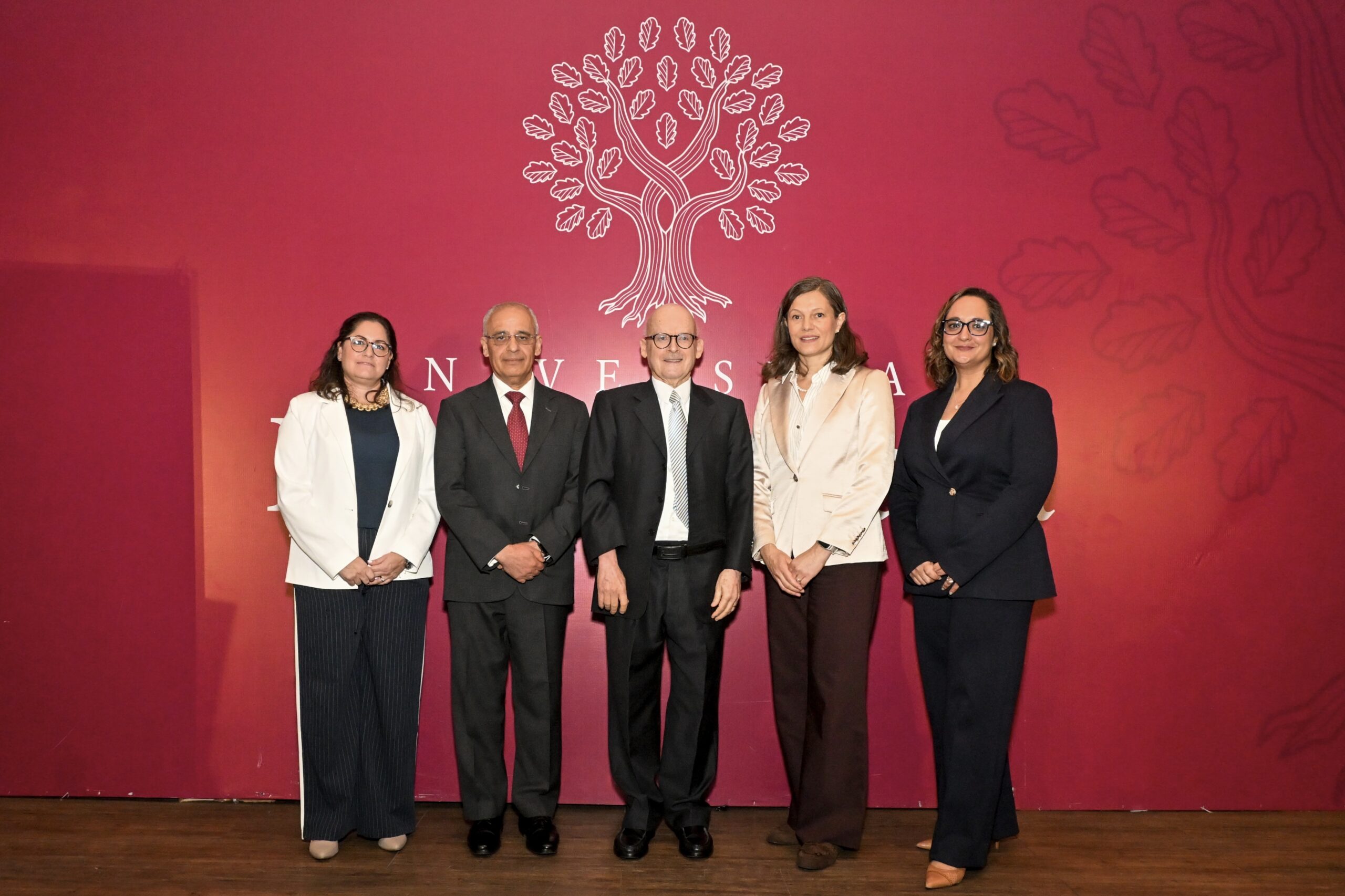
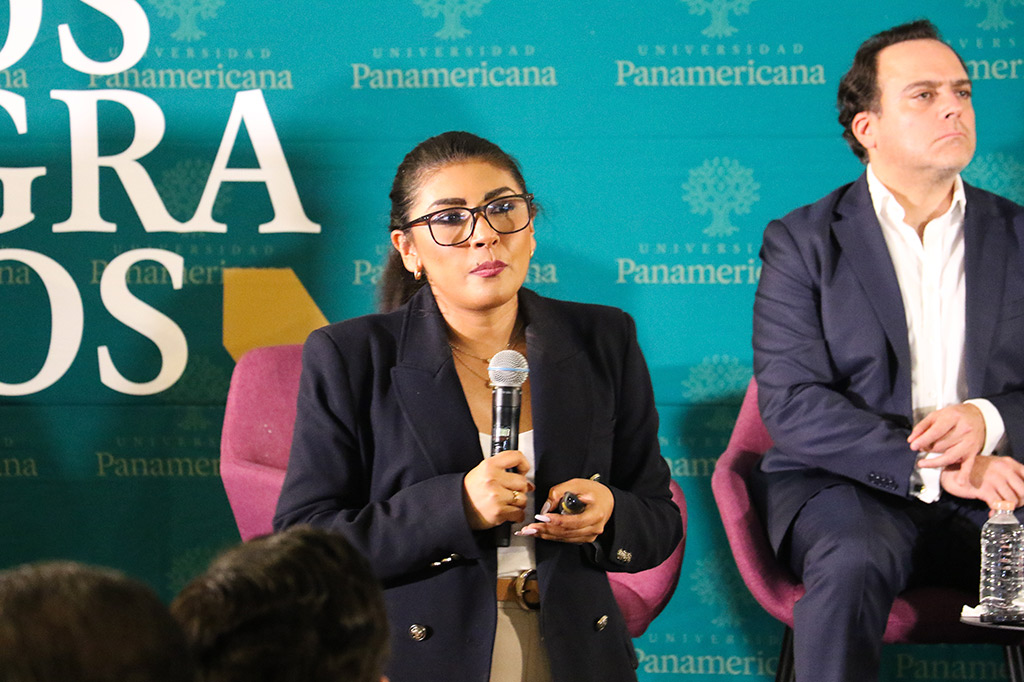
Mexico City, June 20, 2024. Postgraduate programs in Government and Economicsas well as Postgraduate courses in Communication of the Universidad Panamericanaand the Mexican Institute of Christian Social Doctrine (IMDOSOC), held the event Pulso Político (IMDOSOC), held the event Pulso Político, Mesa de análisis México 2024.
The event brought together leading experts and analysts to analyze the political and electoral future of Mexico, such as Dr. Guillermo Tenorio Cueto, Dean of the School of Government and Economics of the Universidad Panamericana; Dr. Luis Gustavo Menéndez, IMDOSOC training and research coordinator; Laura Brugés, Journalist; Luis Estrada, Spin consultant in Communication and political analysis, Yamil Nares, Defoe, pollster; Arturo Espinosa Silis, Strategia Electoral, electoral legal consultant and Cándido Martínez, Áltica, pollster.

Political involvement
To kick off the event, Dr. Tenorio highlighted the collaboration between different institutions and the importance of events such as Pulso Políticofor the training of young people in the process of political involvement.
He added that the event sought to find answers to questions and concerns about the current electoral process and stressed the need for collaboration between academia and other entities to foster a deeper understanding of politics.
Dr. Menéndez then spoke about the importance of media coverage and social networks in electoral processes, mentioning how these tools influence public perception and electoral dynamics. He highlighted his previous experience as Director of Social Technology at the Secretariat of Information and as a professor at various universities, providing a broad perspective on the interaction between media and politics.
Cándido Martínez then focused on the importance of pre-election surveys and how social desirability influences the results. He explained how certain groups, especially those over 65 who receive social programs, are more susceptible to social desirability.

Analysis of polls and election results
Similarly, the variability of survey results was discussed , highlighting the difference between face-to-face, telephone and online surveys. Martinez presented data showing how the difference between first and second place varied significantly depending on the survey method. For example, in face-to-face surveys, the average difference was 23 points, while in telephone and online surveys, it was smaller.
It was emphasized that although polls can indicate trends, they do not always translate directly into electoral results due to factors such as social desirability. Martínez pointed out that approval of social programs and support for López Obrador have a significant impact on voting intentions.
Electoral context and challenges
Arturo Espinoza, spoke about the current context of the elections in Mexico, describing them as the most competitive and with the least integrity in recent years.
He highlighted electoral violence, with more than 32 candidates or pre-candidates murdered and numerous acts of violence. Espinoza mentioned how the polarization and interference of President López Obrador in the electoral campaign, through his daily press conferences, influenced public perception.
The event concluded with a reflection on the need to maintain integrity in democratic processes and the importance of political education. In addition, the crucial role of academic institutions in the formation of informed and engaged citizens was highlighted.

They also discussed how the divided vote and polarization are affecting political dynamics, both at the local and federal levels, and emphasized the importance of transparency and accuracy in the publication of polls and election results.
Pulso Político was an important platform for the exchange of ideas and in-depth analysis of the political situation in Mexico, offering a comprehensive and critical view of the challenges and opportunities on the electoral horizon.
Learn more about Universidad Panamericana 's Graduate Programs at: https://posgrados-panamericana.up.edu.mx/