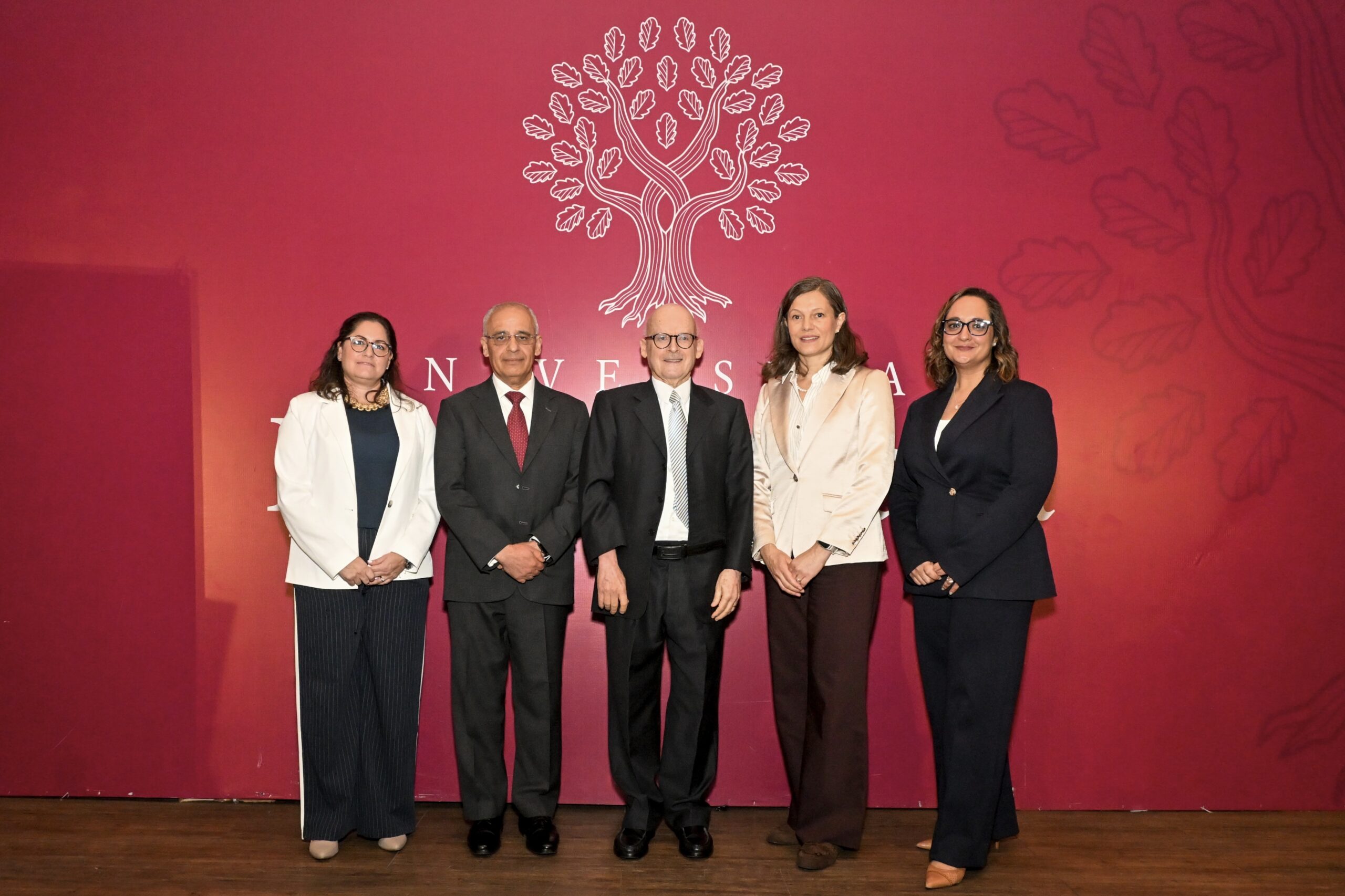
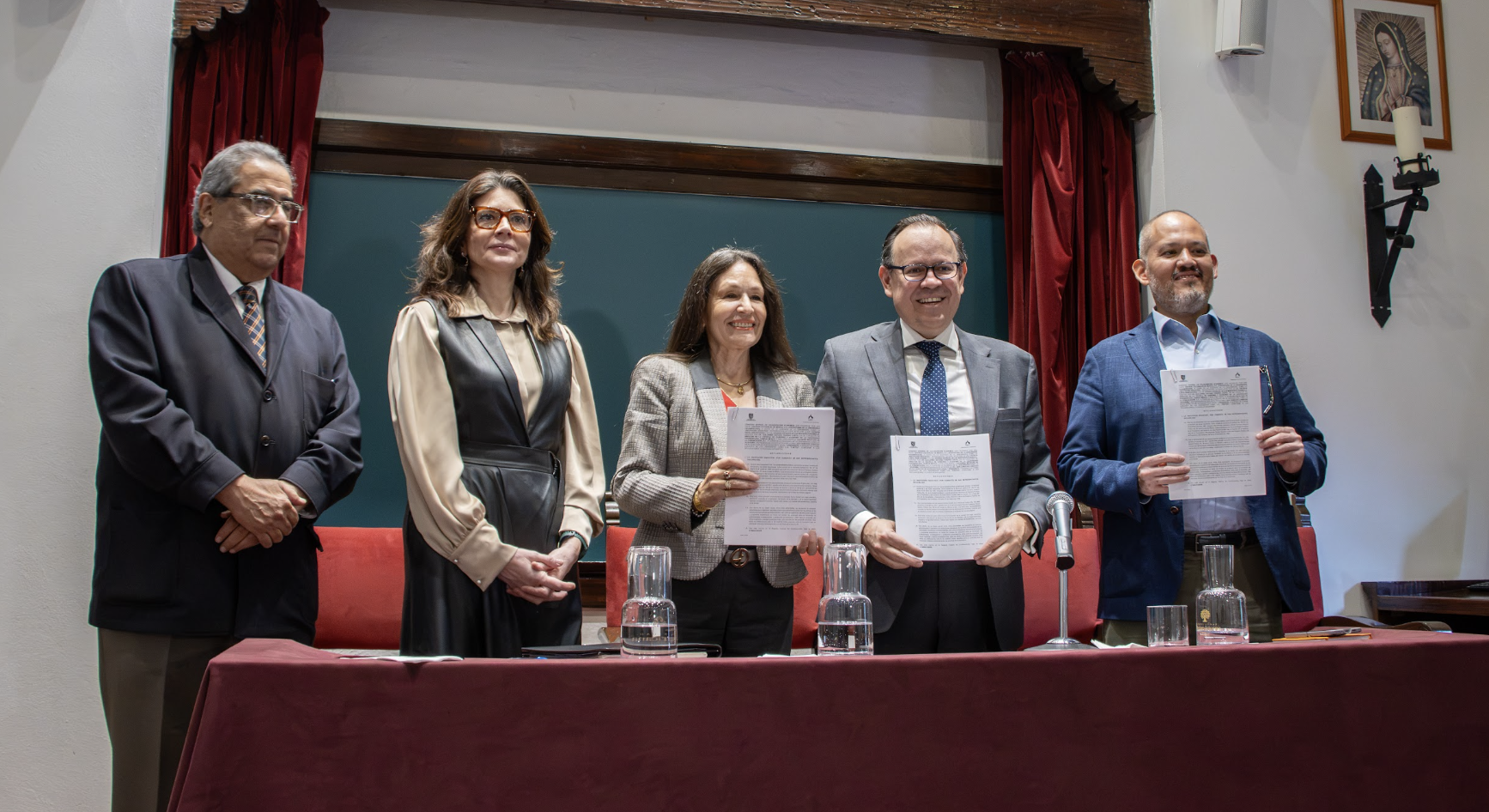
Mexico City, March 6, 2026.—The Universidad Panamericana Mexico City Universidad Panamericana hosted the first Engineering Cluster Think Tank Imágenes Espaciales, an academic gathering aimed at strengthening inter-institutional collaboration and promoting scientific and technological innovation in Mexico.
This initiative aims to generate evidence-based solutions by analyzing data from satellite imagery, with the goal of promoting projects that contribute to social development, urban planning, and informed decision-making.
Scientific innovation with social impact
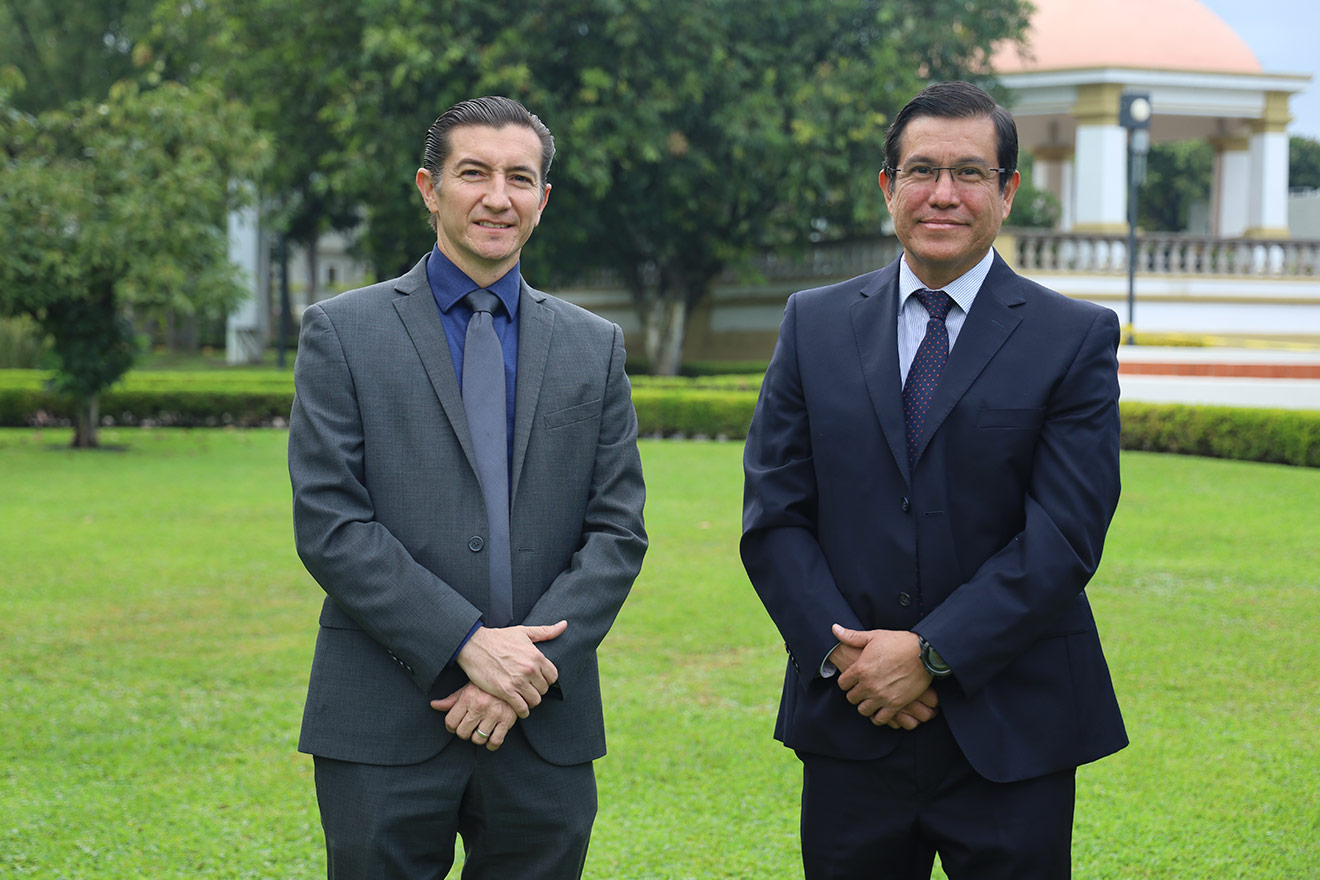
The event began with remarks by Dr. Eduardo de la Vega Segura, dean of the School of Engineering, who emphasized that the launch of the MXÁO-1 satellite represents much more than a technological advancement.
“It represents a vision of the future, of cities that make decisions based on data, science, and collaboration with academics. This cluster demonstrates that when research institutions organize themselves as a knowledge network, their potential for impact is multiplied,” he said.

This Earth observation microsatellite, launched on November 28, 2025, is the first of its kind in Latin America to be developed by a local government. It currently orbits at an altitude of approximately 540 to 550 kilometers, from where it captures high-resolution multispectral images.
Democratizing access to knowledge through satellite imagery
Also participating in the event was Pedro Díaz de la Vega, coordinator of the Álvaro Obregón Mayor’s Office High-Level University Cluster, who emphasized the importance of the triple helix model, which brings together academia, government, and industry.
“The use of satellite imagery can save the lives of millions of people and can also ensure that governments are effective and fulfill their responsibilities,” he said.

This approach helps democratize access to knowledge and promotes the use of technologies such as satellite imagery, which are essential for improving public administration, security, and the well-being of the population.
Aerospace Projects and University Innovation
As part of the program, researchers and faculty members presented the key achievements of the Faculty of Engineering’s Aerospace Laboratory, focusing on the development of nanosatellites, experimental rocketry, and aircraft design.
Alfredo Pedroza Díaz, a research associate at the Aerospace Laboratory , described the work he has carried out with his students to conduct launch tests of experimental aircraft.

This is an academic and practical initiative that has been in development for three years, during which time various tests were conducted, culminating in the first successful launch last November.
“The goal of this project is to give our students the opportunity to apply theory outside the classroom,” he said.
For his part, Manuel Alejandro González Mendoza presented a project for a remote-controlled fixed-wing aircraft, an initiative developed by engineering students and presented last year as part of their academic projects.
A space for dialogue to develop solutions
As part of the event’s activities, a forum for discussion was held in which participants shared proposals for collaboration on the use of satellite imagery to address issues affecting residents of the Álvaro Obregón district.

The discussion was moderated by Dr. Eduardo de la Vega Segura, Dr. Antonieta Martínez Velasco, and Dr. Pedro Díaz de la Vega, who facilitated the exchange of ideas among researchers, academics, and specialists.
This event reaffirms the Universidad Panamericana commitment Universidad Panamericana the generation of knowledge, academic dialogue, and the training of professionals capable of actively contributing to the transformation of society through scientific and technological innovation.