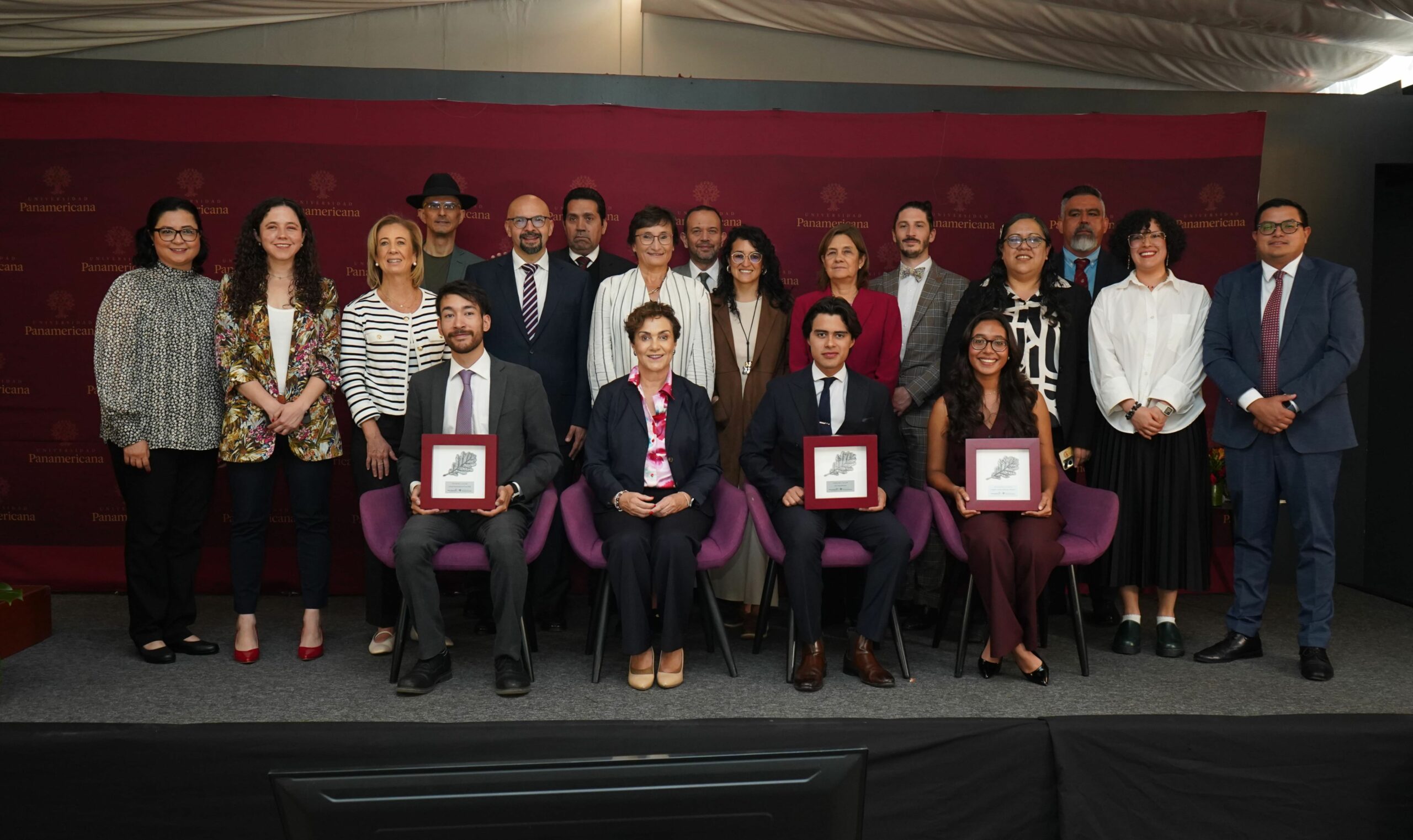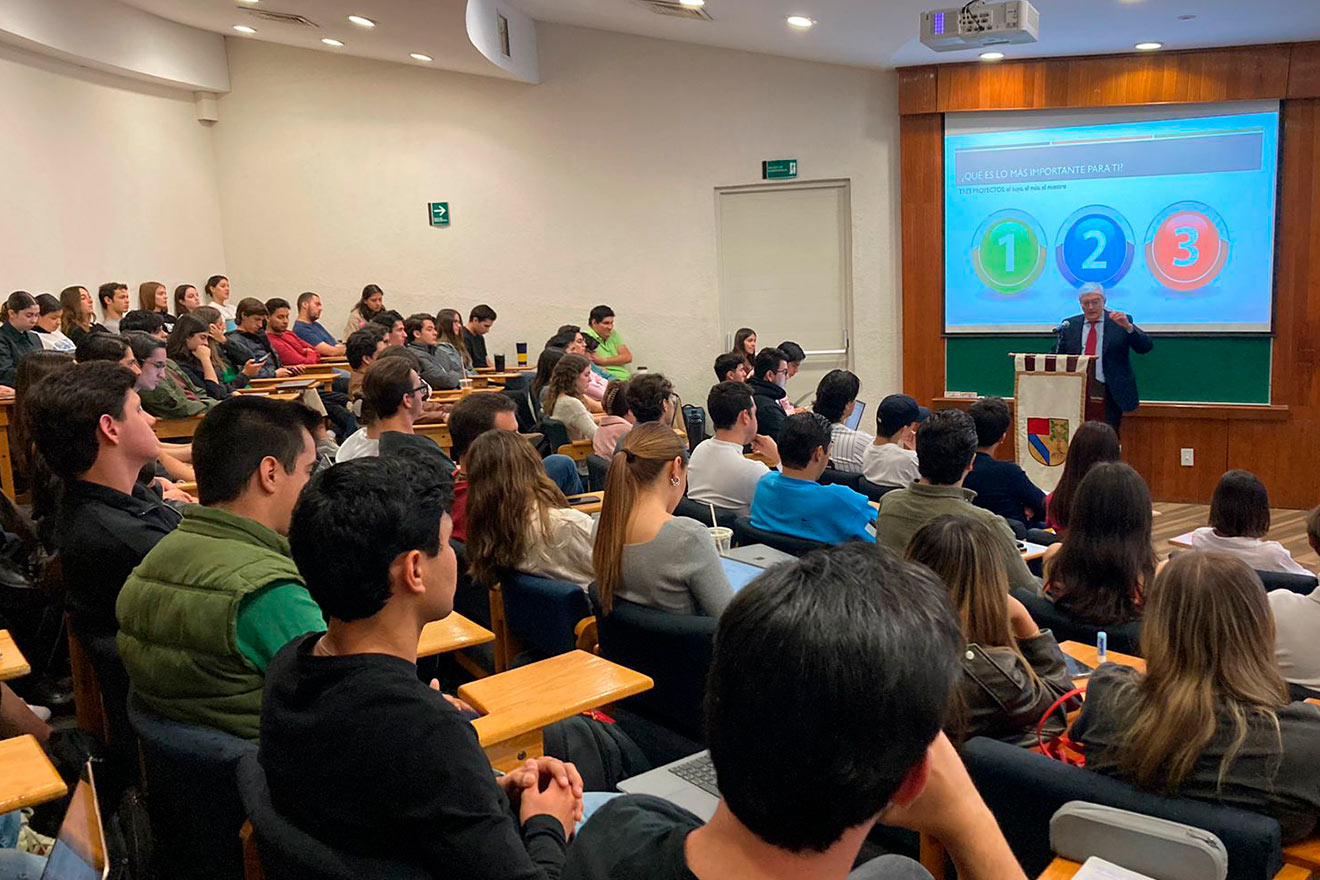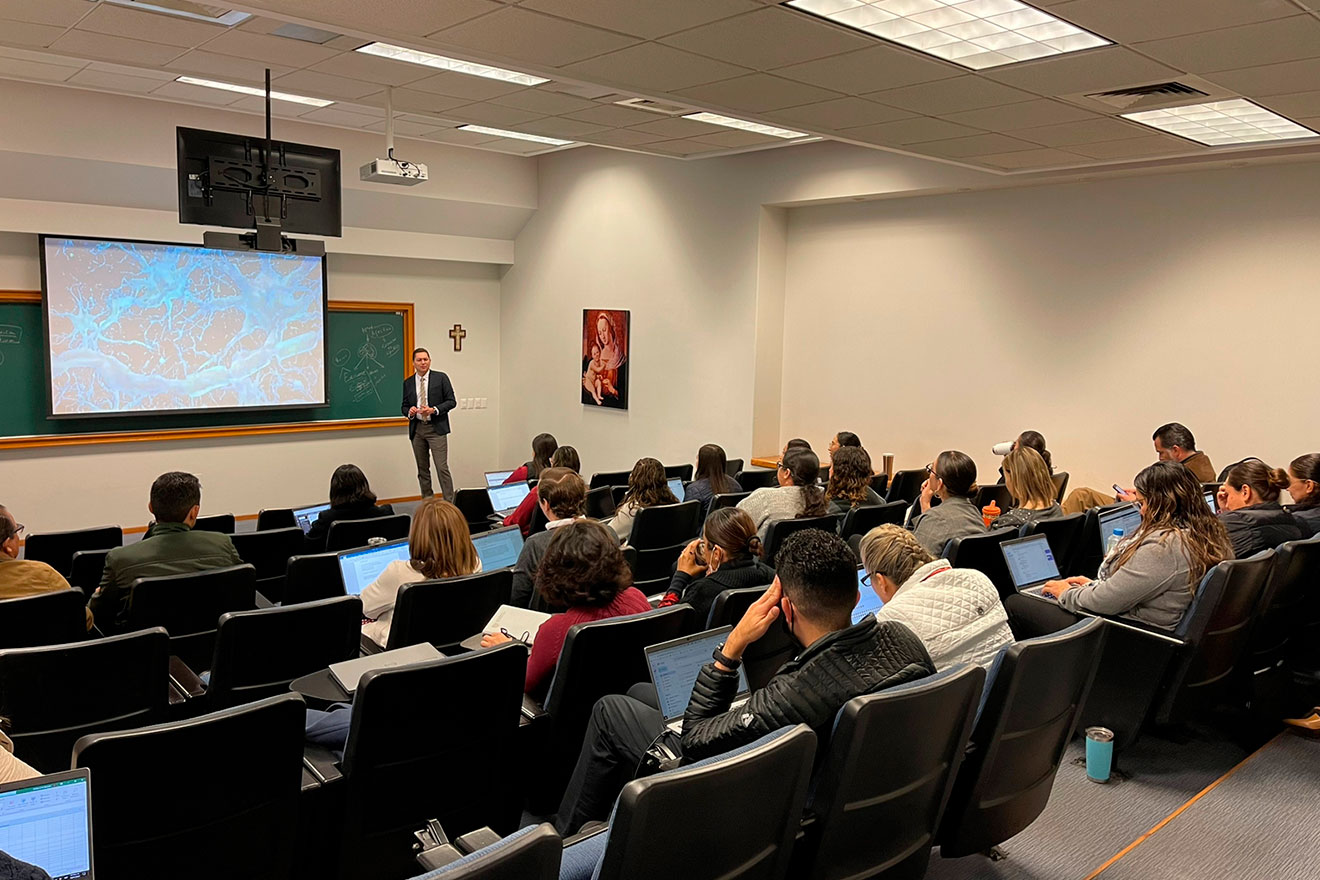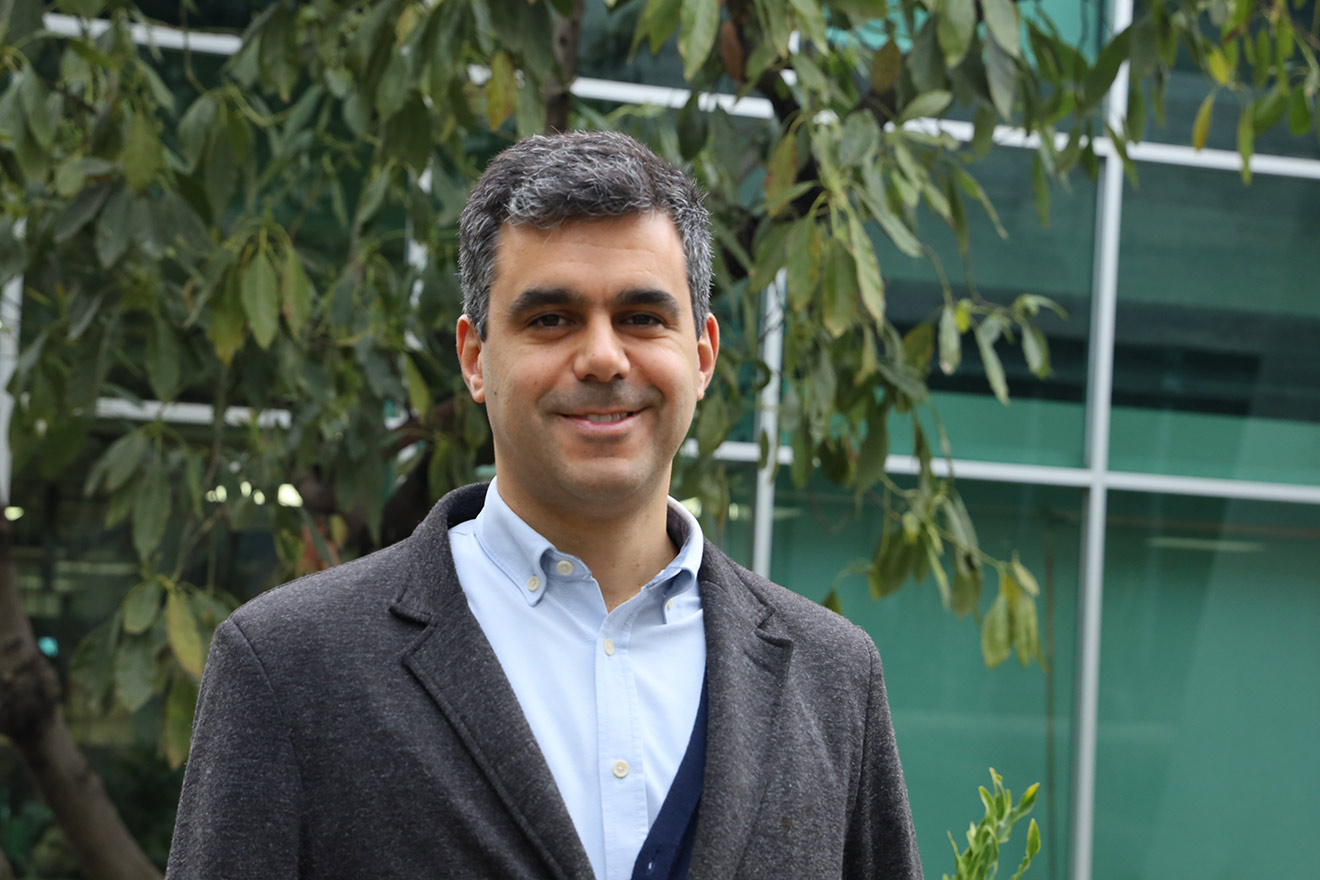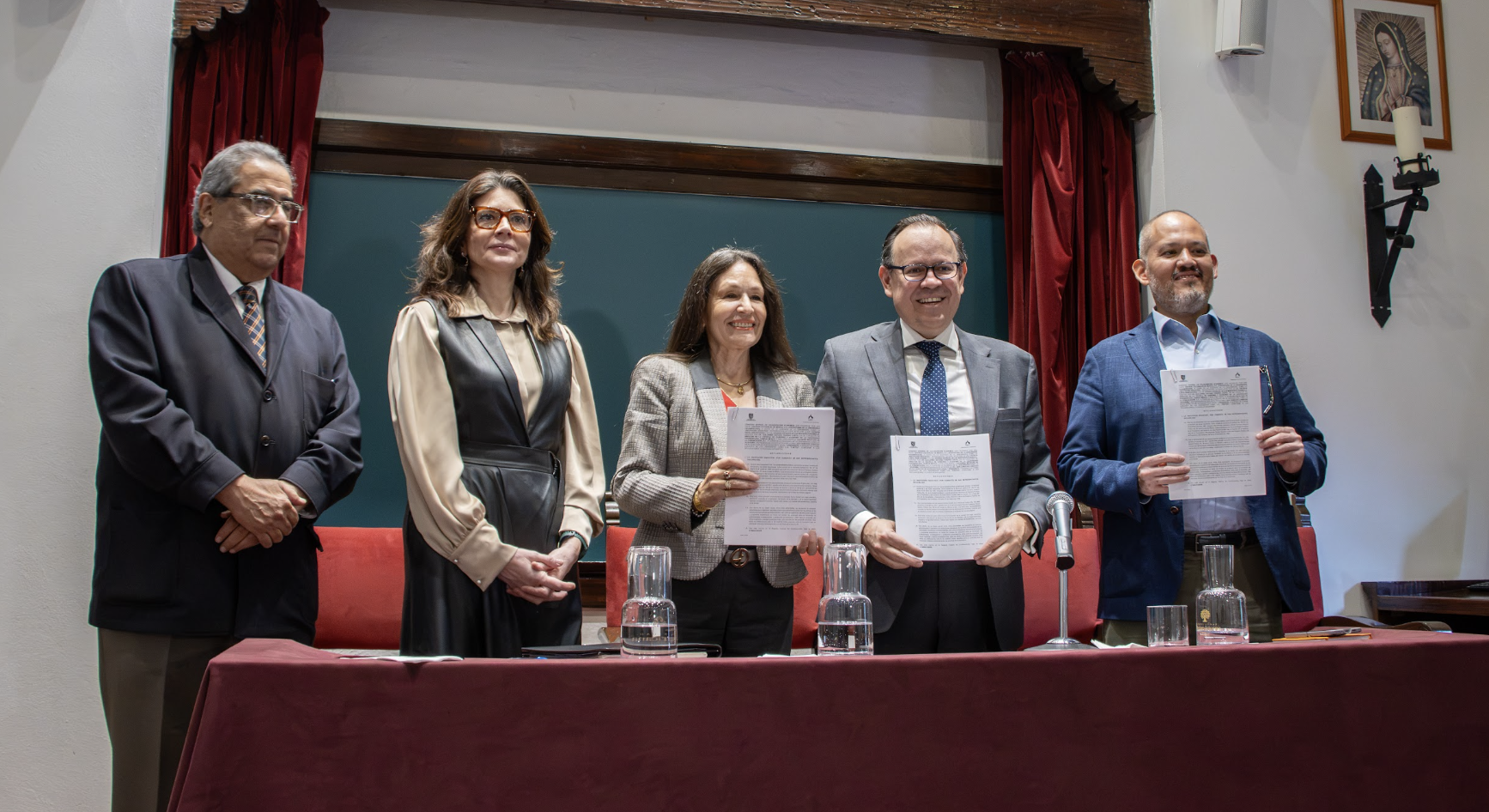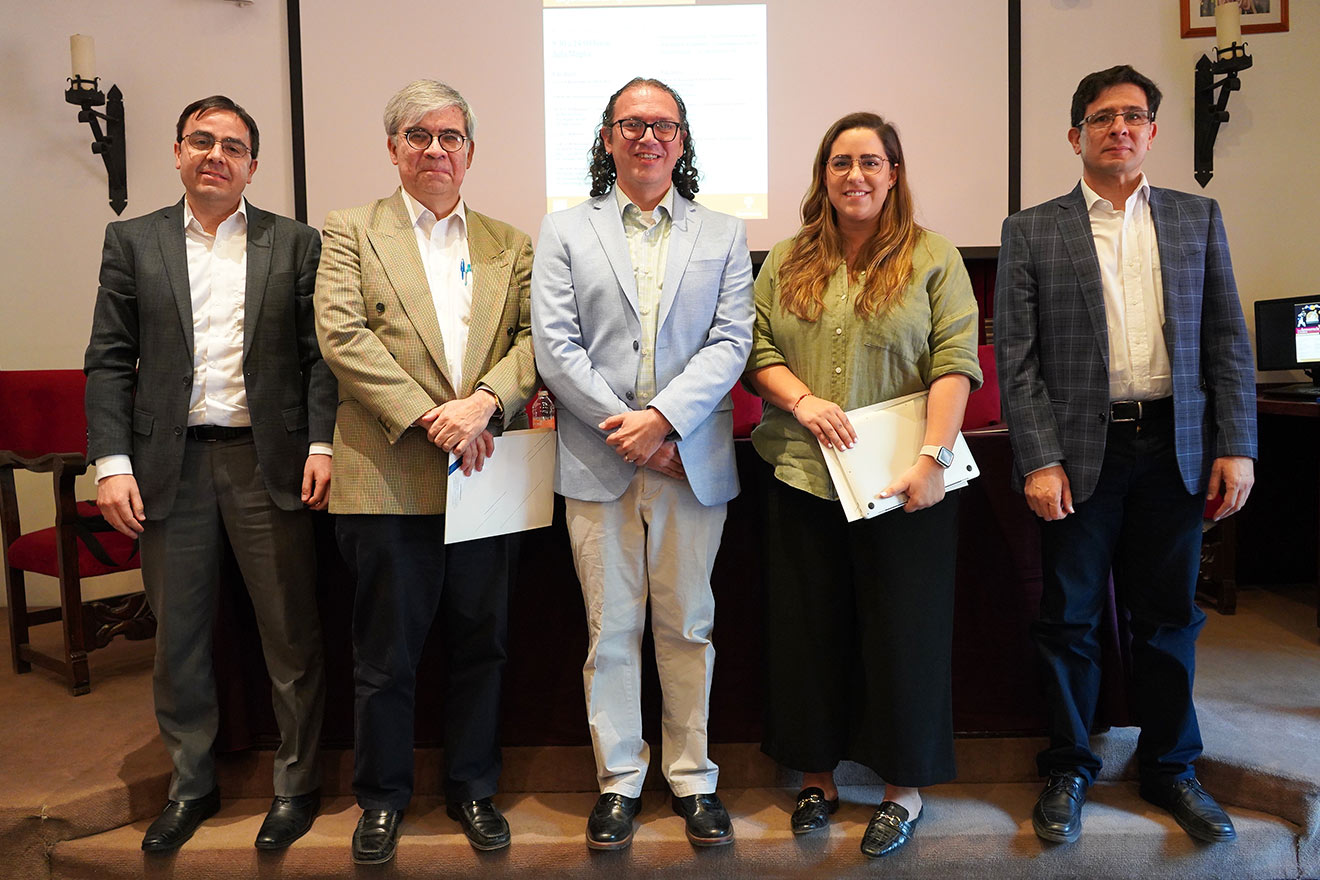
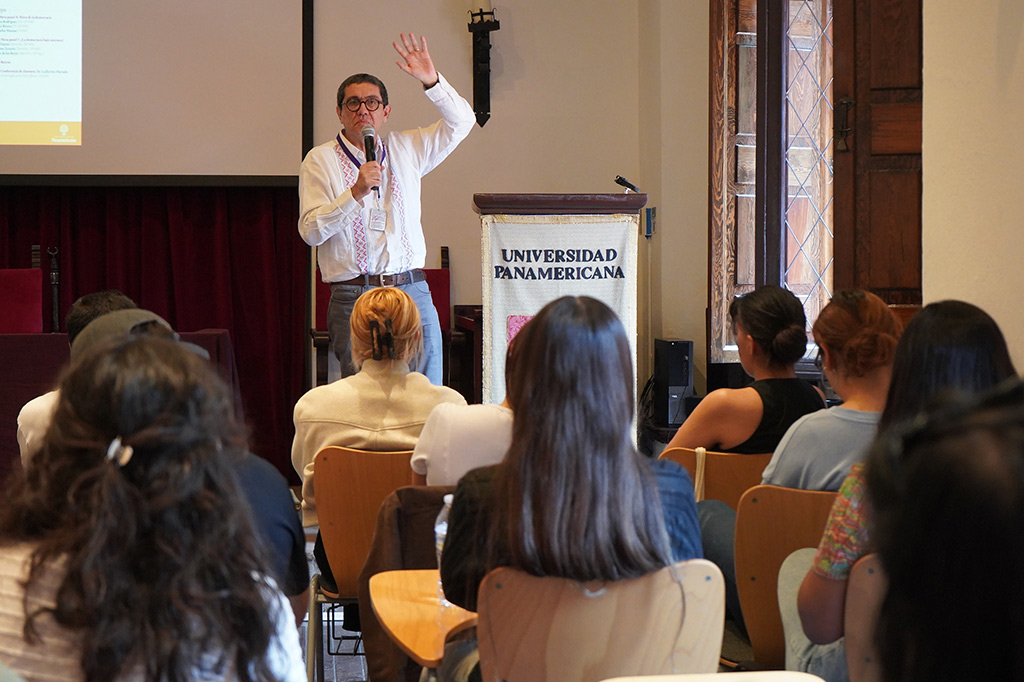
Mexico City, May 27, 2024.- The Institute of Humanities of the University of Mexico (IHU) held the Universidad Panamericana held the event Democracy under examination: III Day of Humanist Reflection, which took place on May 8 and 9, in the facilities of our house of studies.which took place on May 8 and 9, at the facilities of our house of studies.
Democracy in Mexico and its challenges
The inaugural lecture was given by Dr. Mónica González Contró of UNAM's Institute of Legal Research, who addressed the current situation of democracy in Mexico and its challenges.
The doctor gave a historical overview of democracy in Mexico, from the Constitution of 1824 to the current Constitution of 1917. She emphasized that the term "democracy" was not common in Mexican political vocabulary until the mid-19th century and that, although some democratic elements were recognized, the right to vote was limited to certain groups, excluding women, children and indigenous people.

In 1917, the Mexican Constitution adopted the idea of a representative, democratic and federal republic. However, he noted that this democracy has historically been limited and exclusive, and still faces significant challenges today. Citizen participation is crucial, but a more active and participatory citizenry is required to strengthen democracy.
He stressed the need to rethink democracy to make it more inclusive and participatory, beyond periodic elections. Democracy must be a system of life that implies respect for human rights and the existence of counterweights and autonomous bodies that guarantee these rights.
Finally, he urged young people to actively participate and reflect on how to improve and strengthen democracy in Mexico, stressing that it must be more robust and participatory in order to face contemporary challenges.

Myths of democracy
During the panel discussion Myths of Democracy participated from the Panamerican University, Ms. Julieta Rodriguez of the Institute of Humanities, Mexico City campusDr . José Luis Rivera Noriega from the School of Philosophy, Mexico City campus, and Dr. Juan Carlos Mansur from ITAM, who served as moderator. Dr. Juan Carlos Mansur from ITAM was also present and acted as moderator.

Ms. Rodriguez presented a paper on misconceptions about democracy, especially focused on the principles of equality and freedom.
He began his presentation by recalling that democracy, more than a political system, is a way of life based on equality and freedom, citing authors such as John Dewey and Amartya Sen. He explained that, in theory, democracy should ensure that everyone is equal before the law and free to live their lives according to their wishes.
However, he argued that equality in democracy is more a myth than a reality, exemplified by the situation in Mexico where profound economic, social and political inequalities persist.

Similarly, he discussed the "tyranny of the majority," an idea developed by Alexis de Tocqueville, warning that in a democracy, decisions made by the majority can oppress minorities, imposing beliefs and values that perpetuate inequalities. This situation turns equality into a mirage and highlights the fragility of this principle in democratic practice.
The speaker concluded by stating that, despite its failures, democracy has mechanisms to correct its own inequalities and errors, but that this requires political will. She stressed that true equality and freedom in democracy can only be achieved through an active and critical engagement of society to continuously improve and reform its structures.
The ideal democracy
In the continuation of the panel, Dr. Rivera presented a paper focused on the criticisms and limitations of democracy from a philosophical and historical perspective.
Rivera demystified the idea that democracy is the best and most natural system of government. He explained that Rousseau believed that democracy requires very specific and difficult conditions to be met, such as a small state and great equality among its citizens. Without these conditions, democracy becomes an impracticable and easily corruptible system.
He also mentioned Machiavelli, who suggests that all forms of government, including democracy, are flawed and can be dangerous if not properly balanced; and proposes a mixed system combining elements of monarchy, aristocracy and democracy to counteract the weaknesses of each.
In his conclusion, he stressed that democracy should not be seen simply as a system of government, but as a form of social organization that requires a constant commitment from citizens to maintain balance and avoid the tyranny of the majority. He emphasized the importance of having counterweights and mechanisms to correct the errors and abuses of the democratic system.
Finally, he called for greater reflection and criticism of democracy, urging citizens to work actively to improve and perfect this system in practice.

Old virtues for a renewed democracy
The closing conference entitled Old Virtues for a Resumed Democracywas given by Dr. Guillermo Hurtado of UNAM's Institute of Philosophical Research. In his presentation, he expressed that democracy should not only be understood as a system of government based on adequate electoral processes, but also as a way of life based on three essential ideals: liberty, equality and fraternity.
Hurtado criticized how these ideals have lost their original meaning and distinguished between positive and negative freedom, stressing that negative freedom is essential to achieve positive freedom. As for equality, he stressed that democracy is based on the common dignity of people, not on the equality of individual capabilities or resources.
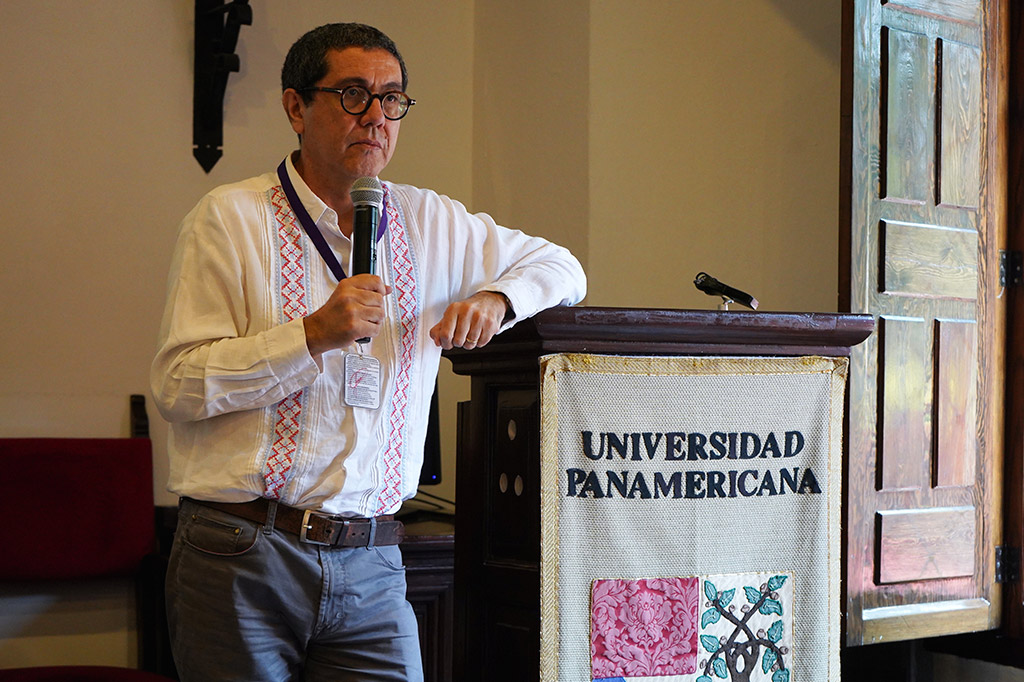
He also presented fraternity as a necessary virtue to balance and guide freedom and equality towards a common good. He mentioned that, although fraternity can be conflictive, it is fundamental for cooperation and solidarity in a democracy, which can only prosper if the people are united and work together to solve collective problems.
He also addressed the current crisis of democracy, characterized by a lack of faith in its ideals and a tendency towards individualism. Thus, he proposed to recover Christian virtues such as faith, hope and charity in a secular version to revitalize democracy.
Finally, he argued that democracy needs to be seen as a social and moral ideal that must be embraced with enthusiasm and firmness, and that it is crucial for its functioning that citizens keep faith in these ideals.
Learn more about what the Humanities Institute of the Universidad Panamericana does at: https://www.up.edu.mx/educacion-universidad-instituto-de-humanidades/