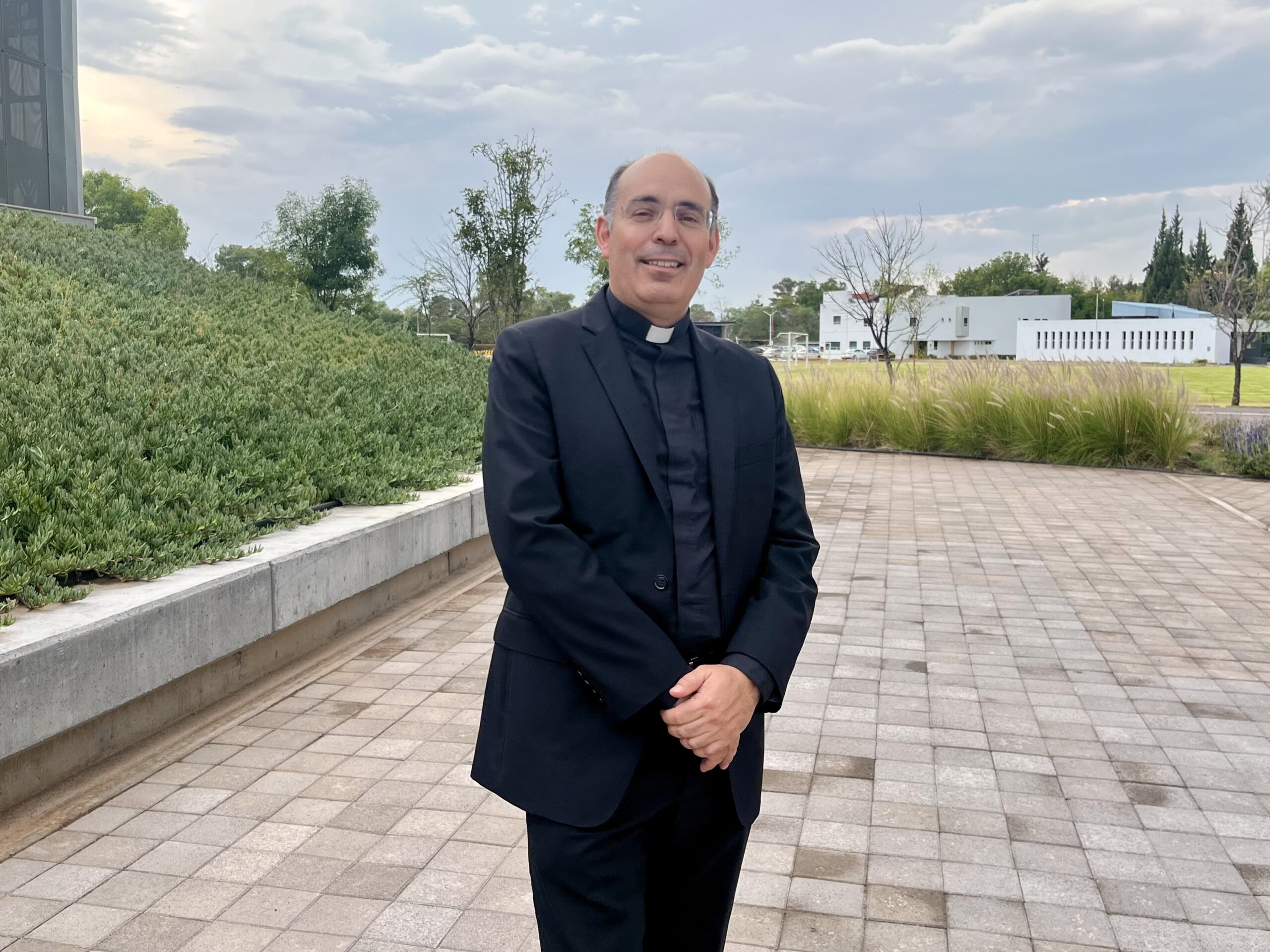
June 19, 2025.— Every year, the Catholic Church celebrates the Solemnity of Corpus Christi, a feast that reminds us of the perpetual miracle of the real presence of Jesus Christ in the Eucharist. To understand its history and meaning, Rev. Luis Felipe Quesada Pérez, senior chaplain at the Universidad Panamericana Aguascalientes Universidad Panamericana , offers a profound reflection on the origin and spiritual meaning of this feast.
A miracle that sparked a celebration
The History of Corpus Christi begins in response to a crisis of faith. In the 11th century, a theologian named Berengar of Tours began to spread the idea that the presence of Jesus in the Eucharist was symbolic, not real. Faced with this position, the Church responded not only with doctrine, but also with action.
“In the mid-13th century, there were several Eucharistic miracles that confirmed the faith in the real presence of Christ. One of the best known occurred in Bolsena, where drops of blood appeared on a consecrated host. That event led Pope Urban IV to establish, in 1264, the Feast of the Body and Blood of Christ”, says Fr. Felipe.
This was the first feast of the Church that did not commemorate a historical event, such as Christmas or Easter, but rather a central dogma of the Catholic faith: the real, true, and substantial presence of Jesus in the Eucharist.
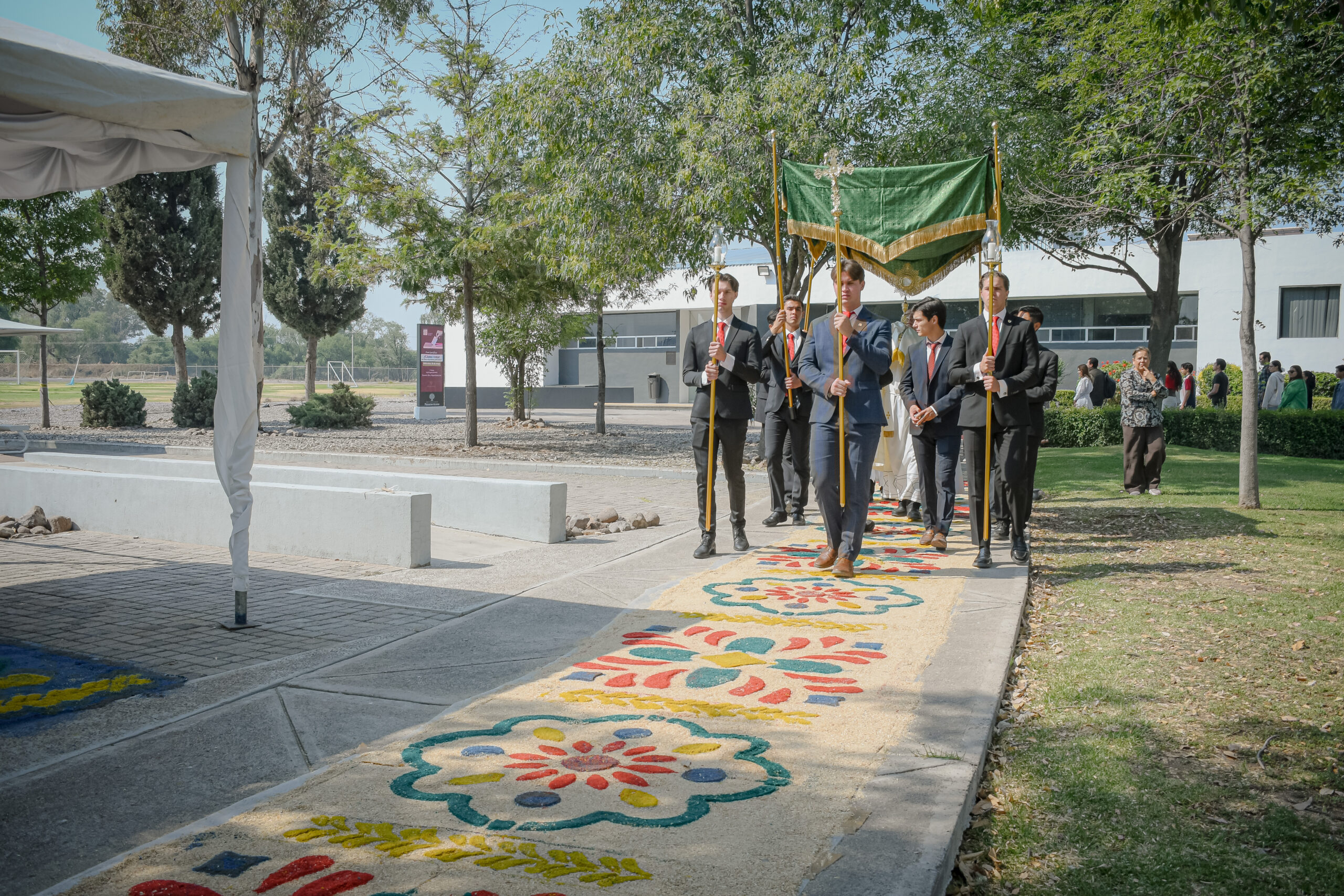
The Church's first public procession
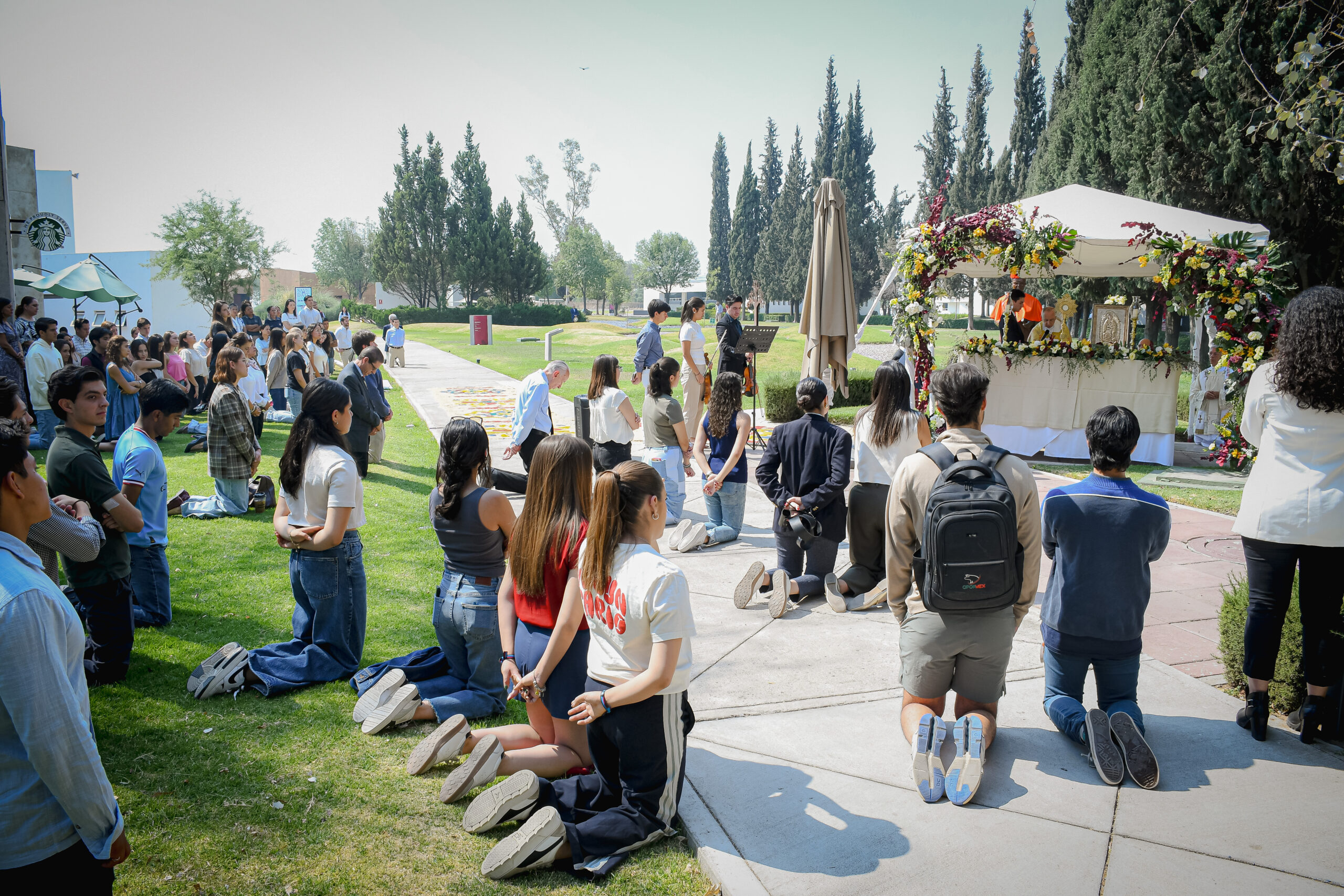
To make this truth visible, a new ritual was introduced into the life of the Church: the Eucharistic procession. It was the first time that the Most Holy Sacrament in a monstrance through the streets, creating a public display of faith and adoration.
“Before the Feast of Corpus Christi, there was no blessing of the Blessed Sacrament or processions. This was the first time that Jesus was carried in a monstrance through the streets to be publicly adored,”, explains the chaplain.
Since then, the Church has enriched this celebration with hymns and liturgical texts. Many of them were written by St. Thomas Aquinas, such as the famous Pange Lingua and the hymn Adoro te devote, which expresses with simplicity and depth the wonder at the mystery: “Sight, touch, and taste are deceived by you… but hearing alone is enough to believe firmly,”, he notes.
Why is it central to the faith?
The real presence of Christ in the Eucharist is more than a symbol: it is the heart of the Catholic faith. “Anyone who loves knows the difference between presence and absence. The Eucharist means that Jesus is with us, that He accompanies us, that we are not alone,”, says Fr. Luis Felipe.
The Eucharist is understood in two dimensions:
- As a sacrifice, it is the renewal of Christ’s sacrifice on the cross.
- As a sacrament, it is the enduring presence of Jesus even after Mass, in the consecrated bread.
An invitation to live by faith
How to experience Corpus Christi? For Fr. Felipe, the essential thing is attending Mass, renewing one’s faith, and not forgetting that Jesus is truly present. “We all have our moments of doubt. That’s why we must ask the Lord for faith. If we truly believed that Jesus is in the Eucharist, the churches would be full,”, he notes.
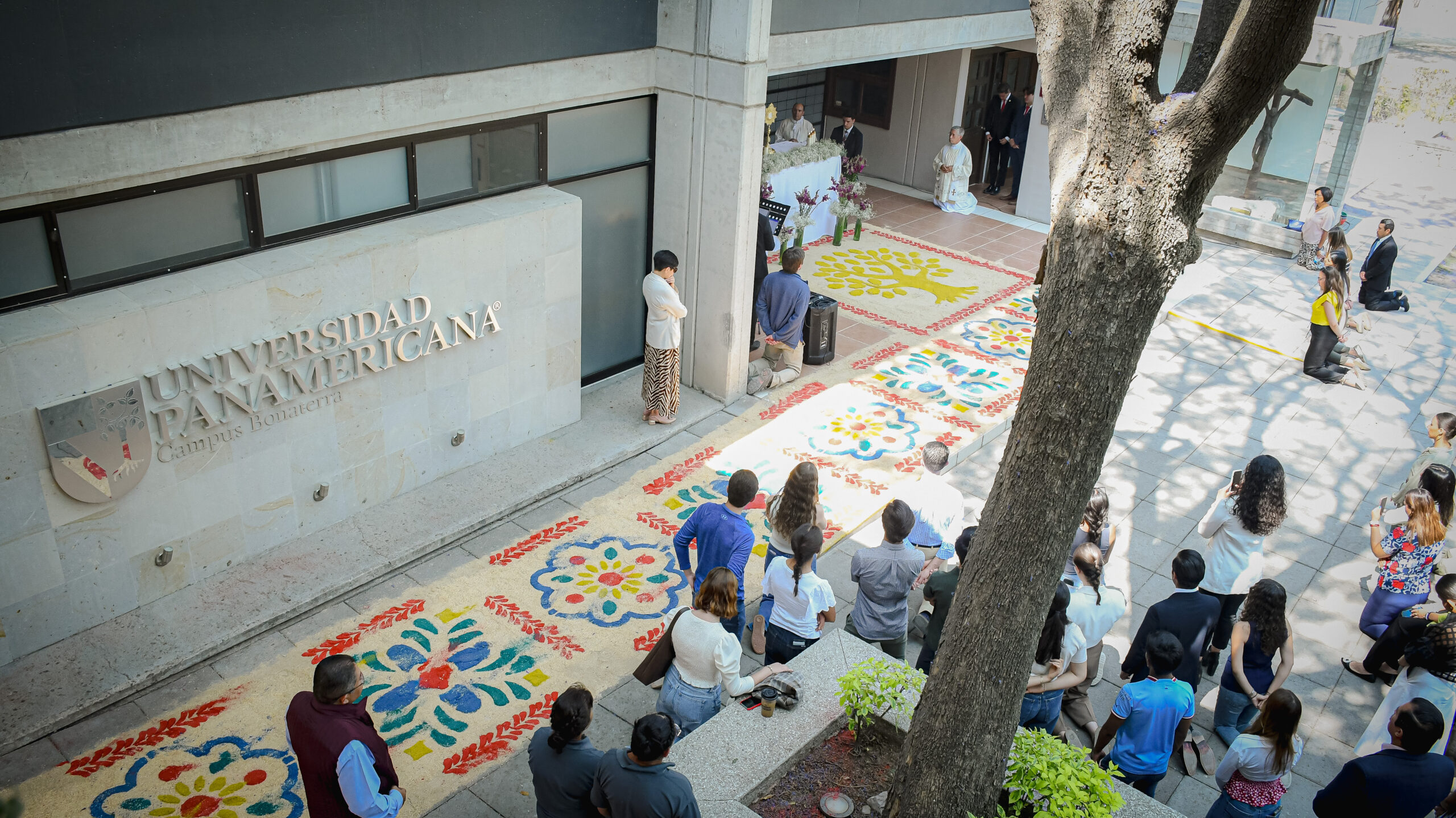
Processions, adoration, and active participation in the sacramental life are concrete ways to not forgetting his presence and delving deeper into the mystery. “Jesus tells us: ‘Here I am, whenever you want.’ And perhaps we lack the faith to appreciate that immense gift that is so close to us,”, concludes Fr. Felipe.
The Solemnity of Corpus Christi not only commemorates an essential dogma of the Catholic faith, but also strengthens the spiritual life of the university community. At the Universidad Panamericana, this celebration takes on special significance as it is integrated into its mission to educate leaders with a sense of humanity and a deep commitment to values.
Learn more about the principles and values of the Universidad Panamericana : https://www.up.edu.mx/sobre-la-universidad-fundamentos-y-valores/