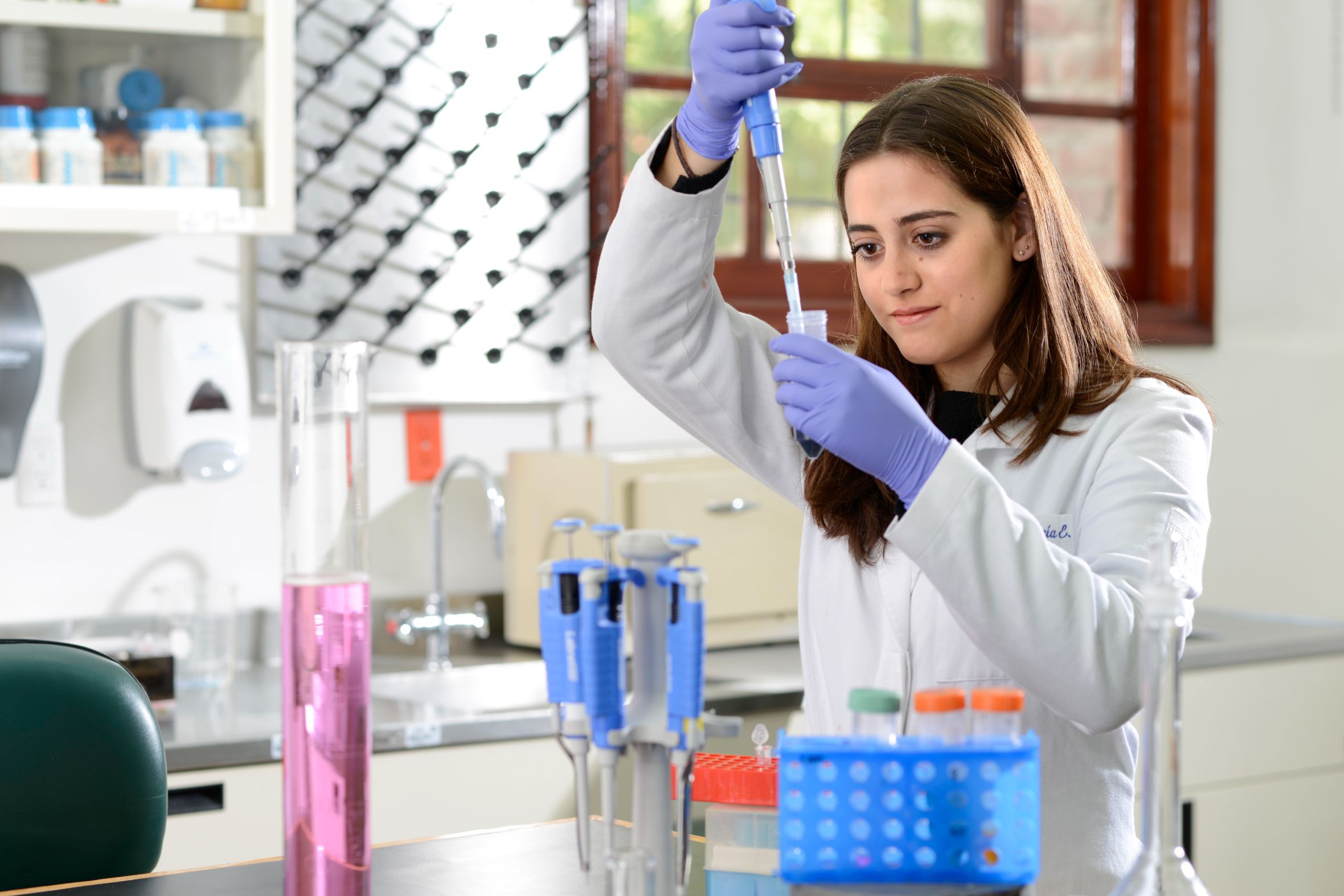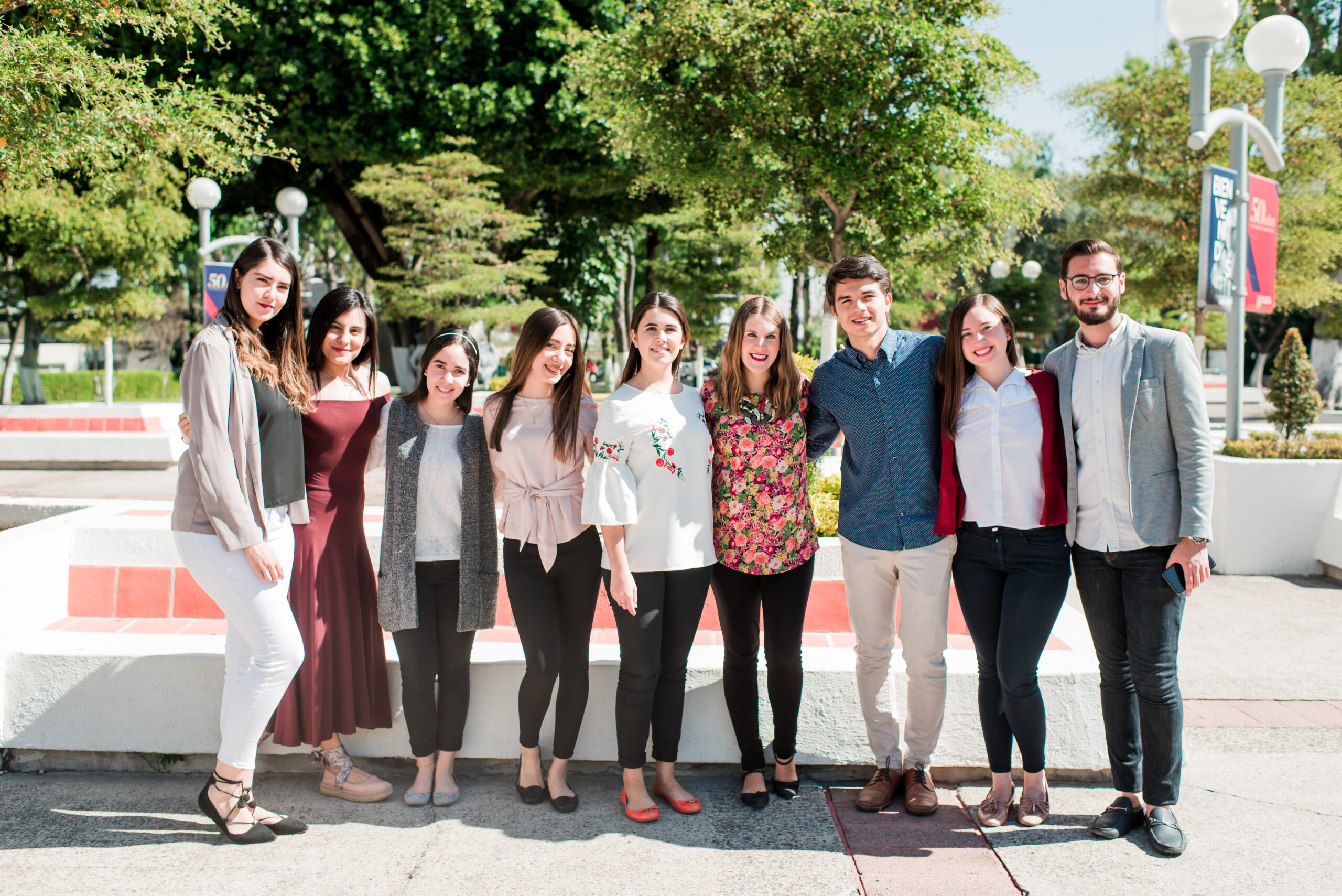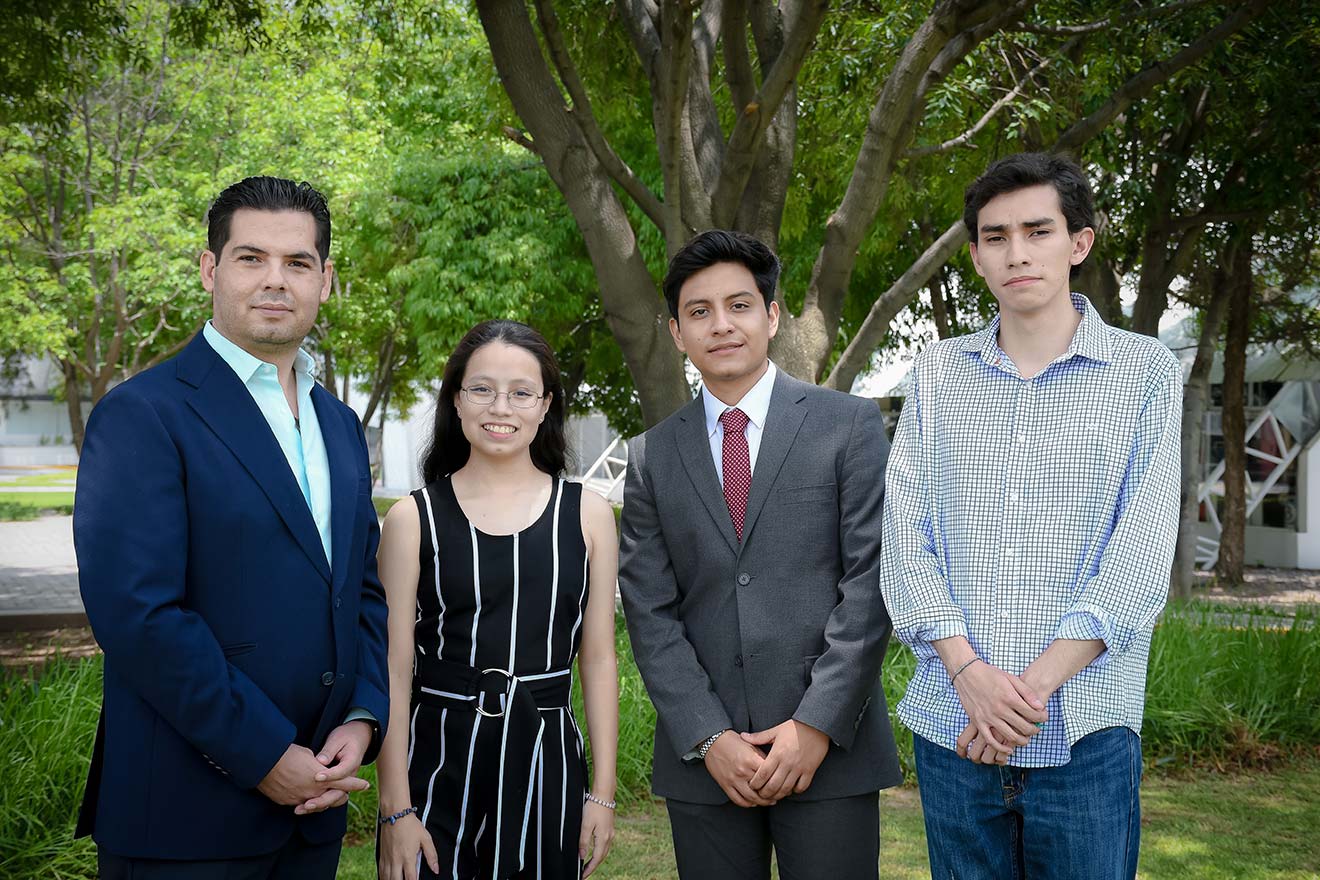
Aguascalientes, Ags., August 30, 2024.- Students of the School of Engineering of our campus Aguascalientes, Ags. Panamericana campus Aguascalientes and a student from the Massachusetts Institute of Technology (MIT) worked this Research Summer with Dr. Héctor Gilardi, a research professor specializing in complex systems modeling and chaotic systems.
Stacy Vazquez is a Mathematics Engineering with Computer Science student at the Massachusetts Institute of Technology, Yamil Melendez is a Bioelectronics Engineering student and Daniel Avelar is an Industrial Engineering student at our Panamericana.
After having previously had the opportunity to visit our campus, Stacy decided to be part of the Summer Research to collaborate on Dr. Hector Gilardi's "Modeling Diseases with Dynamical Systems" project.
For their part, students from the UP School of Engineering dared to participate in the research to strengthen the mathematical knowledge they have acquired throughout their studies.
A project on disease modeling
The arrival of the COVID-19 pandemic came to change the life that was known, so that a latent instability was generated, with it the "peaks of the disease", where for temporary periods the contagions were noticed in a more aggressive way.
These peaks of the disease indicate a stationary value that, according to other analysis models, were not the closest to reality in terms of percentage of contagion and time, because the population continued to travel and therefore spread the disease in non-established periods, that is, in continuous peaks of the disease.
In this sense, Dr. Hector Gilardi and the students decided to focus the study on the transmission of diseases from person to person, with the help of the proposal of an innovative model that would address this issue in a more realistic way.
Disease modeling mainly uses the SIR model, which considers several groups of people - the 'S' represents the susceptible population, the 'I' the infected and the 'R' the recovered - to analyze the disease based on the changes in these populations, for example, if someone gets sick goes from ''susceptible'' to ''infected'', someone who recovers goes from ''infected'' to ''recovered''.
According to this classical model, if someone is already "recovered" they are considered to have permanent immunity, so they no longer pass on to susceptible individuals. However, with COVID-19 it was observed that immunity is temporary.
Therefore, for this project they proposed to use a SEIR model, based on the original model that adds another group: the ''exposed'', who in this case, are asymptomatic but likely to transmit the virus.
"We decided to do this model because we observed that it was quite good, maybe not complete but it considers several factors or situations that could be applicable," expresses student Stacy.
It is worth mentioning that the model parameters considered on average how many interactions there are from person to person, for example, if a person interacts with 10 people per day; there is also the parameter of how infectious the exposed are, how infectious the infected are, how fast they recover, etc. In this sense, the research team tried to decide which parameters would show the most interesting behaviors in the graphs they created with the simulation.
"To interpret the stability of our model, we used the eigenvalues of the Jacobian matrix and found the equilibrium points of the original models, which are the points where all the derivatives are equal to 0, in terms of the parameters and the number of affected individuals. In addition, we found that the change in the mean number of infected individuals in both populations is complementary, that is, when in one population it goes up, in the other it goes down, although not always by the same magnitude," shares Daniel Avelar.
On the other hand, Yamil addressed the part of the population graphs (susceptible, infected, recovered, exposed) in this model, where by applying equations, stable linear behaviors were observed; however, once all the data for all the populations were available, chaotic behaviors were detected.
The Research Summers at the School of Engineering promote a taste for science and STEM areas, inviting both local and international students to put their engineering knowledge into practice to solve real-world problems.