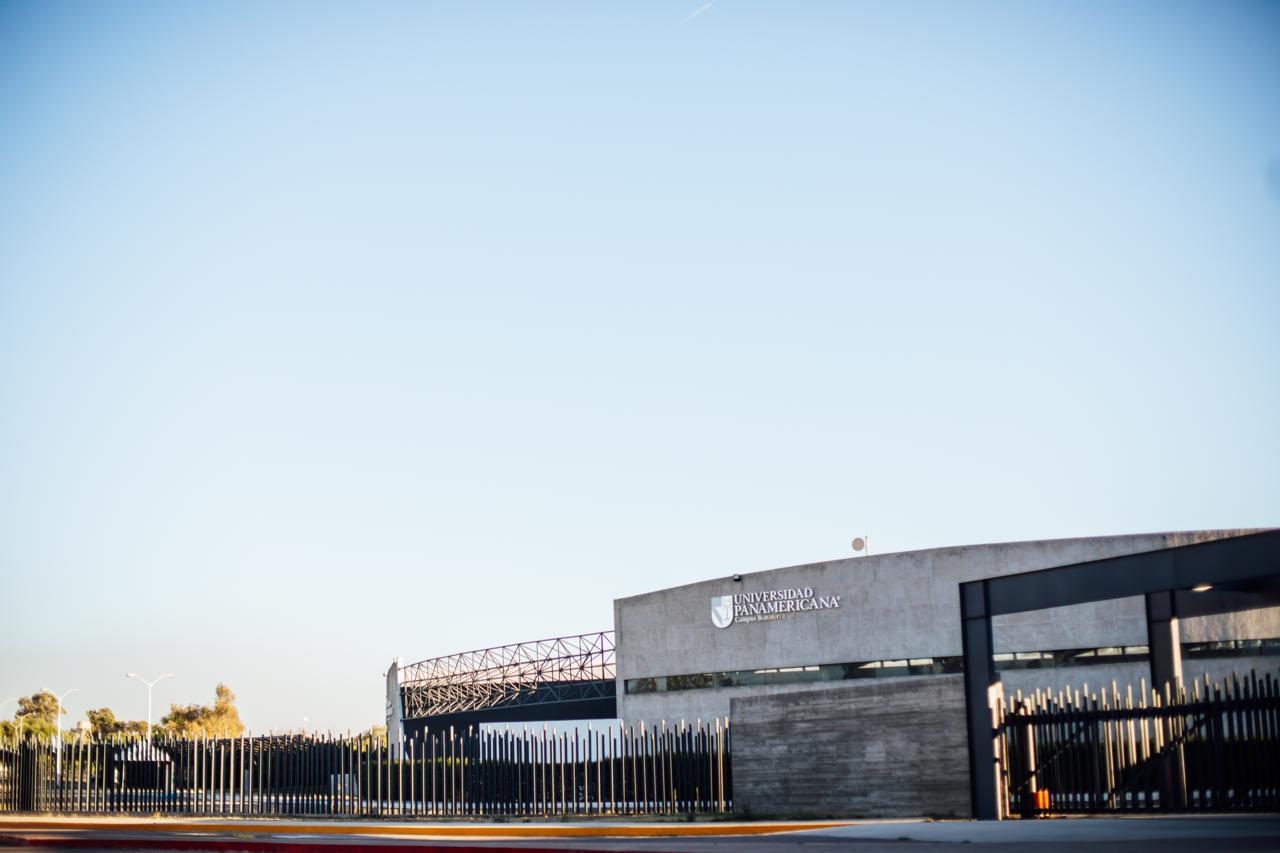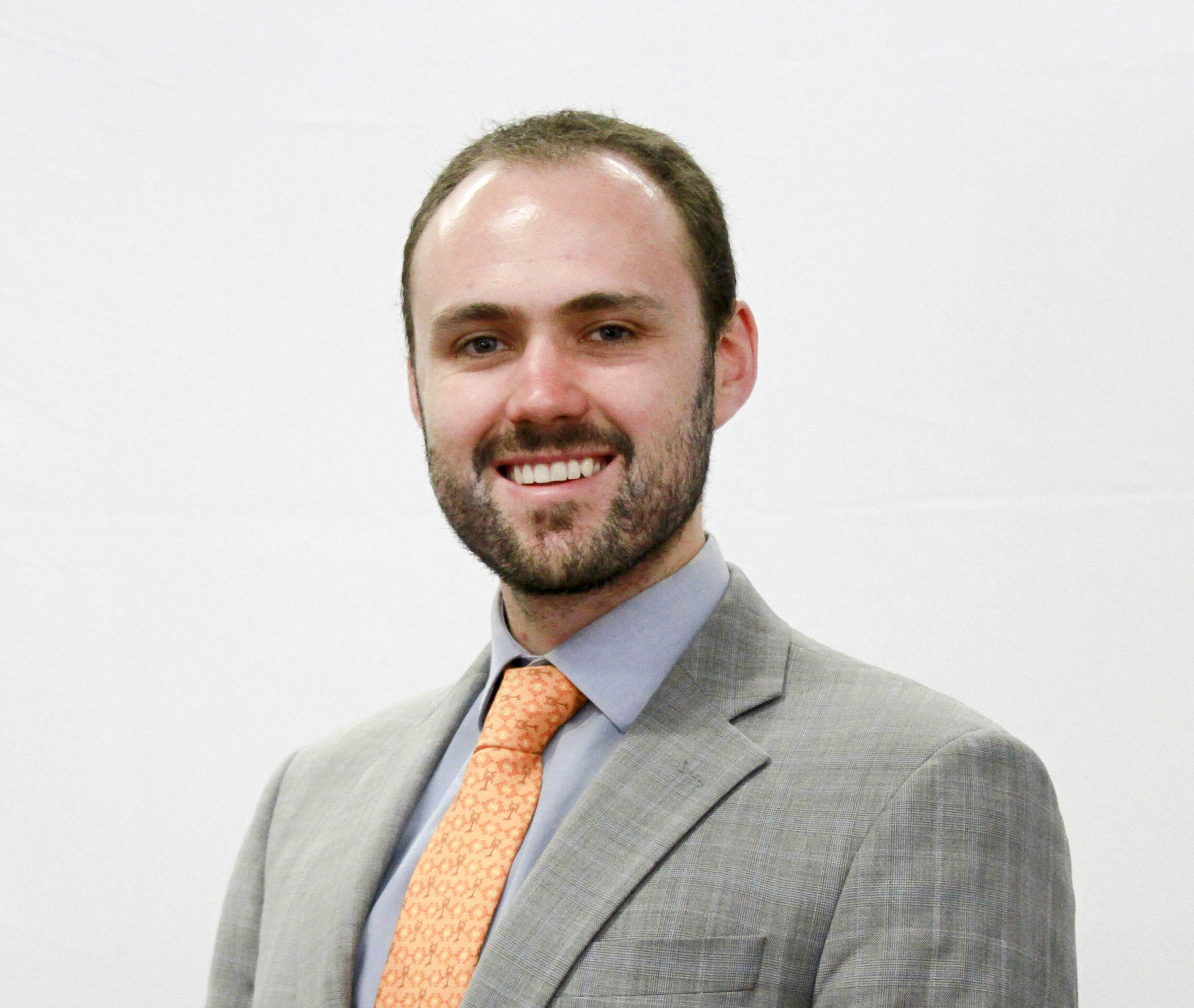
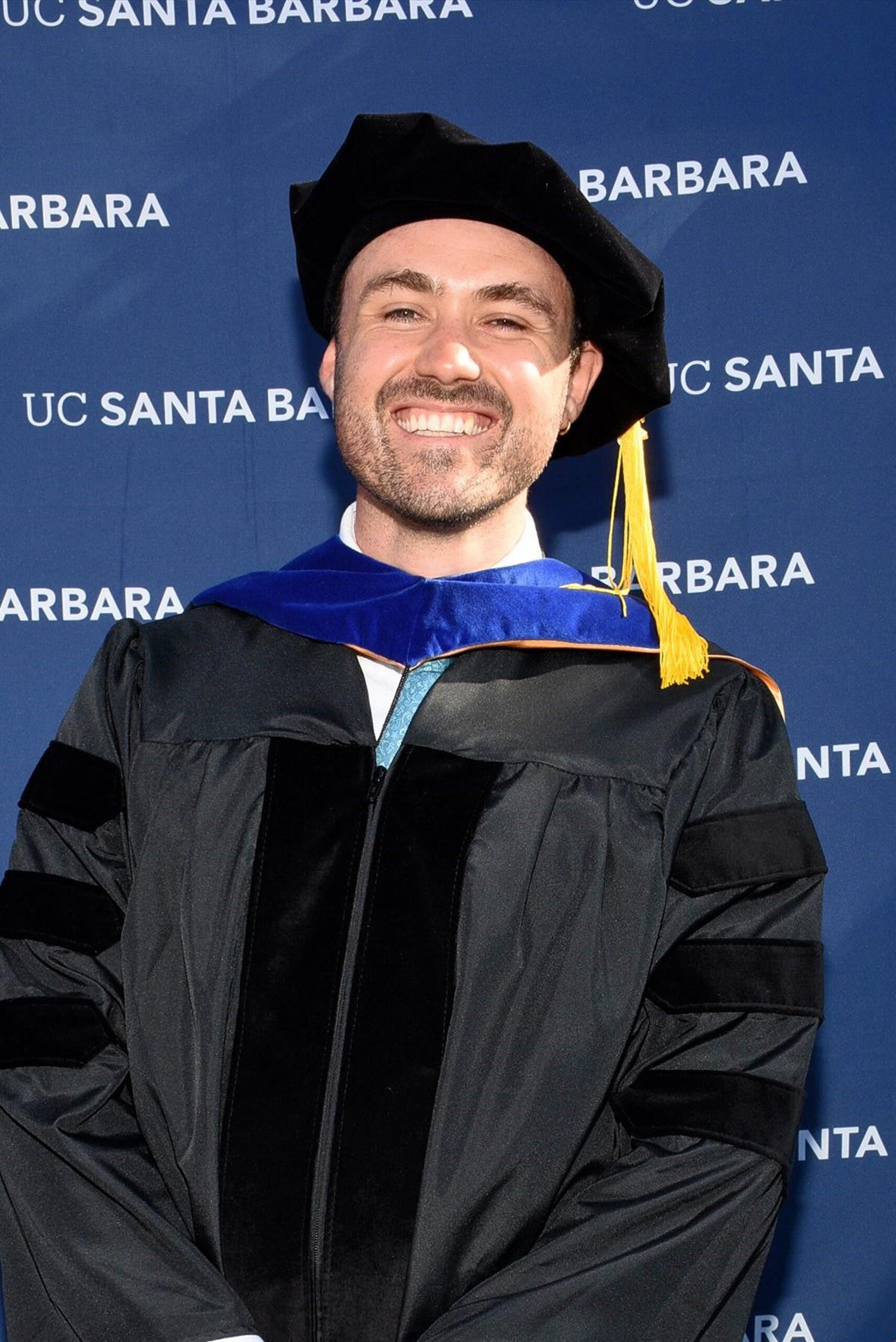
Mexico City, October 3, 2026.— Dr. Salvador Escalante, a research professor in the School of Philosophy at the Universidad Panamericana, is returning to our university after five years of study abroad.
To this end, with the support of the Research Immersion Program (REIP) at the Universidad Panamericana, thanks to which she was able to pursue her doctoral studies at the University of California, Santa Barbara. There, she studied under the guidance of Professor Voula Tsouna, a specialist in Platonic and Epicurean philosophy. Her career also included research stays at Princeton and at the Hardt Foundation in Switzerland.
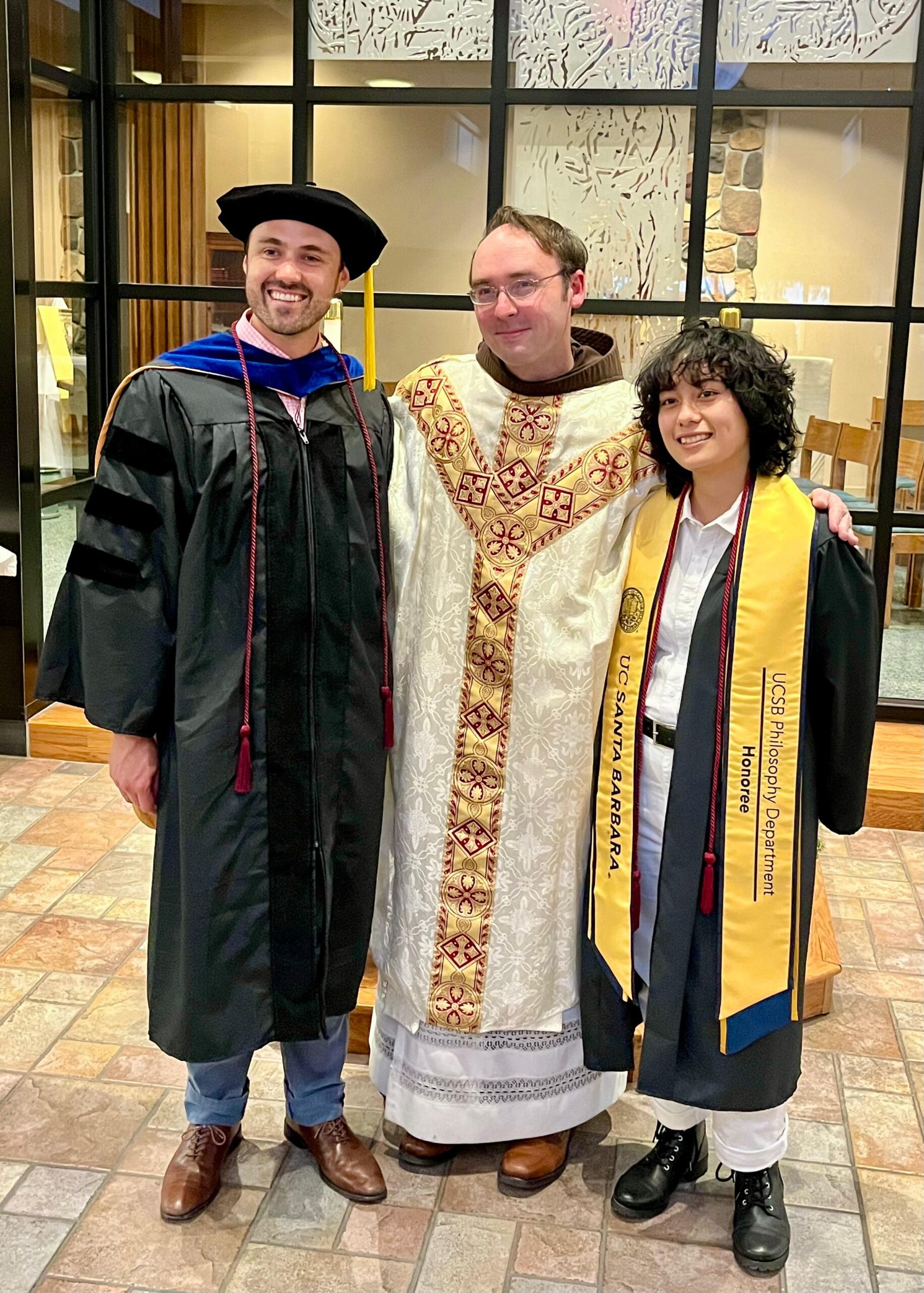
“I’m happy to be back at the Panamericana; it’s like coming home,”, says Dr. Escalante. The researcher notes positive changes at the institution, such as support for research and a desire to become international leaders in their field. But beyond the institutional aspect, his return has a personal dimension: Mexico City is where he grew up, where his family and friends are, “so the opportunity to build a career here is invaluable”, he says.
Between Homer and Plato: A Question About Who We Are
Dr. Escalante’s doctoral project was based on a conviction: “We owe a debt to Greek culture like no other”. Plato, he says, is, along with Aristotle, the most influential of the Greek philosophers, and the works of Homer provide the primary backdrop for his thought.
The question that guided his research was as ambitious as it was fundamental: What is the history of our conceptions of our identity as human beings, and how does this history intertwine with the history of conceptions of the soul? To answer this question, Salvador studied two key moments in that history: Homer and Plato.
Her central thesis challenges the academic consensus. She explains that, although neither Homer nor Plato had a term equivalent to “person” or “personal identity,” most interpreters have assumed that they either lacked a conception of personal identity or, if they did have one, the person is, in her view, the soul.
Dr. Escalante offers another interpretation: “Homer and, especially, Plato did have a conception of personal identity, and according to this conception, a person is not his or her soul.”
The Value of an Expert's Perspective
Regarding the role of his advisor, Prof. Voula Tsouna, Dr. Escalante highlights her deep knowledge of Greek culture, which enabled her to point out key counterexamples to help him refine his arguments. One of the most relevant examples pertains to a central point in his dissertation: the idea that “inner life” is an inadequate term to describe the psychology of Homeric characters.
Tsouna pointed out passages from the *Iliad* and the *Odyssey* where there seemed to be hints of inner life (such as when Achilles senses that Odysseus is trying to persuade him to return to the battlefield), which led Escalante to qualify his position: the Homeric heroes do indeed possess psychological elements that we would associate with an inner life.
“But they themselves did not conceive of these psychological elements in this way, since they did not distinguish between inner life—located in a private sphere inaccessible to others—and the world around them,” he states. This, he explains, is due in part to the fact that the ancient Greeks did not distinguish between the physical and the mental: “for them, even emotions had a body”.
With this example, Dr. Escalante illustrates how his advisor’s big-picture perspective allowed him to “delve into the details of my arguments without losing sight of the bigger picture of which they were a part.”
Three Spaces, Three Lessons
In addition to Santa Bárbara, Dr. Escalante spent time at Princeton and at the Hardt Foundation in Switzerland, two institutions with very different characters.
The Hardt Foundation's mission is to promote the study of classical antiquity and to foster dialogue as a means of understanding.
For Escalante, this experience allowed him to explore different approaches to conducting research and understanding the philosophical tradition: “Our questions build bridges that lead to mutual understanding, despite our historical, political, and ideological differences”.
Regarding Princeton, Escalante comments: “Perhaps the institutions that best represent Princeton are Small World Coffee, a coffee shop, and Labyrinth Books, a bookstore. Together, they embody thepassion for dialogue and knowledge that characterizes this small town.”
When comparing the two academic traditions, Escalante observes that Europe has a greater interest in delving into history, while in the United States the emphasis is on conceptual clarity and sound argumentation. “I think Panamericana has both components, but seeing them distilled separately helped me appreciate their value,”, he reflects.
What's Next
Upon his return, one of Dr. Escalante’s goals is to continue working on publishing the results of his doctoral research and to join collaborative projects, perhaps focusing on moral psychology, the relationship between the individual and his or her community, or the reception of ancient philosophy.
Likewise, with his students, he seeks to share new research methods and convey to them “the importance of clarity of thought and transparency in reasoning.”
Why Should We Keep Reading Homer and Plato?
For the researcher, the relevance of these authors is not merely a historical matter. He points out that in Book IX of the Iliad, Achilles questions the meaning of all his actions up to that point, raising a question that each person must answer for themselves: What is the meaning of my life? Plato revisited that question when he stated that an unexamined life is not worth living. Since then, thinkers such as Friedrich Nietzsche, Viktor Frankl, and even Pope Francis have offered different answers.
“Studying this story allows us to see that Achilles’ question arose in a context of personal and social crisis,” he explains, referring to Agamemnon’s betrayal of Achilles and the impending defeat of the Greek army. He adds: “(…) it shows us that, by asking ourselves this question, we are seeking a value capable of withstanding these moments of crisis”.
For Salvador, today’s philosophical questions become superficial when posed without historical perspective: “Reading Homer and Plato reminds us of key moments in this development and, in doing so, restores the richness of their history to our questions.”
A piece of advice for those who dream of living abroad
Based on his own experience, Dr. Escalante believes that studying or conducting research in another country can be a highly valuable academic experience, although it also involves significant challenges.
That is why he recommends drawing on the experience of those who have already gone through similar processes in different countries, learning how to prepare a competitive application, and, once accepted, not neglecting your personal well-being beyond your academic work.
“For Panamericana employees, the opportunity to be part of the REIP is invaluable, as it gives you the chance to apply to institutions that you could otherwise only dream of joining,”, he concludes.
Learn more about the projects of researchers at the National Institute of Health ( Universidad Panamericana ) at: https://www.up.edu.mx/investigacion/noticias/