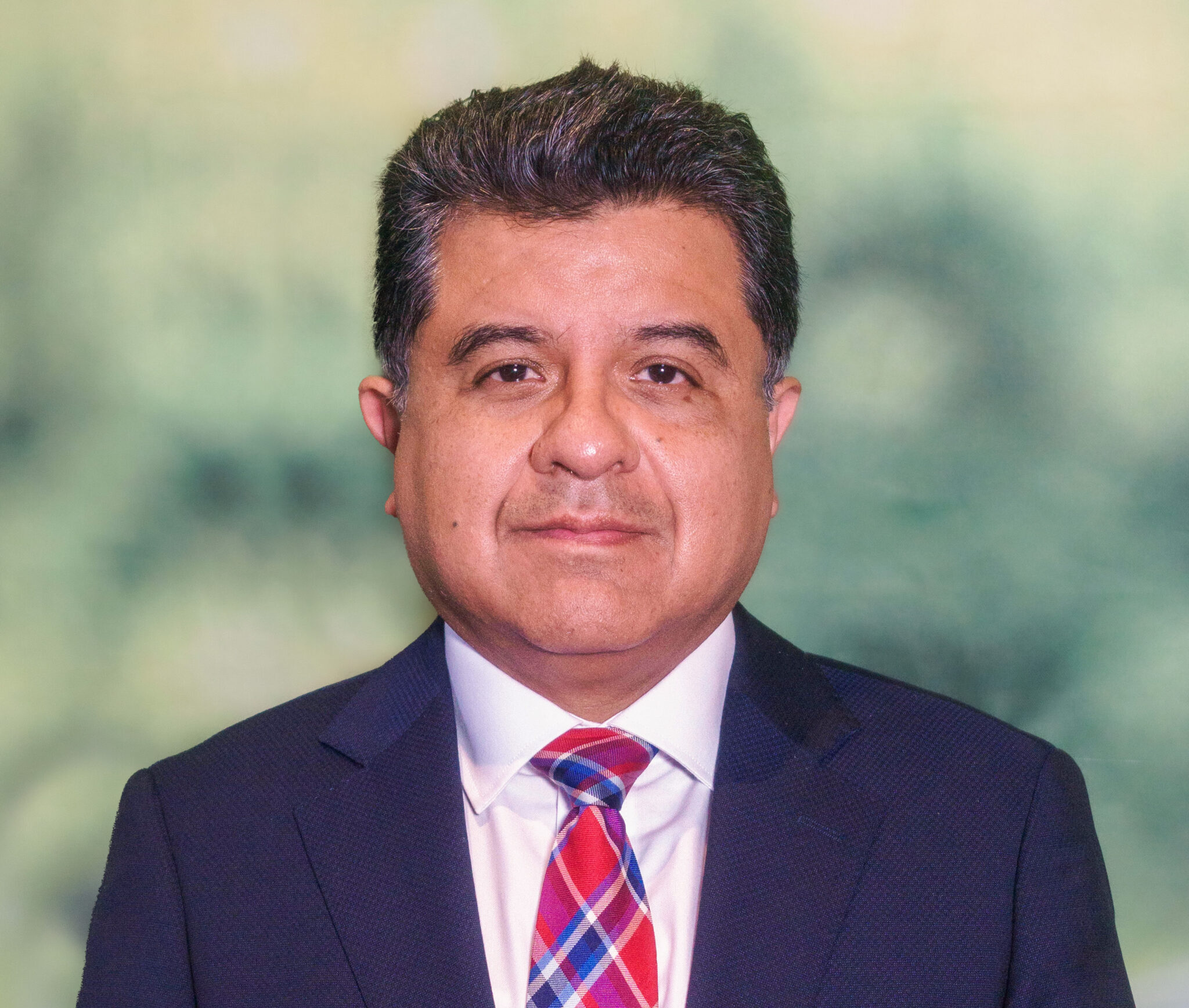
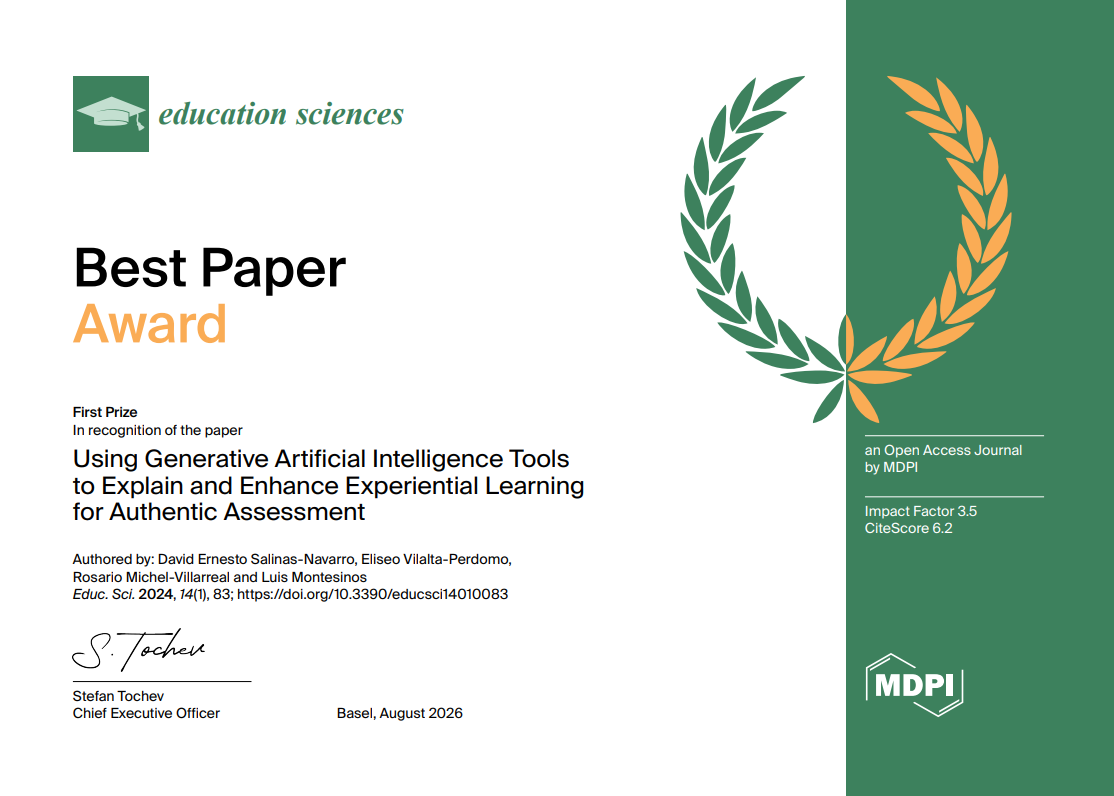
Mexico City, September 17, 2026.— The journal Education Sciences (Q1) awarded the 2026 Best Paper Award to Dr. David Ernesto Salinas Navarro, a research professor in the School of Engineering at the Universidad Panamericana, for an article that proposes an innovative pedagogical framework for integrating Generative Artificial Intelligence (GenAI) into the design of experiential learning activities in higher education.
The award, the researcher explains, represents “a deep sense of professional satisfaction and validation of a rigorous effort to provide real solutions to the field of education”. The recognition took into account high-impact metrics, such as download volume and citations, along with theEditor’s Choicedistinction among more than 1,600 articles published in 2024. “The fact that this award considers these metrics demonstrates that the work has resonated both practically and intellectually within the global scientific community”, he notes.
A Pedagogical Framework to Address the Passive Use of AI
This article stems from a gap identified by Dr. Salinas: most initial approaches to GenAI in higher education focus on ethical issues, algorithmic capabilities, or the passive use of the tool to summarize information.
“I identified a clear need to provide an intentional pedagogical framework in which GenAI serves to foster critical thinking and experiential learning,”, he says. His proposal, he emphasizes, “guides teachers in designing interactive activities that expose students to real-world scenarios and challenge them to solve complex problems.”
The key to the model, the researcher explains, lies in framing GenAI as a “cognitive scaffold” and co-designer of experiences, rather than merely a search engine for answers. The framework is based on David Kolb’s experiential learning cycle, enabling teachers to use AI to create roles, contextualized activities, and dynamic case studies that adapt to students’ decisions.
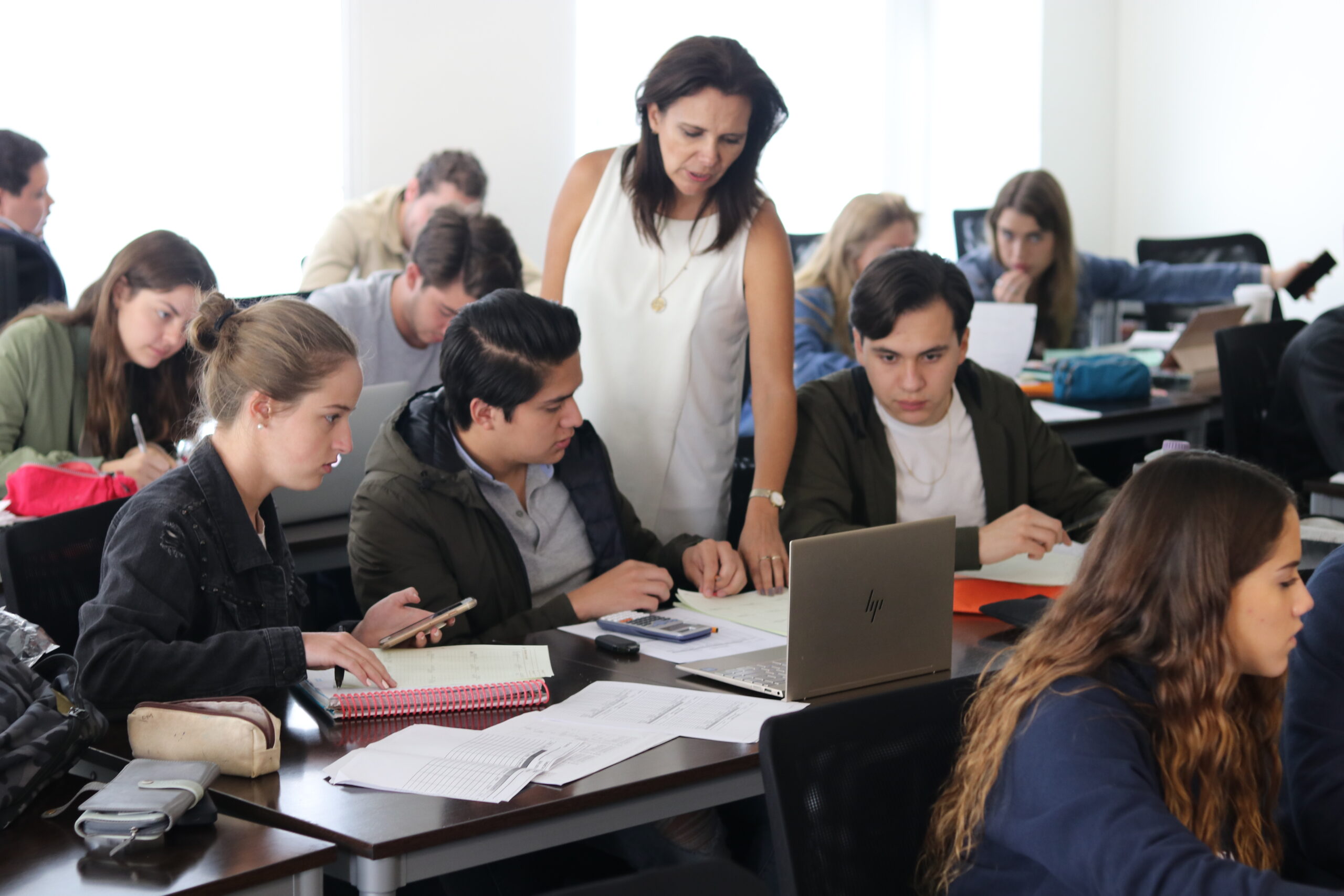
“It differs from other approaches in thatit does not seek to automate teaching or replace human judgment; rather, it places the student in an active role of experimentation, whereAI acts as a reflective interlocutor or as an interactive environment that requires critical analysis and real-time decision-making,” he points out.
Ethical Challenges: Avoiding “Cognitive Atrophy”
Regarding the challenges of incorporating these tools, Dr. Salinas warns that the main challenge “lies in avoiding ‘cognitive atrophy’ or blind faith in the results generated by algorithms.”
Among the top ethical considerations, he lists the following:
- Bias and equity (ensuring that models do not reproduce or amplify cultural, gender, or socioeconomic biases).
- Transparency and privacy regarding student data.
- Redesigning assessment to focus on the thought process and critical reflection rather than just the final product.
- Promoting a learning environment where students do not delegate their responsibility or their decisions.

How is Artificial Intelligence changing the role of teachers?
According to the researcher at the Universidad Panamericana, the emergence of GenAI “accelerates the transition of teachers from the role of ‘knowledge transmitters’ to that of architects of learning experiences and human mentors”. The traditional paradigm, centered on memorization or the basic production of content, “is becoming obsolete.”
“In the coming years, educational value will lie in the ability to ask the right questions, discern the quality of information, and design environments in which students apply human values—such as empathy, ethics, and critical judgment—in collaboration with technology,”, he argues.
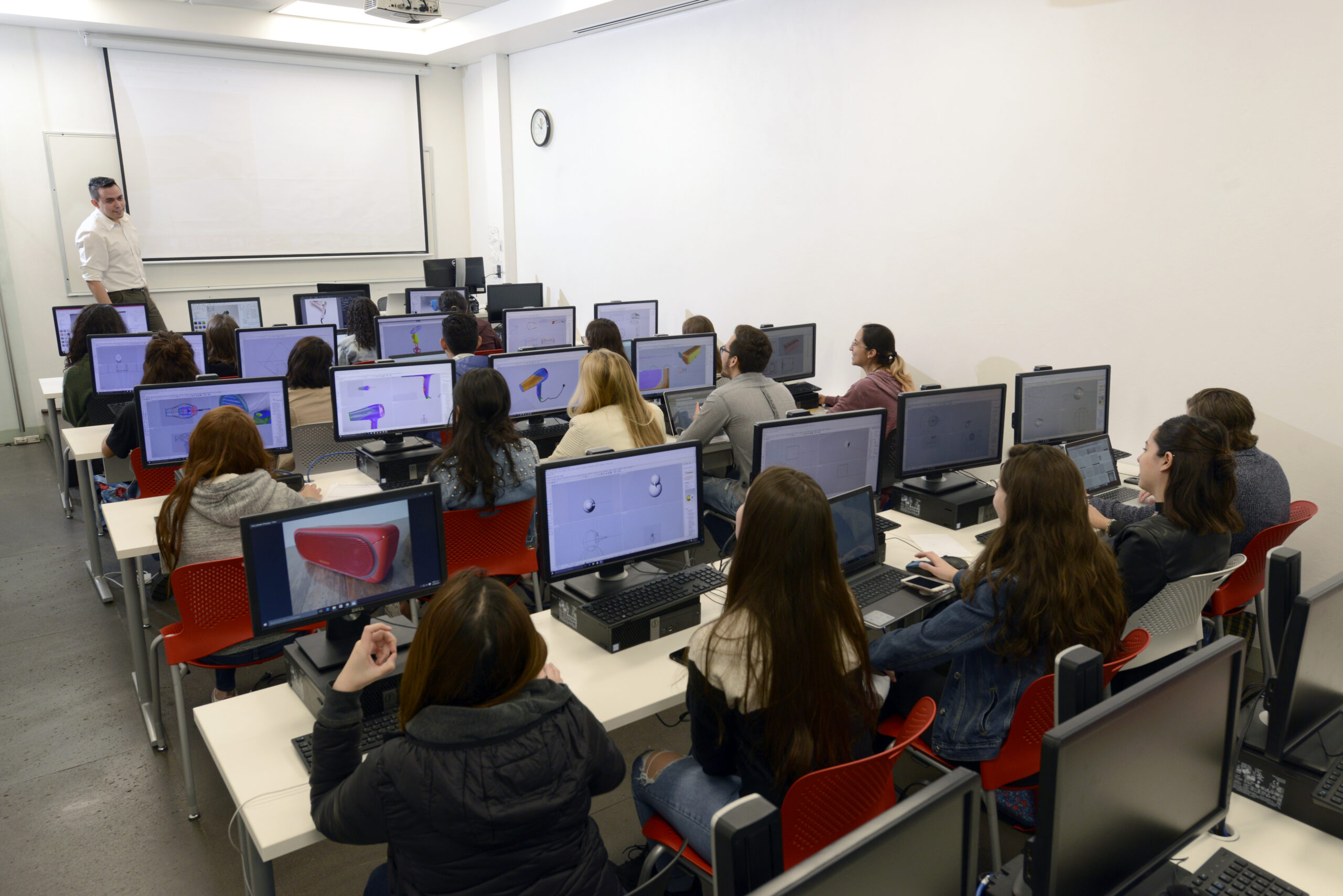
From this perspective, the integration of artificial intelligence into education does not eliminate the teacher's role, but rather poses new challenges for supporting and educating students.
Toward Ecosystems That Strengthen Student Agency
Looking ahead, Dr. Salinas envisions a path forward focused on strengthening student agency within complex sociotechnical ecosystems. “AI should not make decisions or replace human thought, but rather serve as an interactive environment that challenges students to take ethical responsibility for their choices,”, he concludes.
The 2026 Best Paper Award thus recognizes a research project by the Universidad Panamericana that explores the relationship between generative artificial intelligence, educational innovation, and experiential learning, with a focus on the development of critical thinking and student responsibility.
This recognition contributes to the international visibility of the research conducted at the University of the West ( Universidad Panamericana ) and to its participation in the academic dialogue on the impact of emerging technologies on higher education.
Learn more about the researchers at the National Institute of Health ( Universidad Panamericana ) at: https://www.up.edu.mx/investigacion/