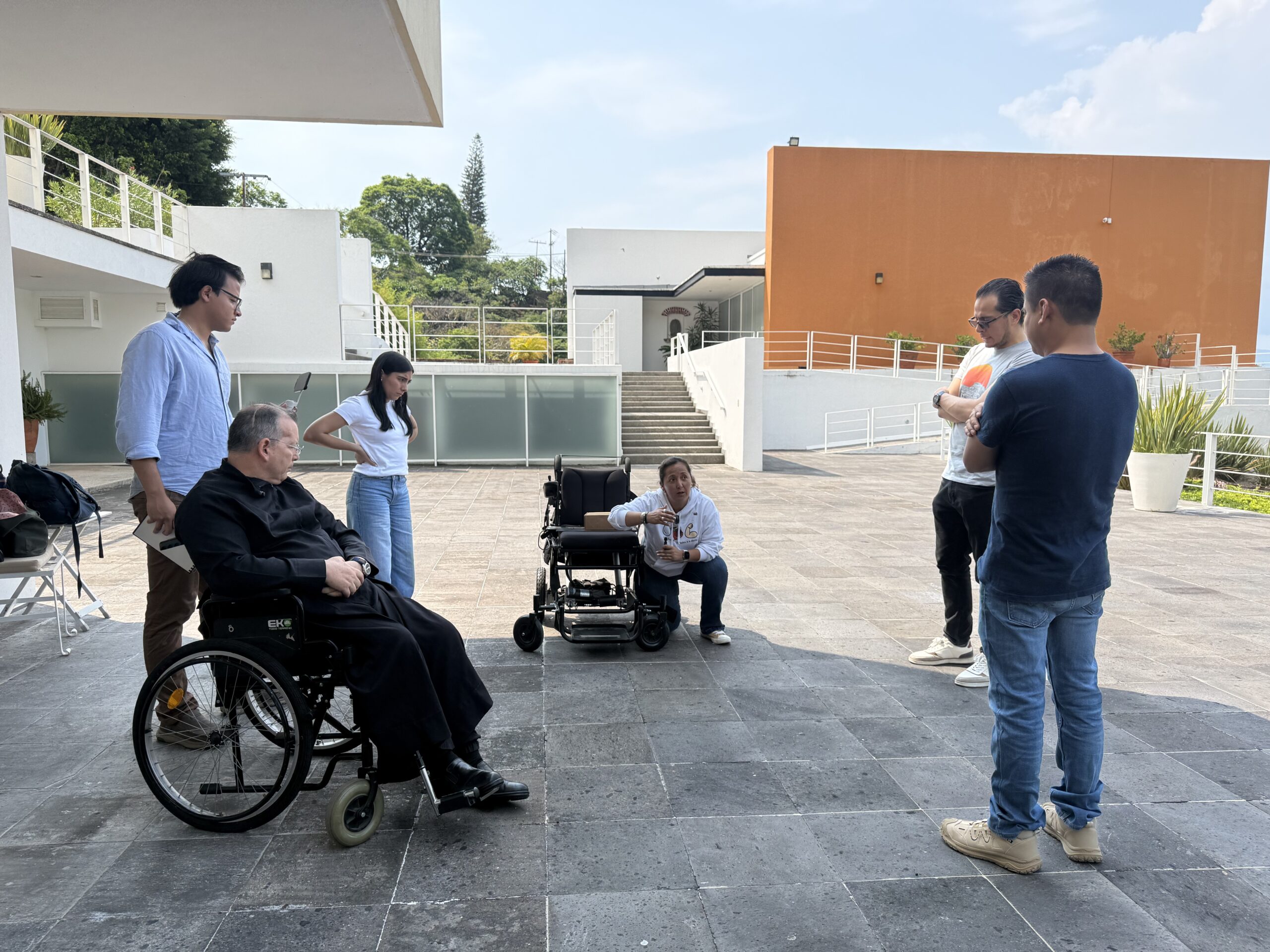
Aguascalientes, Aguascalientes, September 18, 2026.— Faculty and students at the Universidad Panamericana Aguascalientes campus , in collaboration with the Massachusetts Institute of Technology , developed the OSUKÃ project, an applied research initiative that seeks to improve the mobility and autonomy of people who use standing wheelchairs, based on a specific need and through interdisciplinary work and international collaboration.
What is the OSUKÃ Project?
The OSUKÃ project has its origins in a personal story. Óscar Rodríguez’s father suffered two strokes that left him with significant loss of mobility on the left side of his body. From that point on, he began a rehabilitation process that allowed him to regain sensation and some mobility, until he was able to stand with support.
This recovery also gave rise to a new need: to find an alternative that would allow him to make use of that ability to continue carrying out important activities in his daily life, including celebrating Mass.
“I looked for a solution that would allow me to stand and keep my right arm free to perform the movements during Mass,” Father Óscar explained.
During that process, he began using a standing chair. However, the available solution had some limitations when it came to moving around, navigating obstacles, and performing certain movements during Mass.
It was then that, through his relationship with Dr. Gabriela Durán, a research professor in the School of Engineering and the academic director of Innovation and Design, he began to consider the possibility of developing a different solution.
“We began to assess their needs. One of the needs we identified was the ability to approach the altar and perform the necessary bow to kiss the altar, ” explained Dr. Durán.
Interdisciplinary education for solving real-world problems
Based on these conversations, a person’s need became a research challenge for faculty and students at the Universidad Panamericana.
Although OSUKÃ was created to address the specific needs of Óscar’s father, the project aims to ensure that the knowledge and improvements developed can later contribute to solutions for other people who use wheelchairs or standing devices.
“I believe this research isn’t just a one-off thing—I mean, it’s not just for the priest, but for everyone who uses some kind of standing chair,” said Dr. Durán.
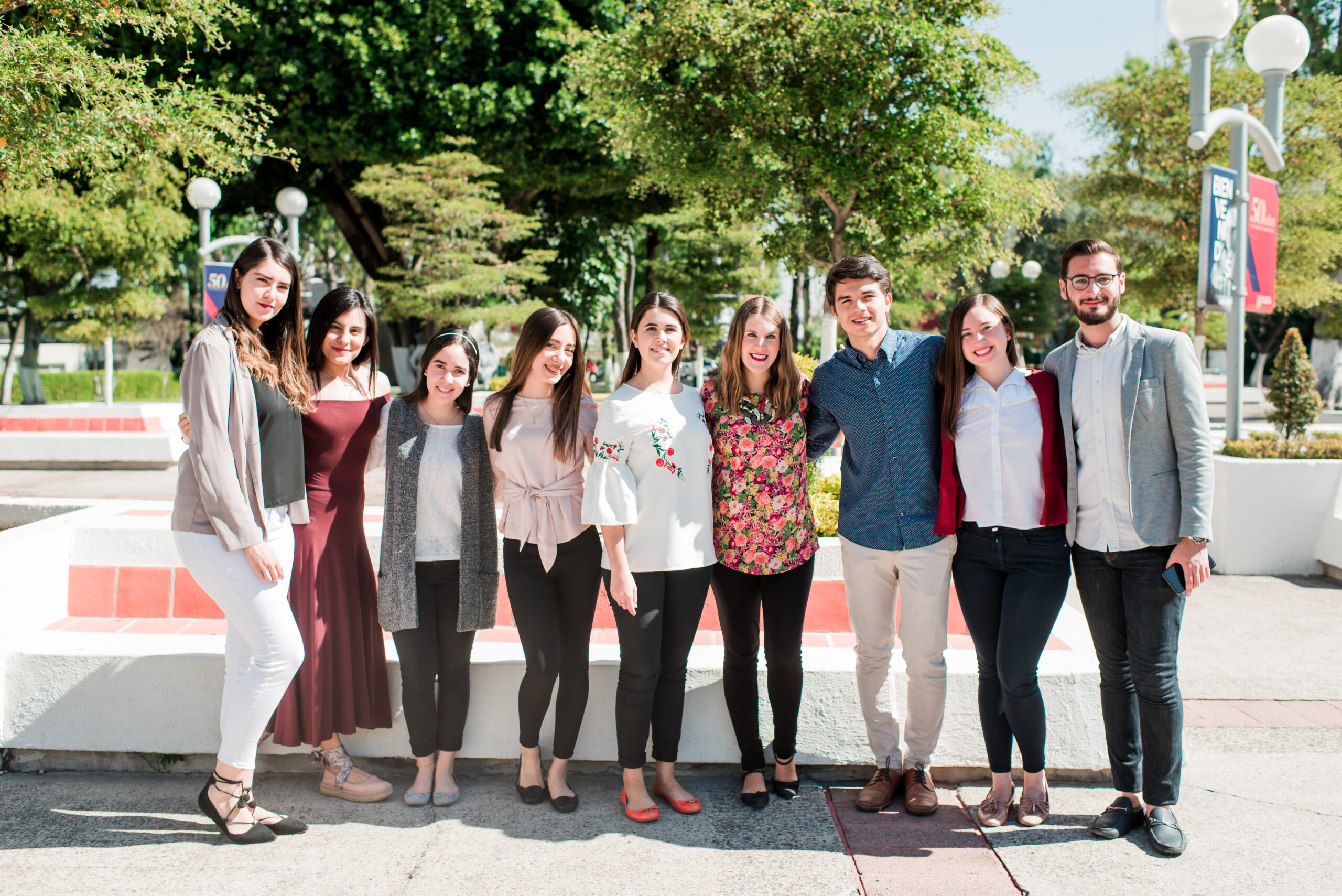
This applied research project brought together faculty and students from various fields of engineering, who participated in different stages of the project and contributed their expertise in design, electronics, mechanics, and ergonomics.
Ángel Jiménez, a professor in the School of Engineering, explained that students from the Mechatronics and Bioelectronics programs participated in the project, contributing to mechanical design, electronic verification, and defining the scope of the proposals. For Hiroki Sasamoto Cruz, an engineer, one of the key takeaways was that the students were able to gain firsthand experience in the process of developing, testing, and refining their proposals.
In this regard, the project allowed students not only to apply technical knowledge but also to understand the responsibility involved in developing solutions tailored to an individual. Furthermore, one of the central aspects was recognizing that user needs could open up new opportunities for innovation.
Designing Based on User Needs
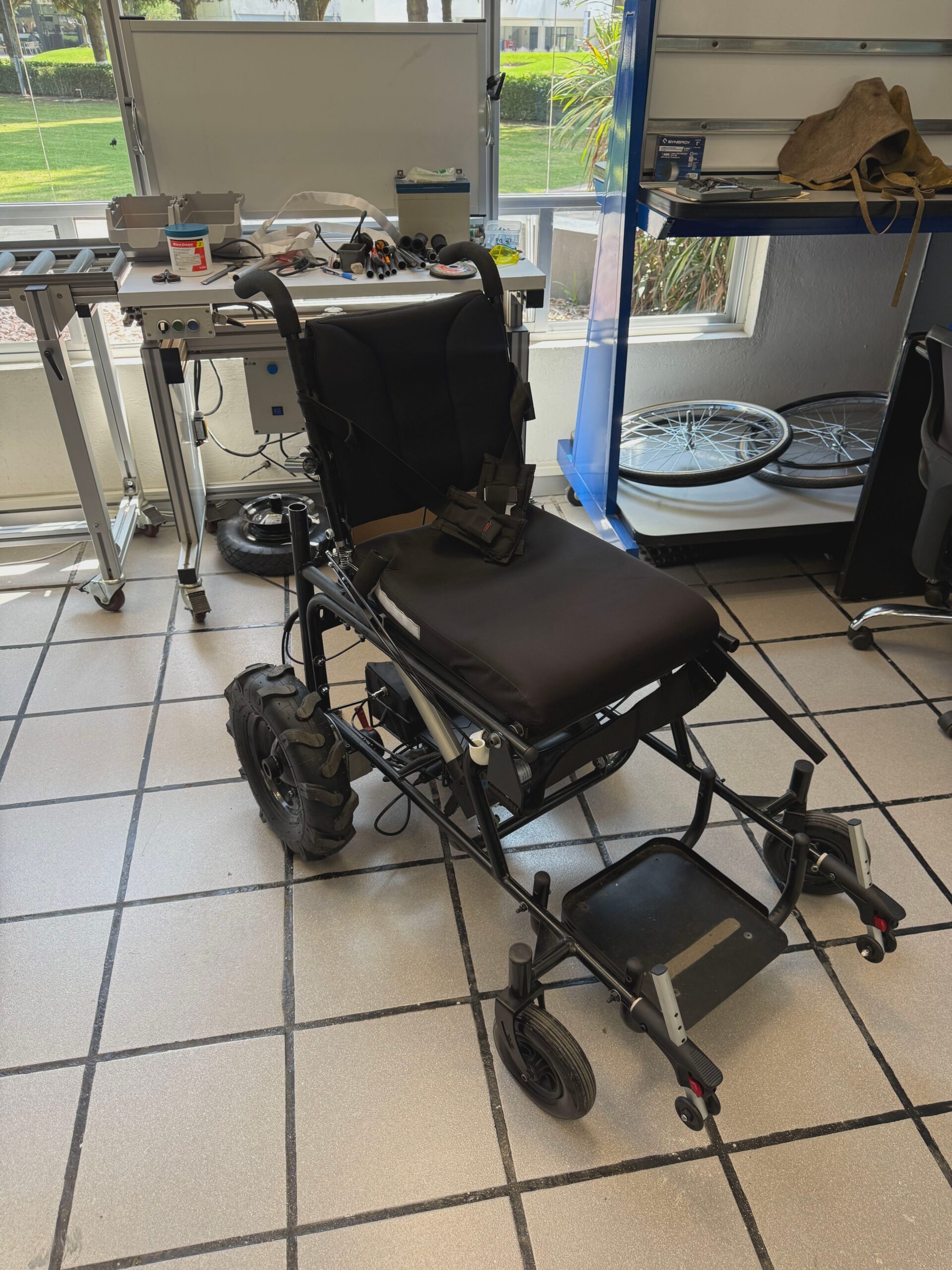
One of the main challenges identified by the team was improving the wheelchair’s ability to navigate obstacles, particularly steps. Student Sebastián Ponce explained that his contribution focused on developing a new tire and wheel design to improve the wheelchair’s performance when encountering these types of obstacles.
For Sebastián, working directly with a chair that will be used by a person also changes the way he understands the design process. “Proposals must be evaluated not only in terms of their technical functionality, but also in terms of how useful they will be in the user’s daily life, ” he explains.
International collaboration that broadens perspectives
Emma Martínez, a mechanical engineering student at the Massachusetts Institute of Technology (MIT), also contributed to the development of OSUKÃ. She participated in a summer internship at the Aguascalientes campus of the National Institute of Technology of Mexico ( Universidad Panamericana ) and joined the project.
During her participation, Emma was involved in various stages of the process, from machining to the construction and modification of components. Her work focused on modifying an existing wheelchair to provide the user with greater mobility in their daily activities.
“It’s been a lot of fun to work in a different machining shop with different people,” she said. Added to that was the opportunity to exchange knowledge with students and professors from the Universidad Panamericana: “It’s also been nice to work with both the students and the professors. I’ve learned a lot from their experiences, since they know so much about the shop and the design aspects.”
In addition, this project also included the participation of Sara Alba, an Engineering, Innovation, and Design student at the Guadalajara campus and a graduate of the Product Engineering program at the Aguascalientes campus, who joined the project at the encouragement of Dr. Durán and motivated by her interest in medical design and the opportunity to continue her professional development in this field.
Knowledge Applied to Reality
After the design, development, and testing process, the project was evaluated directly by its user. For Óscar, the father, one of the main improvements has been regaining his ability to move and participate in activities that are part of his daily life.
“With the chair, I can now get right up to the altar itself after navigating a couple of steps, and I can lean forward to kiss the altar both at the beginning and at the end of Mass, since the backrest can be folded down to help me make that leaning motion,” he explains. In addition to this improvement, a work table has been added that can be attached to the chair.
Father Óscar emphasizes the value of being able to put the knowledge generated at the university to the test in response to specific needs. For this reason, he considers the project’s outcome to be satisfactory and acknowledges the work done by the team.
“I believe that when teachers and students put their knowledge into practice in this way, they avoid limiting themselves to mere hypotheses or theories without grounding them in the reality of people’s needs,” he says.
Collaboration to Make an Impact
The OSUKÃ project reflects the importance of applied research at the University of the Country of Aragon ( Universidad Panamericana ) as a space where knowledge, education, and collaboration can address specific societal needs.
The joint participation of faculty and students from different disciplines, as well as international academic exchange with MIT, enriches the research process and broadens the perspectives from which challenges are addressed.
In this way, collaboration becomes a factor that strengthens students' education and, at the same time, drives the development of solutions aimed at making a real impact on people's lives.