Mexico City, October 8, 2026.— The biblical figure of Job, the righteous man who loses everything for no apparent reason, has for centuries been at the heart of the most difficult questions about suffering, justice, and the relationship between human beings and the divine.
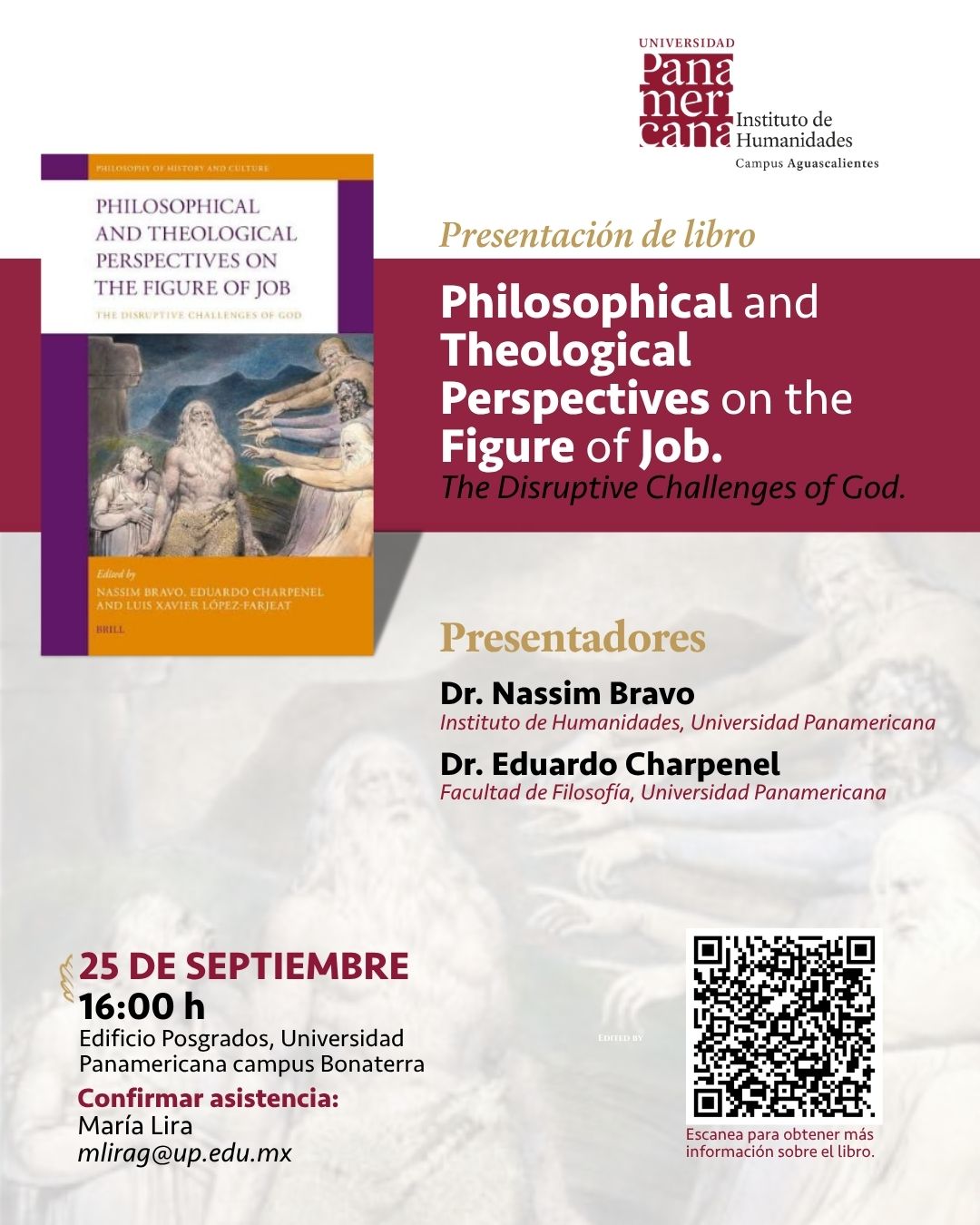
Now, a new academic volume published by Brill, *Philosophical and Theological Perspectives on the Figure of Job: The Disruptive Challenges of God*, brings together scholars from various philosophical and religious traditions to explore—without attempting to resolve them—the tensions that this story continues to raise today.

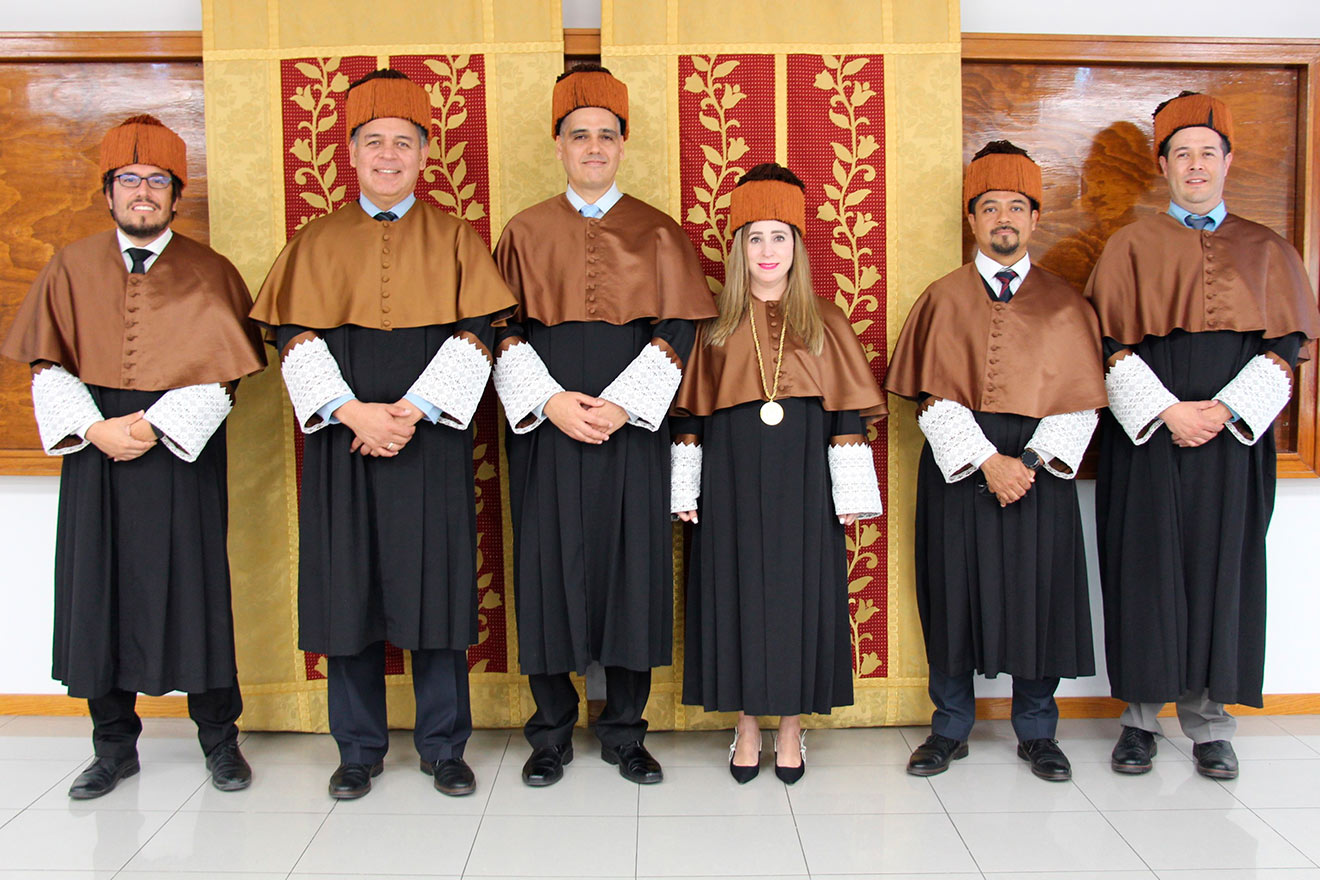
The book, volume 41 of the series Philosophy of History and Cultureseries, was co-edited by Dr. Nassim Bravo Jordán, Dr. Eduardo Charpenel Elorduy, and Dr. Luis Xavier López-Farjeat, scholars at the Universidad Panamericana.
A figure who transcends a single tradition
For Dr. Bravo Jordán, the starting point was recognizing that the Book of Job does not belong solely to the Christian interpretation with which it is usually associated. “The story of Job is a classic narrative that has had an impact on many traditions throughout history,”, he explains.
Furthermore, it notes that, given that the themes it raises—the origin of suffering, justice, and our relationship with the divine—still challenge us today, the editorial team decided to address it “from multiple perspectives that would enrich our understanding of these classic questions”.
This commitment to plurality explains much of the book’s structure, which places Job in dialogue with Kant, Kierkegaard, and René Girard’s mimetic theory, while also exploring María Zambrano’s poetic reason, Islamic theology (kalām), and artistic representations such as William Blake’s illustrations.
What About Job Still Bother Us?
One of the central themes of the book is Job’s disruptive stance toward traditional ideas of justice. Dr. Bravo Jordán explains this based on the original Hebrew worldview: a theory “simple and intuitive, though problematic” according to which “good people are rewarded and enjoy life, while wicked people are punished and suffer”. The problem, he points out, is that experience constantly contradicts this model.
He also adds that in today’s world, “accustomed to getting answers quickly, the calamities suffered by Job—who is the epitome of the righteous man—remind us that the question of justice in the world is never easy to answer” and forces us to live with uncertainty.
Philosophy, Mysticism, and Islam: Three Different Perspectives
What does reading Job alongside modern philosophers offer that a purely theological analysis would not? For Dr. Bravo Jordán, the value lies in showing that the message of the story “is not limited to a religious or denominational discourse […], but is universal.”
The inclusion of María Zambrano stems from a similar impulse, but from a different tradition. In contrast to the Western custom of resolving human questions through abstract concepts, Dr. Bravo explains that Zambrano’s Hispanic approach “suggests that there are aspects of existence that cannot be reduced to a concept or a theory”, but rather must be understood “from the ‘depths of one’s being’ […] and through poetic discourse”.
Incorporating the Islamic perspective, he says, addresses a current need: “In a context where non-Western worldviews appear strange, incomprehensible, and even threatening, it is essential to examine how Muslim scholars have addressed” questions such as those raised by Job.
An unanswered question (not closed)
Job's analysis does not seek to offer a definitive answer to the problem of suffering. According to Dr. Bravo Jordán, it is possible that there are multiple answers and that some questions may remain without a single solution.
This openness is one of the central themes of the book: in contrast to a contemporary worldview accustomed to seeking quick answers, Job keeps open the question of justice in the world and the meaning of suffering.
Similarly, he notes that bringing together specialists from such diverse traditions was not without its challenges. “The main challenge is to offer them all the support they need to freely express their ideas, but at the same time, we must convince them that we are all working toward the same goal,”, he says.
He acknowledges that among the authors there are positions that, “one could argue, represent opposing viewpoints; but they are all part of the same project”.
What He Expects from the Reader
For those who pick up this volume without being specialists, Dr. Bravo Jordán hopes that reading it will spark an interest in exploring the Book of Job firsthand and discovering the enduring relevance of the questions it raises.
In addition, he hopes they will discover that questions posed centuries ago “aren’t so far removed from what readers themselves experience in the modern world”.
You can find more details about the book *Philosophical and Theological Perspectives on the Figure of Job: The Disruptive Challenges of God* here.
Learn more about the research projects at the National Institute of Health ( Universidad Panamericana ) at: https://www.up.edu.mx/investigacion/noticias/