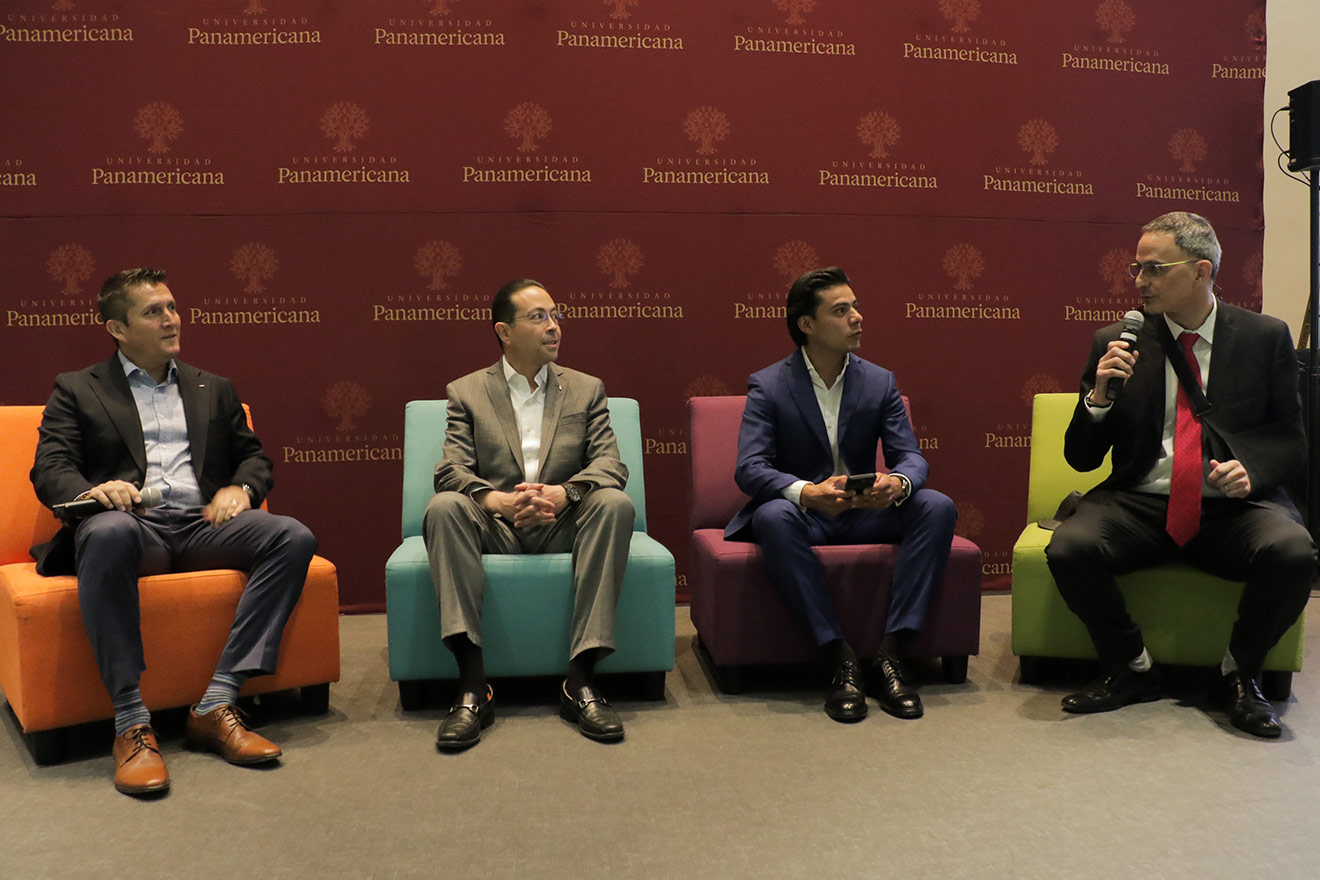
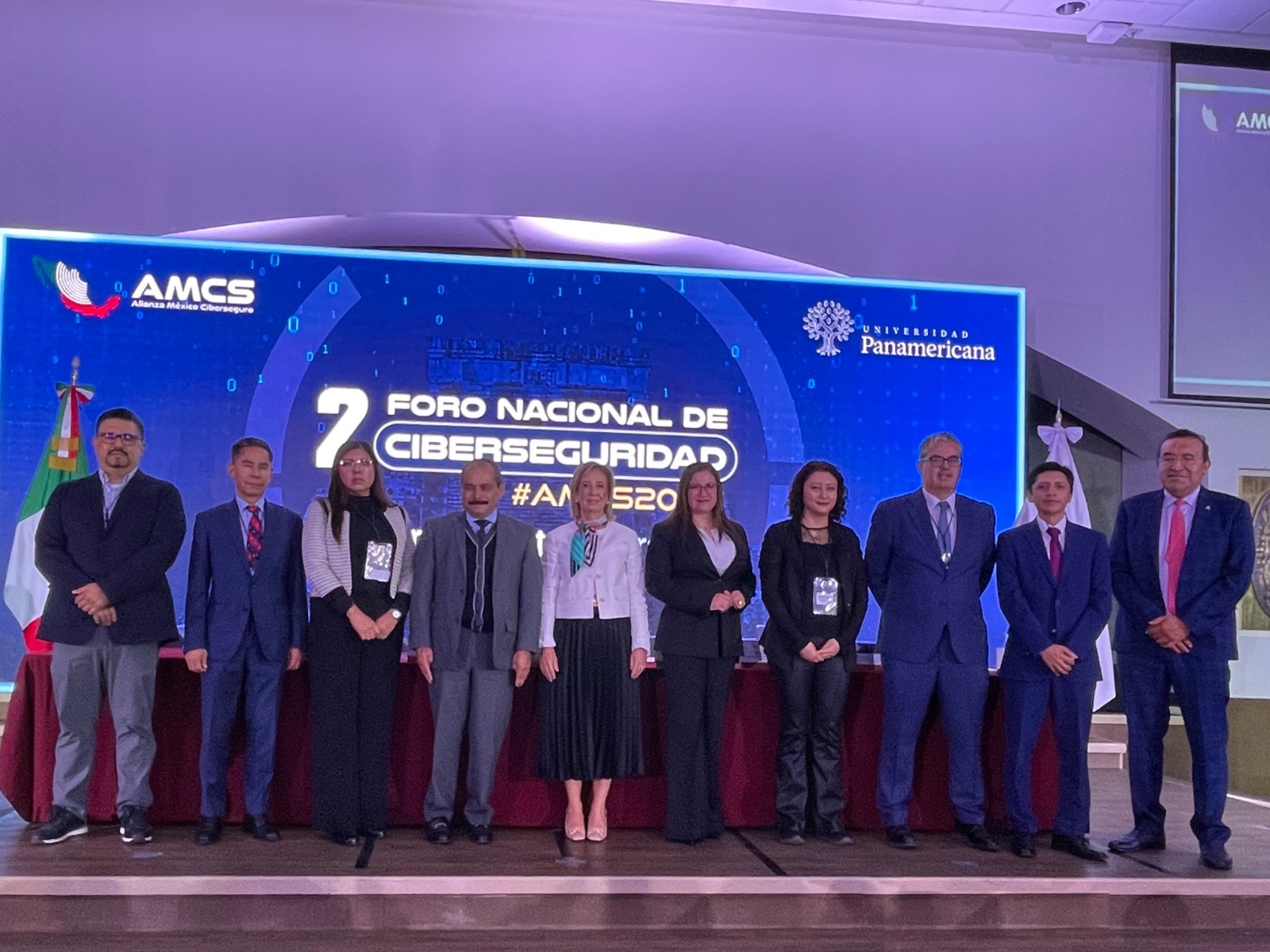
Mexico City, September 30, 2025.— Universidad Panamericana, Mexico City campus, hosted the 2nd AMCS 2025 National Cybersecurity Forum, held September 22–26 under the theme “Cybersecure Digital Prosperity”.
The event brought together government leaders, academics, lawmakers, and representatives from the private sector to discuss cybersecurity challenges in Mexico and develop joint solutions.
A diagnosis calls for immediate action
During the event, Laura Lizette Enríquez Rodríguez, chairwoman of INFOCDMX, revealed striking statistics: “In 2024, more than 108 million attacks were recorded, which amounts to an average of 300,000 incidents per day, while in the first half of 2025 alone, more than 40 billion attempted cyber intrusions were reported.” As a result, Mexico has cemented its position as the most-attacked country in Latin America—a status that demands coordinated and effective responses.
The economic outlook was articulated with particular bluntness byJavier López Casarín, mayor of Álvaro Obregón: “We must push for the digital economy law because it is increasingly clear that Mexico’s economic future depends on our ability to regulate and protect this sector.”
From Diagnosis to Collaborative Development
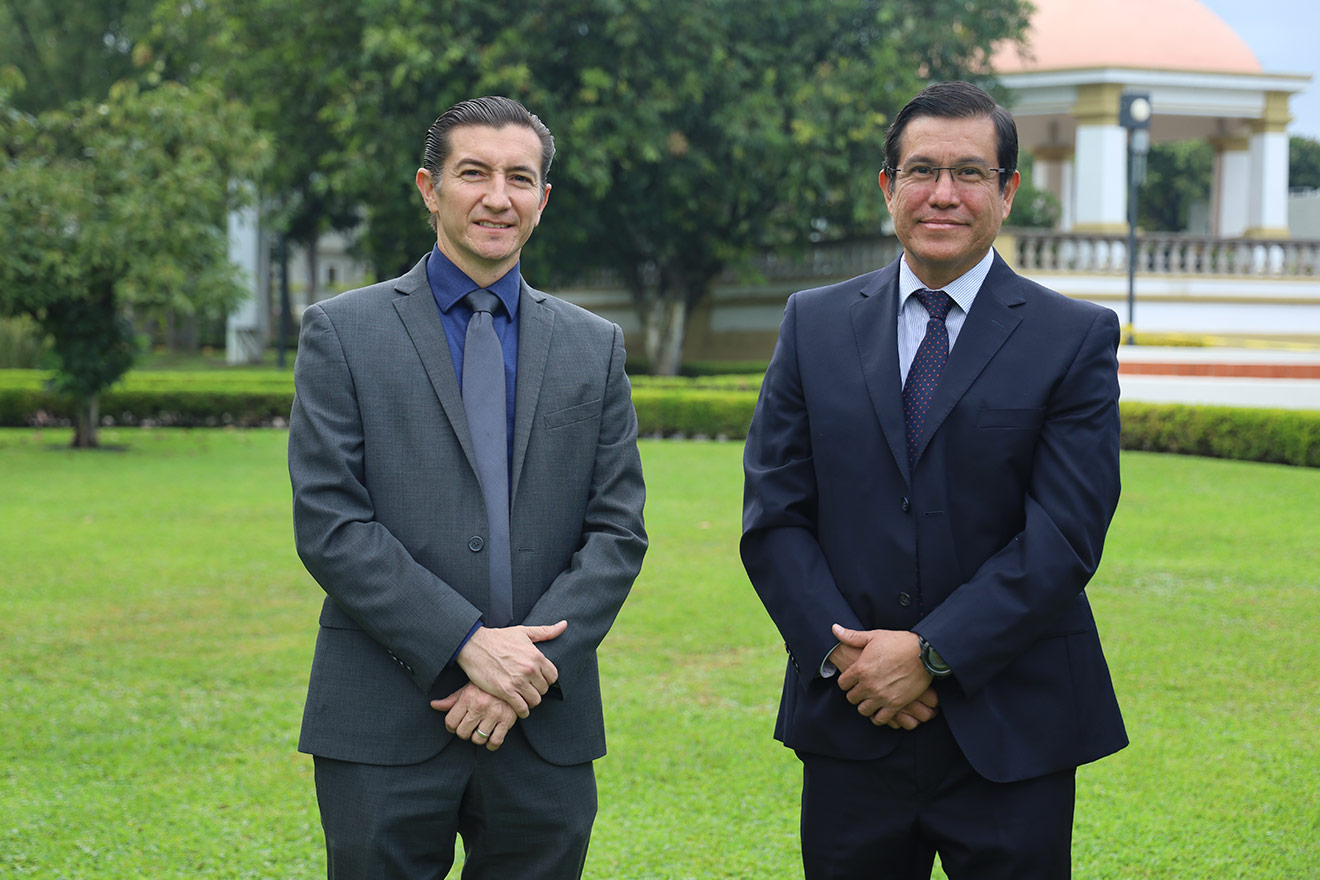
The forum laid the groundwork for multisectoral dialogue, with representatives from all sectors in attendance.Ernesto Ibarra, founder of the Alianza México CiberSeguro, emphasized the collective nature of this effort. Meanwhile,Eduardo de la Vega Segura, dean of the Panamericana School of Engineering and co-chair of the Organizing Committee, summed up the spirit of the meeting: “Cybersecurity is a matter of national security and our shared future.”

“The only possible answer is unity: governments that pass laws, companies that strengthen their value chains, academia that trains specialists, and technology companies that implement solutions,”, he added.
For his part,Víctor Hugo Sánchez Huerta, director of the National Guard’s CERT-MX, stated: “We are open to collaborating on all kinds of initiatives to establish cybersecurity legislation. Although Mexico ranks alarmingly high in crimes such as child pornography, it has also achieved significant results thanks to collaboration with international organizations such as Interpol.”
Many Voices, One Vision
The forum stood out for the diversity of perspectives that converged around a common agenda.Geovanna Cecilia Campos Vázquez, Yucatán’s Secretary of Science, Humanities, Technology, and Innovation, expressed well-founded optimism: “Soon we will have not only that long-awaited regulatory framework, but also public policies and the support of all stakeholders that will ensure citizens are protected in every activity we undertake in the digital world.”
Ángel Augusto Tamariz Sánchez, head of Mexico City’s Digital Agency for Public Innovation, emphasized a practical approach: “The key lies not only in technology, but in coordination among institutions, businesses, civil society, and academia. In Mexico City, we have committed to open-source software and technological autonomy to reduce costs and strengthen digital policy.”
From the legislative branch,Emmanuel Reyes Carmona, chairman of the Senate Economy Committee, noted that “the digital economy requires us to maintain an ongoing and frank dialogue among society, the government, academia, and the private sector. Only in this way can we effectively address this challenge that concerns us all.”
Tangible Results and Recognition
Among the forum’s main achievements were the following documents Toward a National Cybersecurity Strategy and Guiding Principles for Cybersecurity Legislation, which were collaboratively developed by the AMCS and the Mexican Academy of Cybersecurity (AMCID).
The strengthening of these partnerships was marked by the signing of letters of adhesion, bringing the number of member organizations of the Mexico Cybersecurity Alliance to more than 100, including state and municipal governments and private-sector companies, reflecting an unprecedented level of unity within the ecosystem.
Toward a Secure Digital Future for Mexico
During the event’s closing ceremony,Claudia Escoto, co-chair of the forum and co-founder of AMCS, stated that “cybersecurity is no longer an optional investment, but a strategic priority. Every peso lost to cybercrime is a peso that could have been invested in prevention, training, and awareness.”
The 2nd National Cybersecurity Forum not only highlighted the challenges facing Mexico but also demonstrated the capacity for a joint response among the government, businesses, academia, and society.

The " Universidad Panamericana " served as a catalyst for this key dialogue aimed at moving toward a more secure digital Mexico.