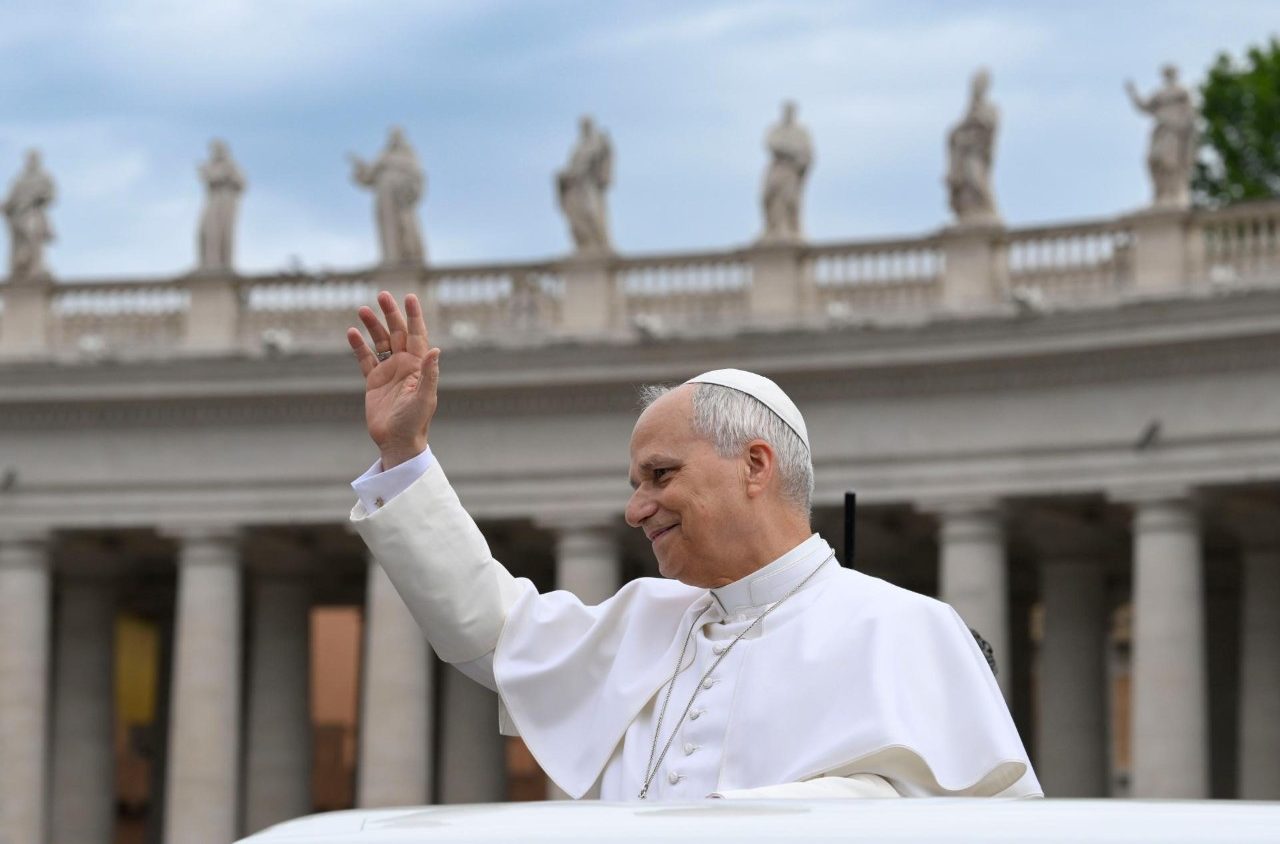
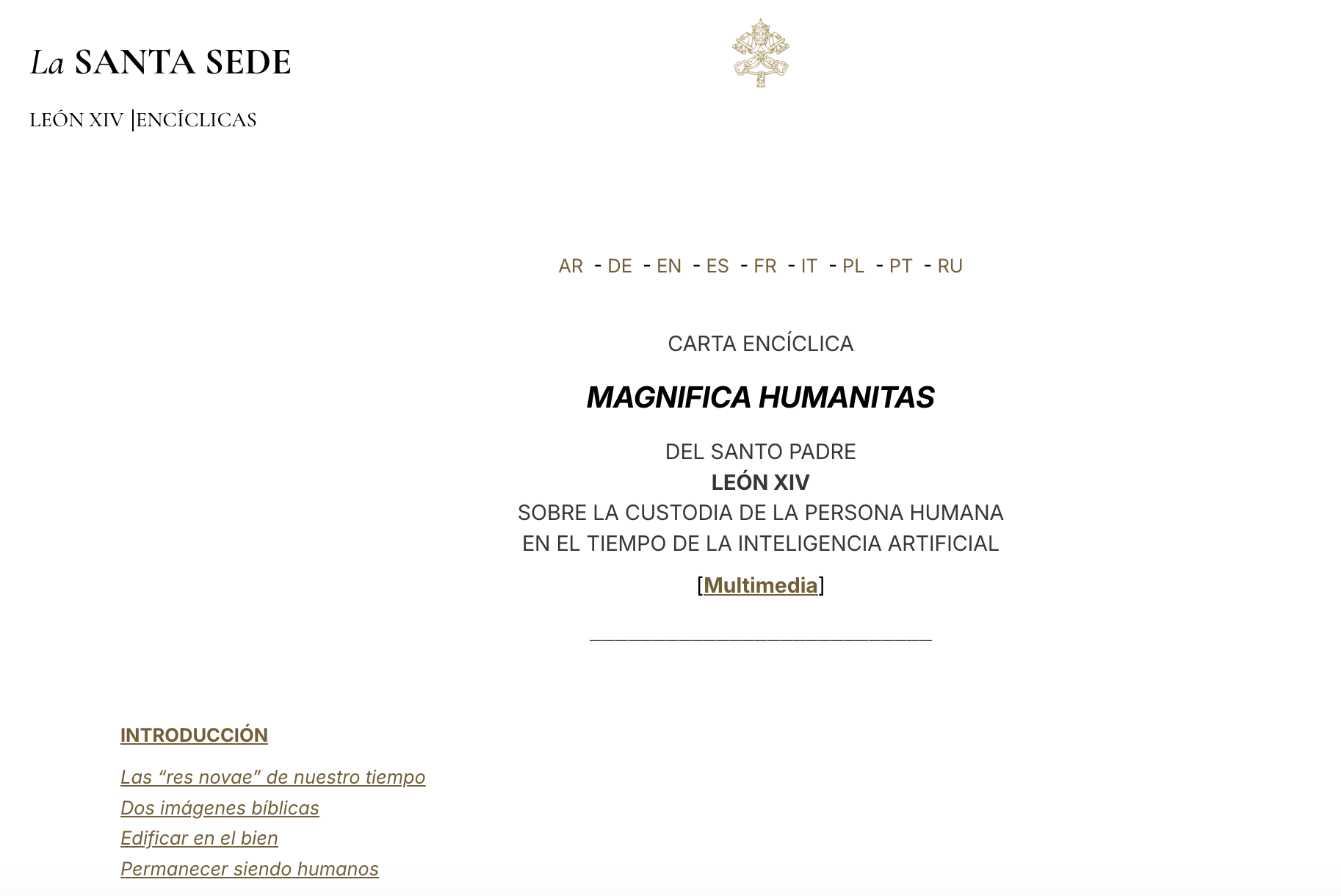
Zapopan, Jalisco, June 10, 2026. One year after the beginning of Pope Leo XIV’s pontificate, the publication of the encyclical Magnifica Humanitas has sparked a global reflection on the impact of technology, artificial intelligence (AI), and digital transformation on human life.
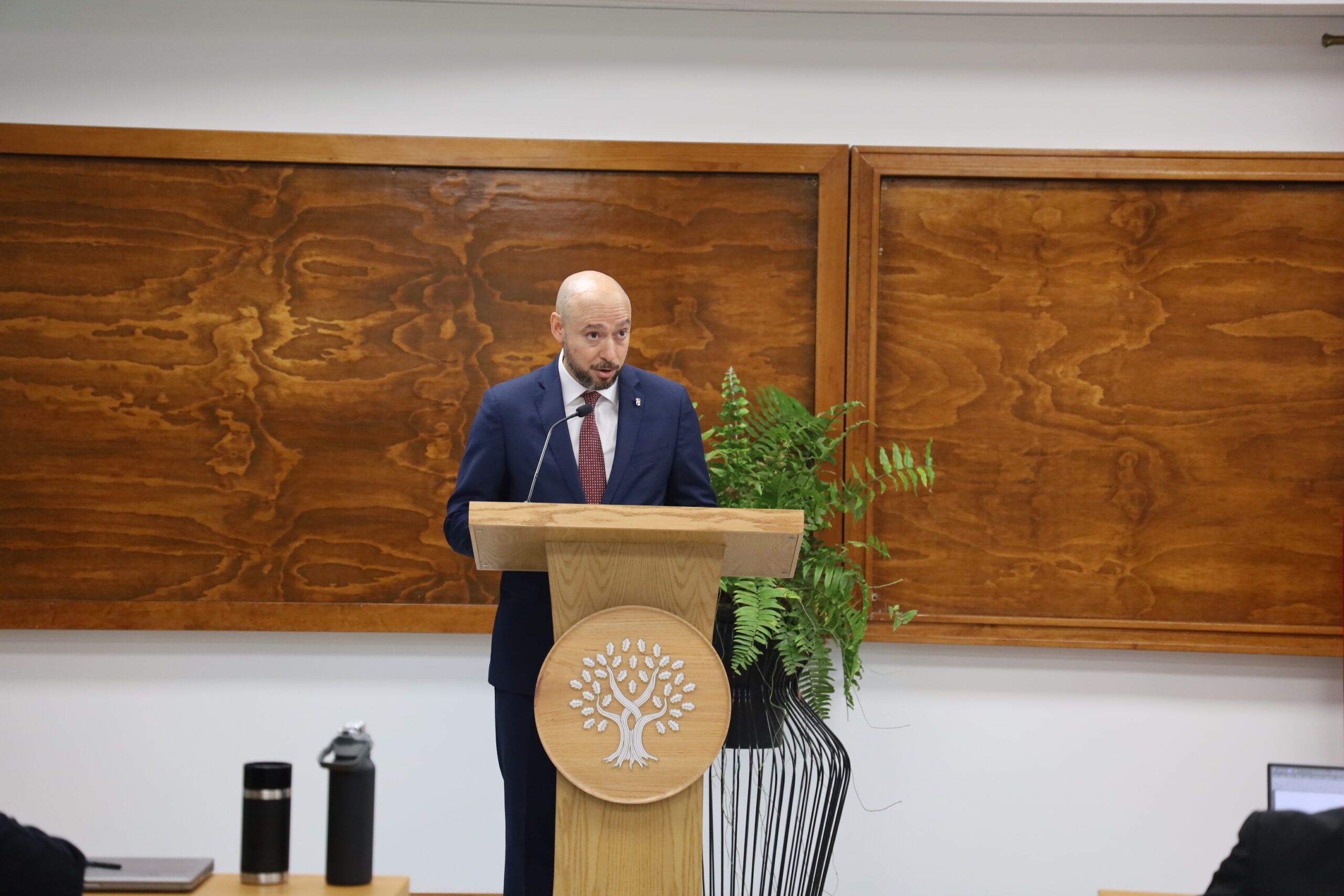
To analyze its scope, Rafael Piña, M.A., a professor at the Institute of Humanities at the Guadalajara campus of theUniversidad Panamericana , explains the ethical, anthropological, and educational challenges posed by this document for the 21st century.
A Historical Parallel: From the Industrial Revolution to the Digital Age
According to the scholar, the encyclical is part of the tradition of the Church’s social doctrine and bears similarities to Pope Leo XIII ’s response to the effects of the Industrial Revolution in the encyclical *Rerum Novarum*.
“Leo XIV identifies situations similar to those faced by Leo XIII more than a century ago. Today we are experiencing a digital revolution that, like the Industrial Revolution, can give rise to forms of violation of the human person,” he explained.
In this context, *Magnifica Humanitas* places a fundamental idea at the center: the dignity of the person. In the face of a society increasingly driven by technological innovation, the document reminds us that development must be at the service of human beings
“Caring for the vulnerable defines our humanity. I think this is very important in these times. I think it’s very thought-provoking that he places the emphasis there,” Piña said.

AI and Critical Thinking: The Risks of Delegating Decisions
One of the central themes of the encyclical is the relationship between artificial intelligence, human freedom, and the search for truth. According to a professor at the Universidad Panamericana, the document warns of the risk of relying too heavily on technological systems for tasks that require reflection, judgment, and discernment.
“The Pope says that we cannot delegate our ability to think. When we stop exercising critical thinking, we weaken our ability to understand reality and make responsible decisions,” said the scholar from the Institute of Humanities.
The encyclical also challenges the idea that technology is neutral. On the contrary, it argues that digital tools embody the perspectives, interests, and criteria defined by their designers.
“Technologies are not neutral. Behind every system there are people, decisions, values, and interests that influence how it works. Furthermore, these tools end up shaping both those who create them and those who use them,” explained the scholar from the Institute of Humanities.
The Educational Challenge and a Guide for the University Community
For the field of education, Magnifica Humanitas poses a challenge that goes beyond teaching digital skills. College education should help students understand when and how to use technology responsibly.
In this regard, Rafael Piña, M.A., emphasized that the encyclical proposes a genuine pedagogy of discernment, capable of forming individuals who know how to integrate technological innovation with sound ethical criteria.
“The challenge is not just to teach people how to use these tools, but to help young people recognize their limitations and understand in which contexts they contribute to human development and in which they may pose risks,” he said.
A Reflection for the University Community
For the scholar, the central message of Magnifica Humanitas can be summarized in one key idea for those involved in higher education, research, and technological development:
“All technology is the product of a particular anthropology. That is why we must ensure that our view of the person is aligned with the truth of the human being and with that magnificent humanity that God has created.”
In this encyclical, Pope Leo XIV calls for a rethinking of the role of artificial intelligence, technology, and education from a perspective centered on human dignity, critical thinking, and ethical responsibility—issues that will shape the future of universities and society in the coming years.
To view the full text of Magnifica Humanitas, visit: Vatican.va – Magnifica Humanitas