Zapopan, Jalisco, August 21, 2025.—The Universidad Panamericana is promoting the implementation of an ethical framework for Artificial Intelligence (AI) with the goal of leveraging this technology as a powerful tool for research and data management, while always keeping humans at the center of its use.
The initiative, led by Dr. María Teresa Nicolás, director of the Institutional Center for Educational Innovation (CIIE), aims to ensure that AI is viewed as a strategic ally, guided by principles that guarantee its responsible use for the common good.
Artificial Intelligence with a Humanistic Approach
Universidad Panamericana 's ethical framework is grounded in the Christian humanism that characterizes our institution and responds to the global cultural shift driven by AI.
“We are currently experiencing a turning point in history and a cultural shift that is driven primarily by artificial intelligence,”said Dr. María Teresa Nicolás. This global cultural shift demands a proactive response from the university—not only by adapting to technology, but also by shaping its use to align with its values.

A tool for doing good
In this context, the Manual on the Ethical Use of Artificial Intelligence was developed as the result of the work of a specialized committee composed of academics and university officials.
“In meetings with colleagues from other parts of the world, we recognized the need for an ethical framework. I had this discussion with Dr. (Ángeles) Padilla Lavín, Vice Rector for Educational Innovation, and Dr. Sergio Velázquez, Vice Rector for Research. So, in response to that concern, a committee on the ethical use of AI was formed,” added Dr. Nicolás.
Ethics Committee and International Standards
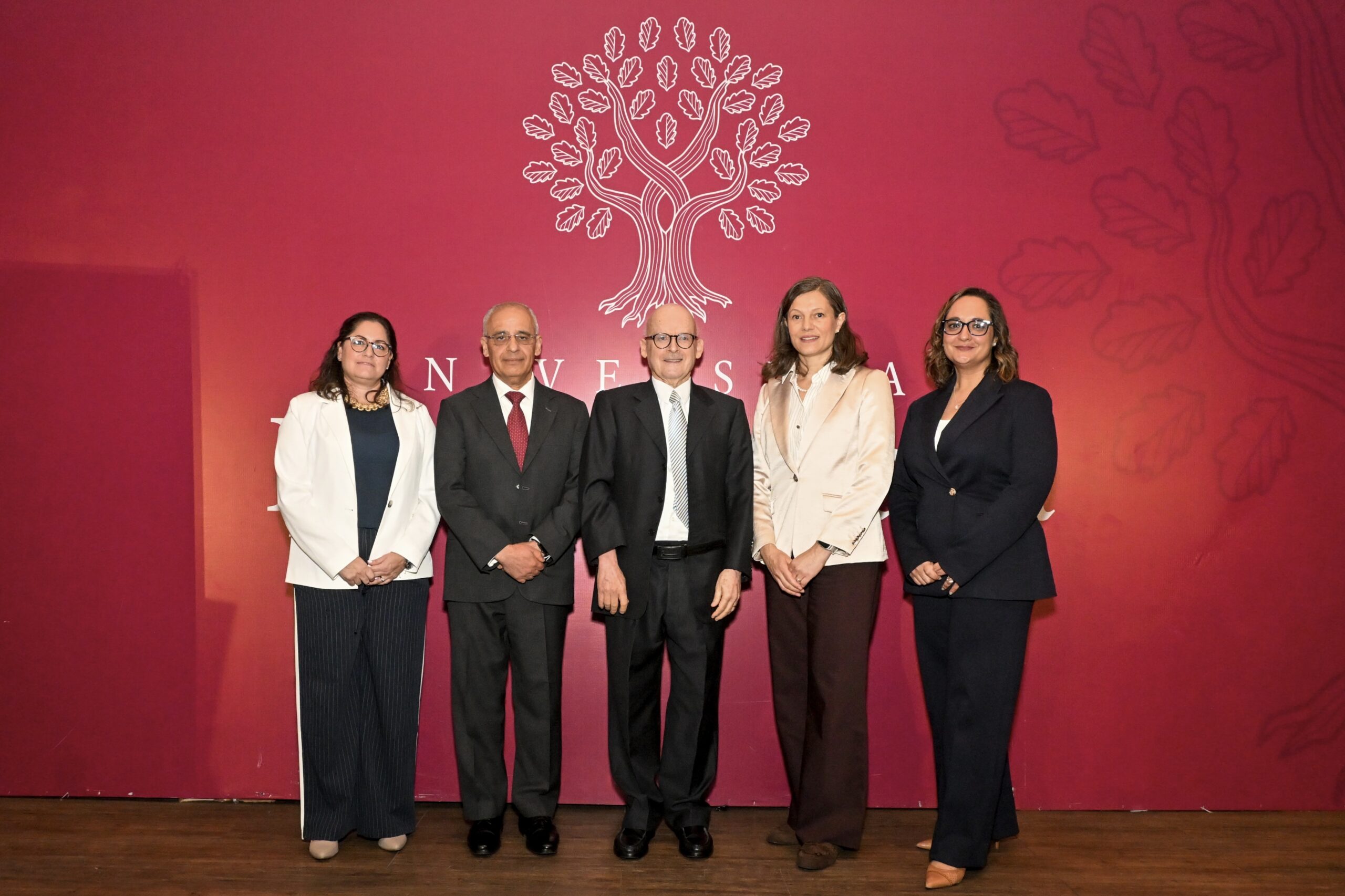
The committee, coordinated by the director of the CIIE, included specialists such as Dr. Alejandro Ordoñez Torres, Armando Alemán Juárez, M. A., Daniela Olea Ibarra , M.A., Dr. Karen González Fernández , Dr. María de Lourdes Martínez Villaseñor , Philippe Prince, M.A., and the vice presidents for academic affairs, Dr. Padilla and Dr. Velázquez.
In preparing this document, we consulted documents from international organizations such as:
- The European Parliament's Resolution on AI.
- The UNESCO Guide to Generative AI in Education and Research.
- The document from the Dicastery for the Doctrine of the Faith on AI and humanity.
- *Camino, Forja, and Surco*, by San Josemaría Escrivá de Balaguer.
Ten Guidelines for Teachers and Students
Based on this framework, the committee developed a set of ten guidelines for the proper implementation of AI, with specific guidelines for teachers, researchers, and students.

- Faculty and researchers: support the human process behind every decision, protect personal information, disclose the use of AI, check for biases, and use it for the benefit of people.
- Students: Use AI as a tool, not as a crutch; be mindful of the information you share; take responsibility for your assignments; and educate yourselves on the ethical use of AI.

Risks and Challenges of AI in Education
Dr. Nicolás also identified the risks of AI in education, which include “creating profiles of students without having actually assessed who the student is.” Attention must also be paid to the automation of assessments without human verification, which is key to avoiding errors and biases.
As part of this adoption of generative AI for education and research, the National Institute of Technology and Higher Education ( Universidad Panamericana ) issued a call for proposals to develop educational and research programs using ChatGPT and Gemini licenses, which was well received, especially among faculty members.
A philosophy of ethical and responsible adoption
For Universidad Panamericana, artificial intelligence should not be a source of fear, but rather an opportunity for responsible innovation: “The real risk is not AI itself, but rather not knowing how to use it in a way that puts humans at the center, ” concludes Dr. Nicolás.
Within this ethical framework, the National Institute of Technology and Higher Education( Universidad Panamericana ) reaffirms its commitment to leading the adoption of AI in education and research in Mexico, with a humanistic, responsible, and ethical approach.
Learn more about the ethical framework for AI at the Universidad Panamericana: https://ciie.up.edu.mx/ai4ed