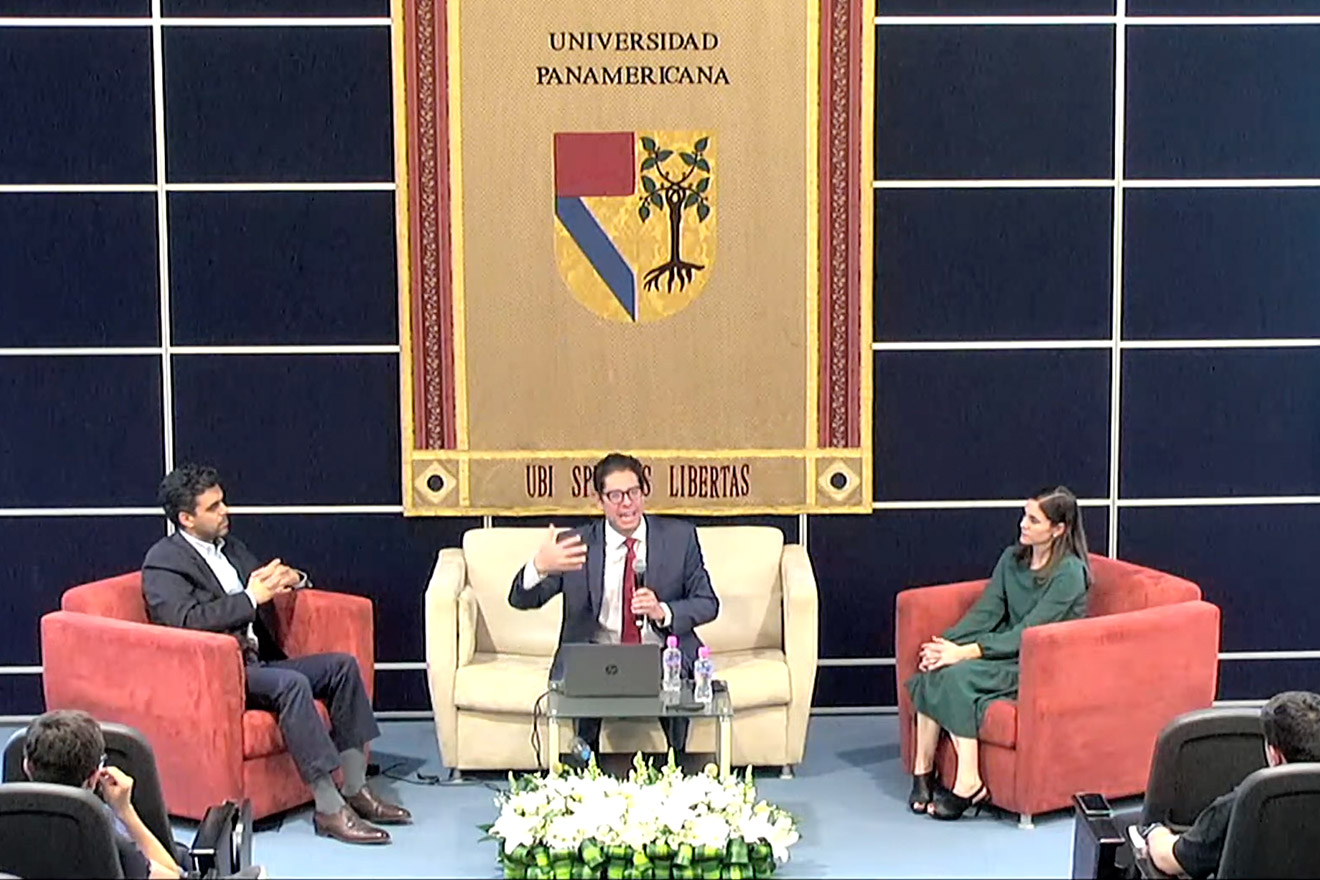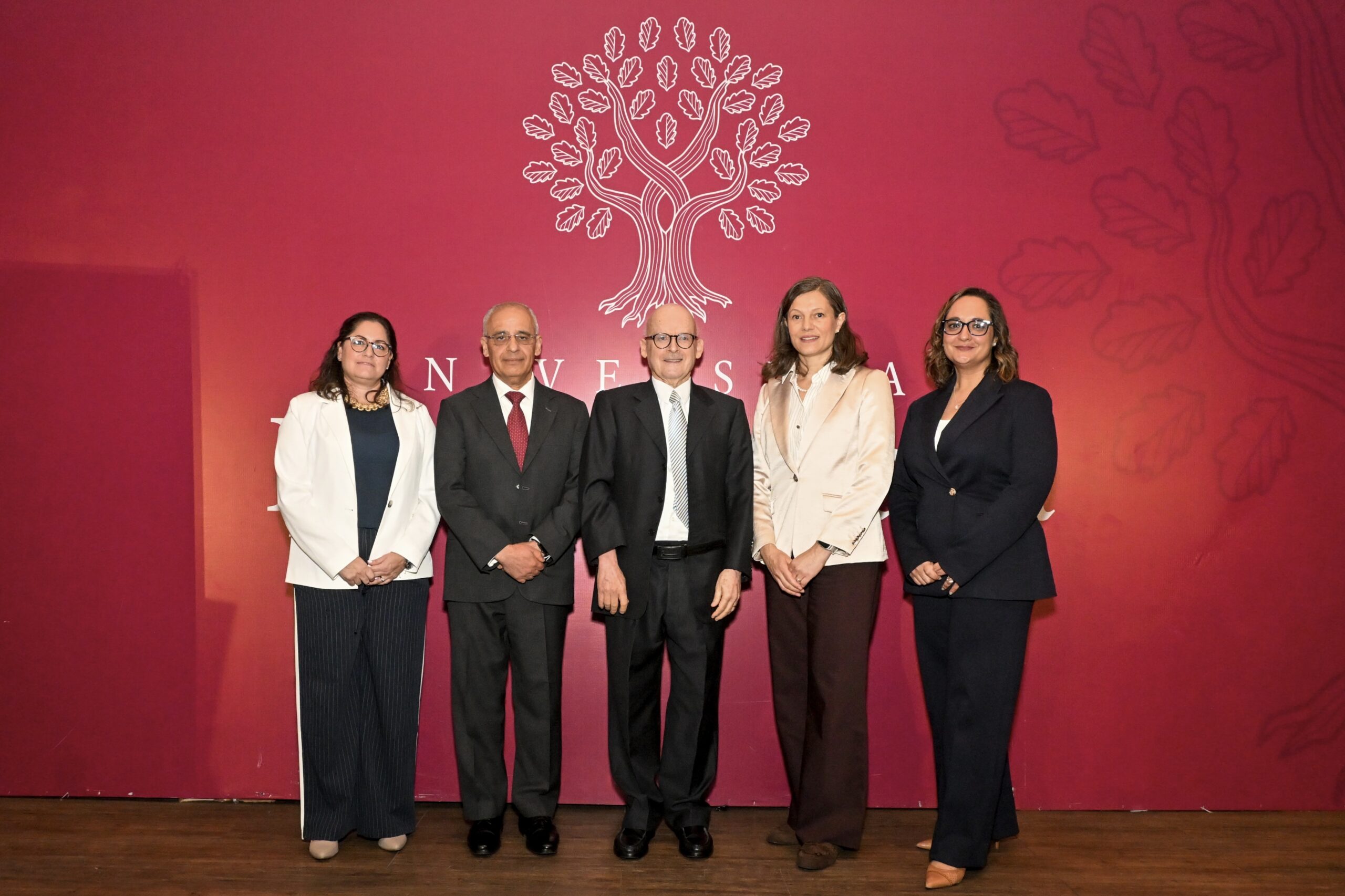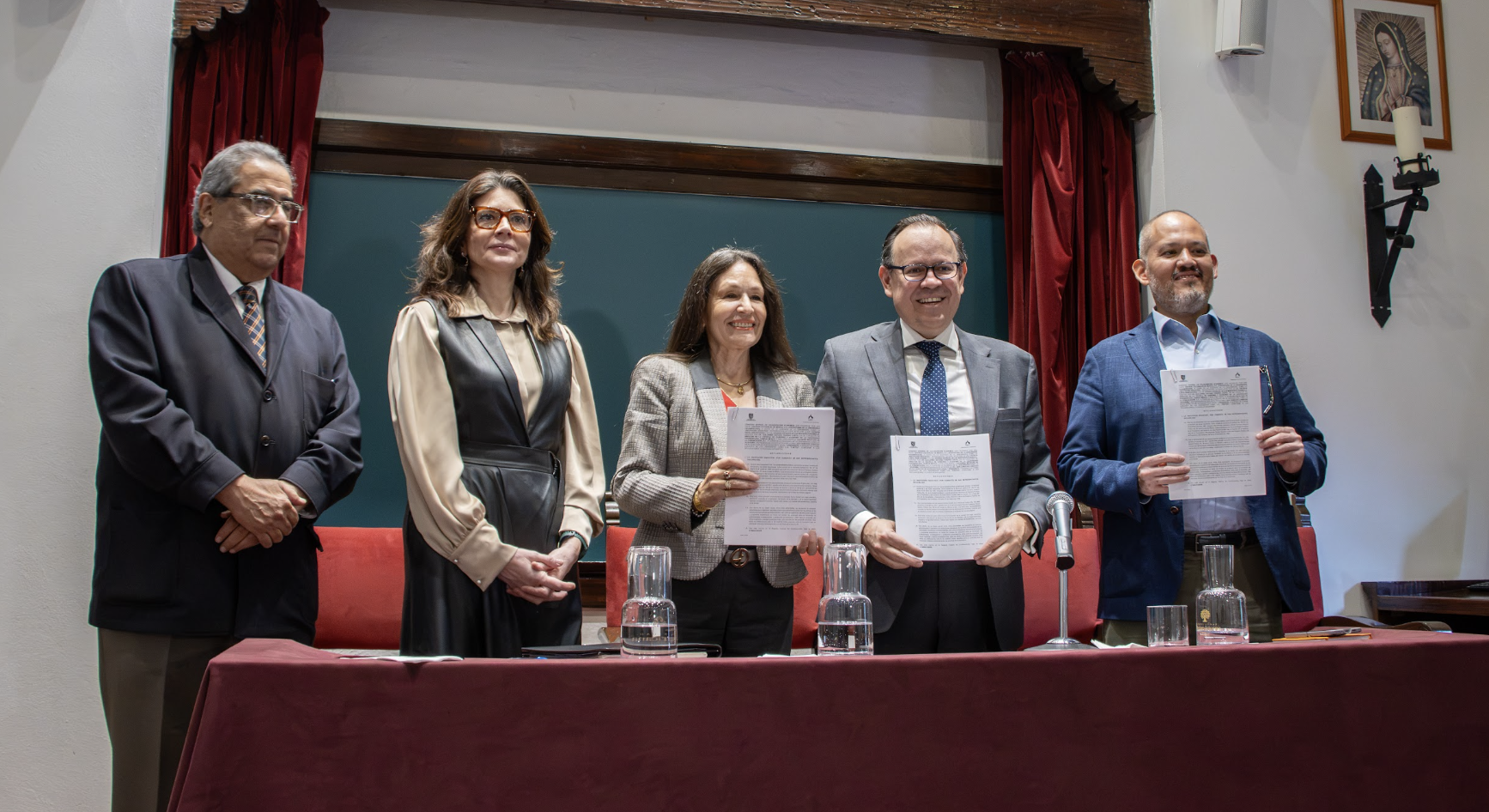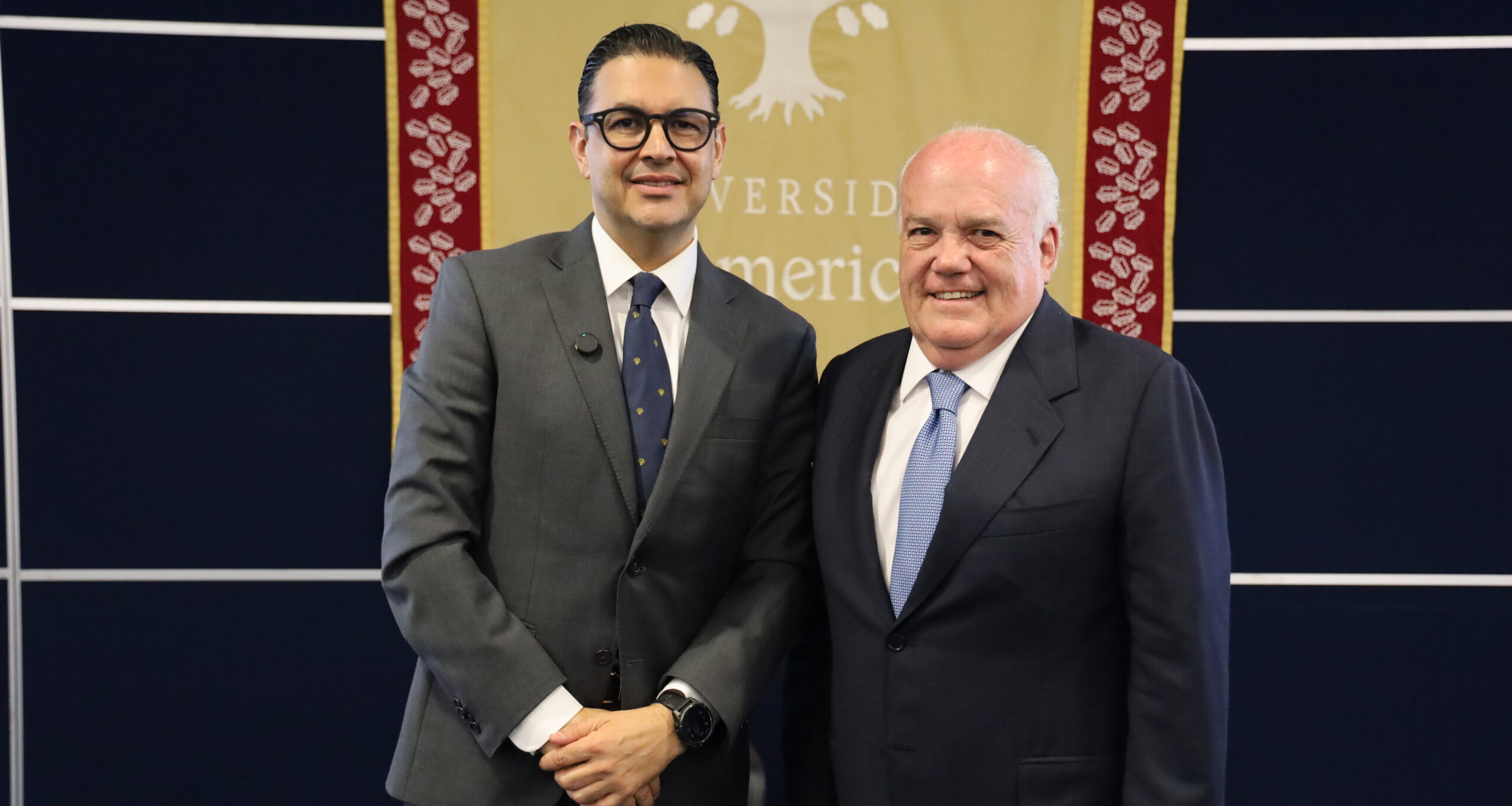
Zapopan, Jalisco, May 15, 2026. With the aim of rethinking the role of organizations in creating more humane, sustainable work environments that are committed to the family life of their employees, the Universidad Panamericana GuadalajaraUniversidad Panamericana held a conference titled Corporate Family Responsibility.
The academic and business event featured Dr. Patricia Debeljuh, an international expert in the field, and Horacio Fernández, CEO of Industrias Tajín.
Both speakers shared their perspectives on the importance of placing the individual and the family at the center of organizational culture, agreeing that this model represents a form of leadership that recognizes the holistic nature (personal, family, and community) of employees.
The family as the cornerstone of a more humane organizational culture
During her presentation, Dr. Patricia Debeljuh explored Corporate Family Responsibility as a central pillar of the relationship between companies, employees, and families. Drawing on her experience in Argentina, the specialist explained that this concept emerged in 2009 as “a path ” driven by university research and supported by companies that understood the importance of “putting the individual at the center” and recognizing “something very important that they bring with them: their family and loved ones.”
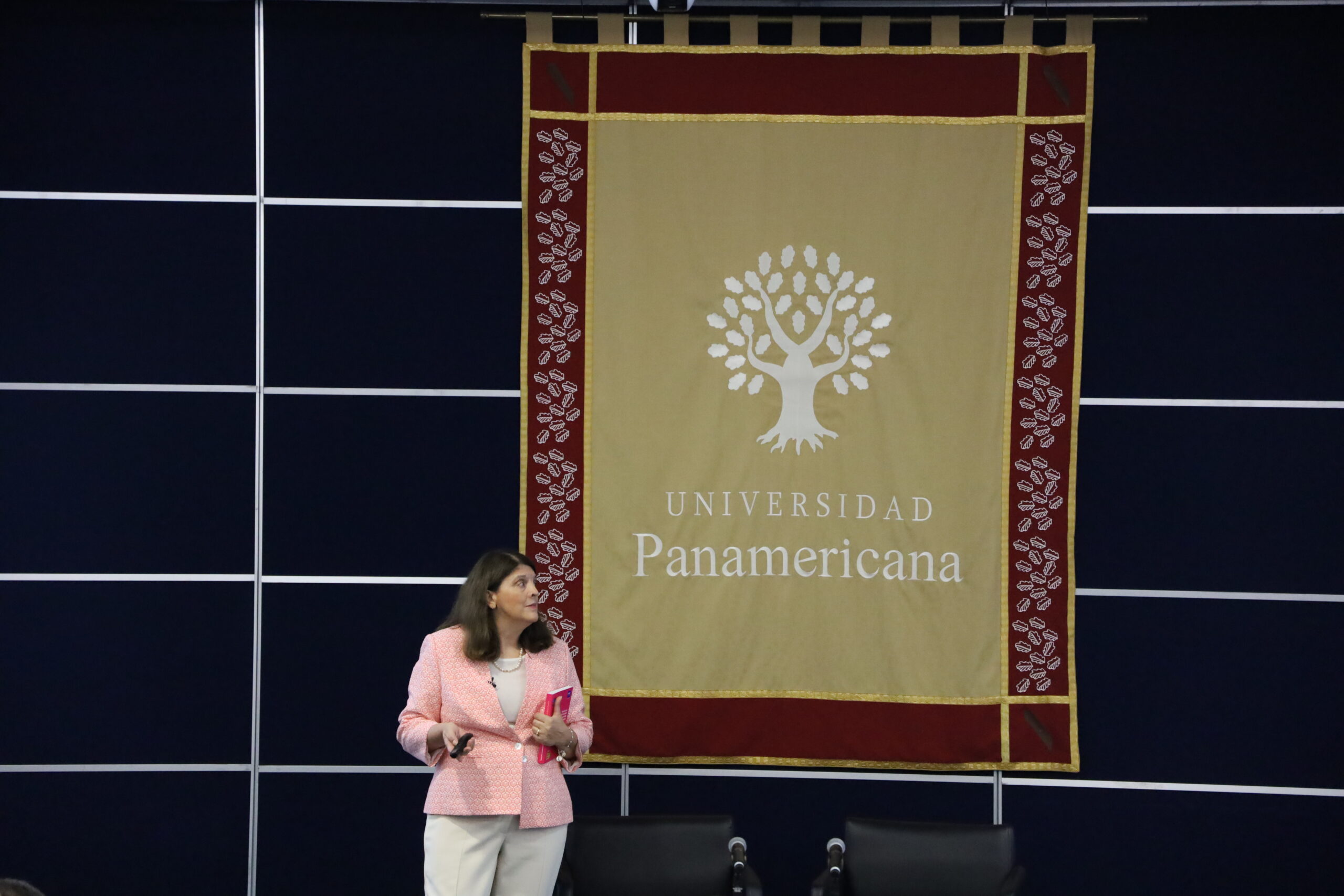
According to the scholar, this concept should not be understood as a form of charity or a superficial benefit, but rather as an internal social responsibility strategy focused on building more humane and sustainable workplace relationships.
“It’s not charity or philanthropy,” he said, defining it instead as an internal social responsibility. He also clarified that “it’s not a superficial, token benefit” nor a policy exclusively for women. “Because we all have families. And it’s a responsibility we take on. And the workplace needs to support that.”
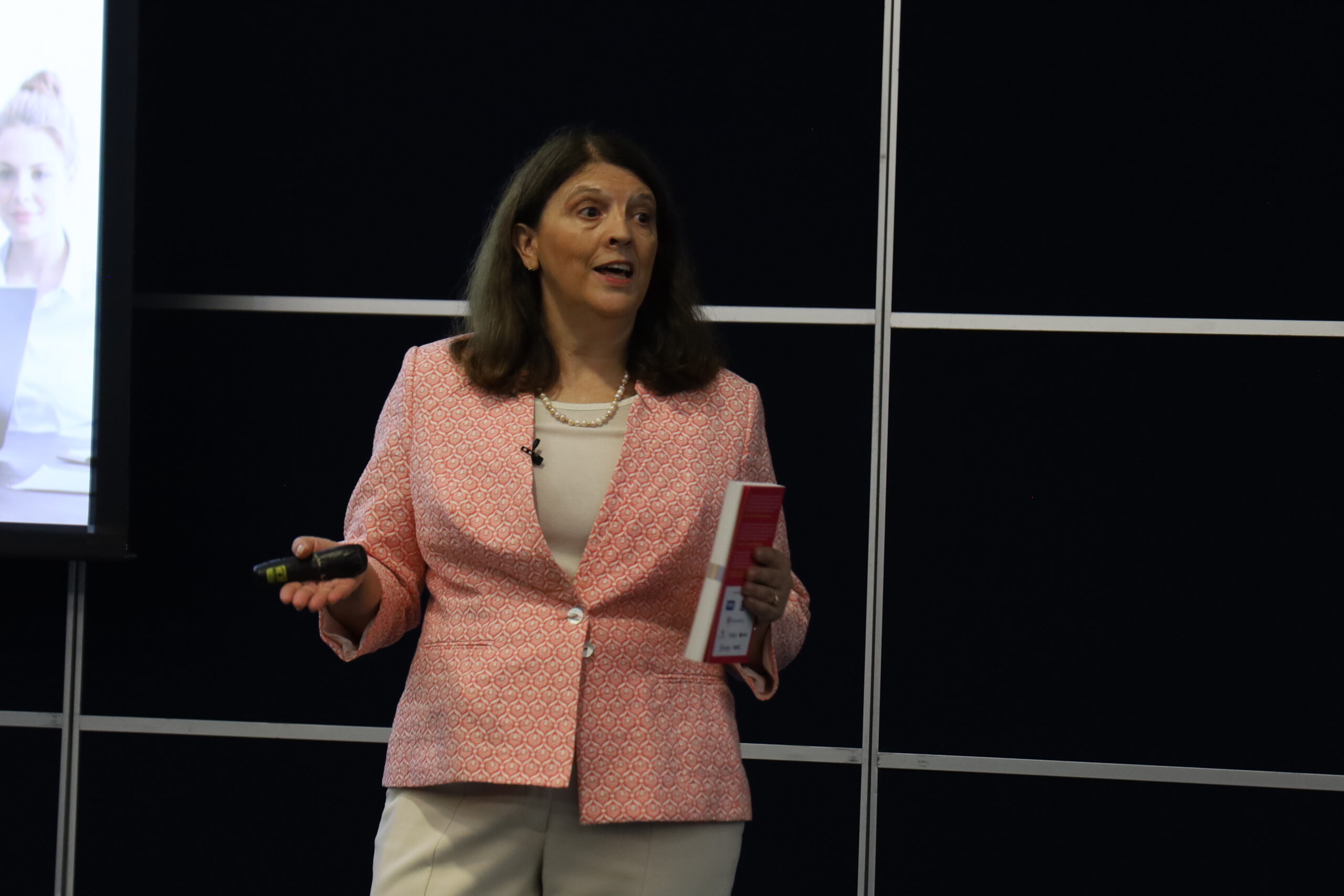
In light of the challenges of the contemporary workplace—such as hybrid work, generational diversity, mental health, and caregiving responsibilities—the expert introduced the term “human ecology ” as “the environment we need as human beings to be born, to grow, and to develop, ” noting that “that natural environment is precisely the family.”
Finally, he clarified that this model does not undermine the need for high standards or the achievement of goals, but rather promotes a culture rooted in “trust, commitment, and shared responsibility.”
Tajín: A corporate culture centered on the value of the individual
For his part, Horacio Fernández presented the success story of Industrias Tajín, a company that, since its founding 40 years ago, has operated under a people-centered philosophy. The businessman emphasized that younger generations demand a clear sense of purpose within organizations: “Young people demand that we clearly state the company’s purpose.”
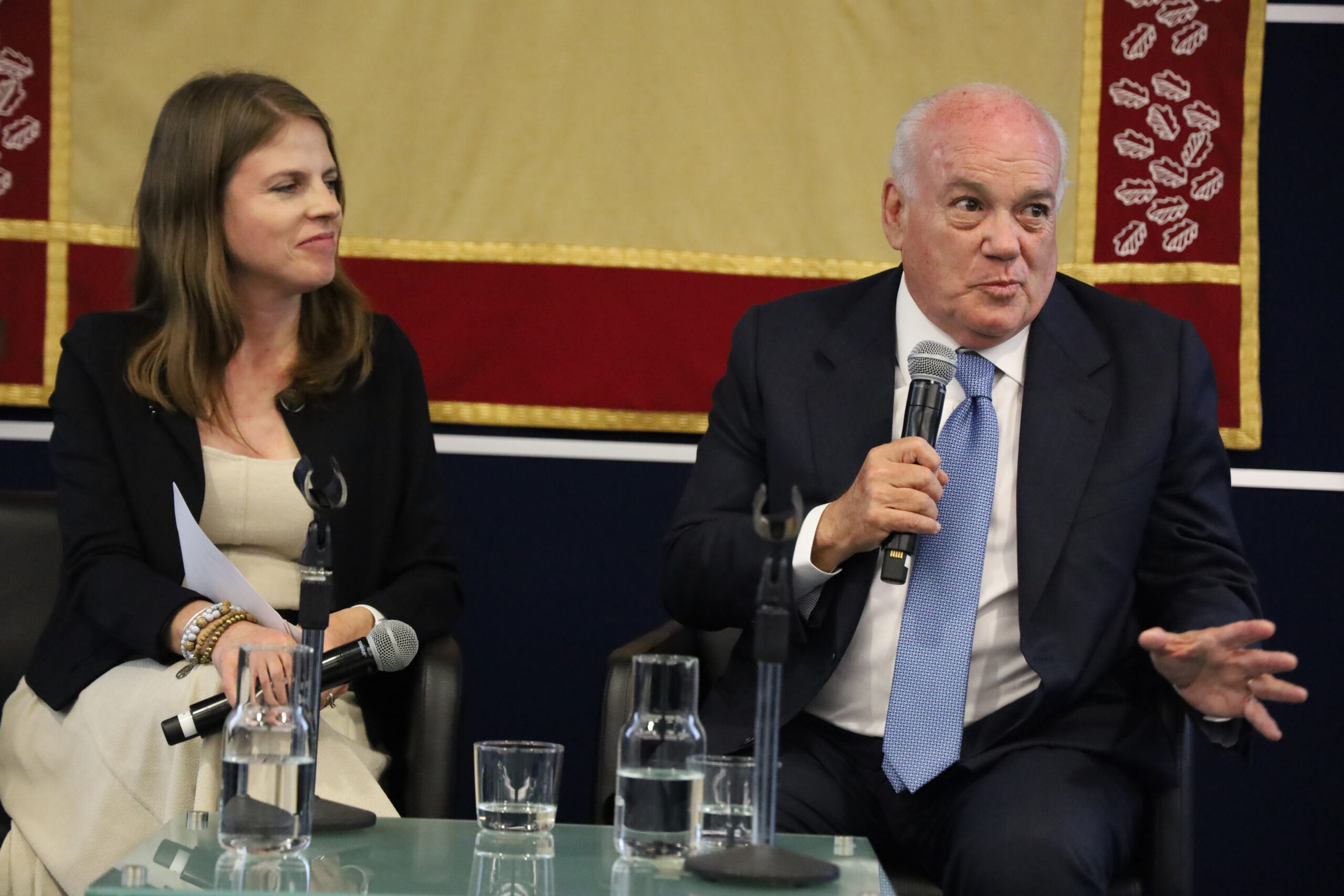
With this in mind, Fernández stated that Tajín remains committed to the belief that “people come first, ” adding a guiding principle for the company:
“If a company doesn’t serve people, it’s useless.”
The executive pointed out that adopting this approach does not depend on the size of the organization or its financial resources, but rather on the ethical stance of its founders . “It’s not a matter of money. It’s not a matter of how long the company has been around. It’s a matter of choice, ” he asserted.
Work-Life Balance: Keys to Strengthening Organizations
In conclusion, Horacio Fernández reiterated that an employee’s primary source of motivation lies within their own home. For this reason, he urged current leaders to prioritize human well-being over quantitative results: “The first thing you need to do is ask them how they’re doing and how their family is doing.”
He emphasized that this close relationship requires consistency and concrete actions, such as reducing workers’ commute times and addressing their family needs with empathy.
When asked about the value of investing in families, the president of Tajín concluded that families are home to “what is most precious” to human beings, and that companies that understand this are able to build stronger, more human, and more lasting bonds with their workforce.
UP promotes reflection on leadership and humanistic business
By hosting this forum, the Universidad Panamericana Guadalajara Universidad Panamericana reaffirms its commitment to a humanistic education and to creating opportunities that bring together research, business leadership, and social welfare.
Through initiatives like this one, the institution promotes a people-centered business vision capable of generating a positive impact on both organizations and society.