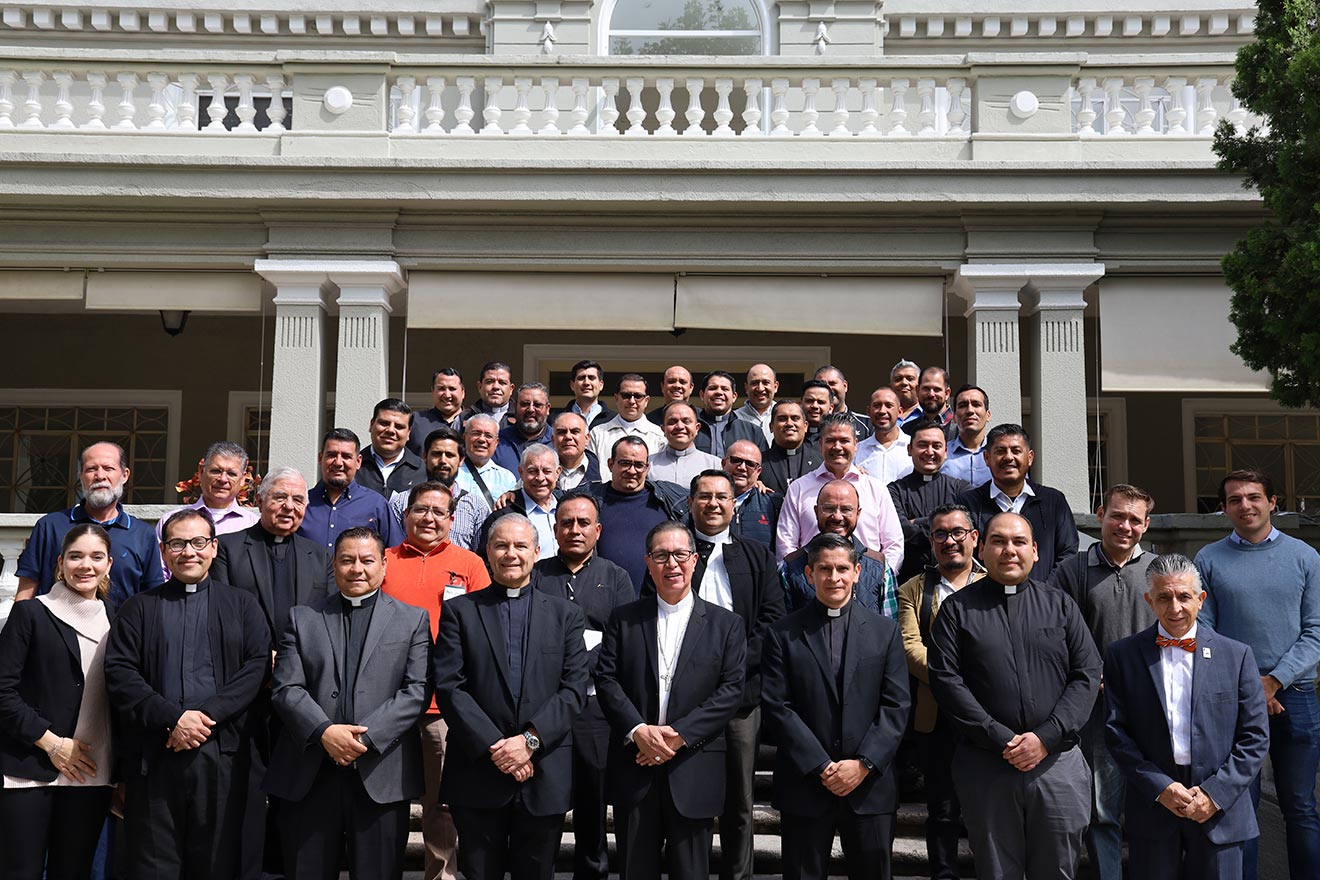
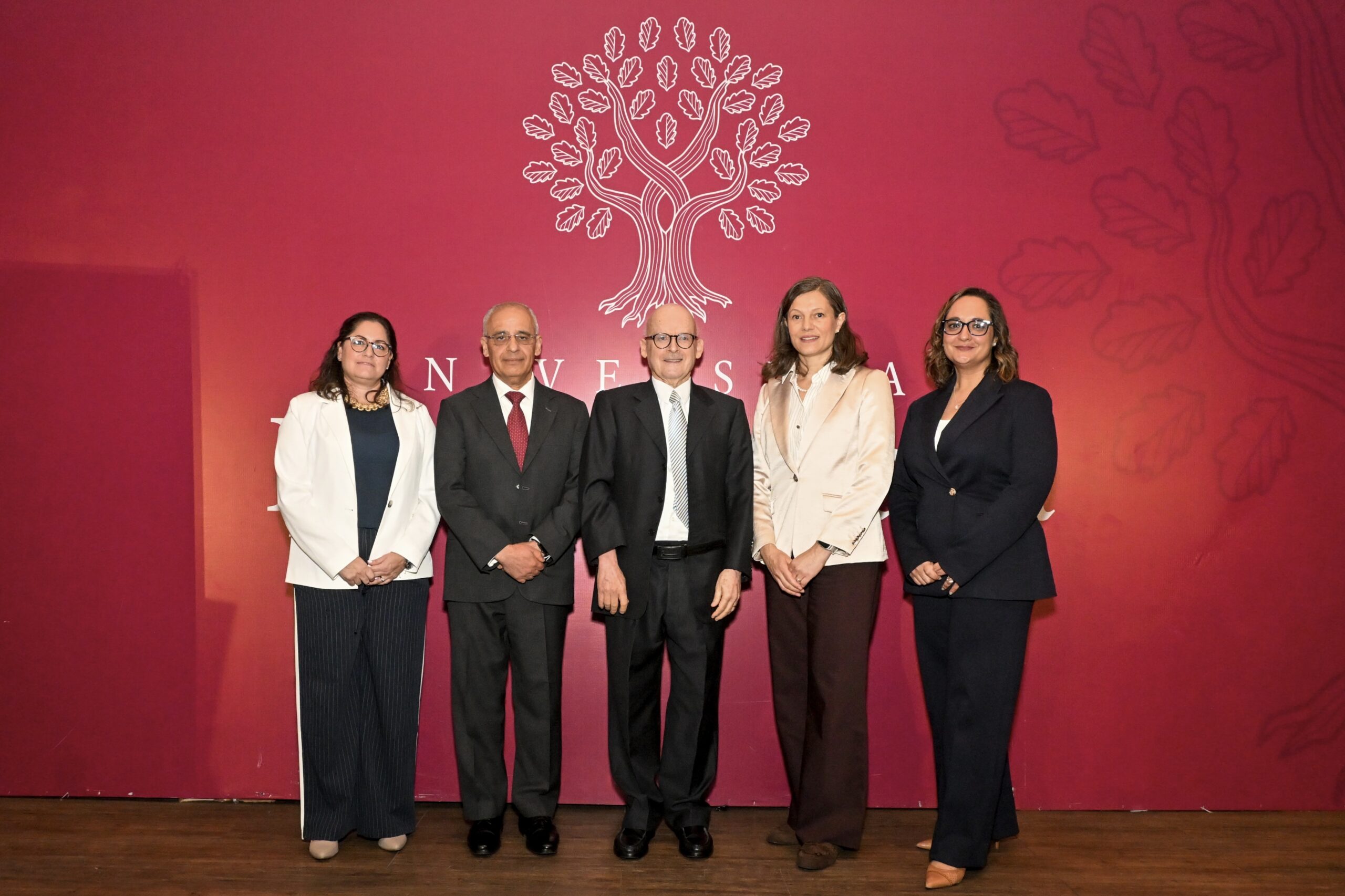
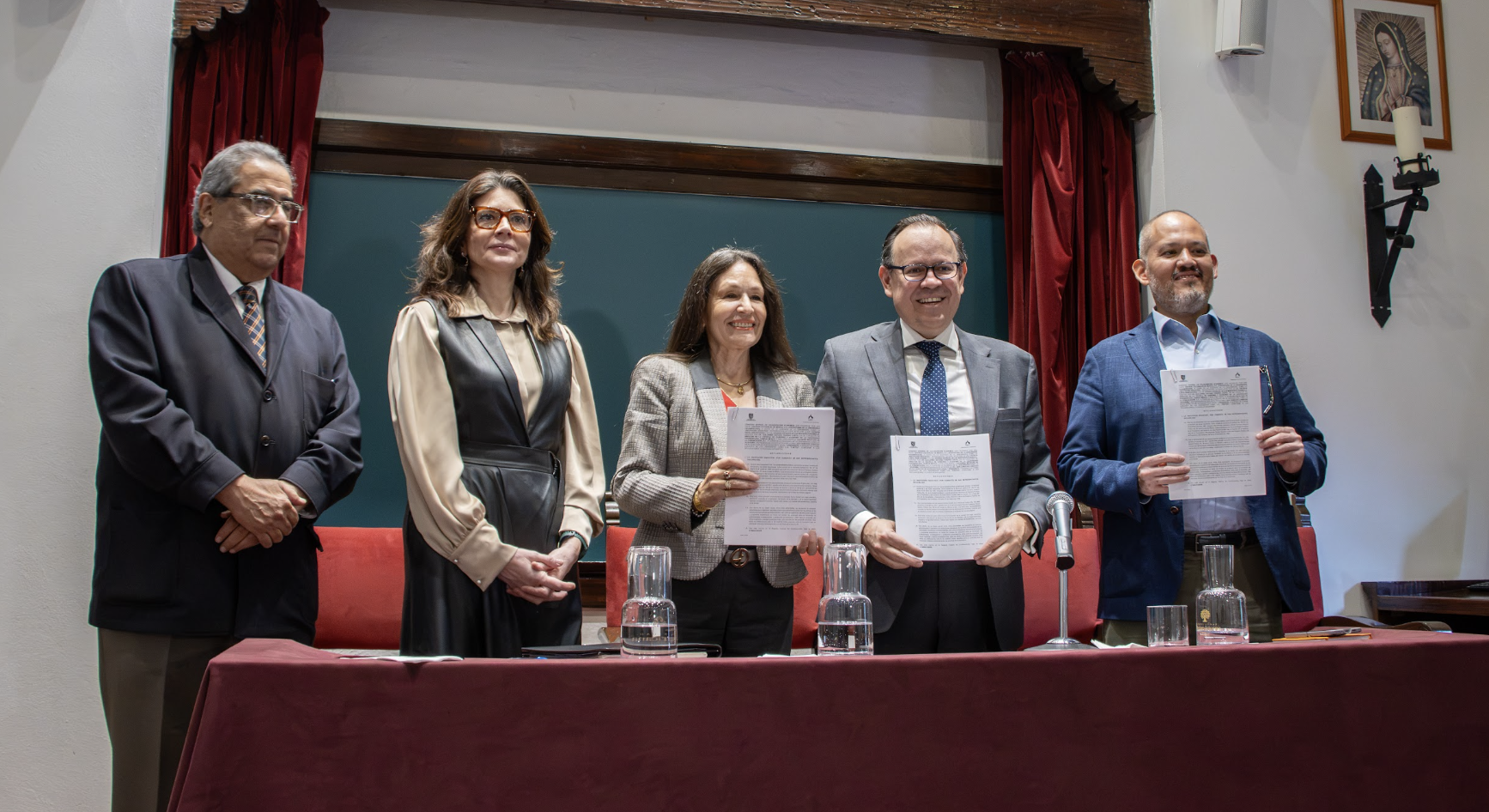
Zapopan, Jalisco; February 9, 2026.—The Guadalajara campus of theUniversidad Panamericana , hosted an academic symposium on Trinitarian ontology, a theological framework that offers insights into understanding reality, the person, and social life from a relational and interdisciplinary perspective.
The event was inspired by the thought of Piero Coda, a renowned theologian and author of numerous academic works and articles, whose contributions have been fundamental to the development and dissemination of Trinitarian ontology in contemporary philosophy and theology.

Understanding Human Beings in Communion
This interdisciplinary forum featured the participation of Father José Luis Íñiguez and Monsignor Andrea Giovita, disciples of Piero Coda, who explored the fundamentals of this school of thought during the first segment of the program, titled “Listening.”
Drawing on the ideas of Piero Coda and Klaus Engelbert, they explained that Trinitarian ontology is not merely a method, but an interpretive framework that guides our understanding of reality from the perspective of various fields of knowledge.

“Trinitarian ontology can serve as an interpretive framework that guides, in a free and unique way, every understanding of reality across the various fields of knowledge. It would, therefore, be a pre-understanding that shapes and guides our way of being and interpreting reality,”explained Father José Luis Íñiguez.
From this perspective, being must be understood as relationship and communion, in light of the Trinitarian mystery revealed in Jesus Christ. The Trinitarian model—Father, Son, and Holy Spirit—shows that identity is built on reciprocity, affirming that being is essentially relational and that reality is fully understood through communion.
“My ontology is relational: it is the relationships I experience that define who I am, and vice versa. This is the shift proposed by Trinitarian ontology: understanding that everything is connected in a network, where every action I take has an impact on the community,”emphasized Bishop Andrea Giovita.

Interdisciplinary Dialogue and Its Application in Academic Life
During the second segment of the event, titled “Dialogue,” professors from various disciplines reflected on the application of Trinitarian ontology in their respective fields, fostering an academic exchange that brought together philosophy, theology, and other areas of knowledge.
This exercise reinforced the interdisciplinary nature of the event and underscored the importance of approaching reality from an integrative and relational perspective.

Humanistic Education and a Culture of Encounter
During the opening ceremony in the Panamericana Auditorium, Dr. Abraham Mendoza Andrade, rector of the Guadalajara campus of the Universidad Panamericana, emphasized the importance of creating spaces for deep reflection in the face of current challenges.
“In a world marked by so much tension and polarization, thinking in terms of communion is essential,” he said.

Through initiatives such as these, the Universidad Panamericana reaffirms its commitment to a well-rounded education, critical thinking, and high-level academic dialogue, promoting a humanistic vision that addresses contemporary cultural and social challenges.
Learn more about the educational model at Universidad Panamericana : https://www.up.edu.mx/sobre-la-universidad-modelo-educativo/