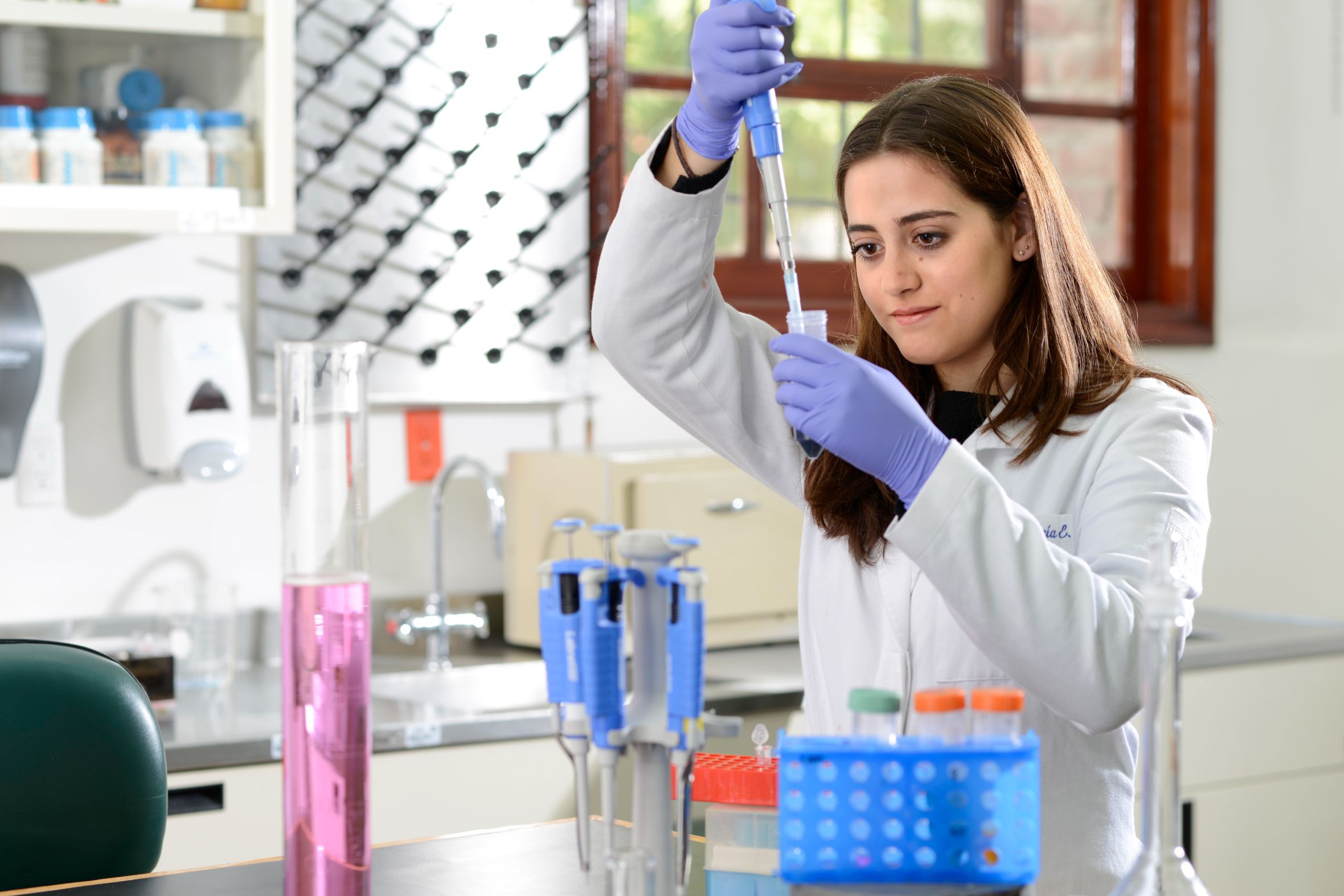
Mexico City, October 17, 2025.–TheMolecular Biology Laboratory at the Universidad Panamericana School of Medicine, in collaboration withYale University, reports significant progress in its research on the pharmacogenetics of breast cancer, with the publication of two new studies and the development of a promisingproteomic signaturethat is currently in the process of being patented.
The project, funded by the National Council for Science and Technology (Conacyt), focuses on the pharmacogenetics of breast cancer, seeking to understand how individual genetic variations influence the effectiveness of drugs. The goal is clear: to personalize cancer treatments to improve patients’ life expectancy and quality of life.

New findings: from genetics to proteomics
Dr. Francisco Javier Estrada Mena, a professor and researcher at the School of Health Sciences at the Universidad Panamericana a member of the National System of Researchers, noted that this line of research has yielded concrete results since 2020.
“We have recently published two scientific articles. One of them addresses genetic markers associated with chemotherapy-induced neurotoxicity induced by chemotherapy. The other, and perhaps the one with the greatest immediate impact, proposes a proteomic signature for breast cancer,” explained Dr. Estrada Mena.
The researcher emphasized the potential of this latest finding, published in November: “The article on the proteomic signature has great potential for application. We have a one-year window to file the patent, and we are already in contact with Rodolfo Martínez from the relevant department at the Universidad Panamericana finalize this process.”
Predictive software for oncologists
As part of this same line of research, the team developed a specialized softwarethat integrates genetic and proteomic data with the patient’s medical history to help the oncologist predict treatment response and recommend the most appropriate therapy.
“It’s really easy to use. The doctor enters information such as the patient’s name, genetic test results, and relevant clinical variables, such as exposure to hormonal contraceptives. The program processes this information and offers evidence-based recommendations, for example, whether it is more appropriate to start with radiation therapy or another alternative,” explained Dr. Andric Christopher Pérez Ortiz,an alumnusof the Universidad Panamericana co-author of the development.

However, its implementation in healthcare institutions faces the challenge of limited availability. Looking ahead, Dr. Estrada Mena announced that the methodology and findings have the potential to be applied to other types of cancer. “It can be applied to uterine cancer, for example, since a similar chemotherapy is used”, he said.
Human capital development and laboratory strengthening
The project has served as a breeding ground for new generations of scientists. “Students from the Universidad Panamericana School of Medicine have joined Universidad Panamericana Molecular Biology Laboratory, thereby strengthening our research capacity,”, noted Dr. Estrada Mena.
Dr. Pérez Ortiz, for his part, expressed his hope that “this effort will allow the Panamericana Molecular Biology Laboratory to become better known within the university community and beyond, and that its facilities and staff will grow, because only then will it be possible to conduct more research that has an impact on society.”
The project benefits from the essential collaboration of the National Cancer Institute (INCAN) and the General Hospital of the Northern Zone in Puebla, as well as the expertise of Dr. Israel Ramírez of the University of San Diego, who helped validate the results using analytical techniques such as Western blotting.
The Universidad Panamericana 's Commitment Universidad Panamericana Biomedical Research
With this breakthrough, the Universidad Panamericana its commitment to scientific research of the highest quality and with a social impact, advancing personalized medicine and the use of innovative technologies to improve cancer treatments.
Panamericana continues to promote multidisciplinary scientific initiatives that, through its laboratories and classrooms, aim to transform the country’s medical landscape and train the professionals who will lead the field of medicine in the future.
Read the full study at:
https://www.oncotarget.com/article/22461/text
Contact information:
Dr. Francisco Javier Estrada Mena
https://www.youtube.com/watch?v=JfAaZQcLZ0I