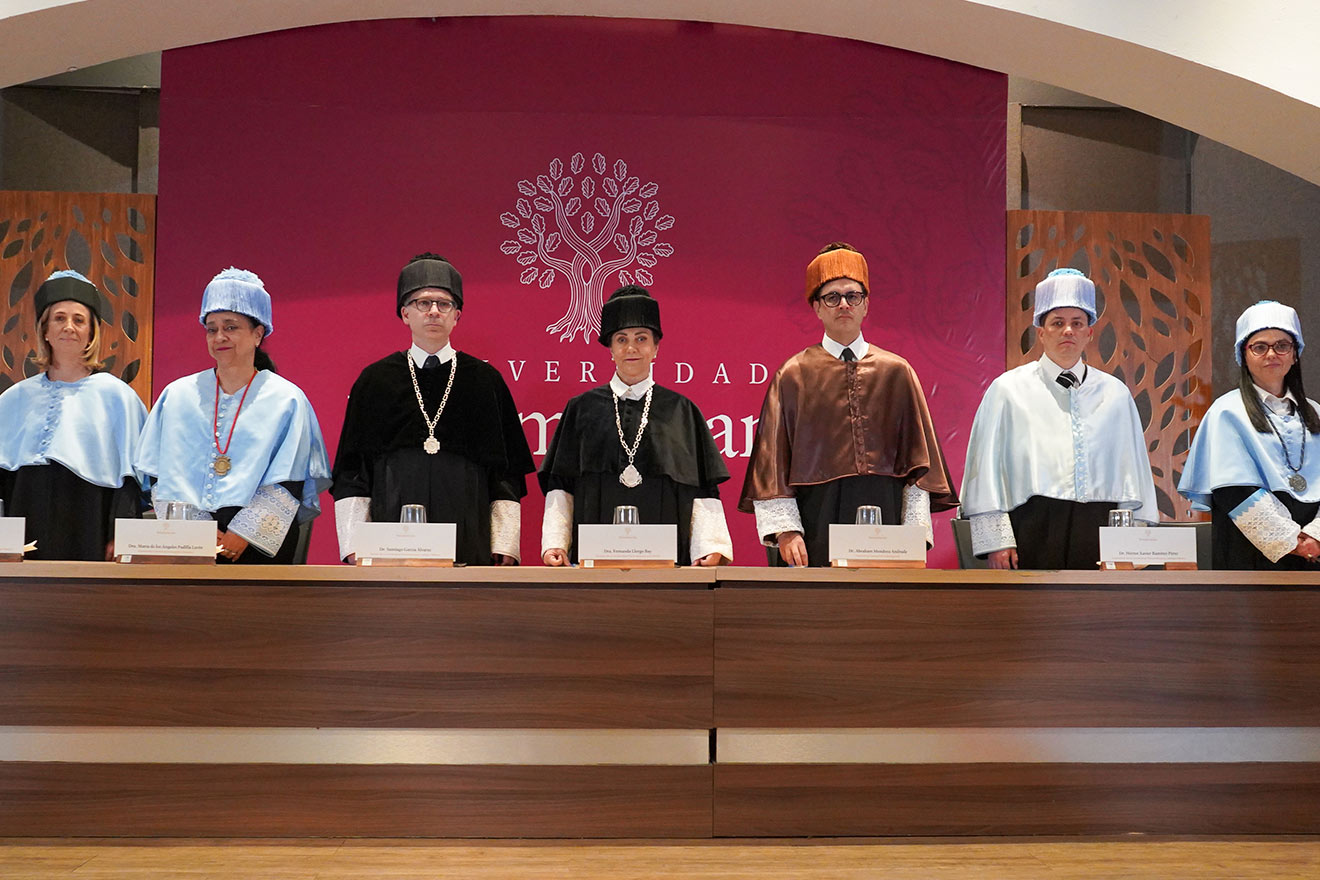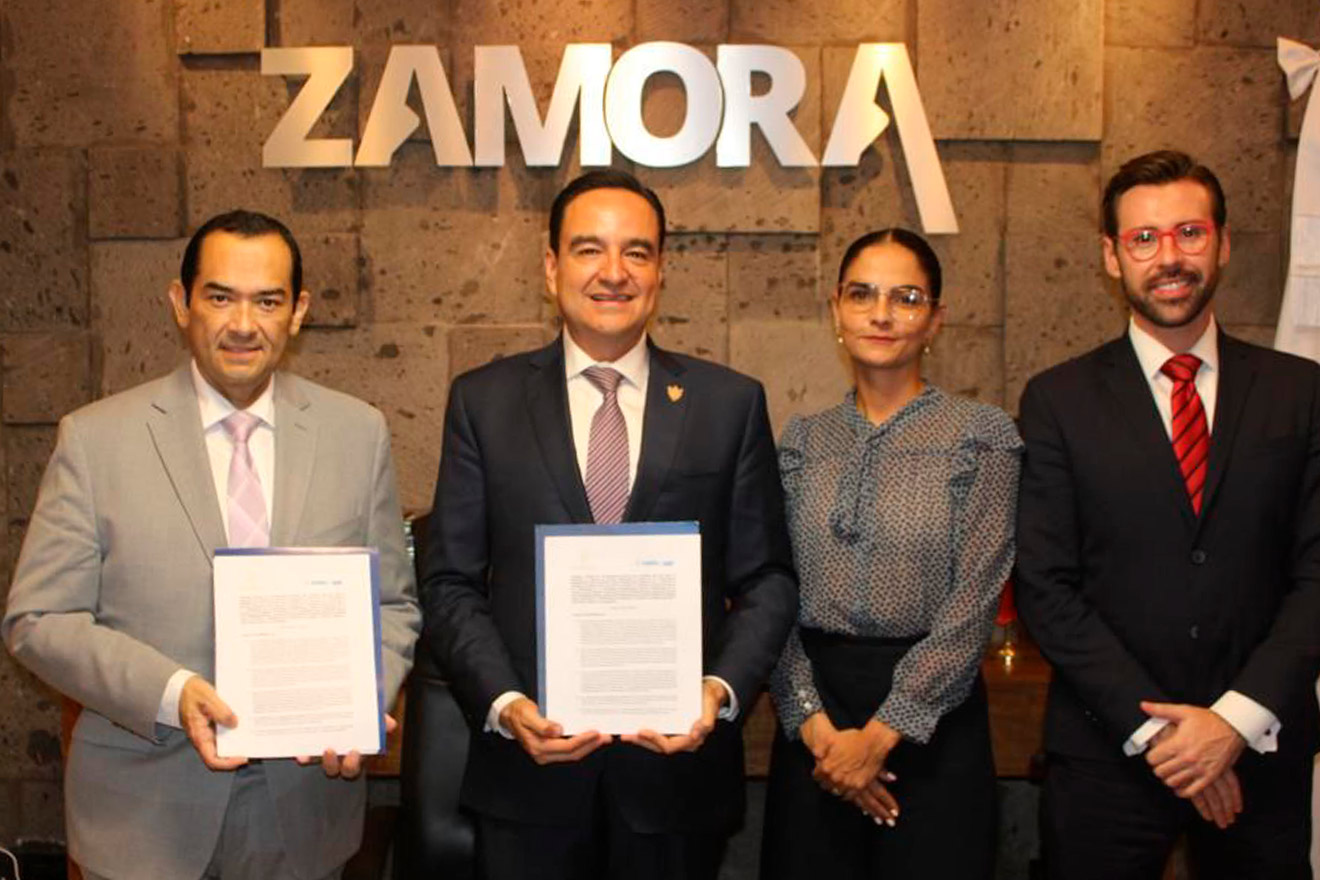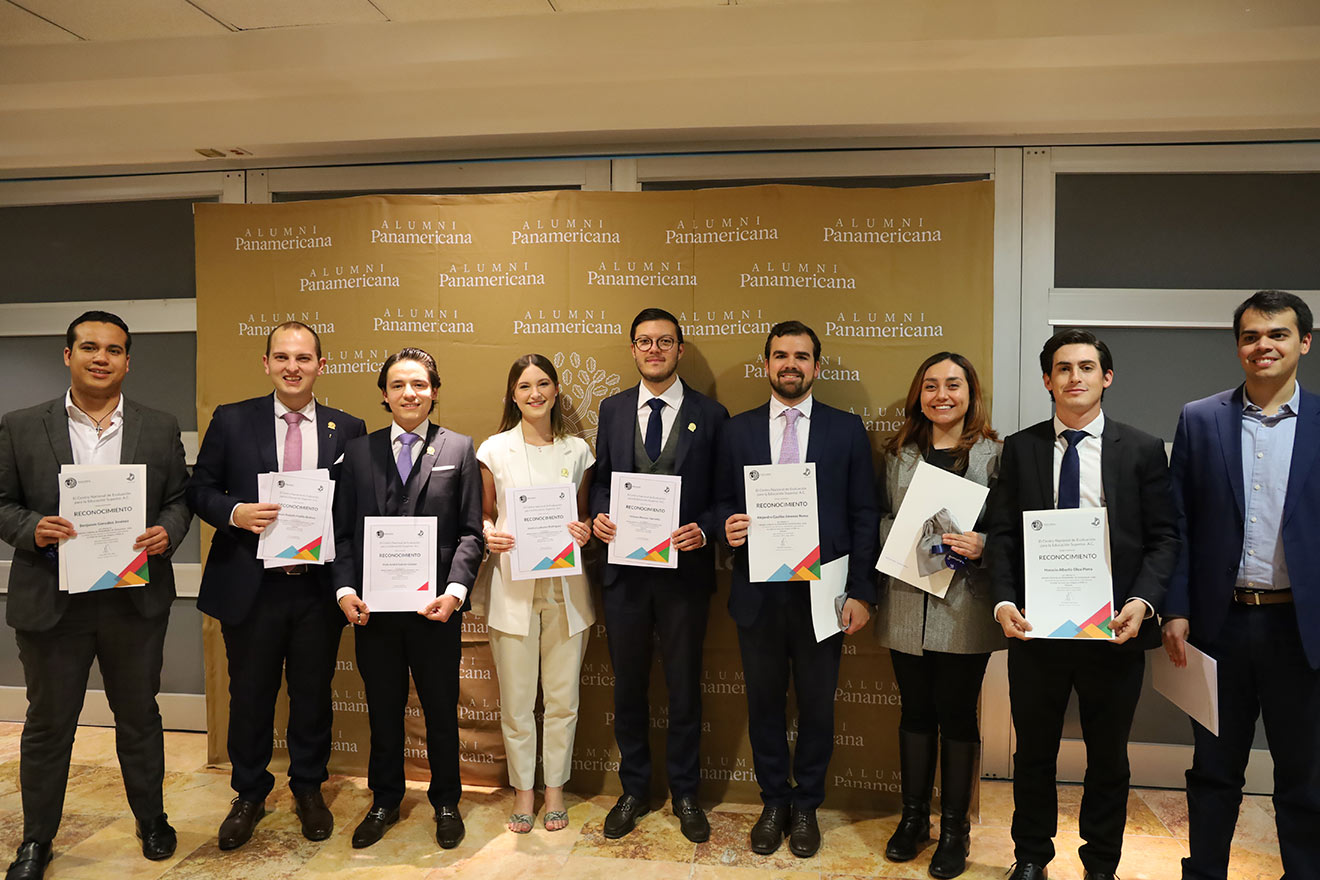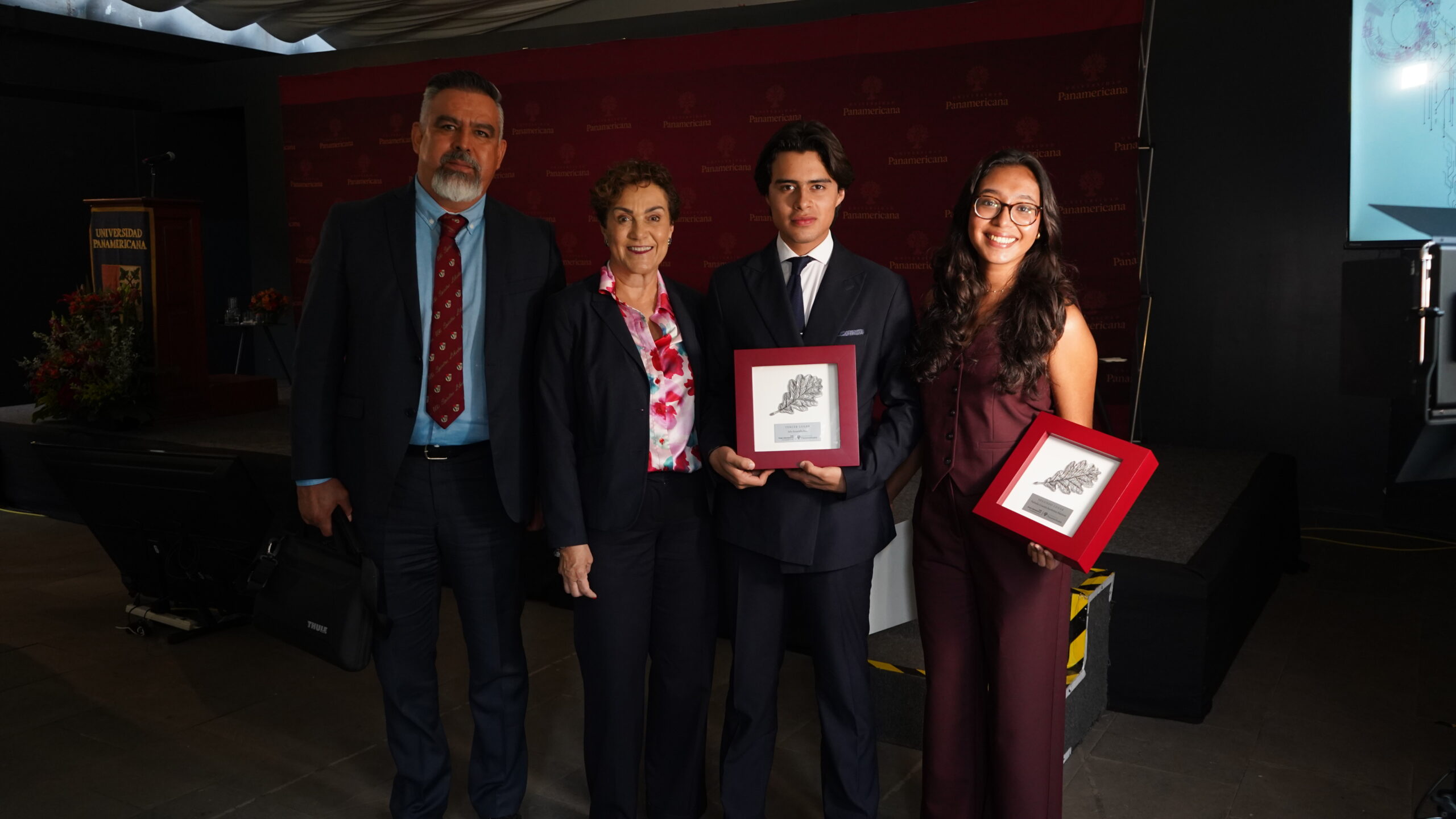
Aguascalientes, Aguascalientes, October 15, 2025.— The Universidad Panamericana hosted the sixteenth edition of the Universitas Forum, under the theme Artificial Intelligence: Innovation and Social Responsibility, where two students from the Universidad Panamericana Aguascalientes campus took the podium.
Research inspired by anthropology and technology
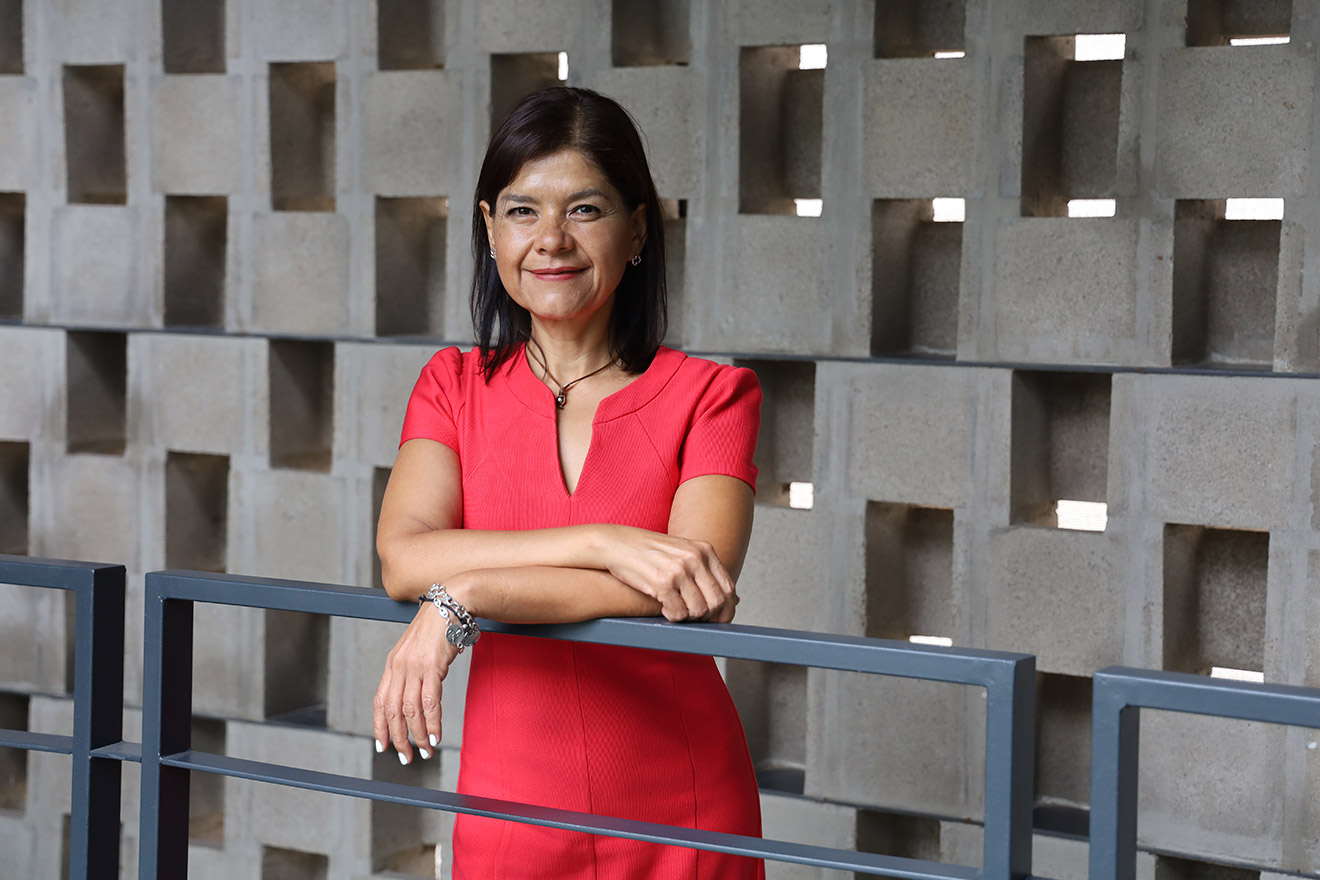
Nathalia Graciela Barrientos, a third-semester student in the Bachelor of Arts in Psychology program, won second place for her essay The Humanity of Artificial Intelligence which addresses one of the most pressing questions of our time: Can artificial intelligence attain truly human qualities?
Inspired by her interest in anthropology and the relationship between technology and human thought, Nathalia decided to focus her research on the field of anthropology, with a special emphasis on the aspects that distinguish people from machines.
Intelligence, Consciousness, and Morality: Three Pillars of Human Thought
The essay explored the limits of artificial intelligence from a philosophical perspective, drawing on the work of classical thinkers such as Aristotle, Kant, and Thomas Aquinas. In her analysis, the student argued that, while artificial intelligence can mimic certain human capabilities, there are insurmountable limits that separate it from human experience, such as self-awareness and experiential interaction with the environment.
“I came to the conclusion that there is no definitive answer—neither a ‘yes’ nor a ‘no’; there will always be a fundamental difference between artificial intelligence and human beings, since machines lack the ability to live and create a subjective view of the world,” the student reflects.
For Nathalia, the recognition she received for her work was a source of deep gratitude toward the Universidad Panamericana. “Finishing in the top three was a privilege for me, and I am very grateful. It was a great opportunity to present my essay in Mexico City, listen to experts, and discover that my ideas resonated with theirs,” she shared.
The experience also allowed him to strengthen his interest in research and interdisciplinary reflection. “Events like this foster the development of analytical thinking and the ability to put what we’ve learned into practice. Learning about the perspectives of other participants was very enriching, because each person approached the topics from different angles, and that helped us appreciate the diversity of ideas and viewpoints,” she noted.
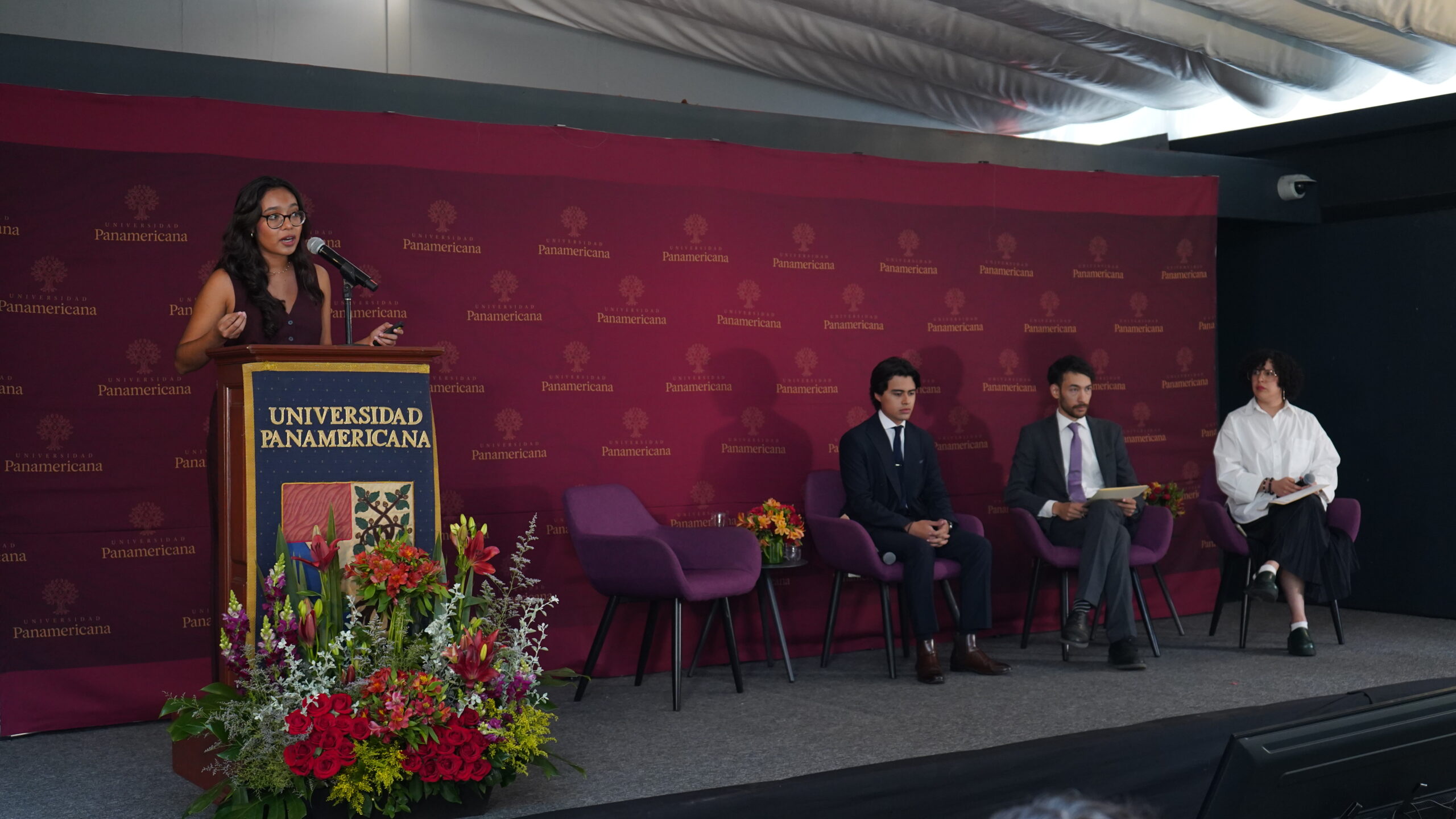
With enthusiasm and dedication, Nathalia reaffirms her commitment to the study of the human mind and its interaction with technological advances, convinced that the dialogue between science, ethics, and philosophy is key to understanding the challenges of the future.
A Critical Look at Technology and Power
For his part, Arlo Escamilla Ruiz, a third-semester student in the Bachelor of Laws program, took third place for his essay “Algorithmic Democracy: Between Efficiency and Domination,”, in which he reflects on the implications and risks of artificial intelligence as applied to the political and social spheres.
From a perspective inspired by the Frankfurt School, the student reflects on the implications and risks of artificial intelligence as it relates to power and politics. In his analysis, Arlo warns that the use of algorithms can optimize government processes, but it can also give rise to new forms of social control and political manipulation.
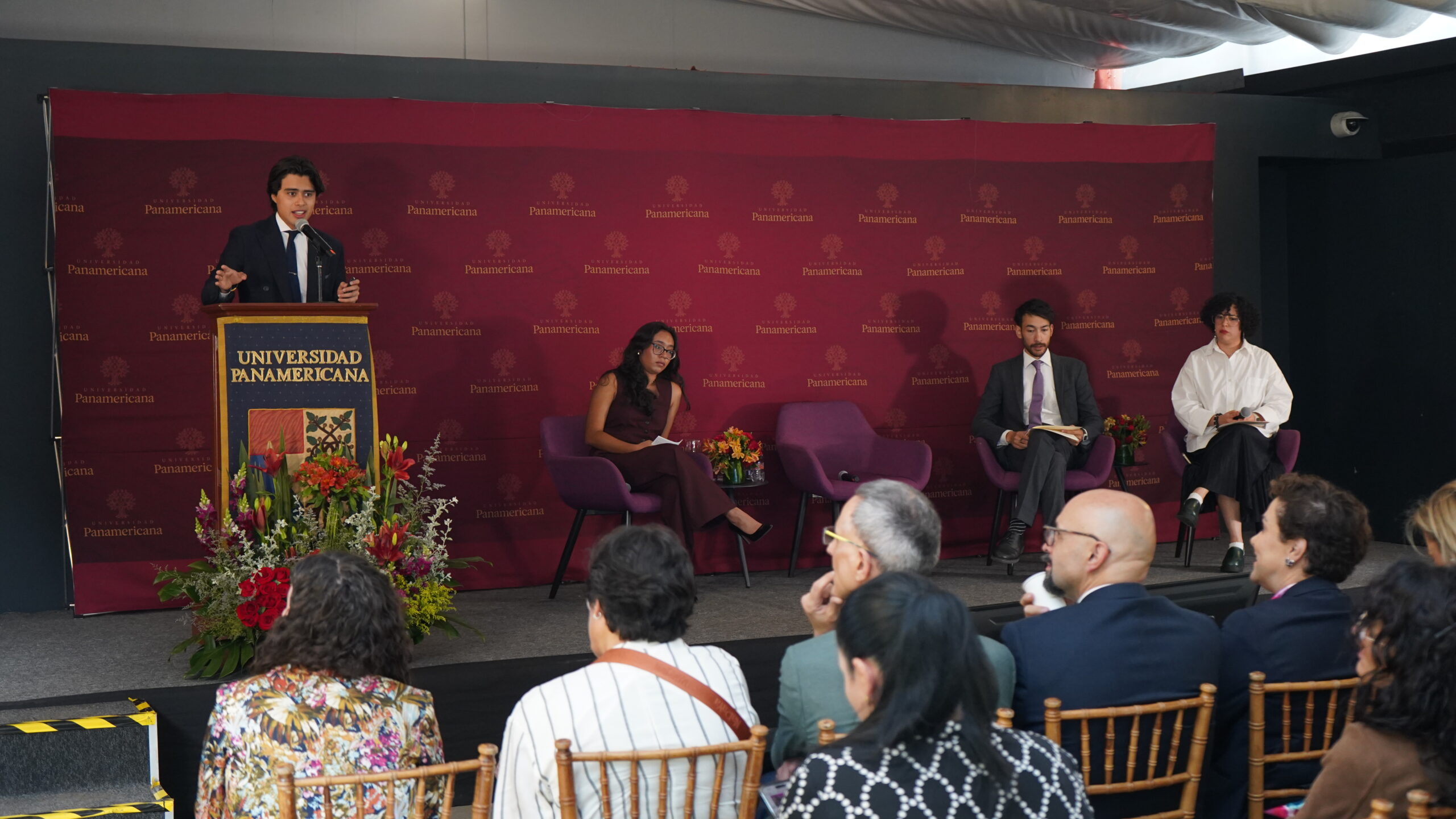
The student argued that, when analyzing human data, technology ceases to be objective and can be exploited for economic or political interests. Drawing on ideas from critical theory, he pointed out how scientific and technological advances often serve the interests of capital, creating what he describes as a “technoligarchy” that directly influences power structures.
In his essay, he also addressed cases of mass surveillance and algorithmic manipulation in various global contexts, citing examples from China, the West Bank, and the United States, where algorithms have even influenced political processes such as Brexit.
Encounters That Broaden Horizons
In addition to the recognition he received, Arlo highlighted the importance of participating in academic forums such as the Universitas Forum, which, in his opinion, “allow students to develop critical thinking skills and share their perspectives with a diverse community.”
“We all have something valuable to contribute,”he said, encouraging his classmates not to miss out on opportunities and to trust their own voices and ideas. For him, these kinds of experiences are enriching not only intellectually but also on a personal and social level.
“I believe this opportunity reaffirmed my interest in continuing to explore the relationship between law, technology, and social ethics,”, he said.
A forum that fosters reflection and innovation
The 16th Universitas Forum reaffirms the University of the West ( Universidad Panamericana ) commitment to a well-rounded education, interdisciplinary research, and ethical leadership.
Through these events, the Panamericana promotes dialogue between science, the humanities, and technology, inspiring its students to question, investigate, and contribute to the development of a more just and responsible society.
Learn more about what happened at the 16th Universitas Forum at: https://www.up.edu.mx/escuelas-y-facultades/instituto-de-humanidades/up-reflexiona-sobre-el-futuro-de-la-inteligencia-artificial-en-el-xvi-foro-universitas/