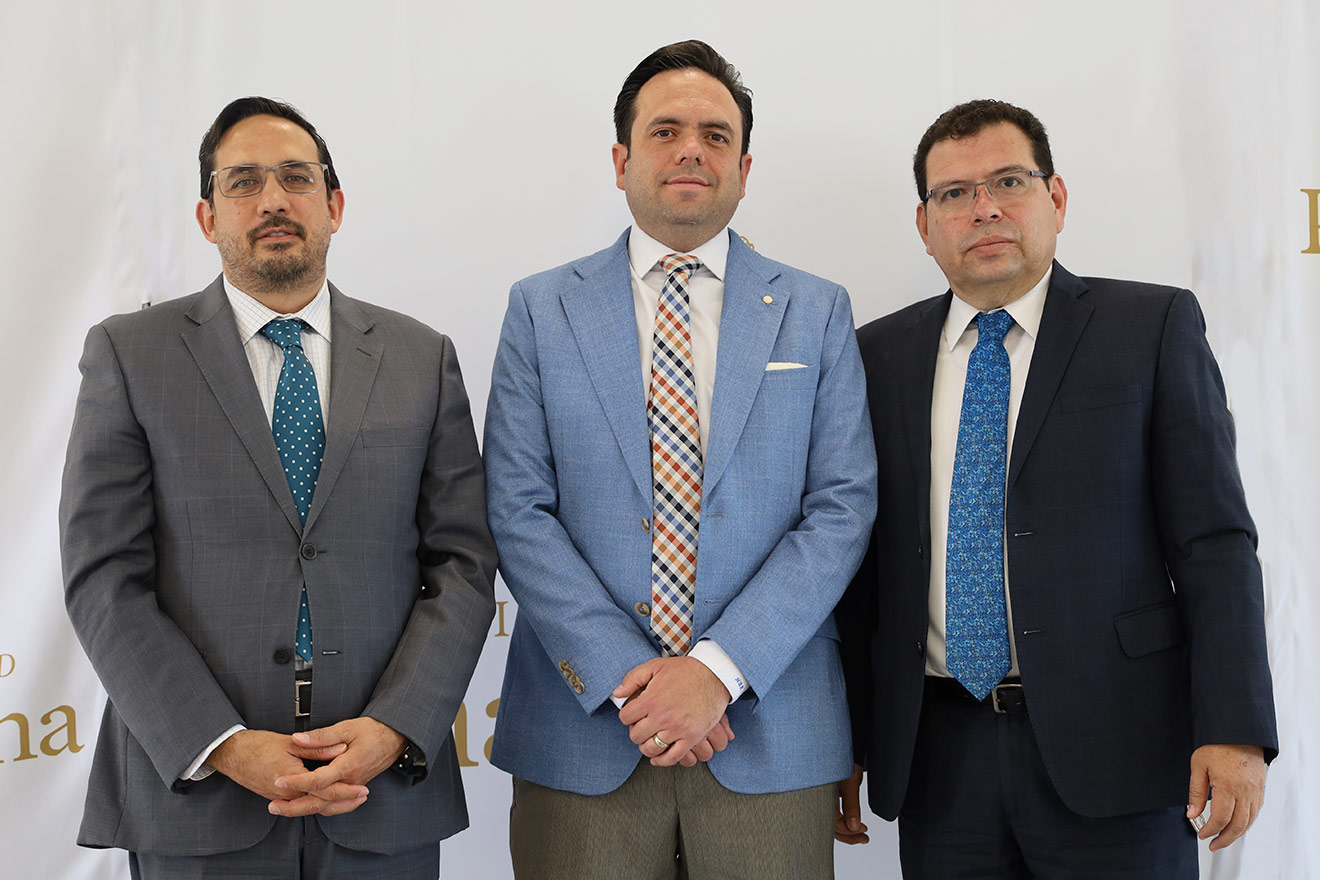
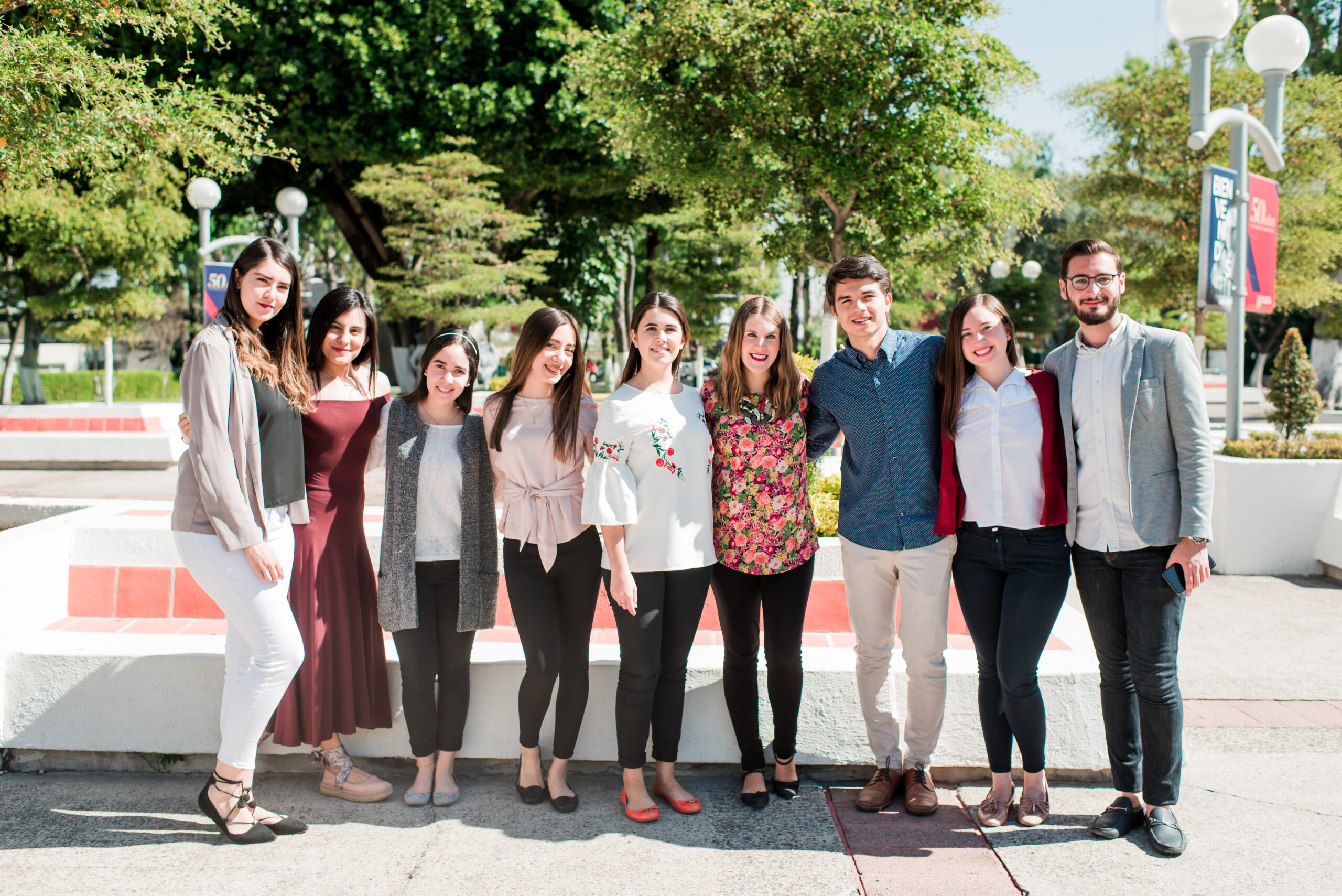
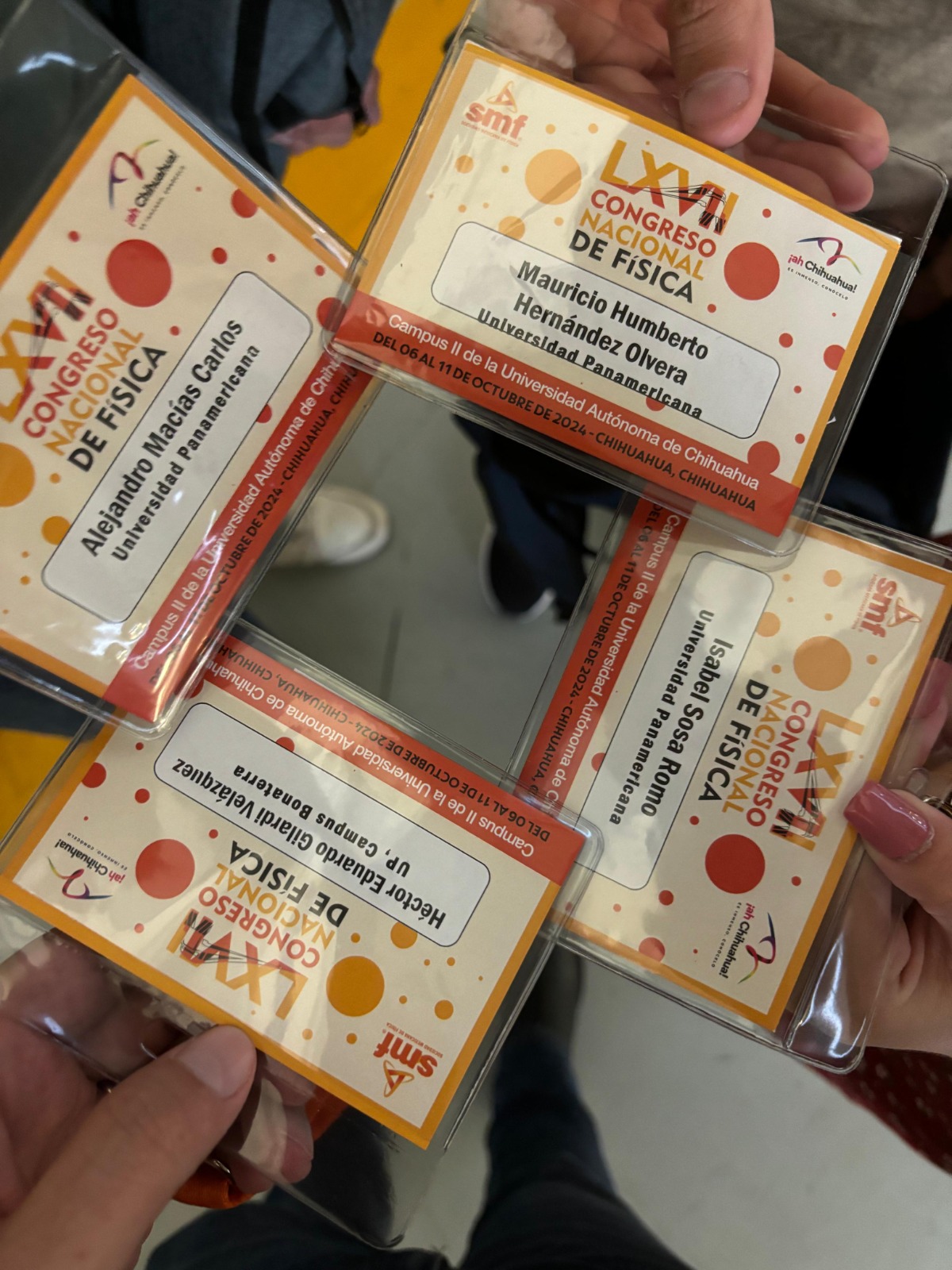
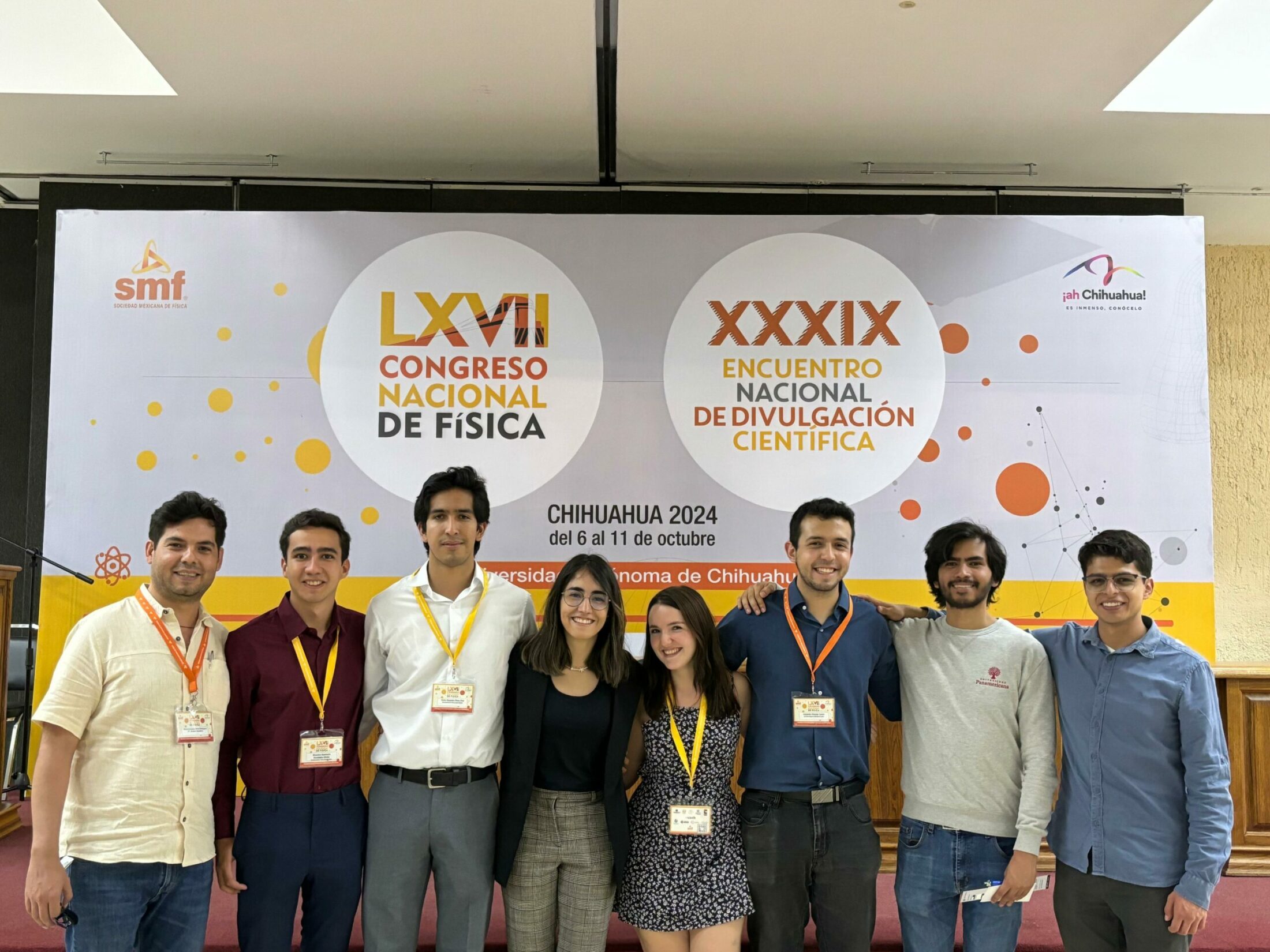
Aguascalientes, Ags., October 31, 2024.— Dr. Dr. Héctor Gilardi Velázquez, a research professor, and students from the School of Engineering at the Universidad Panamericana, Aguascalientes campus, participated in the 67th edition of the National Physics Conference held in Chihuahua, where they presented five scientific and technological projects.
These projects were developed by students in the Mechatronics Engineering and Bioelectronics Engineering programs as part of their professional training, in collaboration with Dr. Fernando Dávalos, Dr. Omar Ruiz, and Dr. Héctor Gilardi.
Projects that innovate and contribute to society
This year, students from the School of Engineering presented five projects they had been developing in their respective courses for about a year and a half.
Some projects focus on the field of biosystems, such as the project on Modeling and Parametric Analysis of the Food Digestion Process in the Stomach and Its Transit to the Intestine, which aims to study how the type of food intake affects the digestive process.
“Our blood sugar level depends on what we eat. So, in order to properly describe how a person’s glucose levels rise, we need to understand how our body processes glucose from the moment we eat it,”, says Dr. Gilardi.
Based on a model that takes into account the stages of food digestion in the stomach, this project aims to study how food behaves and to identify which parameters of this model correlate with the different types of food digestion.
Innovation in Complex Systems Research
In addition to the area of complex systems and biosystems, the following project was also presented: Frequency Analysis of Neuron Dynamics, which the different types of activity present in neurons are described.
Depending on the type of activity or process our body is engaged in, different numbers of neurons are activated in our brain; in this regard, neurons undergo activation and deactivation processes that often exhibit chaotic behavior.
Dr. Héctor Gilardi explains: “Neurons can either be healthy or die, or even have a different capacity for thought or motor function; this is related to our brain activity. This means that the neurons are not behaving as they should.”.
“In much the same way, we took the neuron models and began to identify, within this model, the conditions under which we can guarantee different activities of our neurons,”, he adds.
Technology and Instrumentation in Power Systems
Another area on which the projects focus is technological development and instrumentation; in this area, the following work was presented: "Lyapunov Stability Analysis of Interconnected Power Systems", in collaboration with Dr. Omar Ruiz, which ensures the correct operation and optimal performance of high-power converters.
In today's world, where the development of alternative energy sources has had a significant impact, societies face a major challenge: the installation of solar panels in homes and how that energy is used.
According to the doctor, one area of research that has gained momentum in recent years focuses on how to design converters that take energy generated within a certain range and adapt it to the commercial grid without causing problems for users or the power grid itself.
“This paper proposes converter systems for interconnecting power sources. Finally, it presents a proposal for interconnecting systems, along with an analysis and verification that the system can operate,”, adds Dr. Ruiz.
Development of Robots for Rescue Operations in Disaster Areas
Meanwhile, the robotics team at Panamericana has been working for several years on a project titled "Ixnamiki Rescue Robot Platform Development", which presents the design and instrumentation of a rescue robot for disaster zones. This project is supported by Dr. Fernando Dávalos.
When building this robot, certain factors must be carefully considered. These range from analyzing the context in which the robot is expected to operate and the type of work it will perform, to determining the properties the material used to construct the robot’s arms must have, the type of motors needed to ensure it has the strength required to move smoothly, and even the communication system it should use.
“The students developed and presented this detailed analysis, which is necessary for building the robot and ranges from defining requirements to identifying the solutions to be implemented in the robot,”, says Dr. Dávalos.
Magnetic Levitation: An Example of Applied Physics Principles
Finally, the paper "Principles of Electricity and Magnetism Applied to the Construction of a Maglev Train," applies basic concepts of physics and instrumentation to explain how magnetic levitation trains work.
The fundamental principle of the levitation train is repulsion. “If I try to bring two magnets together by their north poles, I can’t do it, but if I bring a north pole together with a south pole, it is possible. The idea is to ‘play’ with that repulsion, but in order for them to attract each other, I have to reverse the polarity—that is, a south pole will attract a north pole, but before they come together, I have to reverse it so they start to repel each other, and that’s what generates movement in a train,”, the professor explains.
This project involved building a prototype magnetic levitation train, for which both the tracks—to ensure linear motion—and the train itself were designed. In addition, the switching of the magnetic fields was programmed through the design of electromagnets.
“The students designed electromagnets, which allow them to change the polarity in order to generate this movement. This project involved both the design aspect—specifically, force diagrams in their most general form, but incorporating mechanical and magnetic forces—and the design of the electronics needed to program the train’s operation,”, he says.
It is important to recognize the high academic caliber of the students in the School of Engineering, as they submitted projects on par with those of graduate students.

Learn more about the School of Engineering at: https://www.up.edu.mx/educacion-universidad-facultad-de-ingenieria/