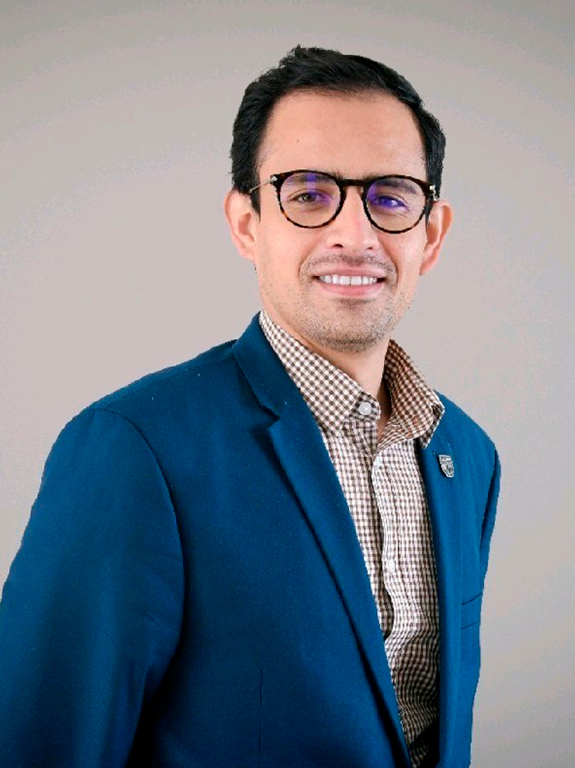
Aguascalientes, Aguascalientes, June 23, 2025. The Mtro. Ricardo Espinosa de Loeraresearch professor of the Faculty of Engineering of the Universidad Panamericana campus Aguascalientes has been selected to carry out a research stay at Harvard University in the biomedical area.
High-level research in support of neurosurgery
After participating last year in the 27th International Conference on Medical Image Computing and Computer Assisted Intervention (MICCAI) in Morocco and recognized as the most important congress on medical image computing, Professor Ricardo Espinosa made connections with researchers from other countries, among them, Dr. Nassim Haouchine, who invited him to participate in the biannual Research Internship program at Harvard University.
This research stay is between Harvard Medical School and the Department of Radiology in collaboration with Brigham and Women's Hospital in Boston.
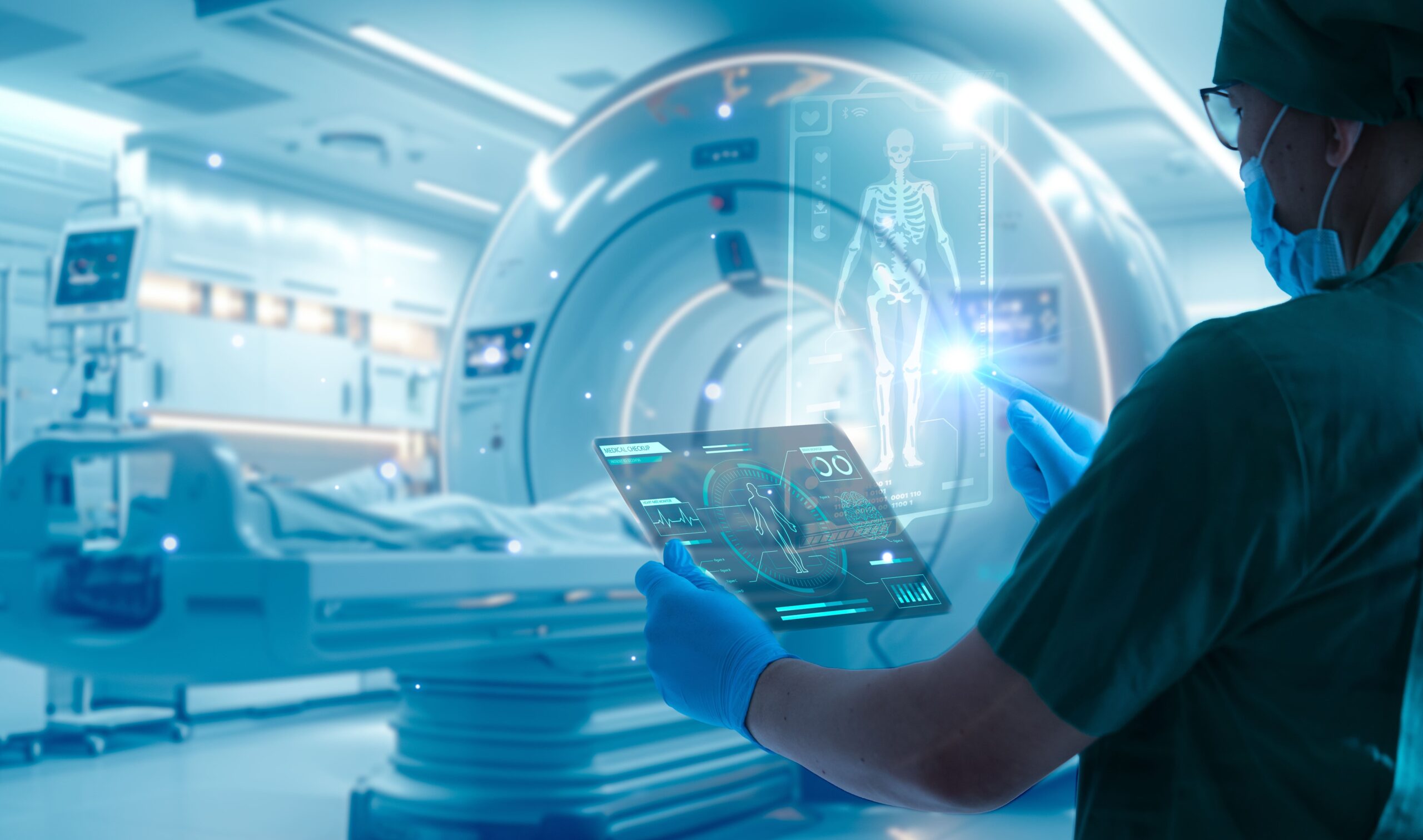
The project entitled Vision-based Registration of Aneurysm Clips for Neurosurgical Applications consists of artificial intelligence-based registration during the process of neurosurgery, specifically in aneurysms.
According to Dr. Ricardo Espinosa, during an aneurysm neurosurgical process, there are metal clips that are inserted into the brain, however, if these clips are wrongly inserted into the brain, they can affect many other parts of the body.
"The objective of the project is to make a record of the correct placement of the clips through computer vision and artificial intelligenceso that the physician can know, in real time, exactly the depth and inclination of all the axes of the clip so that it is in the correct position," adds the professor.adds the professor.
An opportunity to strengthen international research
For the academic, this experience means a great opportunity to comprehensively help the biomedical sector, as well as to test his skills in deep learningartificial vision and clinical applications in neurosurgery.
"I feel very happy, it is a very nice opportunity. I want to focus on doing a good job, especially to open the door to more collaborations in research topics and even academic topics with students"he emphasizes.
In addition, during the research stay, Ricardo will have the opportunity to stay in the surgical planning laboratory, where he will have access to state-of-the-art resources such as surgical simulation platforms, imaging datasets and advanced computer vision libraries.
Innovation in the service of health
This is not the first time that Professor Ricardo Espinosa has been involved in biomedical issues, as he is currently pursuing his PhD in Computer Science at the Université de Lorraine. Université de Lorraine in France.
His thesis is focused on the development of an artificial intelligence model for 3D reconstruction of endoscopic images of the colon. This with the aim of helping doctors to fully and accurately diagnose colon cancer during colonoscopy.
"Artificial intelligence is the new electricity. I am convinced that it is not only in medicine that we are going to solve this type of problems that seemed far away. I believe that this is where creativity comes in, in creating synergies with areas that seem far away and being able to provide solutions to real problems."he declares.
Innovation and global collaboration from Panamerica
With this experience, the Universidad Panamericana strengthens its international projection in areas such as biomedical engineeringbiomedical applied research and the and the training of academic talent capable of innovating in strategic sectors such as health.
Learn more about Universidad Panamericana at: https://www.up.edu.mx/sobre-la-universidad-modelo-educativo/