Aguascalientes, Aguascalientes, November 4, 2026.— The Mexican Institute of Industrial Property (IMPI)granted a patent for the “Photovoltaic Concentration System with Integrated Solar Micro-Tracking and Azimuth Rotation of the Cells”, an invention in which the Universidad Panamericana, Aguascalientes campus, participated alongside four other institutions—three Mexican and one Spanish.
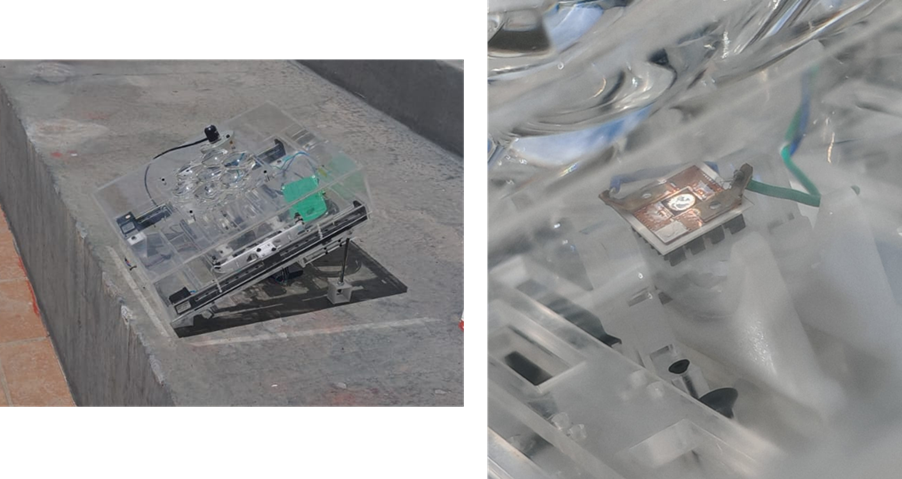
The invention is a photovoltaic module designed to improve two aspects of the crystalline silicon panels currently used in homes, businesses, and industrial settings: efficiency and transparency. While traditional modules convert about 23% of the light they receive into electricity, the prototype opens up the possibility of achieving an efficiency of nearly 30%, although it still requires testing to demonstrate that performance on a sustained basis.
Fixed Lenses, Moving Cells
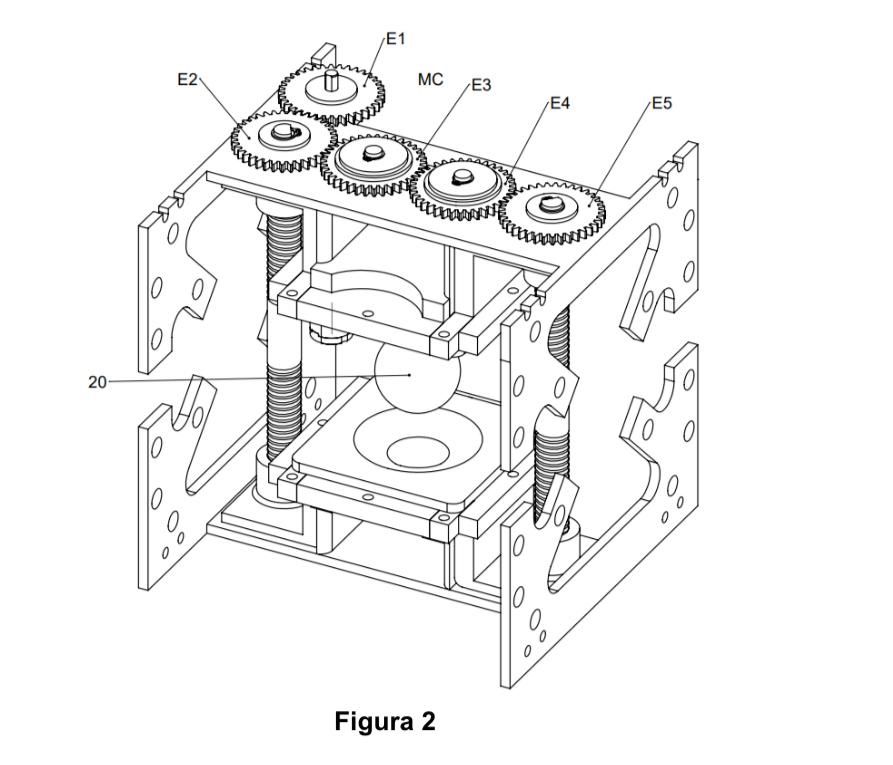
To achieve this, the system combines lenses that concentrate sunlight with miniaturized photovoltaic cells—measuring 5.5 x 5.5 mm—made from multi-junction III-V semiconductors.
“This system consists of a set of lenses that focus sunlight onto small, ultra-efficient photovoltaic cells,”, explains Dr. Pedro Manuel Rodrigo Cruz, director of research and liaison for the Aguascalientes campus of the CINOV (Center for Innovation and Technological Development), part of the Universidad Panamericana.
These cells function as a stack of layers that absorb a much broader range of the solar spectrum than silicon. According to Dr. Pedro Rodrigo, this makes it possible to “generate the same amount of energy as a conventional system while occupying much less space”, resulting in savings in both land and wiring.
Concentrated photovoltaics have demonstrated efficiencies exceeding 30%; however, conventional systems require large steel structures known as solar trackers, which increase installation and maintenance costs.
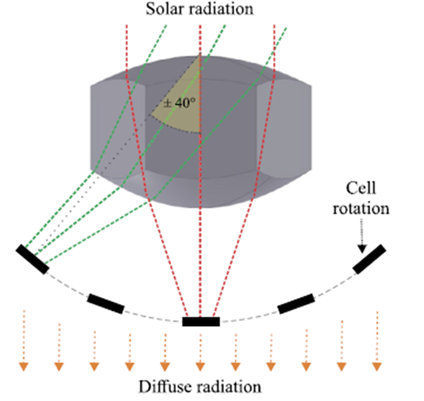
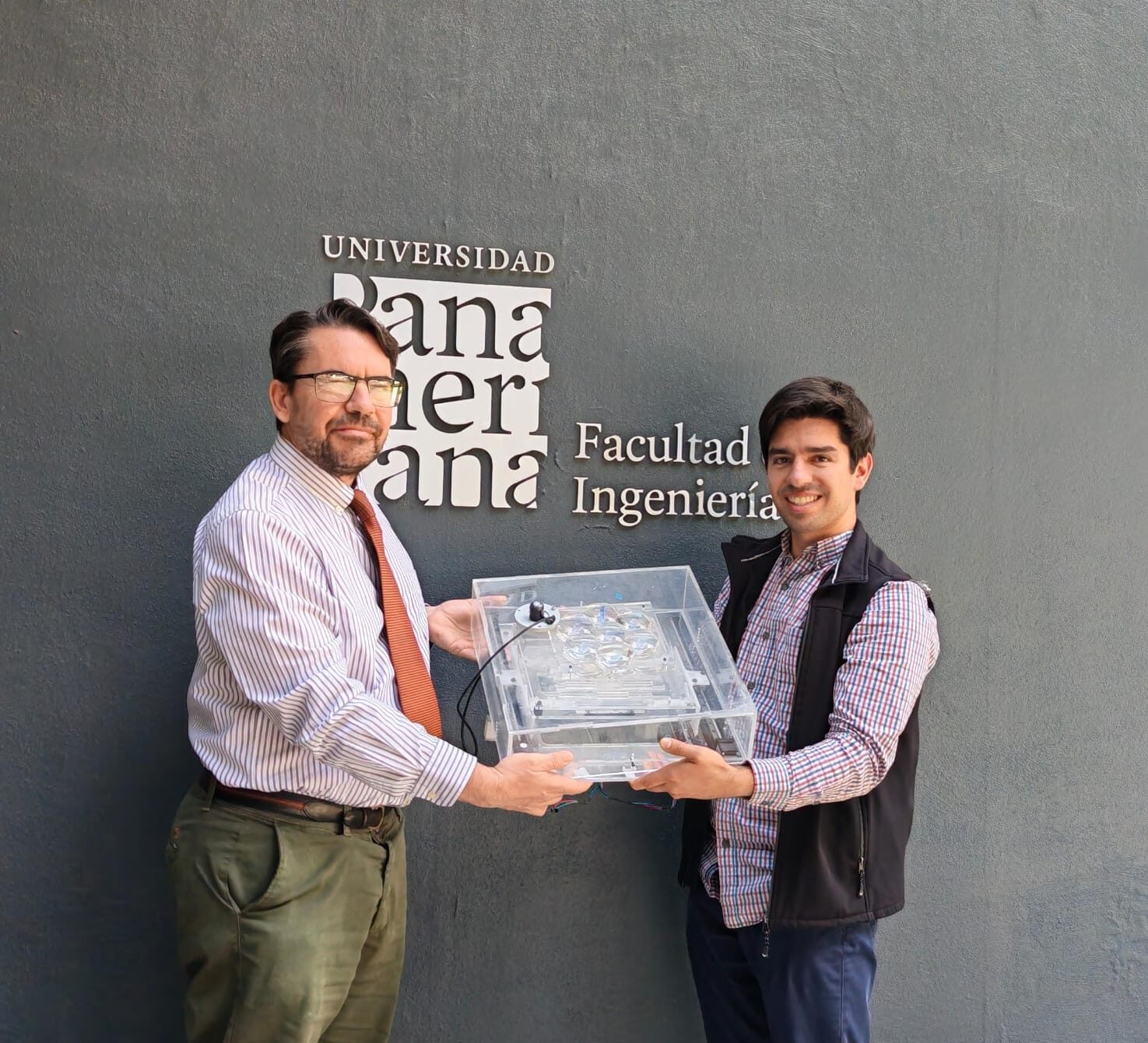
The prototype eliminates them with the concept of “micro-tracking”: the module is installed in a fixed position, and the cells move a few millimeters within it to track the light source. “This significantly reduces the cost of the system, makes installation much easier—since the modules are mounted on fixed structures and no calibration of the solar tracker is necessary—and minimizes maintenance,”, the researcher notes.
Dr. Fernando Dávalos Hernández, also a researcher at the Panamericana, explains the significance of the invention: “Although the concept of ‘micro-tracking’ is not new, we were able to improve it by incorporating the rotation of the solar cell around the azimuth axis to increase efficiency”.
As he explains, unlike traditional systems, the lenses remain fixed and only the movement of the solar cell is adjusted, resulting in a simpler design and an installation process that is just as straightforward as that of a conventional module.
Transparency in Agrivoltaics
The second feature of the prototype is that it is made of transparent materials that allow diffused light to pass through. This characteristic opens up possibilities for application in agrivoltaics, a model that combines solar energy generation with agricultural activities on the same land.
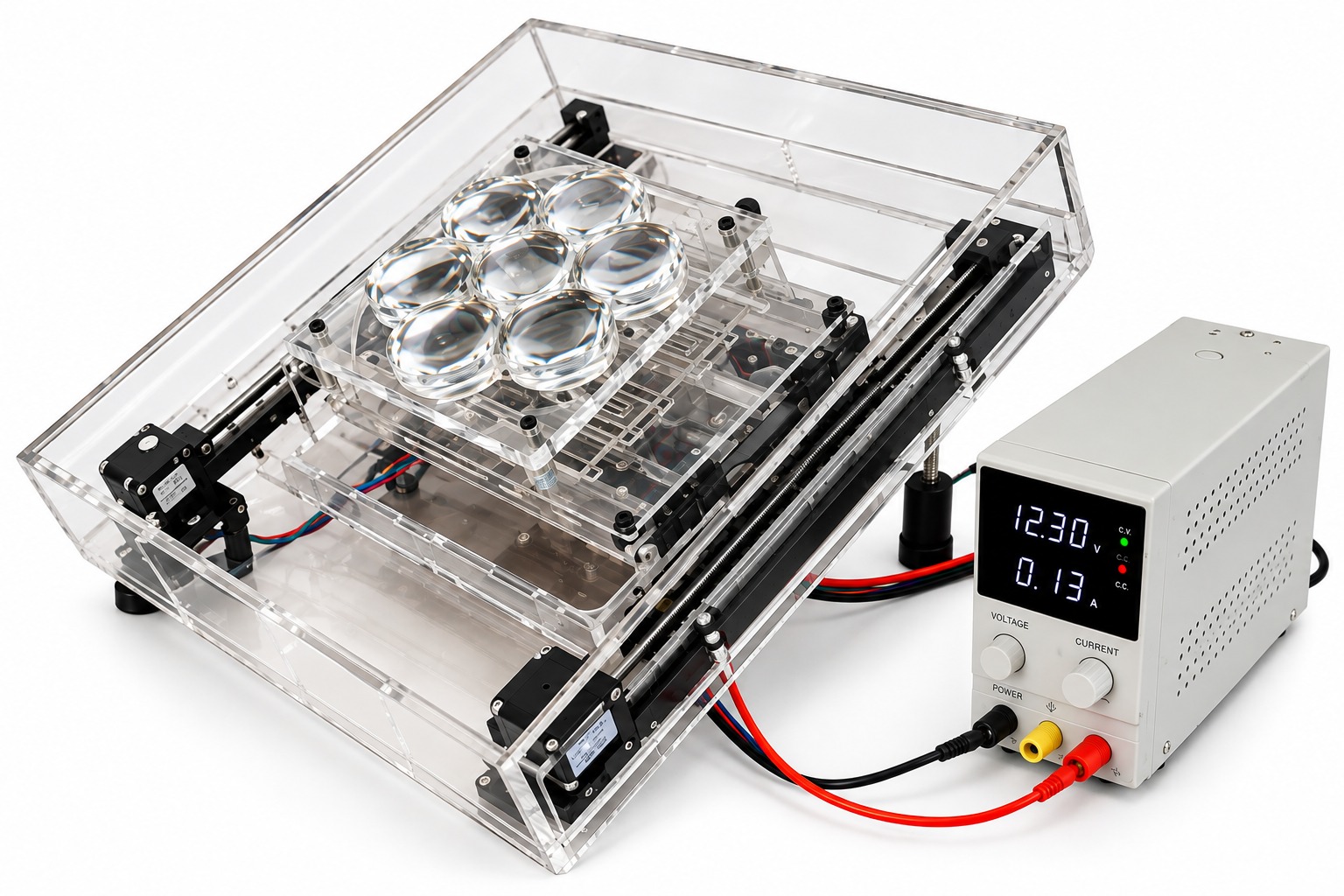
“These modules can be easily installed on farmland, both in solar greenhouses and in open-air installations, resulting in what are known as ‘agrivoltaic systems’”, says Dr. Rodrigo Cruz. Another identified niche is architectural integration into buildings that benefit from diffused light entering the interior.
From a postdoctoral fellowship to an international consortium
The project originated during Dr. Pedro Rodrigo's postdoctoral fellowship in 2020–2021 with the Advances in Photovoltaic Technology (AdPVTech) at the University of Jaén, Spain, with funding from that country’s Ministry of Science.
Back in Mexico, he learned that the University of Jaén had secured national funding to develop a module with micro-tracking and formed a Mexican consortium to join the project. Together with Dr. Arturo Díaz of the Center for Optical Research—with whom he was already collaborating on agrivoltaics—he proposed the collaboration to AdPVTech.
The University of Jaén led the optical design and manufacturing. In Mexico, the National Institute of Technology ( Universidad Panamericana), the Aguascalientes unit of the Center for Optical Research, the San Juan del Río Institute of Technology, and the Autonomous University of Baja California developed the mechanical components and control electronics.
Panamericana also led the data collection and monitoring efforts. “These results demonstrate the importance of international academic mobility and the opportunities that arise through the formation of both international and national collaborative networks,”, notes Dr. Rodrigo.
The first prototypes of the solar tracker were conceptualized and developed at Panamericana. Dr. Fernando Dávalos explains that the most important contribution was the idea of rotating the cell around the azimuth axis, and that the main technical challenge was “integrating all the mechanical components without wasting any space on the module, so that the movement and rotation of several solar cells could be controlled using only three actuators in total.”
The Institutional Directorate of Innovation and Technology Transfer at the National Institute of Technology ( Universidad Panamericana ) coordinated the administrative aspects of the patent application, which involved a unique process because five institutions were to share ownership of the invention.
A patent in record time
The development was published in August 2025 in the international journal Results in Engineering. The application was filed with the IMPI in July 2026, and the patent was granted in September following an unusually rapid review. “We believe that the speed of the process is indicative of the quality of the work submitted,”, said Dr. Pedro Rodrigo.
For Dr. Dávalos, this achievement validates the joint effort: “For research at the (Aguascalientes) campus, this is a great incentive: it demonstrates that the multidisciplinary work carried out here can generate our own intellectual property and opens the door to taking the next steps toward the transfer and commercialization of the invention.”
Next Steps
The prototype is currently in an experimental proof-of-concept phase. The next steps include demonstrating its efficiency under real-world solar radiation conditions and at different latitudes, increasing the angular acceptance, improving thermal management, and optimizing the electronic control system.
The materials and assembly must also be reinforced to withstand outdoor conditions, and the technology must be scaled up from the module to the system level through demonstrations in solar greenhouses. At the same time, the team is seeking industrial partners—particularly manufacturers and assemblers of photovoltaic modules committed to innovation.
Dr. Rodrigo recommends that students interested in renewable energy follow their calling and not lose heart. He emphasizes that engineers specializing in this field play a crucial role in meeting the growing demand for energy and water resources, a demand that is also driven by technological advances and artificial intelligence.
For his part, Dr. Dávalos agrees that there is still much to be done: “There is still a great need for researchers from different disciplines so that more people can enjoy clean, high-quality energy in their daily lives.”
Research team and participating institutions:
- Universidad Panamericana: Dr. Pedro Manuel Rodrigo Cruz and Dr. Fernando Dávalos Hernández.
- Optics Research Center, Aguascalientes Branch: Dr. Arturo Díaz Ponce and Dr. Nivia Iracemi Escalante García.
- San Juan del Río Institute of Technology: Dr. Iván Trejo Zúñiga.
- Autonomous University of Baja California: Dr. Rosa Citlalli Anguiano Cota.
- University of Jaén (Spain): Dr. Eduardo Fernández Fernández and Dr. Florencia Marina Almonacid Cruz, leaders of the AdPVTech group, along with researchers Dr. Álvaro Valera Albacete and Dr. María de los Ángeles Ceballos Pérez.
Learn more about the research projects at the National Institute of Health ( Universidad Panamericana ) at:https://www.up.edu.mx/investigacion/