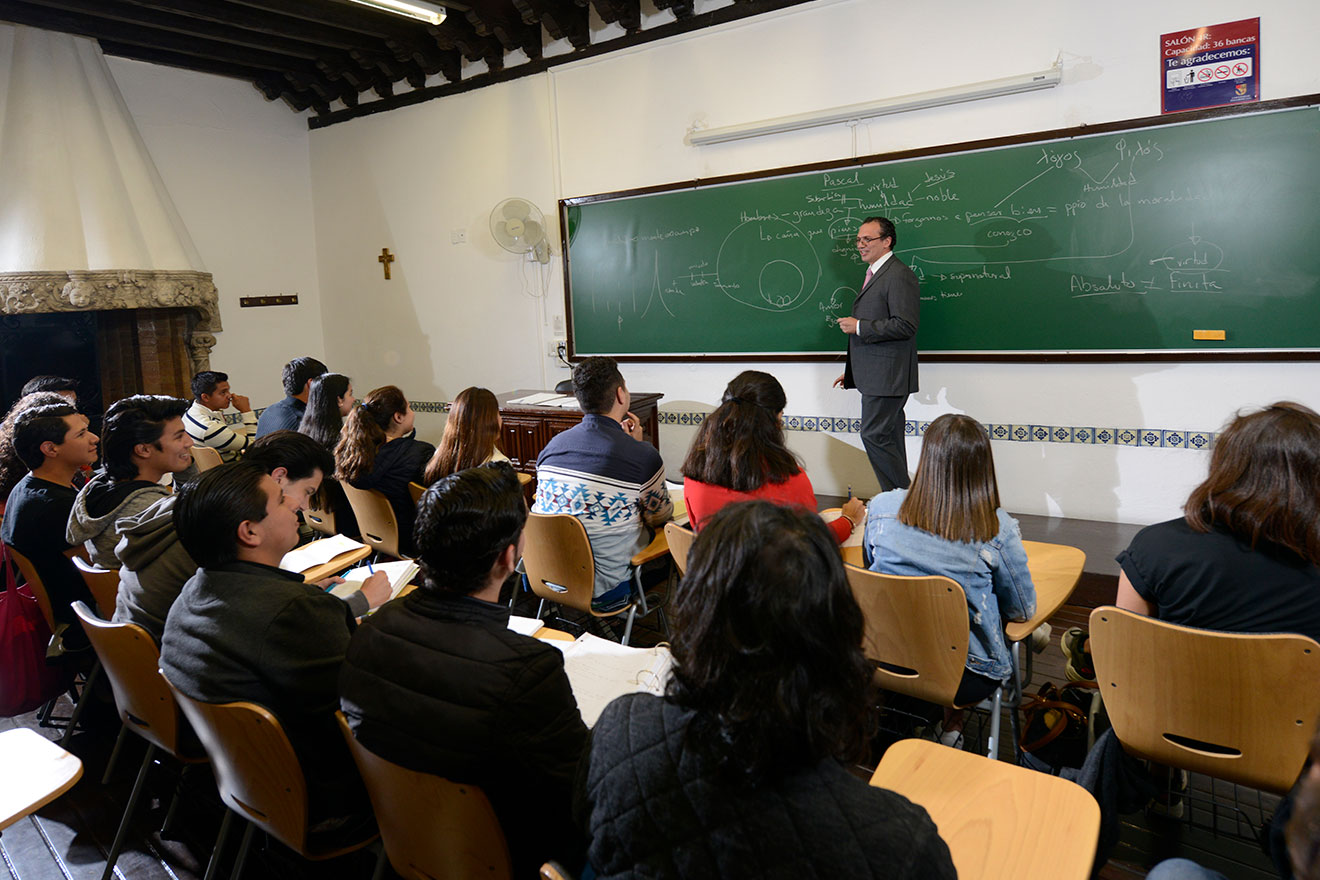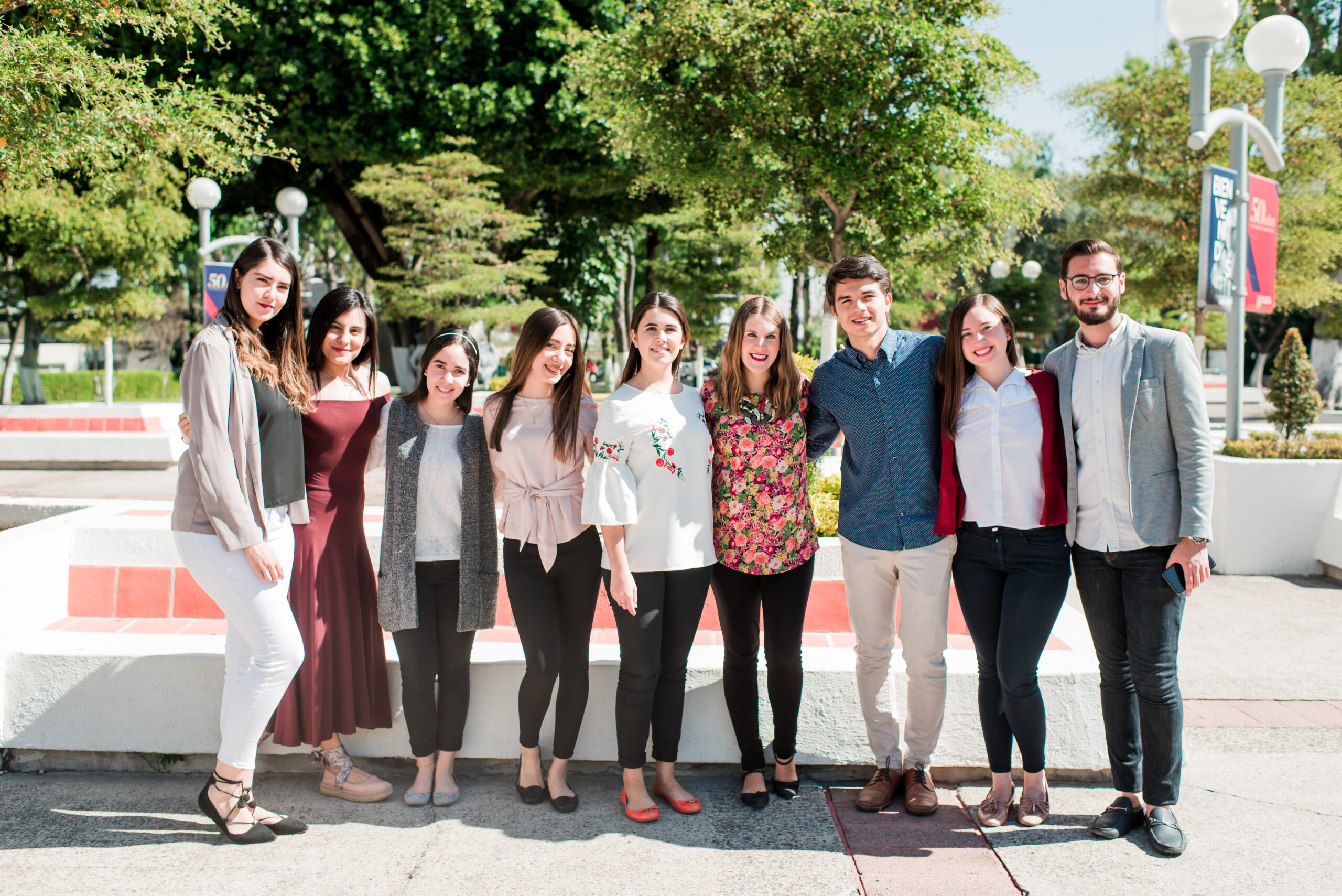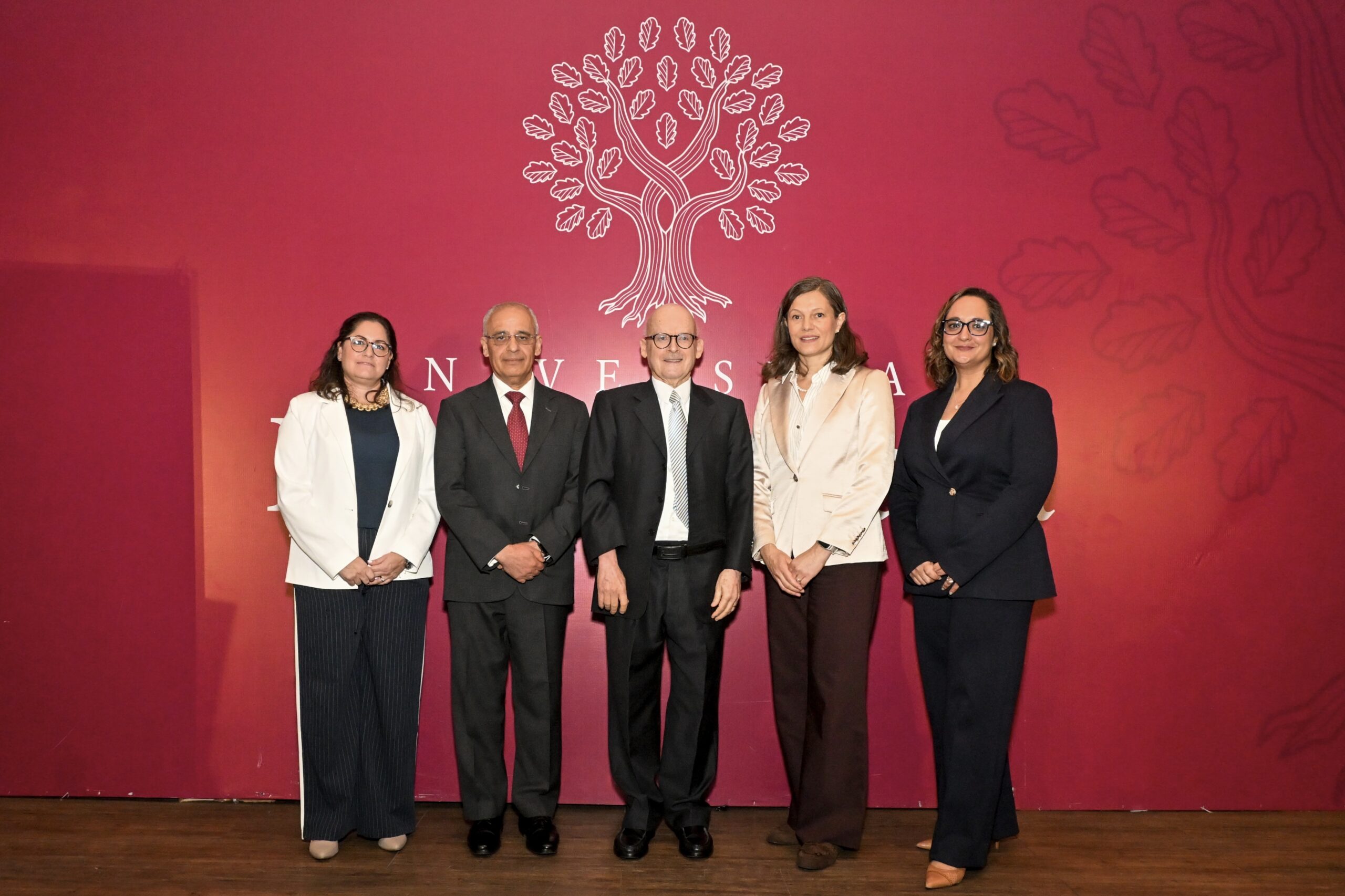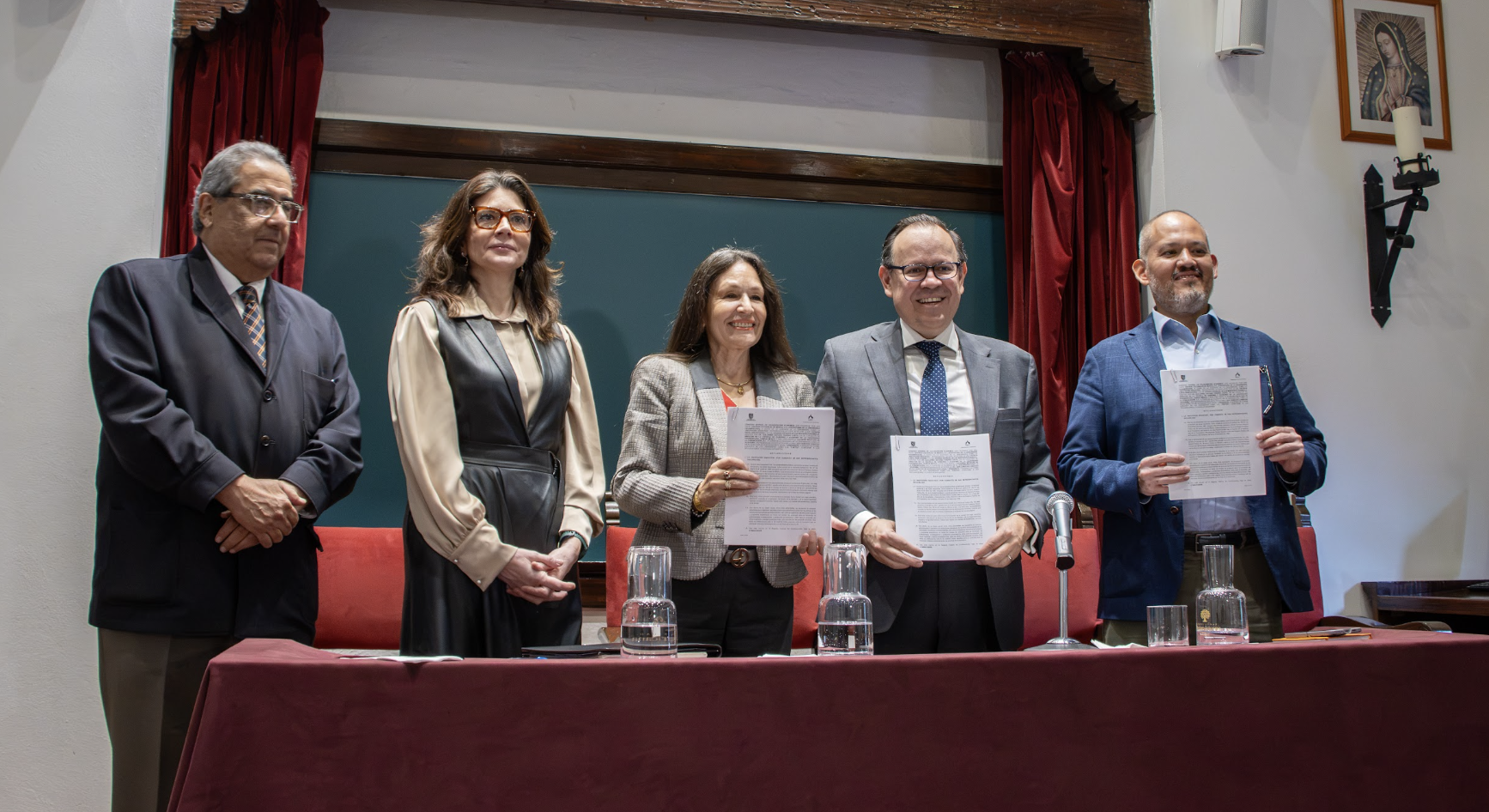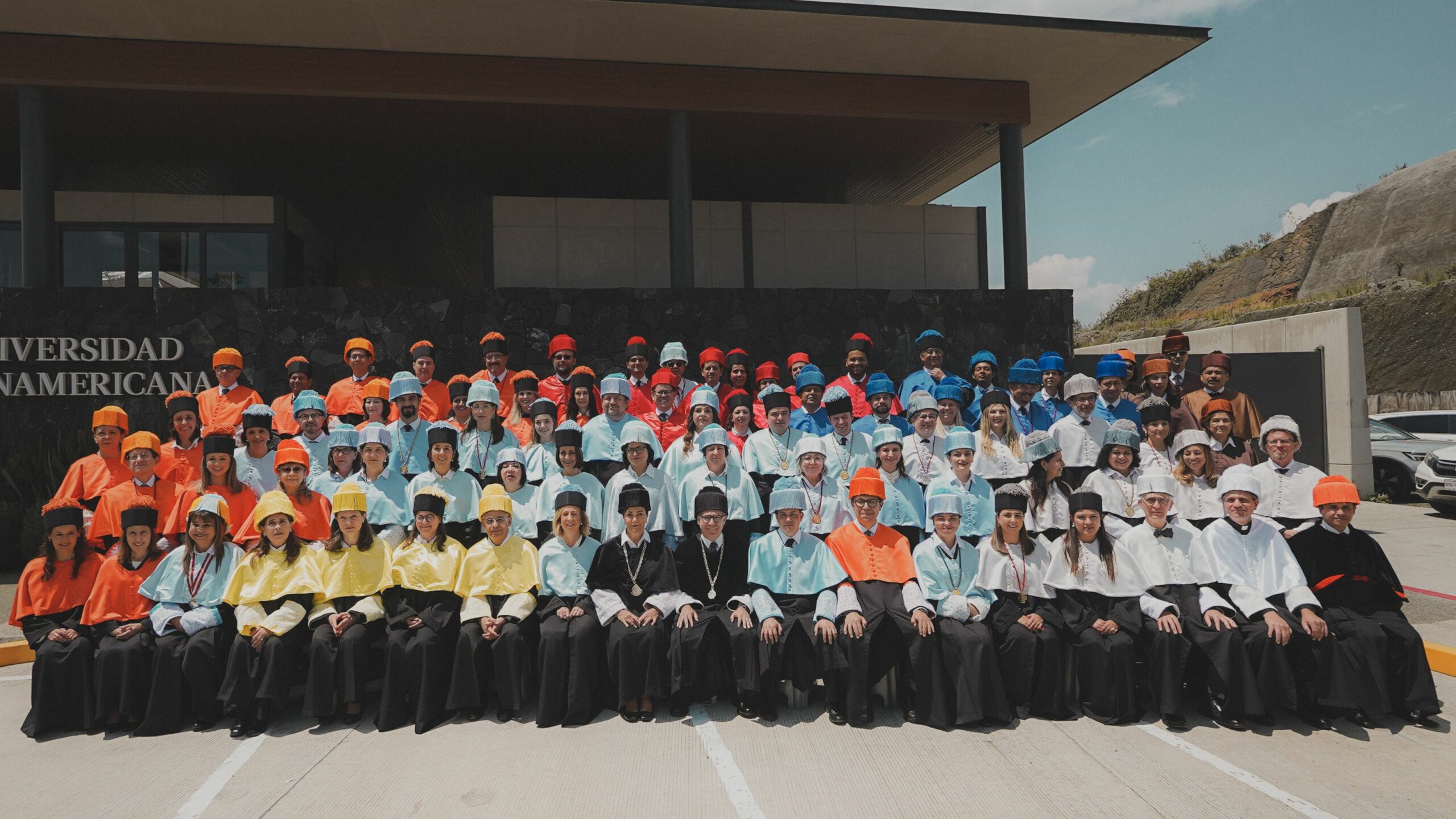
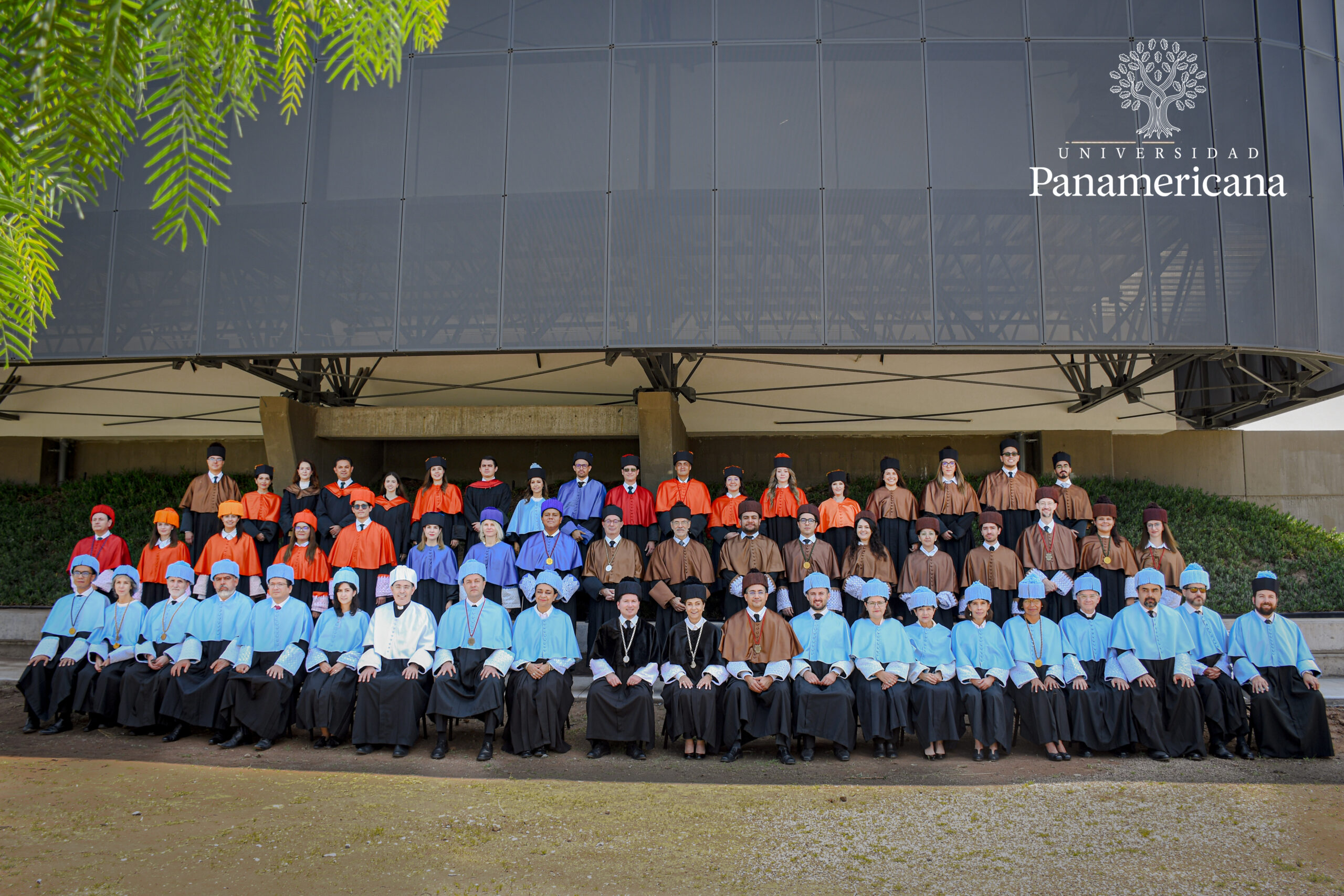
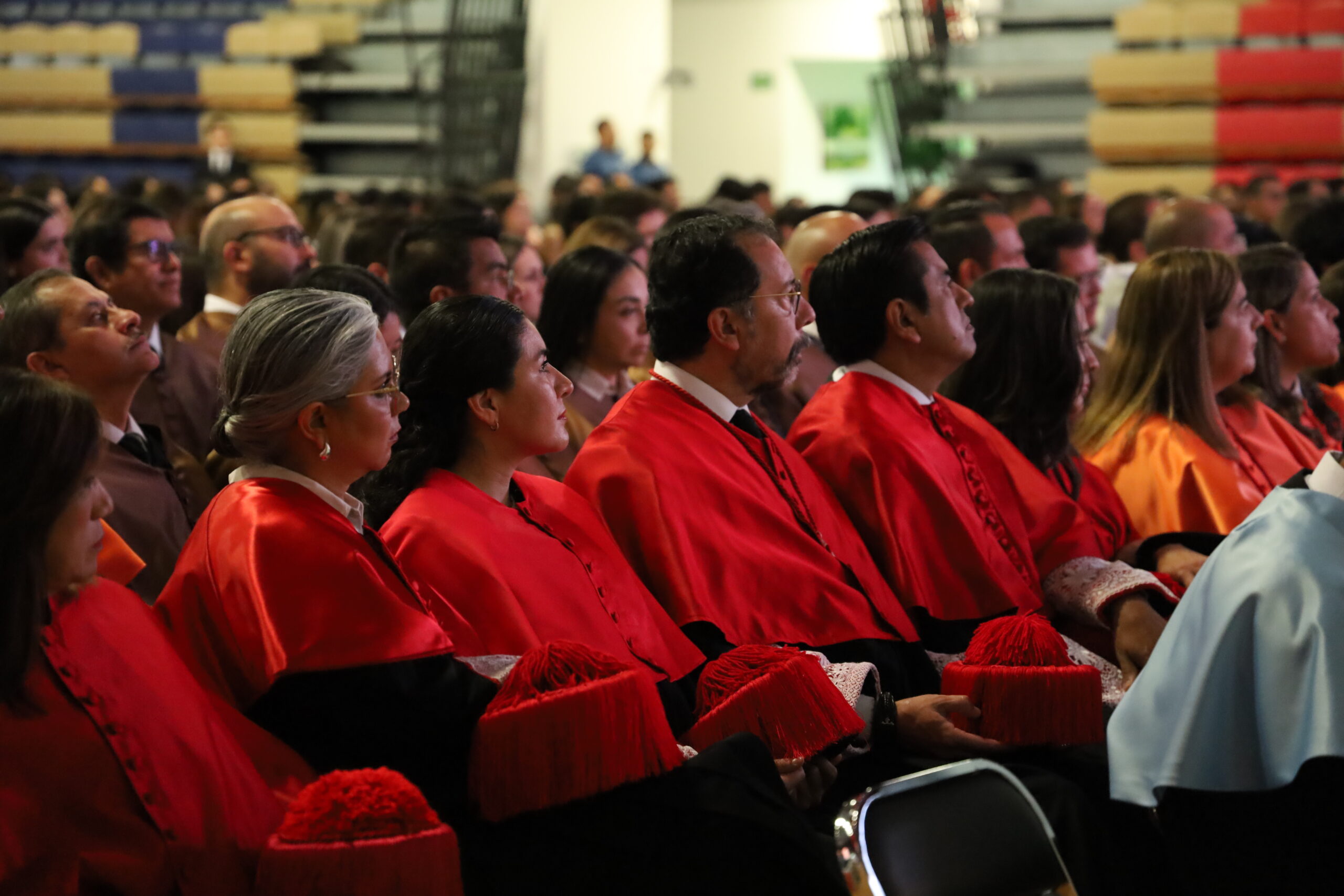
August 14, 2025.— To mark the end of one academic year and announce the start of the next, the Universidad Panamericana its now-traditional Opening Ceremony across its three campuses (Mexico City, Guadalajara, and Aguascalientes), a practice inspired by a European university tradition dating back more than 700 years.
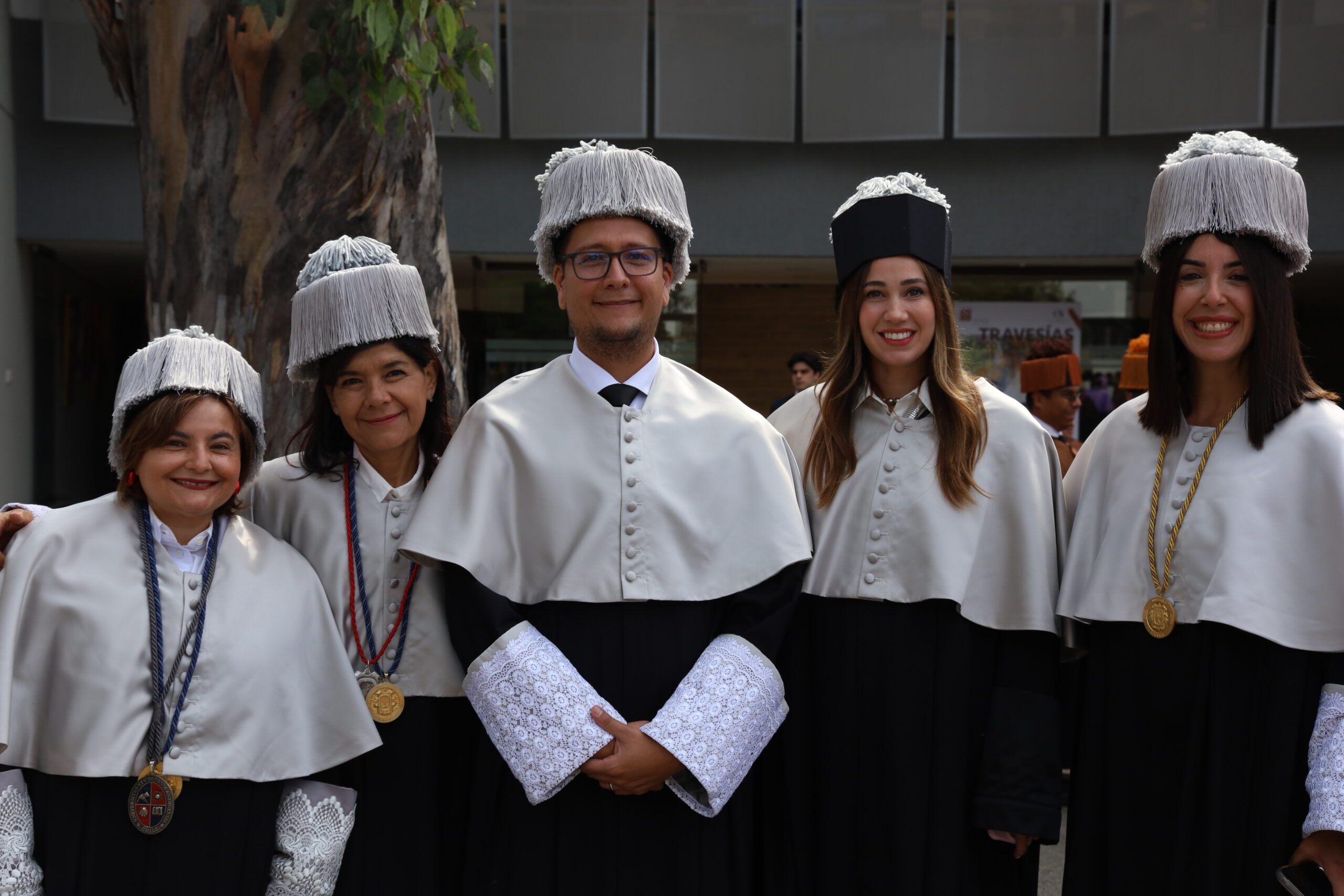
The celebration was attended by the entire faculty, students, and staff, and Dr. Fernanda Llergo Bay, President of the UP-IPADE System, was a special guest at all three ceremonies.
In addition, the respective deans were present at each campus: Dr. Santiago García Álvarez at the Mexico City campus; Dr. Abraham Mendoza Andrade at the Guadalajara campus; and Antonio de los Reyes Moreno at the Aguascalientes campus.
University and Identity: The Challenge of Being and Transcending
In her speech, Dr. Llergo reflected on the identity crisis facing universities in the modern era, where the pressure to adapt to technological changes and utilitarian demands (such as employability) threatens their historical essence: to be a space for the disinterested pursuit of truth, community dialogue, and a well-rounded education.
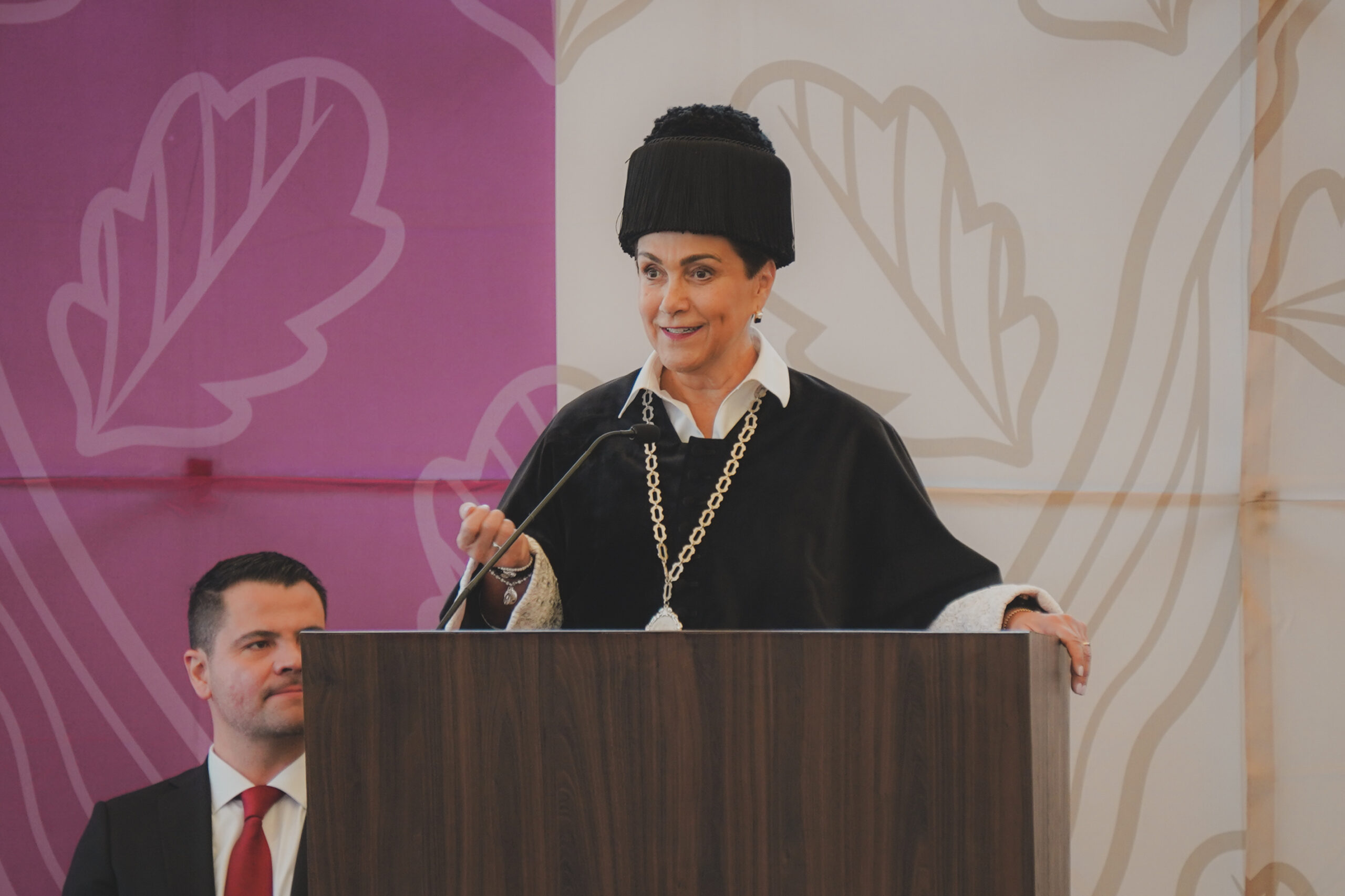
He noted that, while innovation is necessary, it should not undermine the university’s foundational pillars, such as its reflective nature, its intellectual tradition, and its transformative role in people’s lives.
“True innovation does not contradict tradition, but rather renews it from within. (…) The University must be a place where students are taught to think, not just to repeat. This implies rejecting both dogmatism and relativism,” stated the Rector General.
He concluded by saying: “It is not a matter of choosing between tradition and innovation, but of harmonizing them. The University flourishes when its roots run deep and its branches reach toward the sky of the future. Only in this way can the university continue to be a place where knowledge is built in community, where truth is sought unconditionally, and where educating people remains the noblest task.”
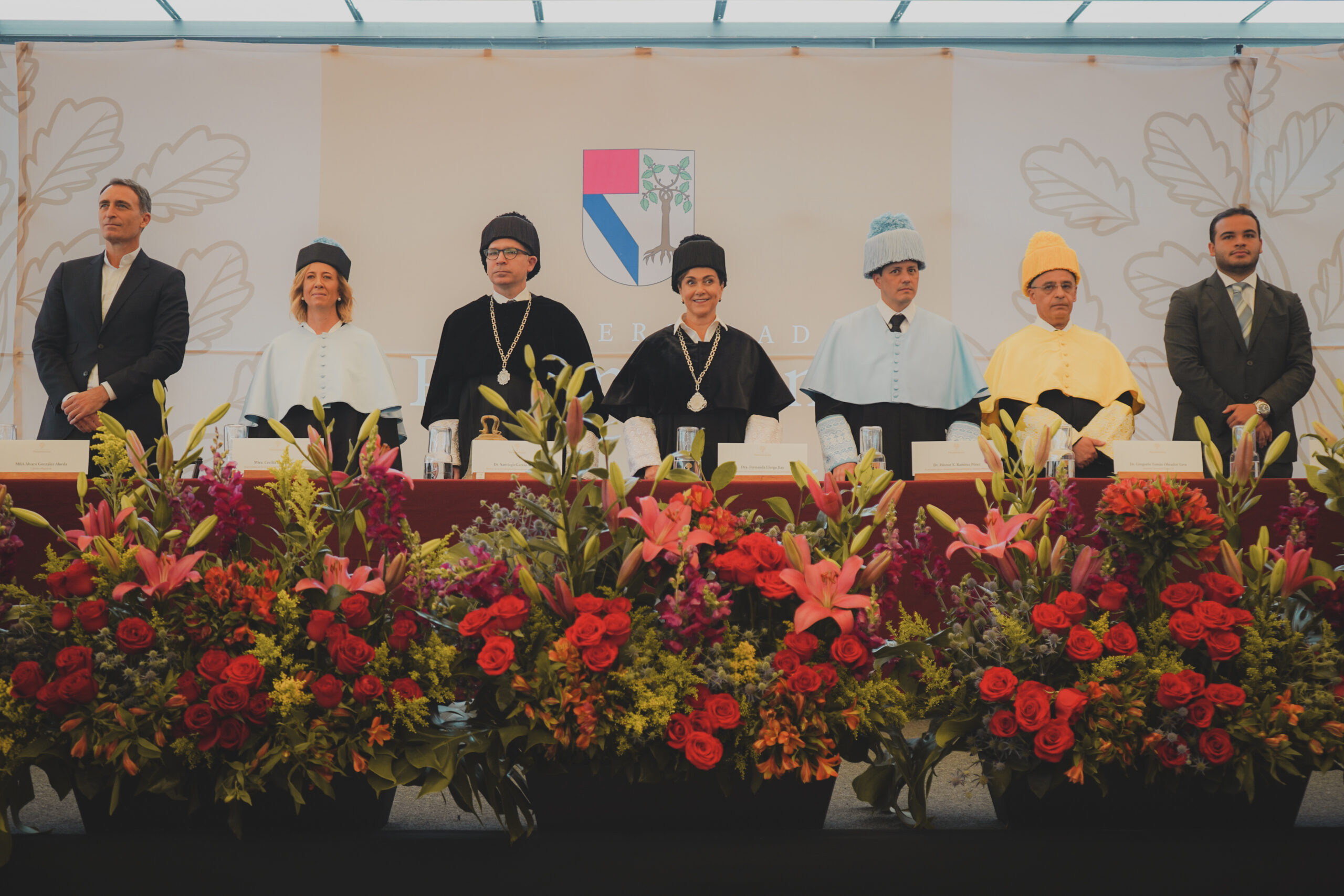
Fruitfulness in Education
At the Mexico City campus, Dr. Santiago García addressed in his speech the challenge universities face in producing not only competent professionals, but also people of integrity and commitment, emphasizing that education goes beyond utilitarian metrics.
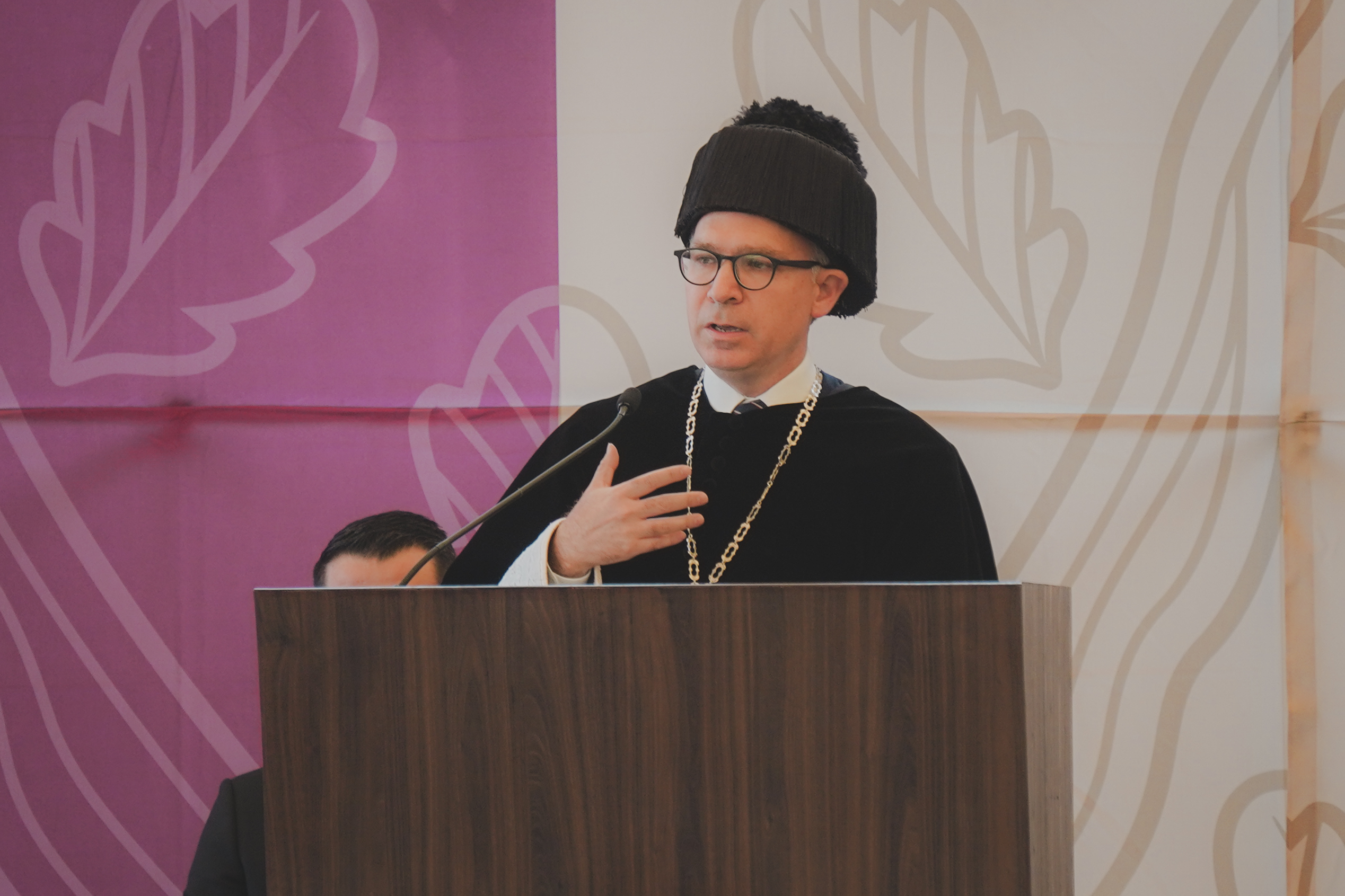
He also focused on fostering an environment where students can thrive as individuals and as ethical beings, despite the uncertainty and individual freedom inherent in this process.
“University professors, especially in an age of artificial intelligence and easy access to knowledge, should specialize in the art of helping people flourish, respecting their pace and exercising patience in the face of the reality that growth can be fast or slow,”, said the dean of the Mexico City campus.
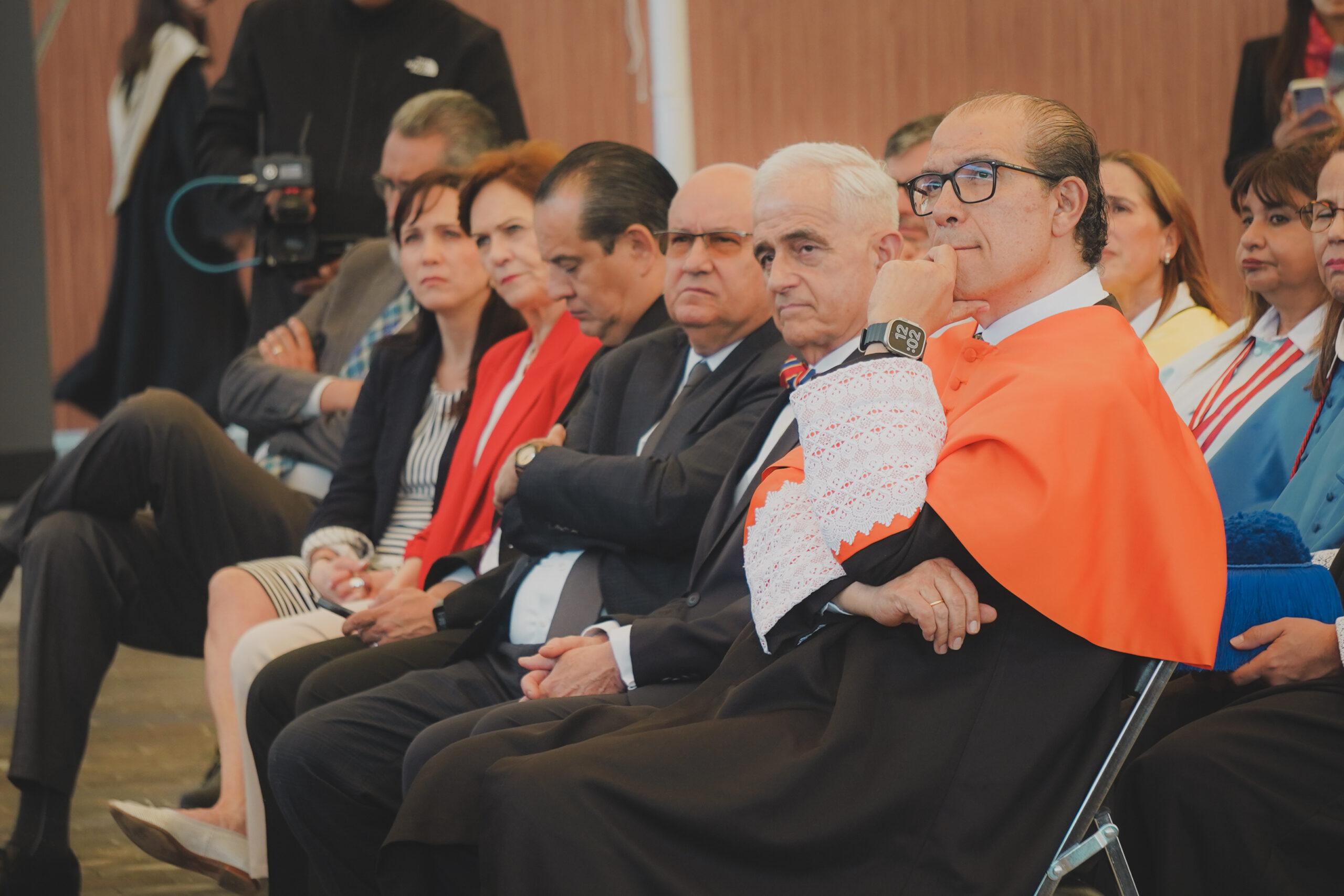
Fostering people of integrity
At the Guadalajara campus, Dr. Abraham Mendoza highlighted the university’s vital role in providing a well-rounded education, especially in an era dominated by artificial intelligence and technology.
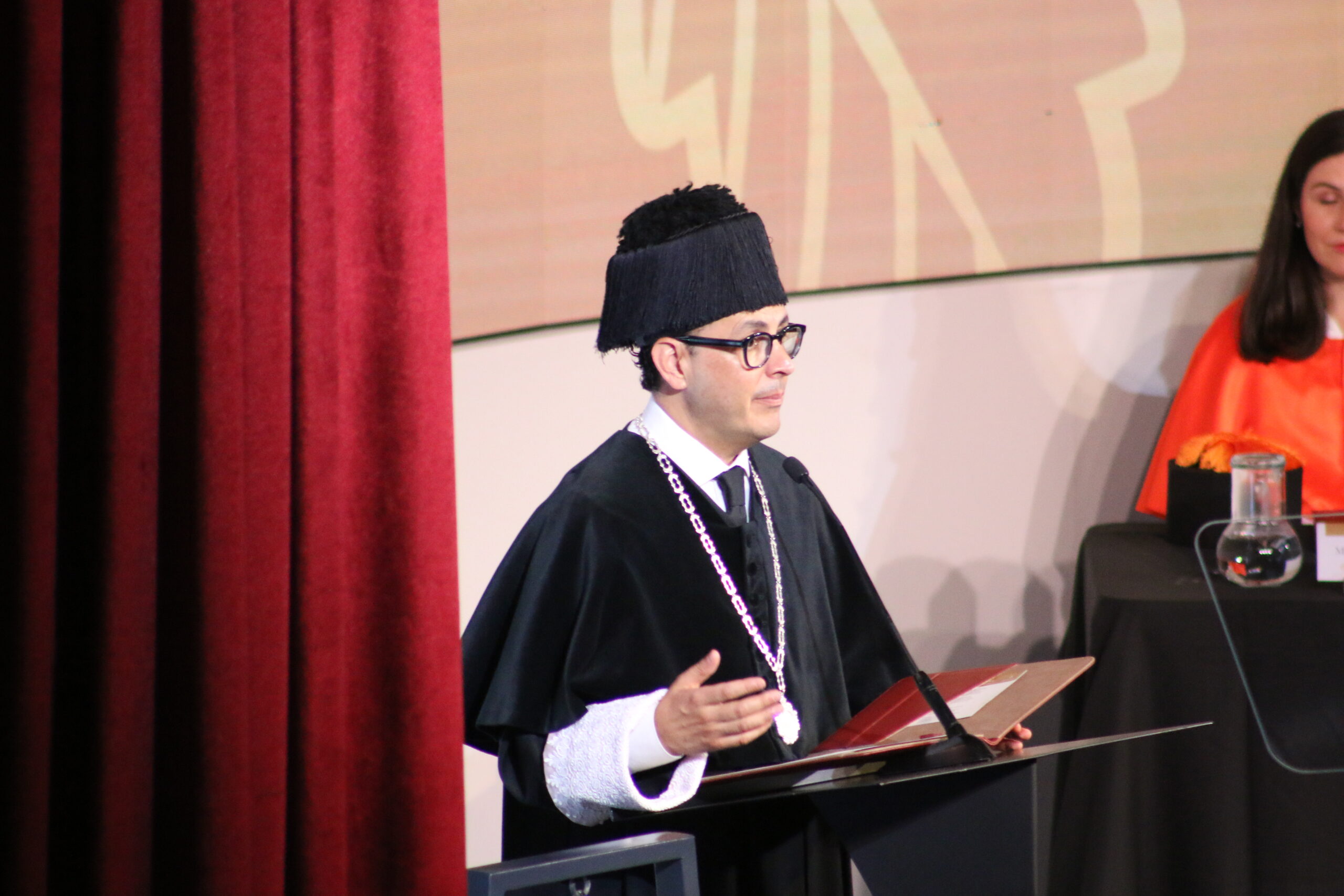
He also reaffirmed the relevance of the four cardinal virtues (prudence, justice, fortitude, and temperance) as ethical guides for navigating contemporary challenges, balancing the use of technological tools with human values such as freedom, responsibility, and service to the community.
“At the Universidad Panamericana , we Universidad Panamericana produce machines; we shape people. And we do so by cultivating virtues, encouraging reflection, and valuing the spoken word, active listening, and meaningful interaction,”, Dr. Mendoza emphasized.

A Meeting of Generations, Ideas, and Experiences
At the Aguascalientes campus, Antonio de los Reyes encouraged students to view their university experience as a journey of holistic transformation, guided by the institutional motto “Ubi spiritus, libertas” (“Where there is spirit, there is freedom”).
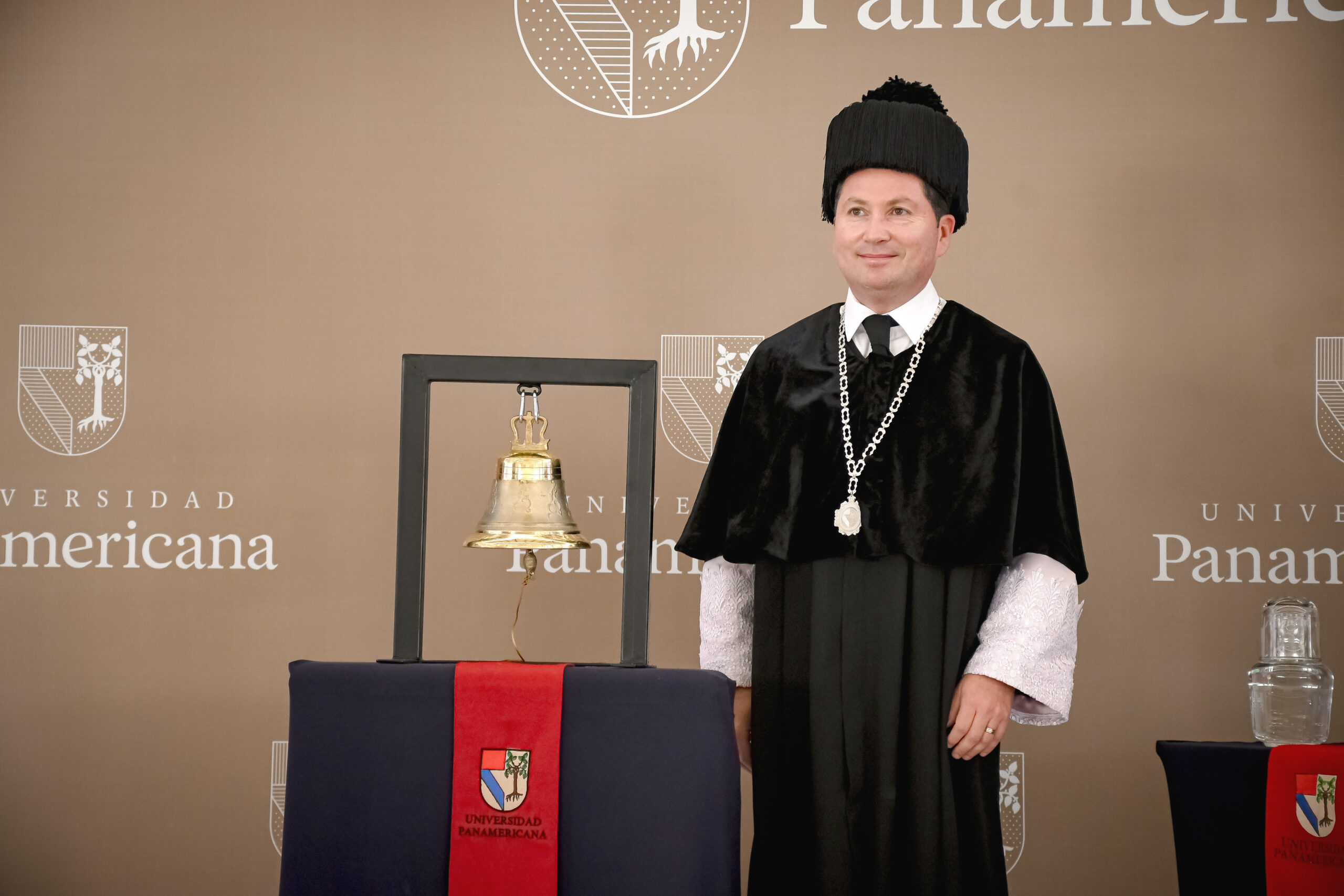
He also reminded the students that “renewing oneself does not mean losing one’s identity, but rather adapting without betraying oneself”, a balance that requires “more than technical skills: conviction, character, and heart.”
He also urged them to approach their college years with dedication: “You didn’t come here just to pass your classes; you came to develop into well-rounded individuals, with minds, hands, and hearts”. He concluded his speech with a call to build community: “A university is a meeting of generations, ideas, and experiences”.
Head, Heart, and Hands: A Journey of Personal Transformation
The inaugural master class, “ ,” was led by Álvaro González Alorda, managing partner of Emêrgap, who shared his reflections on personal and organizational transformation, based on his experience as a consultant and author, which can be found in his book Head, Heart, and Hands: A Journey of Personal Transformation

He criticized the superficiality of many corporate change processes, noting: “There are three types of companies: those that merely pay lip service to transformation, those that have a technical model for change, and those that integrate innovation with human development”.
For him, true transformation begins with leaders: “I’m not talking about cosmetic changes, but rather the development of skills, the creation of good habits, and the building of character.”
He emphasized the importance of self-development as an individual responsibility: “Each person is the protagonist of their own development. It is not a responsibility that can be delegated”, and emphasized the role of the mentor as a guide to “help identify development challenges and tackle them with discipline.”
Similarly, he questioned the corporate obsession with complex formulas and warned of the dangers of a poor intellectual diet: “Your level of leadership depends directly on your intellectual vitality (…) today we run the risk of it being shaped by Netflix algorithms.”
Speaking about the transformation process, he said: “Transformation hurts. Just like going on a diet hurts”. He also noted that a good mentor doesn’t seek to please, but to challenge, creating a mix of discomfort and hope.
He concluded with a humanistic perspective, noting that “people are transformed through the daily exercise of their will”, not through certificates or motivational talks.