UP Campus: Mexico City

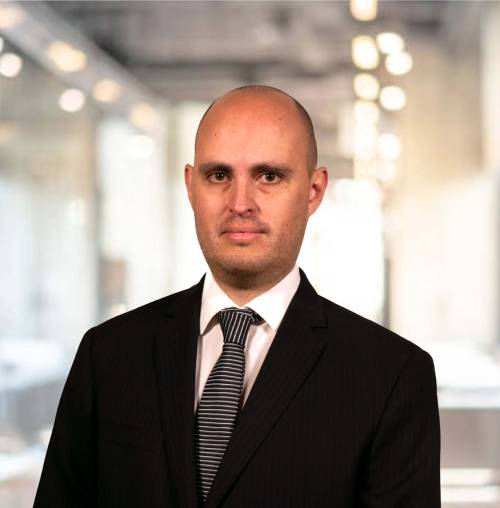
  • Paolo Riccardo Morganti

    Paolo Riccardo Morganti

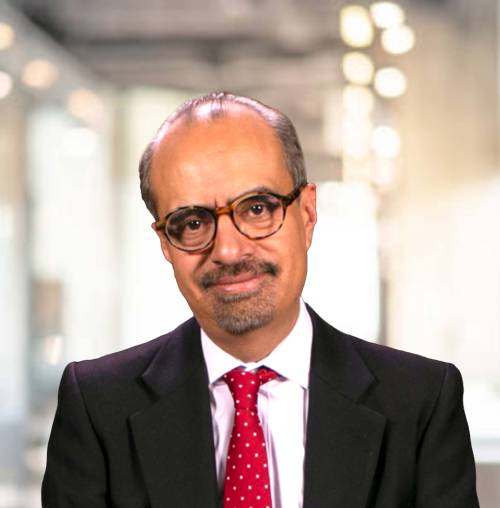
    Dr. Paolo Riccardo Morganti is a full-time researcher in the School of Business. He earned his Ph.D. in Economics from New York University.

    His research focuses on theoretical microeconomics, industrial organization, and quantitative marketing. In particular, his current research focuses on firms' strategic incentives for vertical differentiation.

    His research has been published in high-impact journals such as *Quantitative Economics*, *The Journal of Economics *, and *ReMeF*.

    • Microeconomics
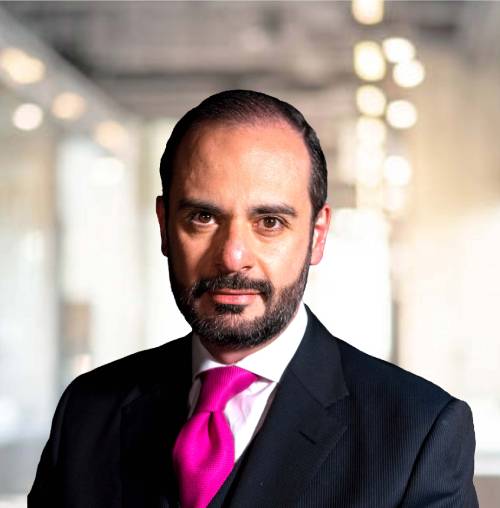
  • David Xavier Lévystone

    David Xavier Lévystone

    • Professor-Researcher 
    • Email: dlevystone@up.edu.mx
    • Profile:

    After studying philosophy at the University of Paris IV–Sorbonne and philology and papyrology at the École Pratique des Hautes Études, David Lévystone earned his Ph.D. in the History of Philosophy from the Sorbonne University in 2009, under the supervision of Professor Jonathan Barnes. After completing his dissertation, he participated in the project on the Presocratics led by Professors André Laks and Glenn Most, which resulted in new standard editions of the Presocratic fragments (Les débuts de la philosophie, Fayard, 2016, and Early Greek Philosophy, 9 vols., Loeb, 2016).

    Starting in 2010 and for six years, he served as a professor at Sungkyunkwan University in Seoul, where he taught courses in ancient and medieval philosophy. Since 2017, he has been a professor and researcher at the Universidad Panamericana, where he teaches Greek and ancient philosophy. He has been particularly involved in the organization and development of the Master’s program in Ancient Philosophy at that institution.

    He has published numerous articles in French, English, and Spanish in specialized journals such as *Phoenix*, *Phronesis*, *Mnemosyne*, and *Philosophie Antique*. His research focuses primarily on archaic and classical philosophy, with a special interest in the origins of political and economic thought and their implications for the contemporary world. He also co-edits the Oikonomia series, dedicated to the study of the ancient economy, published by De Gruyter.

    Research Areas:

    • Ancient Philosophy
    • Ancient Economy
    • Studies on Greek Sophistry

    Research Projects:

    • “Xenophon’s Economic Thought and Its Influence”

    Link to publications: 

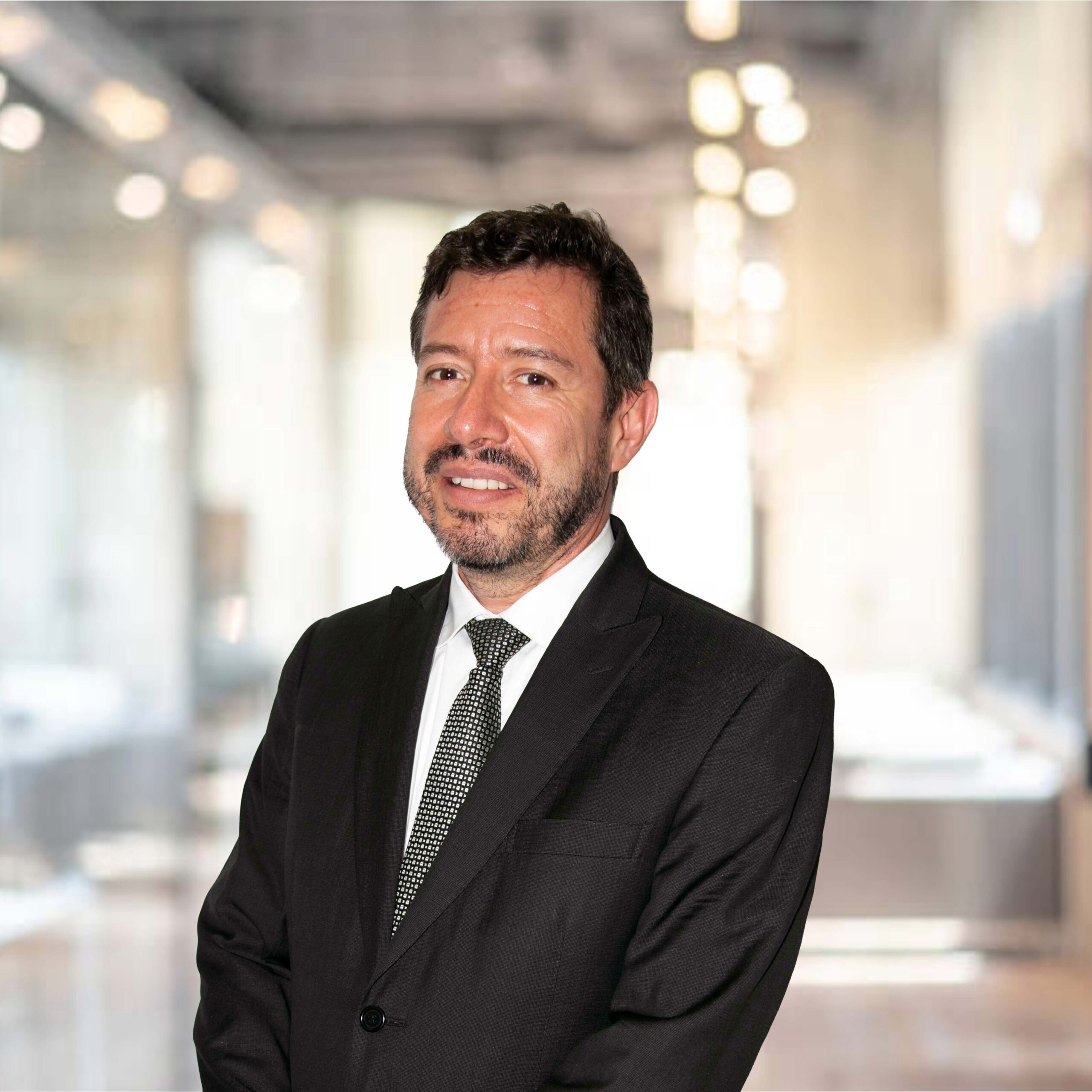
  • Eduardo Óscar Charpenel Elorduy

    Eduardo Óscar Charpenel Elorduy

    • Secretary of Research, Full Professor B, SNII II
    • Email: echarpen@up.edu.mx
    • Profile:

    Eduardo Charpenel Elorduy is a full-time research professor in the School of Philosophy at the Universidad Panamericana. He earned his Ph.D. in Philosophy from the Rheinische Friedrich-Wilhelms-Universität Bonn (Germany) in 2015. At that institution, he has taught seminars as a visiting scholar, and during the winter semester of 2021–2022, he served as a visiting professor (Lehrstuhlvertreter) in the Department of Ancient and Practical Philosophy. He was also a visiting professor at the University of Łódź (Poland) in 2023. His historical interests focus on ancient philosophy (Plato, Aristotle, Augustine of Hippo) and classical German philosophy (Kant, Hegel). His systematic interests encompass ethics, political philosophy, philosophy of law, aesthetics, philosophy of culture, and philosophy of religion. He is the author of *Ethos und Praxis. Der Charakterbegriff bei Aristoteles* (Karl Alber, 2017), as well as numerous scholarly articles and book chapters. He also co-edited, with Nassim Bravo and Gustavo Esparza, *Myth and Religion: The Cultural and Philosophical Significance of the Hero* (Brill, 2026), and, with Nassim Bravo and Luis Xavier López Farjeat, *Philosophical and Theological Perspectives on the Figure of Job: The Disruptive Challenges of God* (Brill, 2026). Since 2024, he has served as co-editor of the Revista de Estudios Kantianos, a publication of the Society for Kantian Studies in the Spanish Language (SEKLE). He has been a member of the National System of Researchers since 2018 and currently holds Level II status within that system.

    Research Areas:

    1. German Idealism
    2. Ancient Philosophy
    3. Kantian and Hegelian Studies


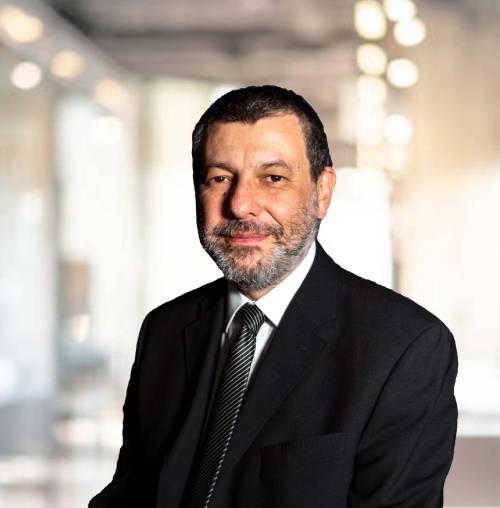
  • José Luis Rivera Noriega

    José Luis Rivera Noriega

    D. (2015) in Philosophy from the Facultad de Filosofía y Letras, and a Diploma in Open and Distance Education (1994) from the Sistema Universidad Abierta y a Distancia, both from the Universidad Nacional Autónoma de México. He has been a Fulbright-García Robles Fellow of the U.S. Department of State at Saint Louis University (1998) and the Catholic University of America (1999-2003), and of the General Direction of Academic Personnel Affairs (1994-1998) at the Instituto de Investigaciones Filosóficas of the Universidad Nacional Autónoma de México.

    Professor of Term Logic, Dialectics and Argumentation, Political Philosophy, and Analytic Philosophy and Pragmatism in the School of Philosophy at the Universidad Panamericana. 

    Liaison Coordinator for the International Logic Olympiad, Mexican Academy of Logic. 

    Areas of expertise: Modern and contemporary Anglo-American philosophy; medieval Scholastic philosophy; epistemology, logic, and argumentation. 

    Areas of expertise: Semiotics and Philosophy of Language; Political, Social, and Legal Philosophy. 

    Areas of interest: Metaphysics, Ontology; Philosophy of Religion.

    Research Areas:

    1. Political philosophy
    2. Medieval Philosophy
    3. Philosophy of Logic
    4. Theories of Argumentation
  • André Laks

    André Laks

    • Tenured Professor-Researcher, Level D
    • Email: alaks@up.edu.mx
    • Profile:

    He holds a Ph.D. in Philosophy from the Sorbonne University and has taught at his alma mater, the University of Lille, Princeton University, and is currently a tenured research professor in the Department of Philosophy at the Universidad Panamericana. He is an honorary member of the Institut Universitaire de France and the driving force behind the Master’s program in Ancient Philosophy at the Universidad Panamericana.

    Editor, co-editor, and author of more than twenty books, including *Introduction to Presocratic Philosophy*, published in Spanish by Gredos (2010) and also published in French (the original), Portuguese, English, and Chinese; *Plato’s Second Republic: An Essay on the Laws* (2022); and, above all, the nine-volume co-edited series on early Greek philosophy with Glenn W. Most in the Loeb Library series published by Harvard University Press (2016).

    Research Areas:

    • The Origins of Greek Thought.
    • Plato, Aristotle, Epicurus
    • Commentary
    • The Reception of Ancient Philosophy in Antiquity and Modernity
    • History of Hermeneutics and Philology

    Research Projects

    • Epistemic Modesty

    Link to publications: 

  • Virginia Aspe Armella

    Virginia Aspe Armella

    • Tenured Research Professor, Level D, SNI III 
    • Email: vaspe@up.edu.mx
    • Profile:

    Dr. Aspe holds a Ph.D. in Philosophy from the University of Navarra and, since 1998, has been a professor of philosophy in Mexico at the Universidad Panamericana. She specializes in Aristotle and practical and productive reasoning, as well as in political and social philosophy in Mexico. She is a full member of the Hispanic-American Academy of Sciences, Arts, and Letters, corresponding to the Spanish Academy, as well as of the Mexican Academy of History and the National System of Researchers (Level III). She previously taught in the graduate philosophy program at UNAM and has completed academic visits to Columbia University on four occasions. For her philosophical work, Dr. Aspe was awarded the Fray Alonso de la Veracruz Medal (2023) by the Philosophical Association of Mexico. She was also named a Distinguished Guest of Salamanca on the occasion of the international conference marking the 500th anniversary of the School of Salamanca, where she delivered the closing lecture. 

    He has taught classes and given lectures at the Autonomous University of the State of Mexico, the Popular Autonomous University of the State of Puebla, the National University of Cuyo (Argentina), New York University (NYU), the 2024 World Congress of Philosophy (Rome), and the 5th International Congress on Bartolomé de las Casas (Seville), among many other forums. He has also served as an organizing committee member for numerous international conferences in Mexico, such as the 16th International Congress of Classical Studies of the International Federation of Classical Studies Associations (2022) and the 12th International Conference on the Baroque (2025). 

    His most recent books are *Aristotle and New Spain* (Routledge, 2025) and Approaches to the Theory of Freedom in Sor Juana Inés de la Cruz (Aliosvientos-Colegio de Michoacán-UP, 2018). Other notable publications include “The Renaissance Reception of Nahua Paideia in the Writings of Bernardino de Sahagún: An Aesthetic Approach to Religion” (Religions, 12), “The Influence of the School of Salamanca in Alonso de la Vera Cruz’s *De dominio infidelium et iusto bello*” (in The School of Salamanca: A Case of Global Knowledge Production. Brill), “On the Greed and Extravagance of the Encomenderos in the Eighth Remedy by Bartolomé de las Casas” (Cauriernsia, 15) and “The Political Dilemmas of Mexico’s Transformations: A Philosophical Approach” (Tópicos, Journal of Philosophy, 58).

    Research Areas:

    1. Mexican Philosophy
    2. Reception of the Aristotelian Tradition

    Research Projects

    • Authority, Freedom, and Dominion in Mexico’s Transformations: An Examination of Fundamental Philosophical Arguments. Phase One: The Mexican Enlightenment of the 18th Century and the Early 19th Century.
    • Authority, Freedom, and Dominion in Mexico’s Transformations: An Examination of Fundamental Philosophical Arguments. Part Two: Mexico’s Second Political Transformation (1848–1898): Background and Consequences.
    • The Fundamental Philosophical Arguments Underlying Mexico’s Transformations: An Approach to the Third and Fourth Transformations (1903–2019)
    • Cultural Manifestations of the Baroque: A Hermeneutics of a Cultural Category.


    Link to publications:
    https://scripta.up.edu.mx/entities/person/vaspe

    Awards: Fray Alonso de la Vera Cruz Medal, 2024, Mexican Philosophy Association


  • Luis Xavier López Farjeat

    Luis Xavier López Farjeat

    • Tenured Research Professor, Level D, SNII III
    • Email: llopez@up.edu.mx
    • Profile:

    Dr. Luis Xavier López Farjeat is a tenured professor and researcher (Level D) in the School of Philosophy at the Universidad Panamericana, Mexico City Campus.

    He is a member of the National System of Researchers, Level III. He is associate director of the “Aquinas and ‘the Arabs’ International Working Group” (www.AquinasAndTheArabs.org) and editor of *Tópicos, Revista de Filosofía* (https://revistas.up.edu.mx/topicos/es).

    He is a professor of Islamic philosophy in the Graduate Program in Philosophy at UNAM and of Islamic philosophy and intellectual history in the Master’s Program in Asian and African Studies at El Colegio de México. He has been a visiting scholar at the Center for Middle Eastern Studies at the University of Texas at Austin and a resident scholar at the Center for Theological Inquiry in Princeton.

    He has been a visiting professor at various universities, including Marquette University, the University of Notre Dame, the Catholic University of America, Princeton Theological Seminary, the University of Navarra, the University of the Andes, and El Colegio de México.

    He has published numerous scholarly articles and book chapters on the transmission and transformation of ancient philosophy in the Islamic world, Arabic philosophy, and the intellectual history of the Middle East; on the interaction between Jewish, Christian, and Islamic philosophies; and on the role of Middle Eastern Christian traditions in the transmission of Greek philosophy to the Islamic context.

    His books include *Reasons, Arguments, and Beliefs: Reflections Based on Classical Islamic Philosophy* (2018) and *Classical Islamic Philosophy: A Thematic Introduction* (2022). He is also a co-author and co-editor of *Philosophical Psychology in Arabic Thought and the Latin Aristotelianism of the 13th Century* (2013), *The Routledge Companion to Islamic Philosophy* (2016), *Contextualizing Premodern Philosophy: Explorations of the Greek, Hebrew, Arabic, and Latin Traditions* (2023), and *Philosophical and Theological Perspectives on the Figure of Job. The Disruptive Challenges of God (2025). He has also contributed as an author to the Stanford Encyclopedia of Philosophy and has served as a guest editor for the journals *Anuario Filosófico* and *The Muslim World*.

    Research Areas:

    • Arab and Islamic Philosophy
    • Ancient Philosophy
    • Arab and Syriac Reception of Greek Philosophy
    • The Latin Reception of Arabic Philosophy
    • Hegel

    Areas of interest:

    • Theory of Argumentation, Theory of Knowledge, Epistemology and Philosophy of Mind, Ethics and Political Philosophy, Ethics of Immigration, Philosophy of Religion, Aesthetics and Philosophy of Art, Philosophy and Literature.

    Research Projects

    • “Aristotelian and Neoplatonic Perspectives in Judaism, Christianity, and Islam”
    • “Migration, Territory, and Identities.”
    • “Experiences of the Divine in the Abrahamic Traditions”

    Link to publications:

  • María Elena García Peláez Cruz

    María Elena García Peláez Cruz

    • Research Professor
    • Email: mepelaez@up.edu.mx
    • Profile:

    Dr. María Elena García Peláez Cruz is a research professor in the School of Philosophy at the National Autonomous University of Mexico ( Universidad Panamericana). She earned her bachelor’s degree in philosophy from that institution. Her master’s thesis in philosophy at UNAM, “On the Biological Assumptions of Aristotle’s Politics,” was awarded the Norman Sverdlin Prize in 2008. She earned her Ph.D. in Philosophy from UNAM with the dissertation “The Cosmological, Metaphysical, and Physiological Relevance of Reproduction in Aristotle’s Biological Treatises and Its Implications for the Definability of Women.” From 2013 to 2023, she served as Dean of the School of Philosophy at the National Autonomous University of Mexico ( Universidad Panamericana), where she has been a tenured professor of the History of Ancient Philosophy. She has taught various undergraduate, master’s, and doctoral courses in that same school, as well as in other programs and institutions both nationally and internationally. Committed to the social impact of philosophy, she co-directed SWIP-Analytic México, an organization dedicated to providing tools and support to female philosophy students at the undergraduate and graduate levels from various Mexican states. She has collaborated on and directed various research projects and published in books and specialized journals. She is the author of the book *The Feminine Longing for Eternity. Reproduction and Embryology in Aristotle’s Biological Works,” in the International Aristotle Studies series, Verlag Karl Alber, Baden-Baden, Germany, 2026, and co-edited the book “Voices and Echoes of Early Greek Philosophy,” in the Beiträge zur Altertumskunde series, Walter de Gruyter, Berlin, 2024. She has also participated in and organized international conferences and, in the publishing field, contributes to various specialized journals, both on editorial boards and as a reviewer. She has worked tirelessly to forge connections that benefit the academic community and students in the country; as a result, since 2019 she has served as co-organizer of the Consortium on Ancient Philosophy among Princeton, São Paulo, and Panamericana universities.


    Research Areas:

    1. Ancient Philosophy and Biology
    2. History of Ancient Philosophy
    3. Aristotle

    Research Projects

    • “Experiences of the Divine in the Abrahamic Traditions”

    Link to publications: 


  • Leonardo Ruíz Gómez

    Leonardo Ruíz Gómez

    • Dean of the School of Philosophy, Professor and Tenured Researcher, Level D, SNII II
    • Email: leruiz@up.edu.mx
    • Profile:

    Leonardo Ruiz Gómez holds a Bachelor’s degree in Philosophy from the National Autonomous University of Mexico ( Universidad Panamericana ) and a Ph.D. in Philosophy from the University of Navarra, where he was awarded the 2014 Special Thesis Prize. Since 2015, he has worked as a Research Professor in the School of Philosophy at the National Autonomous University of Mexico ( Universidad Panamericana ) and currently serves as Director of the Bachelor’s Program in Philosophy at that same university. Since 2016, he has been a member of the SECITHI National System of Researchers (Level II). He served as director of the Bachelor’s Degree in Philosophy at the Universidad Panamericana from 2019 to 2023 and is currently the dean of the Faculty of Philosophy at the same institution. He has served as secretary of the Ibero-American Leibniz Network since 2024 and has led and participated in various research projects on the philosophy of Leibniz and the Baroque period. 

    He is the author of the book: The Leibnizian Concept of Space: The Controversy with Clarke and Newtonianism (EUNSA, 2014) and of various scholarly articles. His areas of research include the philosophy of nature, bioethics, the philosophy of science, modern philosophy, and 17th-century metaphysics.

    Research Areas:

    1. Modern Metaphysics of the 17th and 18th Centuries
    2. Baroque Philosophy
    3. Bioethics
    4. Philosophy and History of Modern Science
    5. Transhumanism

    Research projects:

    • Transformations in Metaphysics in the 16th and 17th Centuries: The Concepts of Cause, Substance, and Mode
    • Cultural Manifestations of the Baroque: A Hermeneutics of a Cultural Category 

    Link to publications:

  • Mauricio Lecón Rosales

    Mauricio Lecón Rosales

    • Director of Graduate Studies, SNII II
    • Email: mlecon@up.edu.mx
    • Profile:

    He holds a Bachelor’s degree in Philosophy from the Universidad Panamericana , and a Ph.D. in Philosophy from the University of Navarra (2014), where he defended his dissertation, “Causality, Action, and Freedom in Francisco Suárez,” receiving the highest distinction of summa cum laude under the supervision of Prof. Dr. Ángel Luis González. He has completed research fellowships at Martin Luther University Halle-Wittenberg in Germany and at the Nicola Center for Ethics and Culture at the University of Notre Dame.

    Since 2014, he has been a Tenured Research Professor (Level C) in the School of Philosophy at the Universidad Panamericana, where he currently serves as Director of Graduate Studies. He is a Level II member of the National System of Researchers (SECIHTI). He is a member of the Société Internationale pour l’Étude de la Philosophie Médiévale (SIEPM) and the Society for Medieval Philosophy (SOFIME).

    His work revolves around three main areas: metaphysics and scholastic legal philosophy, with a special focus on Francisco Suárez and the School of Salamanca; the philosophy of humor and laughter; and 20th-century Mexican philosophy.

    He has published with publishers such as Palgrave Macmillan, Springer, Brill, and EUNSA, and in journals such as *The Review of Metaphysics*, *The European Journal of Humour Research*, *Studia Neoaristotelica*, *Pensamiento*, *Scripta Mediaevalia*, and *DOXA. Cuadernos de Filosofía del Derecho*. Among his books, *Action, Praxis, and Law: A Metaphysical and Psychological Study of Legislative Action in Francisco Suárez* (EUNSA, 2014) stands out.

    Research Areas:

    1. Medieval and Scholastic Philosophy
    2. 20th-Century Mexican Philosophy
    3. The Philosophy of Humor

    Research projects:

    • Transformations in Metaphysics in the 16th and 17th Centuries: The Concepts of Cause, Substance, and Mode
    • Cultural Manifestations of the Baroque: A Hermeneutics of a Cultural Category.

    Link to publications: 


  • Karen González Fernández

    Karen González Fernández

    • Professor and Researcher
    • Email: kgonzale@up.edu.mx
    • Profile:

    She has a degree in Philosophy from Universidad Panamericana and a Master's degree and PhD in Philosophy of Science from UNAM.

    Since 2010, she has been a professor and researcher in the School of Philosophy at the Universidad Panamericana, where she primarily teaches courses in propositional logic, predicate calculus, contemporary epistemology, and the philosophy of science. She has also served as the editorial secretary of *Tópicos, Revista de Filosofía* since 2010.

    Her main areas of research are philosophy, the teaching of logic, and the philosophy of artificial intelligence. She is the principal investigator for the seminar “Logic, Epistemology, and Ethics of Artificial Intelligence,” organized in collaboration with the School of Engineering at the Universidad Panamericana, which has been held since 2019.

    He is a member of the Mexican Academy of Logic (AML), the Philosophical Association of Mexico (AFM), and the International Panel on Information Environment (IPIE).

    Research Areas:

    • Philosophical Perspectives on Artificial Intelligence
    • Philosophy of Science
    • Heuristics
    • Teaching Logic

    Research Projects

    • Co-leader of the “Ethics of Artificial Intelligence” project with the Institute

    Champion of the Common Good. (2024–2026)

    • Fermento—Transdisciplinary Collection. (Participant, 2024–2025)
    • “Logic, Epistemology, and Ethics of Artificial Intelligence” (Principal Investigator, 2020–2021)
    • “Logics of Discovery, Heuristics, and Creativity in the Sciences,” PAPIIT-DGAPA-UNAM-IN Project No. 400514-3.

    Link to publications: